Vocabulary development Normal Letter Sounds Worksheets for Ages 3-7
6 filtered results
-
From - To
Discover engaging Vocabulary Development Normal Letter Sounds Worksheets for ages 3-7, ideal for early learners! These worksheets focus on teaching letter sounds and enhancing vocabulary through interactive activities tailored for young minds. Designed to support comprehension and phonemic awareness, children will enjoy fun exercises that promote language skills while developing critical thinking. Perfect for home or classroom use, our worksheets offer a variety of activities, including matching, word recognition, and sound identification, helping children build a solid foundation in literacy. Support your child’s educational journey with these effective and enjoyable resources that inspire a love for learning!
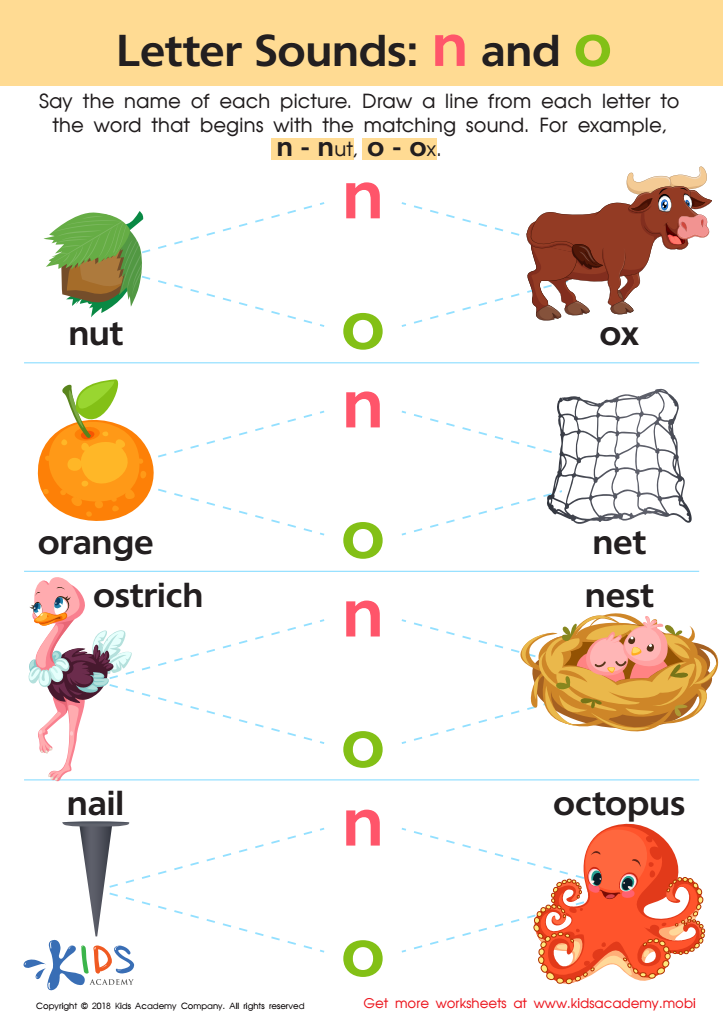
Letter N and O Sounds Worksheet
 Assign to My Students
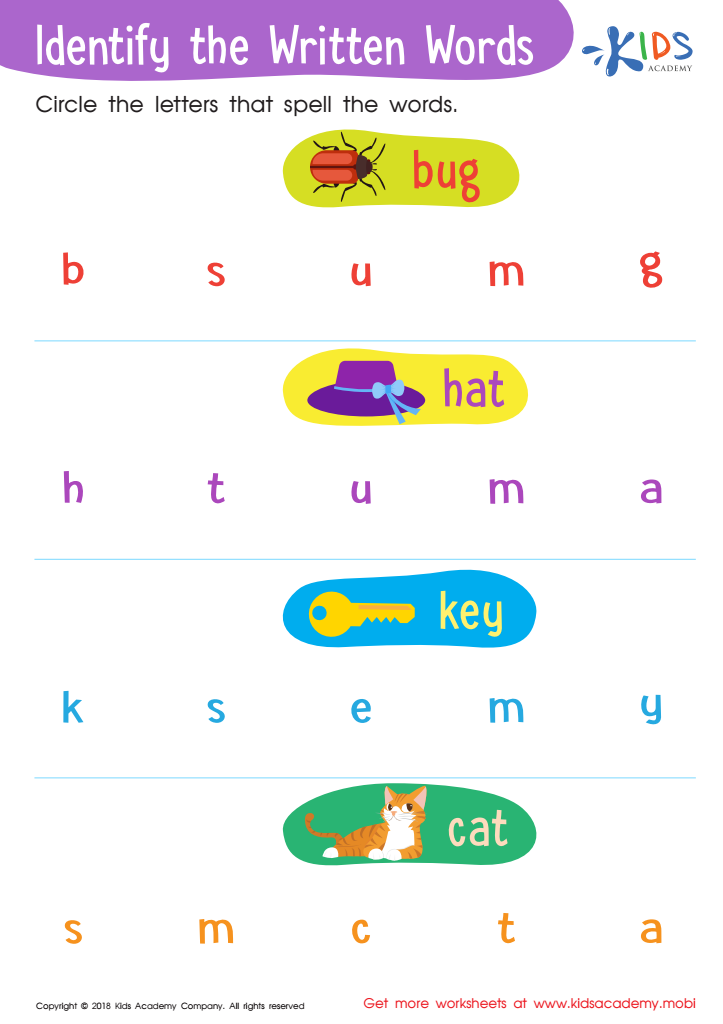
Identify the Written Words Worksheet
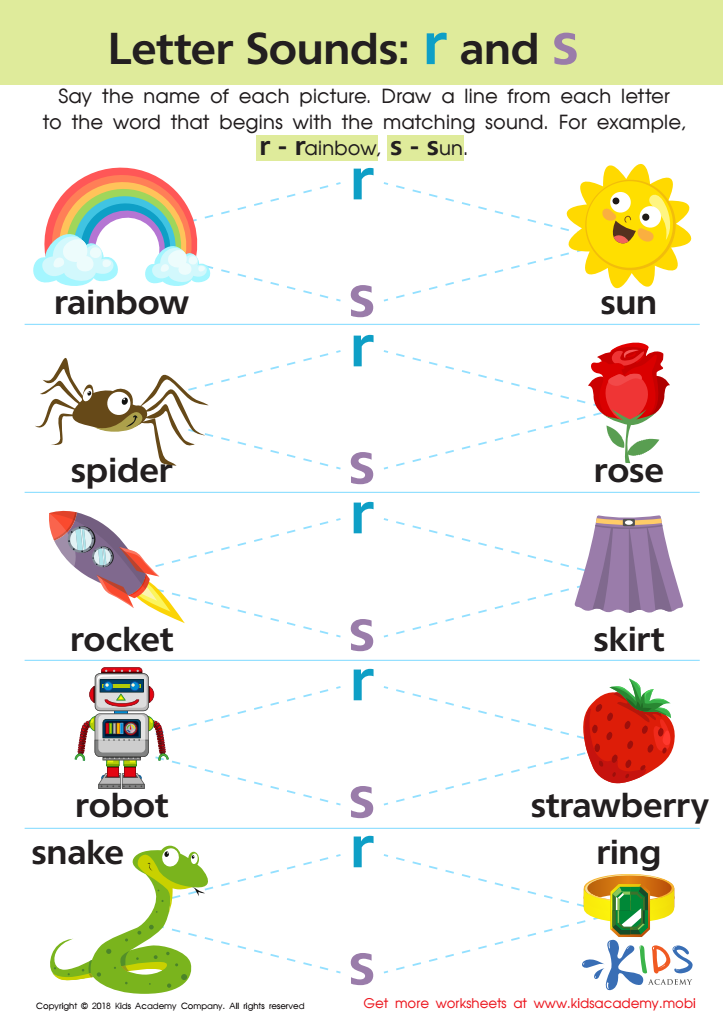
Letter R and S Sounds Worksheet
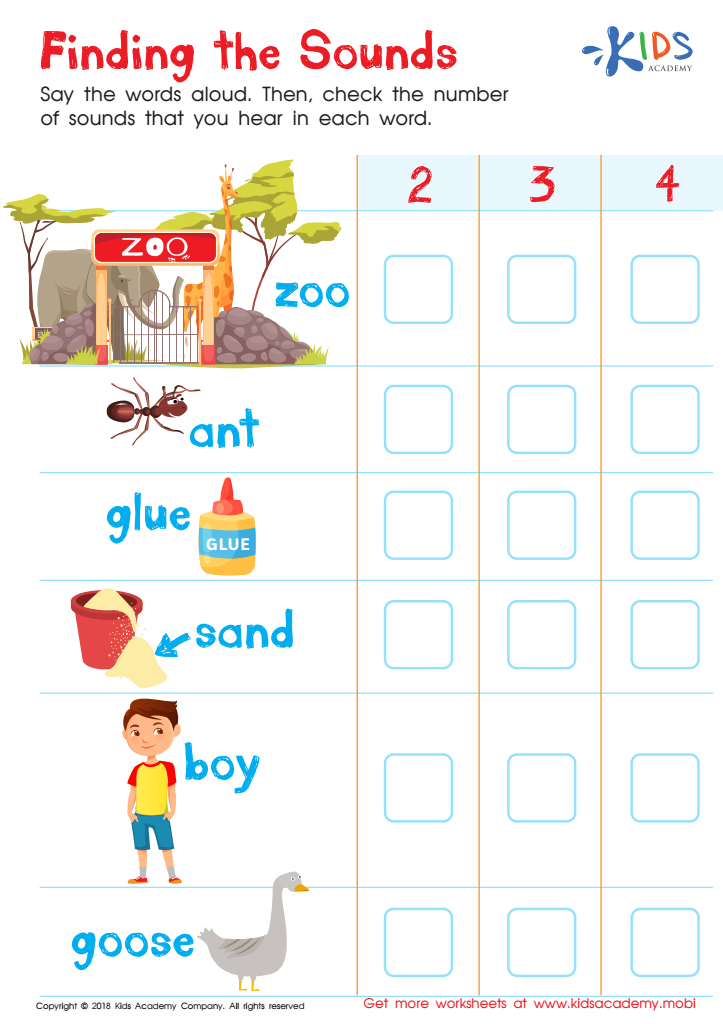
Finding the Sounds Worksheet
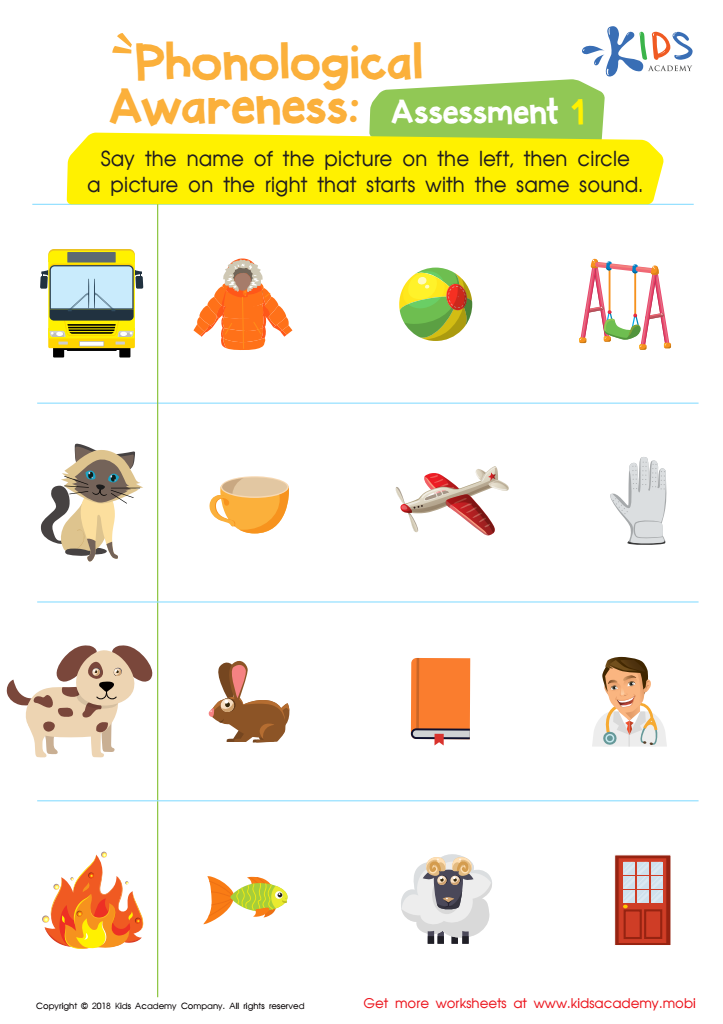
Phonological Awareness: Assessment 1 Worksheet
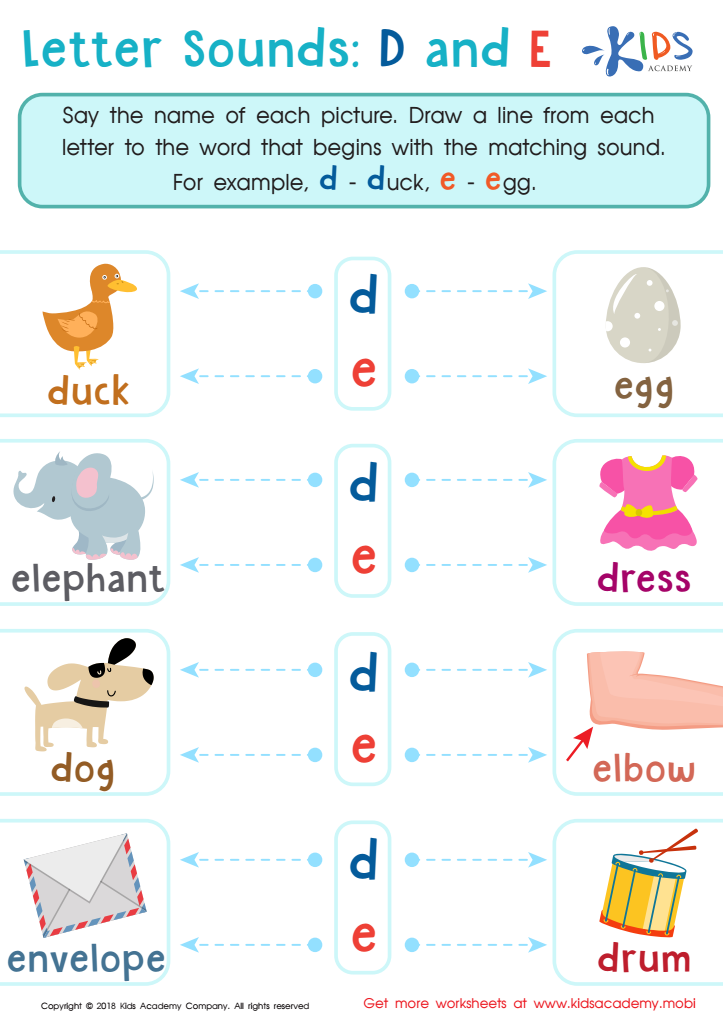
Letter D and E Sounds Worksheet








Vocabulary development and understanding letter sounds are crucial for children aged 3-7 because they lay the foundation for effective communication and literacy skills. During these early years, children's brains absorb language at an incredible rate; thus, support from parents and teachers can significantly impact their linguistic growth. A rich vocabulary enhances their ability to express ideas, increasing confidence and encouraging them to engage in conversations and storytelling.
Moreover, the mastery of normal letter sounds, or phonemic awareness, is essential for reading readiness. Knowing letter sounds assists children in decoding words, which directly correlates to the development of reading skills. When children can identify sounds and their corresponding letters, they are better prepared to tackle reading challenges as they progress in their education.
Parents and teachers should prioritize vocabulary and letter sound development because they contribute to academic success and overall cognitive growth. Engaging children in playful learning activities, such as rhymes, songs, and interactive storytelling, fosters both skills while making learning enjoyable. By nurturing these abilities early on, we set a strong foundation for lifelong learning, open communication, and eventual proficiency in reading and writing. Thus, investing in vocabulary and letter sounds is investing in a child’s future.






