Letter-sound correlation Normal Phonics Worksheets for Ages 3-7
3 filtered results
-
From - To
Discover our engaging Letter-Sound Correlation Normal Phonics Worksheets, designed specifically for children ages 3-7. These interactive resources help young learners master the essential connection between letters and their sounds, fostering a strong foundation for reading. Our worksheets feature vibrant illustrations and fun activities that keep kids excited while they practice letter recognition and phonetic skills. Perfect for home or classroom use, each worksheet is crafted to enhance phonemic awareness through various exercises. Dive into essential phonics practice with Kids Academy, and watch your child's confidence and literacy skills grow alongside their love for learning!
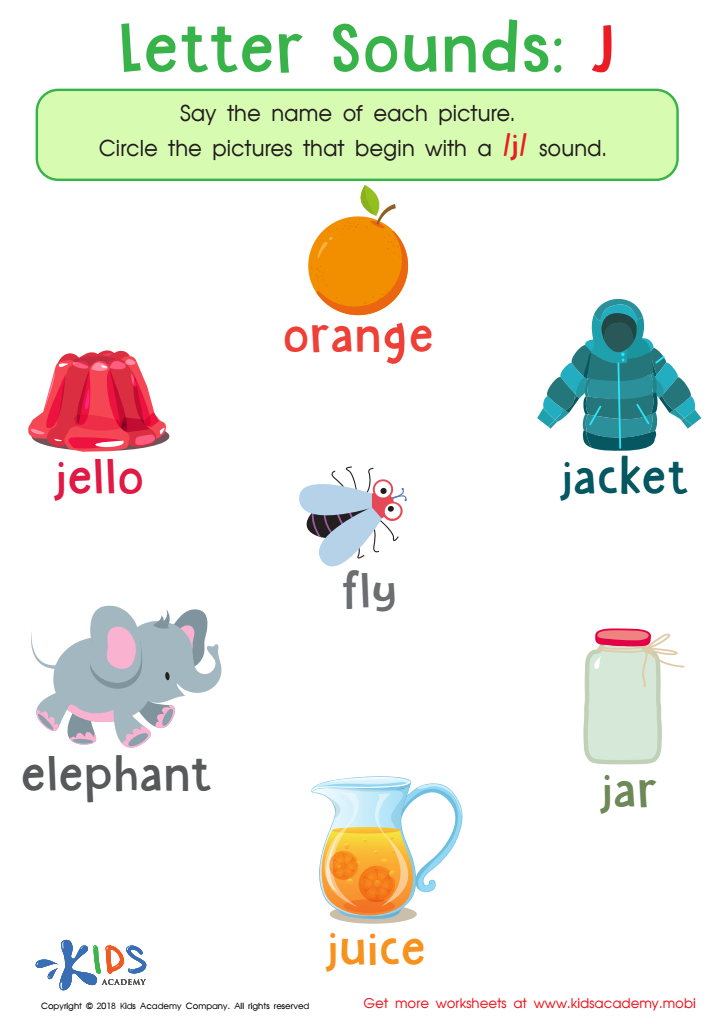
Letter Sounds: J Printable Worksheet
 Assign to My Students
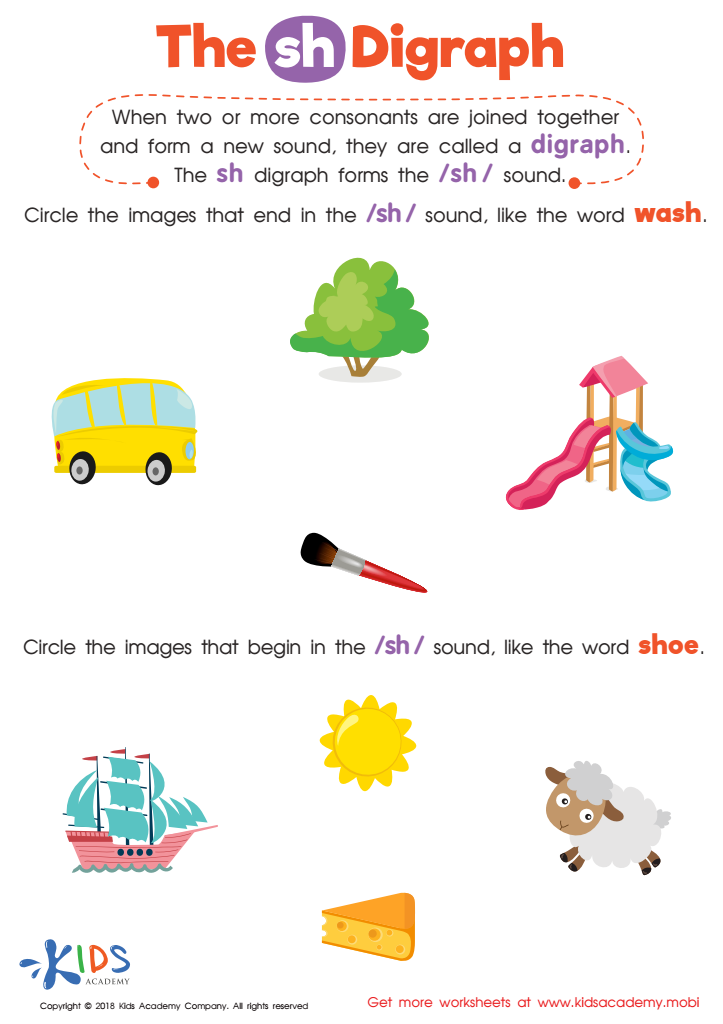
The SH Digraph Worksheet
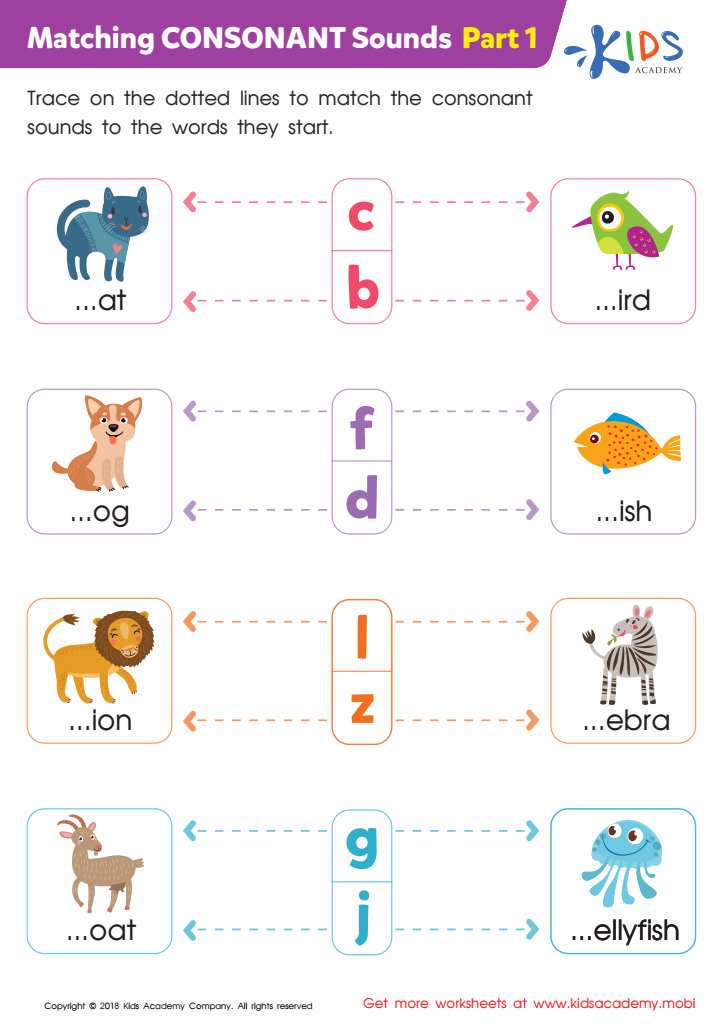
Matching Consonant Sounds: Part 1 Worksheet








Letter-sound correlation, an essential aspect of Normal Phonics, plays a crucial role in the early literacy development of children aged 3-7. Understanding this concept helps children grasp the foundational skills necessary for reading and writing. When children learn that letters represent specific sounds, they enhance their phonemic awareness, which is vital for decoding words. This skill allows them to sound out unfamiliar words, fostering confidence and independence in their reading journey.
Moreover, effective phonics instruction supports comprehension. Children who can decode words easily are better able to focus on understanding the text rather than getting stuck on pronunciation. In turn, this leads to greater enjoyment and engagement with reading, solidifying a positive attitude toward literacy.
For teachers and parents, prioritizing letter-sound correlation demonstrates a commitment to a child’s educational success. When family members engage with their children in phonics activities—like reading aloud and playing sound games—they can reinforce skills taught in the classroom, creating a collaborative learning environment. This consistent reinforcement not only strengthens a child's reading abilities but also builds a solid foundation for future academic achievement. Caring about letter-sound correlation thus prepares children for a lifetime of literacy, critical thinking, and learning.







