Reading development Normal Phonics Worksheets for Ages 3-7
5 filtered results
-
From - To
Boost your child's reading skills with our Normal Phonics Worksheets for Ages 3-7. Designed for young learners, these engaging and interactive worksheets make phonics fun. Children will explore letters, sounds, and simple word-building activities tailored to their developmental stage. By gradually progressing through varied exercises, they'll enhance their reading fluency and comprehension effortlessly. Ideal for both home and classroom use, our worksheets are perfect for early learners embarking on their reading journey.
Explore our lively, age-appropriate worksheets today and give your child a solid foundation in reading. Visit us at Kids Academy to start nurturing lifelong reading skills stitched with fun and learn.
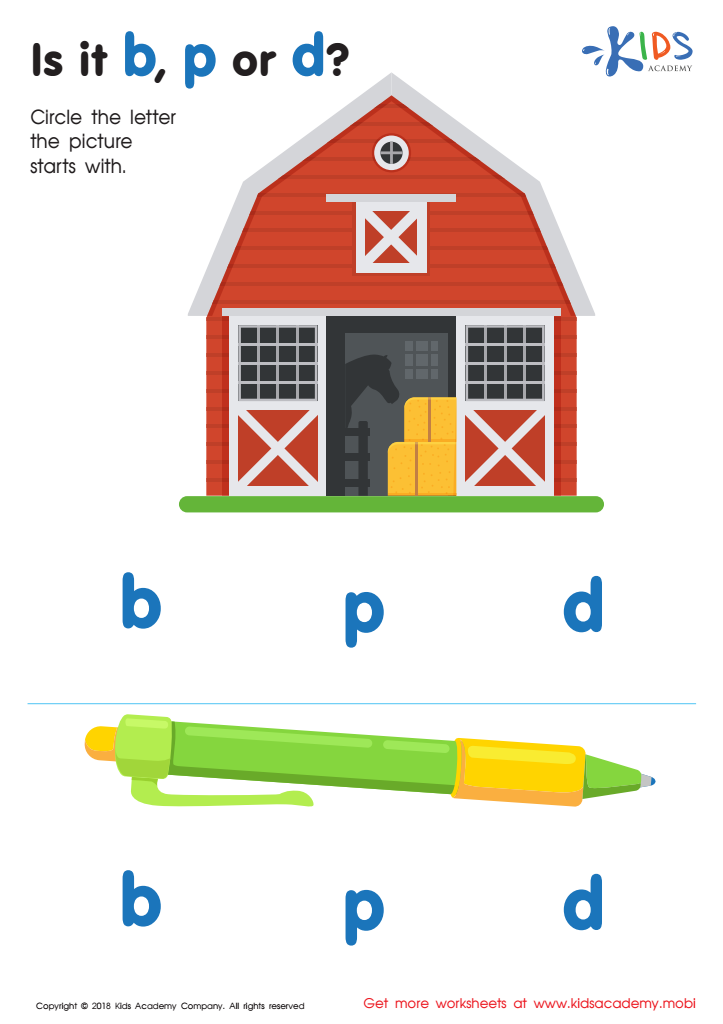
Is it b, p or d? Worksheet
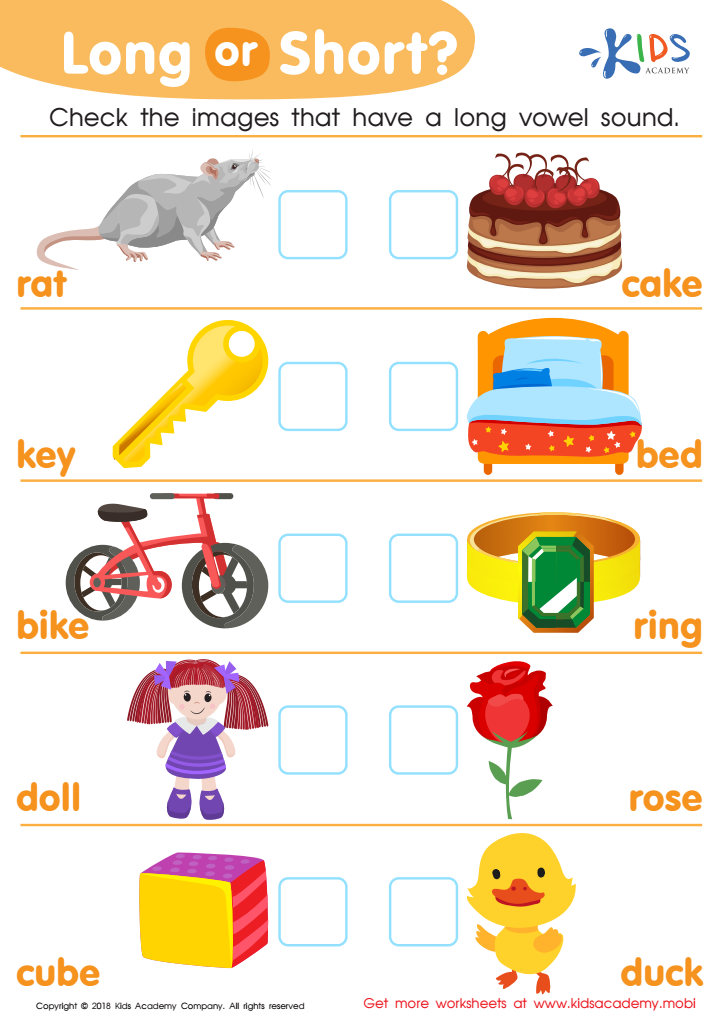
Long or Short Reading Worksheet
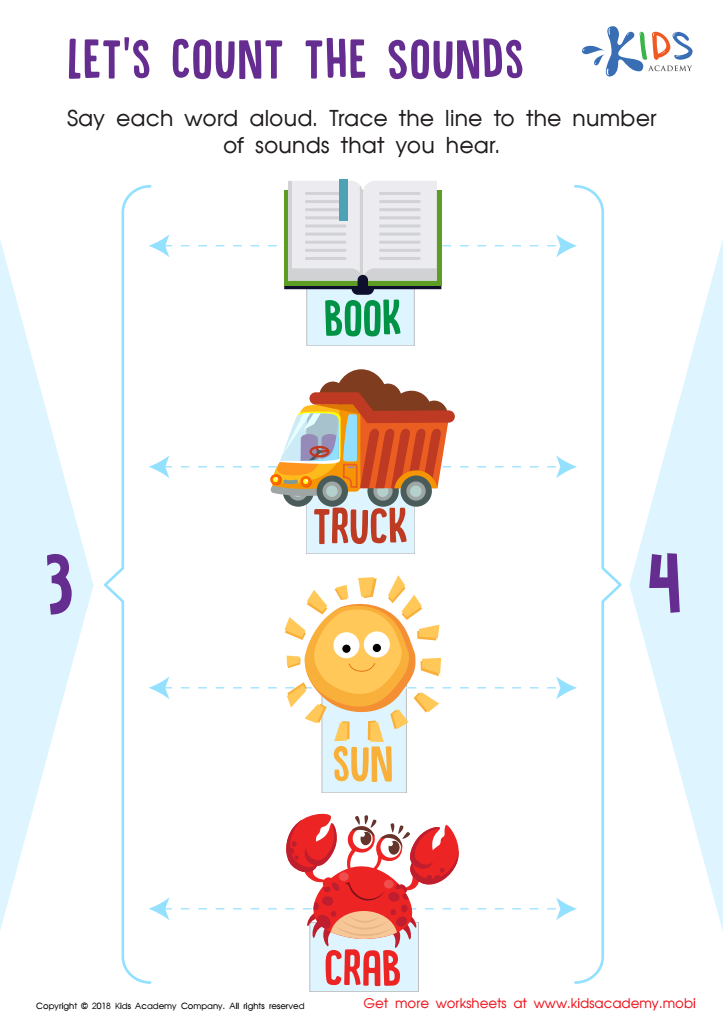
Let's Count the Sounds Worksheet
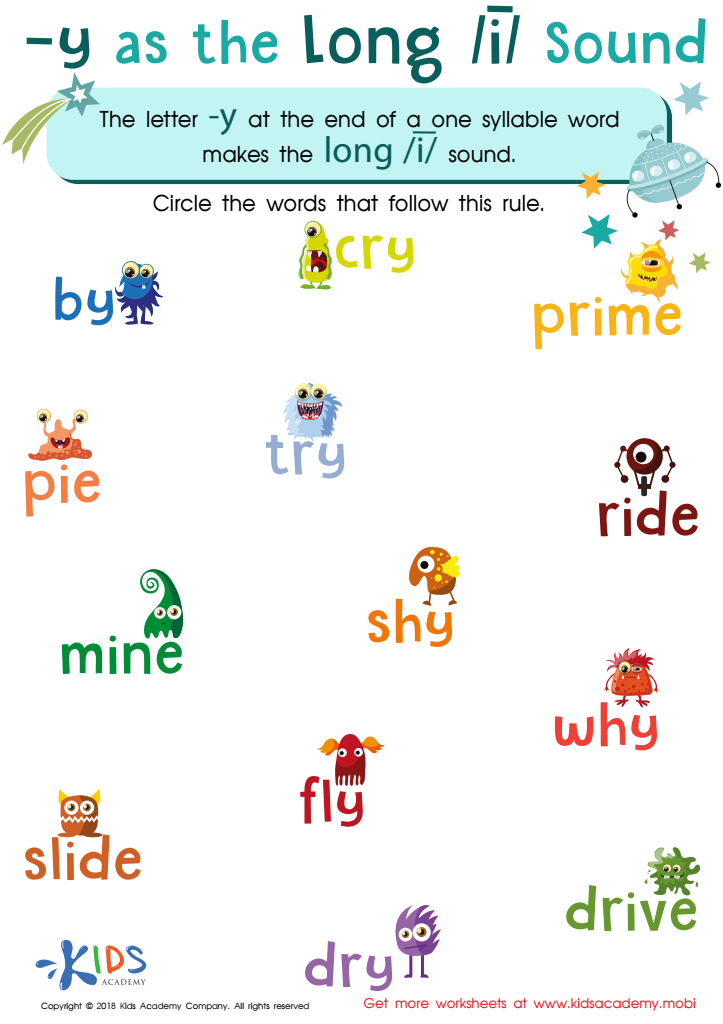
Reading: Y as Long I Worksheet
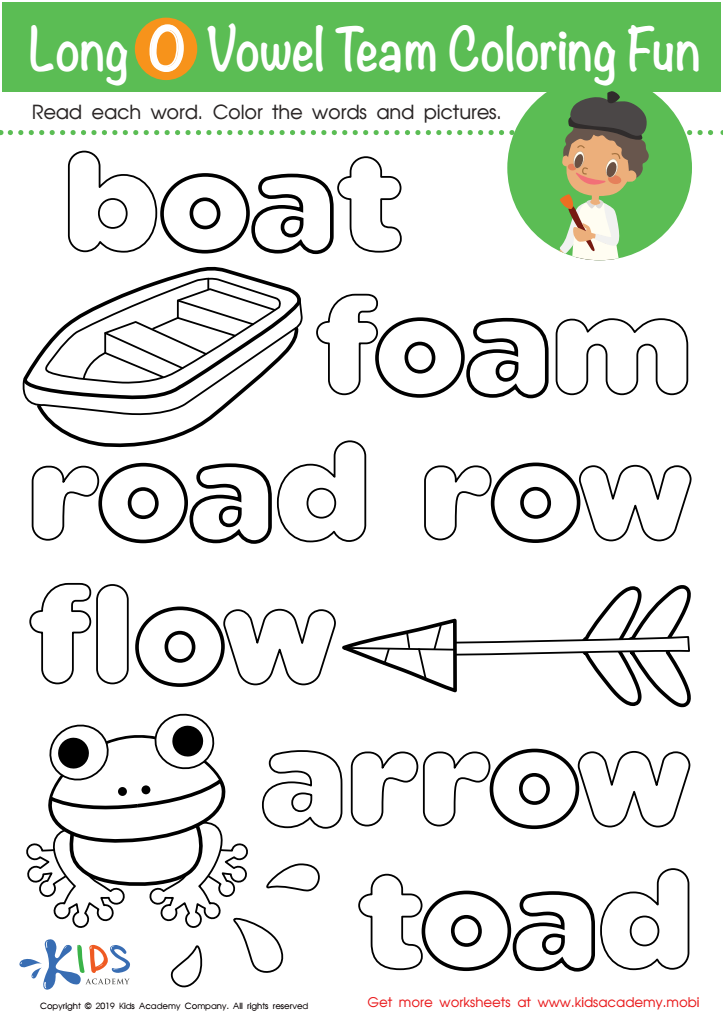
Long O Vowel Team Coloring Worksheet
 Assign to My Students








Reading development and a strong grasp of phonics are fundamental components in the education of children aged 3-7, offering vital benefits that lay the groundwork for future academic and lifelong success. Learning to read and understand phonics at an early age equips children with the ability to decode words, which in turn enhances their reading fluency and comprehension. This burgeoning literacy skill set fosters a positive and encouraging reading environment, crucial for instilling a love for reading.
Moreover, proficient reading skills are directly linked to better performance across all academic subjects. As children comprehend what they read, they also bolster their cognitive development, including memory, focus, and analytical thinking. For children within this age range, achieving these literacy milestones supports effective communication and language skills vital for social and emotional growth.
In addition, addressing reading abilities early aids in identifying and mitigating potential learning difficulties. Early intervention enables the adoption of tailored teaching strategies matching each child’s needs, ensuring that no learner falls behind. For both parents and teachers, prioritizing reading progress and phonics offers the child a firm educational base, paving the way for future achievement and instilling confidence critical for personal development and success.







