Rhyming skills development Normal Phonics Worksheets for Ages 3-7
4 filtered results
-
From - To
Enhance your child's phonics journey with our engaging Rhyming Skills Development worksheets, designed specifically for ages 3-7. These colorful and interactive resources help young learners identify, create, and enjoy rhymes, building a solid foundation for reading and literacy. Children will explore fun activities that promote language skills, spark creativity, and foster a love for words. Perfect for both home and classroom use, our worksheets cater to diverse learning styles, making phonics practice enjoyable and effective. Start igniting your child's imagination and language abilities today with our expertly crafted rhyming worksheets, and watch them thrive in their reading adventures!

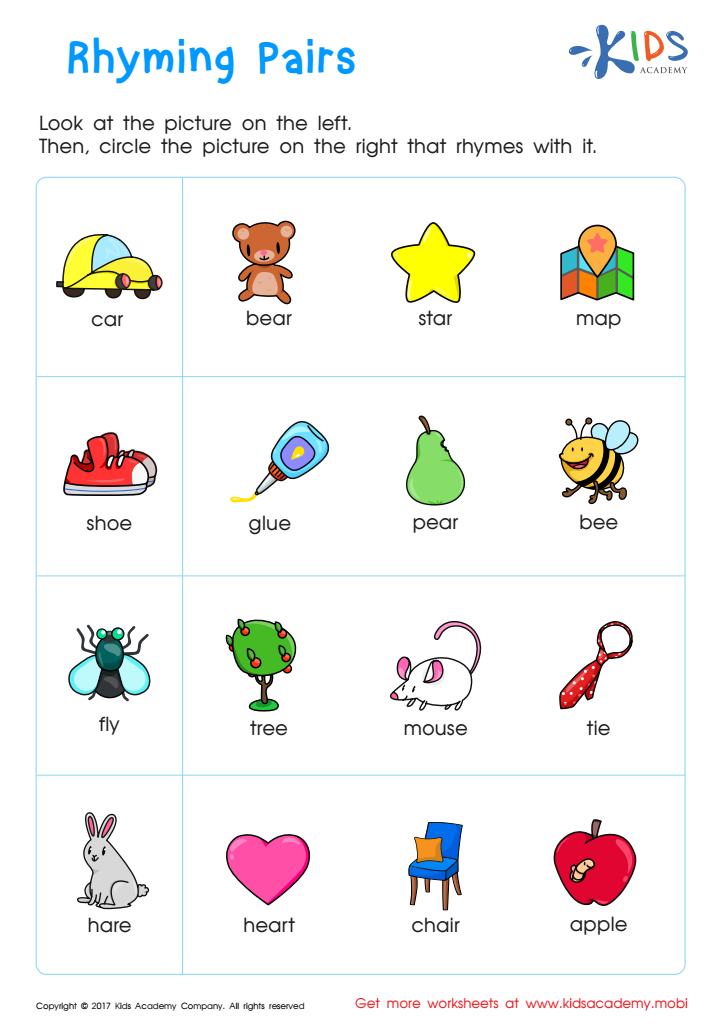
Rhyming Words Rhyming Worksheet
 Assign to My Students
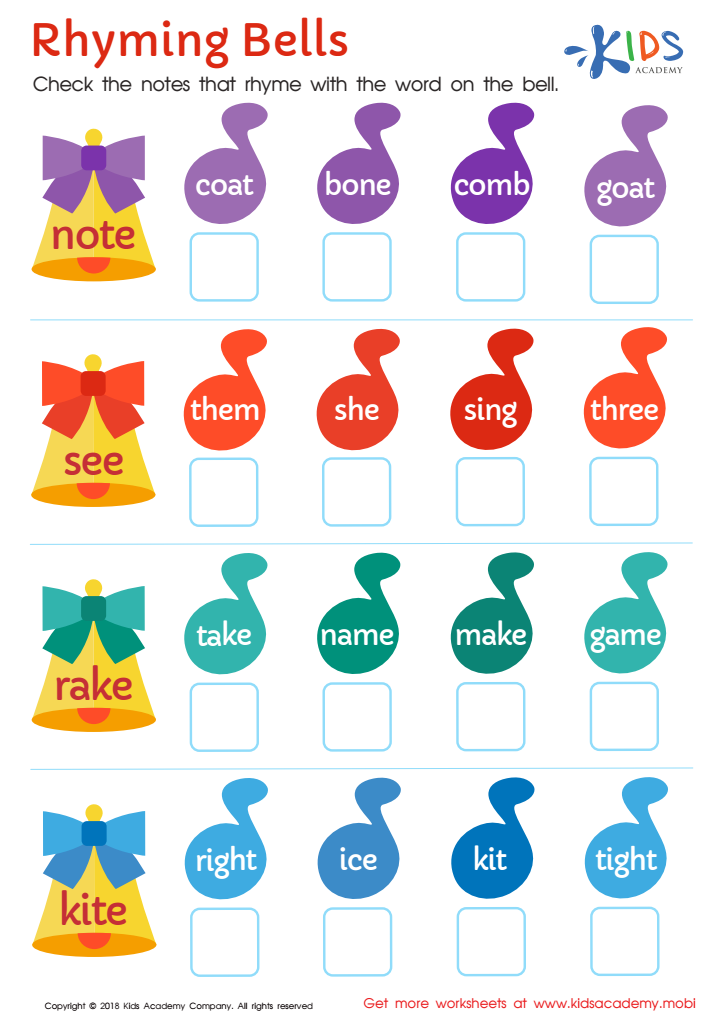
Rhyming Bells Worksheet

First Words: Picture Rhymes Worksheet








Rhyming skills are a crucial component of early literacy development for children aged 3-7, and both parents and teachers should prioritize their enhancement. Engaging with rhymes helps children to develop phonemic awareness, which is the foundation for reading and writing. Recognizing and producing rhyming words allows young learners to understand sounds, making it easier to manipulate letters and words later on.
Moreover, rhyming activities can boost vocabulary and language skills. When children learn to recognize and produce rhyming words, they expand their lexicon, enabling them to express themselves more effectively. Rhymes often come with a playful rhythm and melody, making them enjoyable. This intrinsic enjoyment fosters a love for literature and encourages frequent reading—essential for academic success.
Additionally, developing rhyming skills aids in cognitive development; it sharpens memory, enhances creativity, and encourages verbal skills. Engaging in phonemic activities at home or in the classroom through songs, chants, and games reinforces these skills effectively. By emphasizing rhyming skills, parents and teachers set children on a path toward successful literacy that will benefit their educational journey for years to come.







