Sound differentiation Normal Phonics Worksheets for Ages 3-7
3 filtered results
-
From - To
Explore our engaging Sound Differentiation Normal Phonics Worksheets designed for children ages 3-7! These worksheets promote essential phonics skills by helping young learners differentiate sounds, enhance auditory discrimination, and build a solid foundation for reading. Featuring vibrant illustrations and age-appropriate activities, our worksheets make learning fun and interactive. Perfect for classrooms or at-home learning, these resources cater to varying skill levels and can be easily integrated into any phonics curriculum. Help your child thrive in their literacy journey while fostering confidence in their reading abilities. Download the phonics worksheets today and ignite a love for learning through sound differentiation!
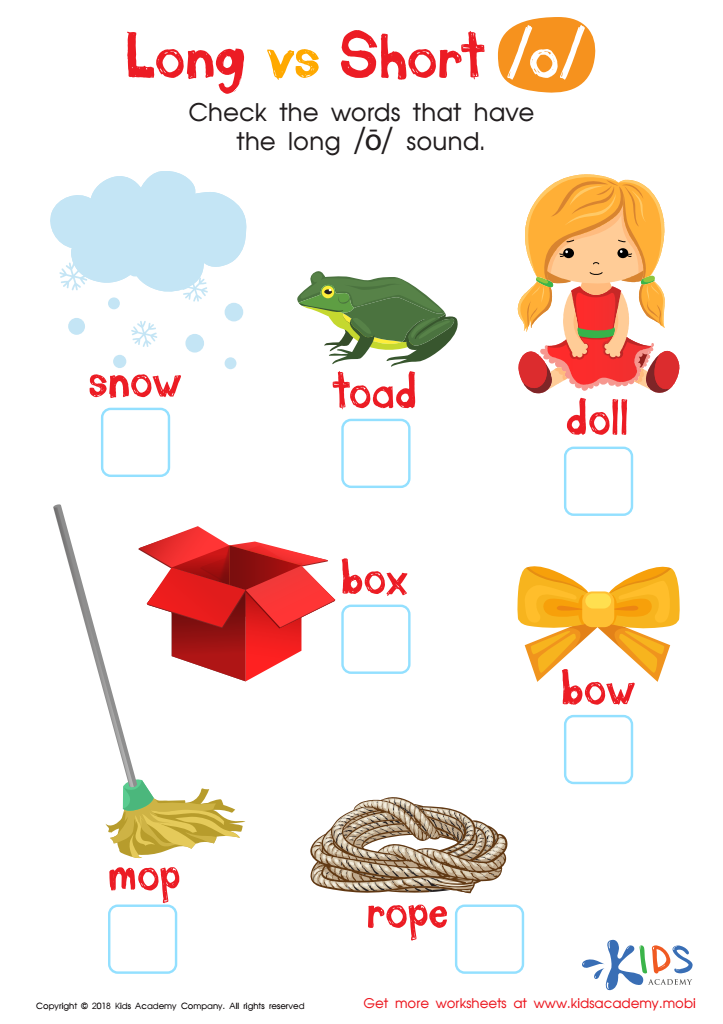
Long vs Short O Reading Worksheet
 Assign to My Students
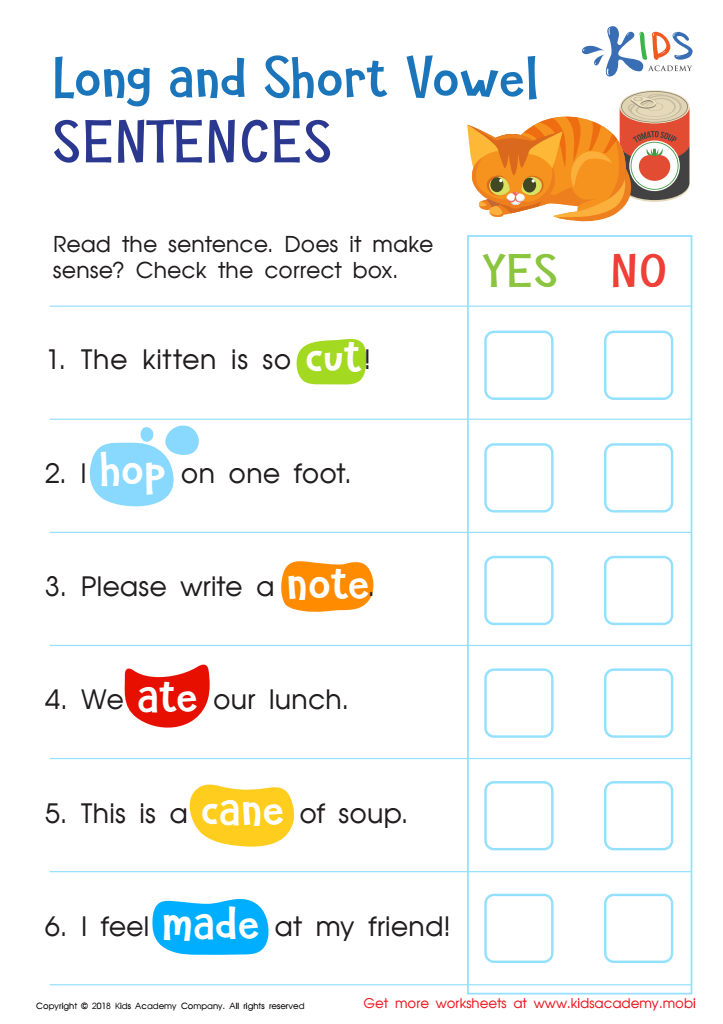
Long and Short Vowel Sentences: Assessment Worksheet
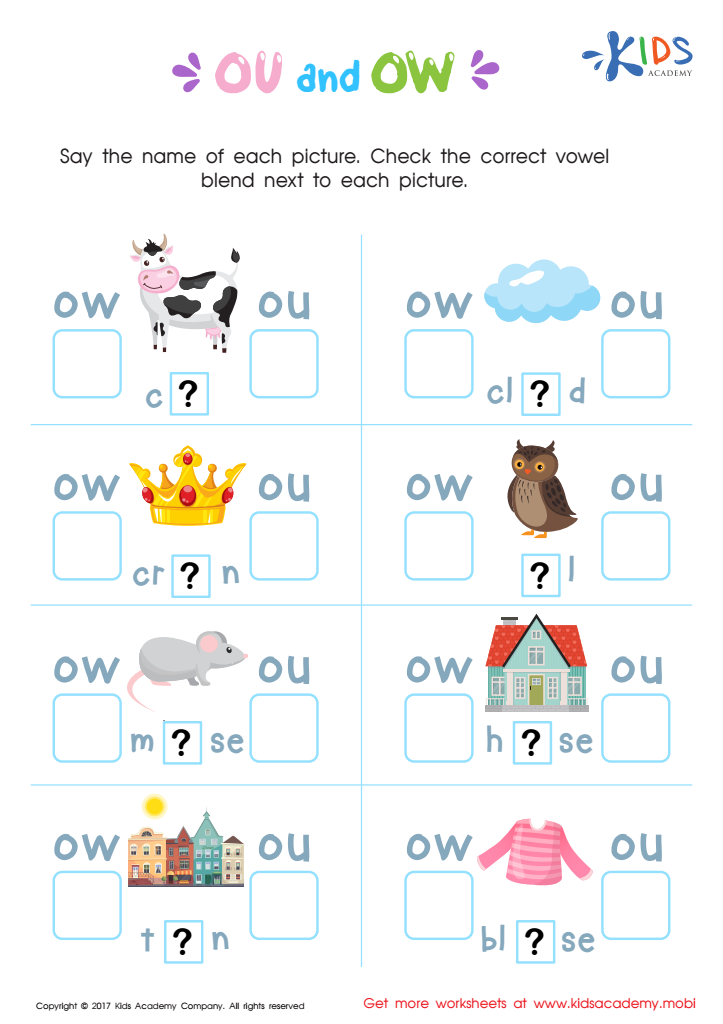
OU and OW Words Worksheet








Sound differentiation in phonics is crucial for children aged 3-7 as it lays the foundation for literacy and communication skills. During these formative years, children learn to identify and manipulate sounds within words, which is essential for reading and writing. By mastering sound differentiation, children can better understand the relationship between letters and sounds, aiding in their ability to decode words and enhance their vocabulary.
For parents and teachers, promoting sound differentiation supports cognitive development and boosts confidence. Engaging children in activities that foster phonemic awareness—like rhyming games, sound-based storytelling, and playing with letter sounds—encourages active participation in their learning journey. This interaction cultivates a love for reading and enhances overall academic performance.
Moreover, early investment in phonic skills can help prevent reading difficulties later, ensuring students are well-equipped for more complex literacy tasks in subsequent grades. Ultimately, prioritizing sound differentiation nurtures children’s communication abilities and empowers them to become confident learners. Therefore, parents and teachers should take an active role in sound differentiation practices, understanding its invaluable impact on a child's educational trajectory and future success.







