Reading Improvement Normal Vowels Worksheets for Ages 3-7
5 filtered results
-
From - To
Enhance your child's reading skills with our engaging Normal Vowels Worksheets, specifically designed for ages 3-7. These worksheets focus on vowel recognition and understanding, enabling young learners to build a strong foundation in literacy. Our activities are creatively crafted to make learning fun and interactive, encouraging kids to explore vowels through various exercises, including tracing, coloring, and phonics practice. Perfect for classrooms or home education, our resources cater to different learning styles, ensuring every child can improve their reading proficiency. Download our worksheets today and watch your child gain confidence in their reading journey while mastering normal vowels!
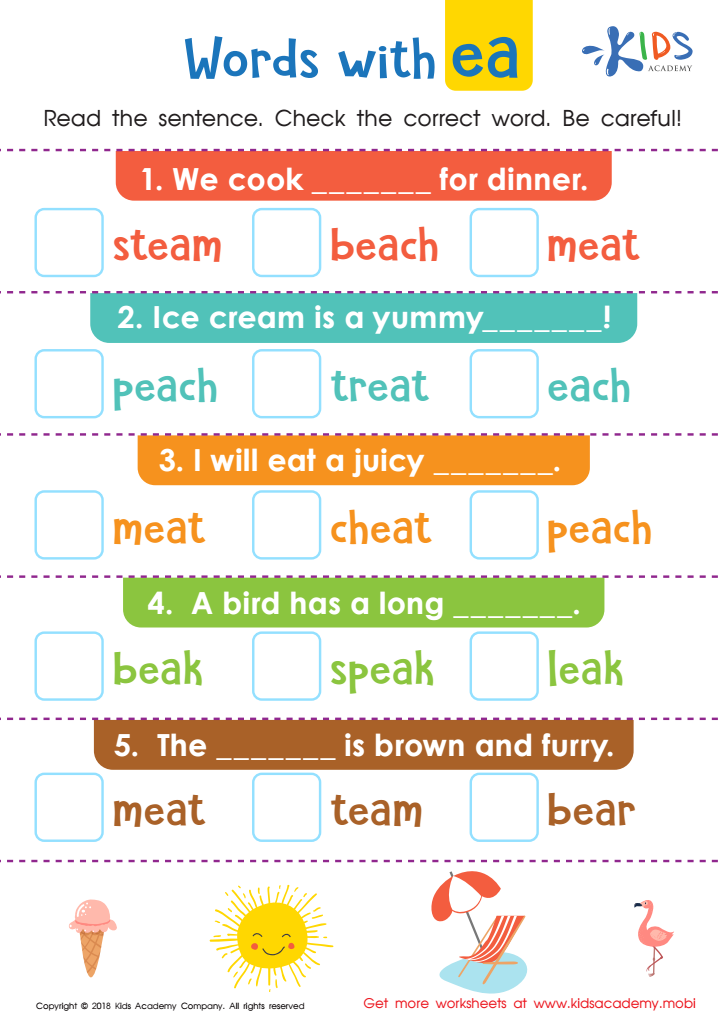
Words with ea Worksheet
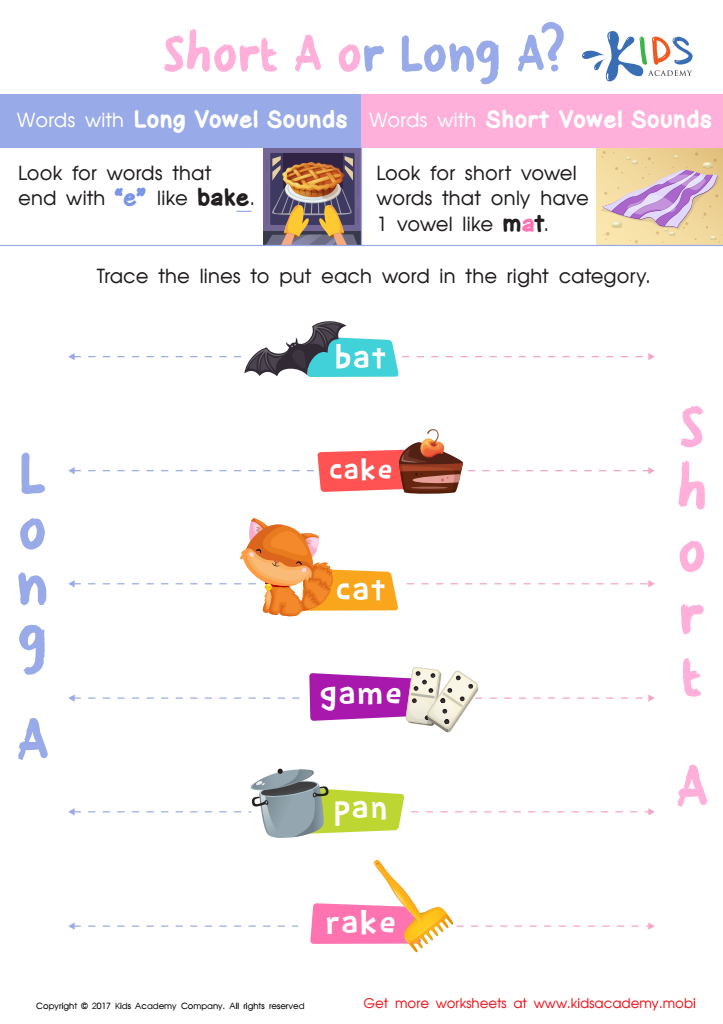
Short /a/ or Long /a/? Worksheet
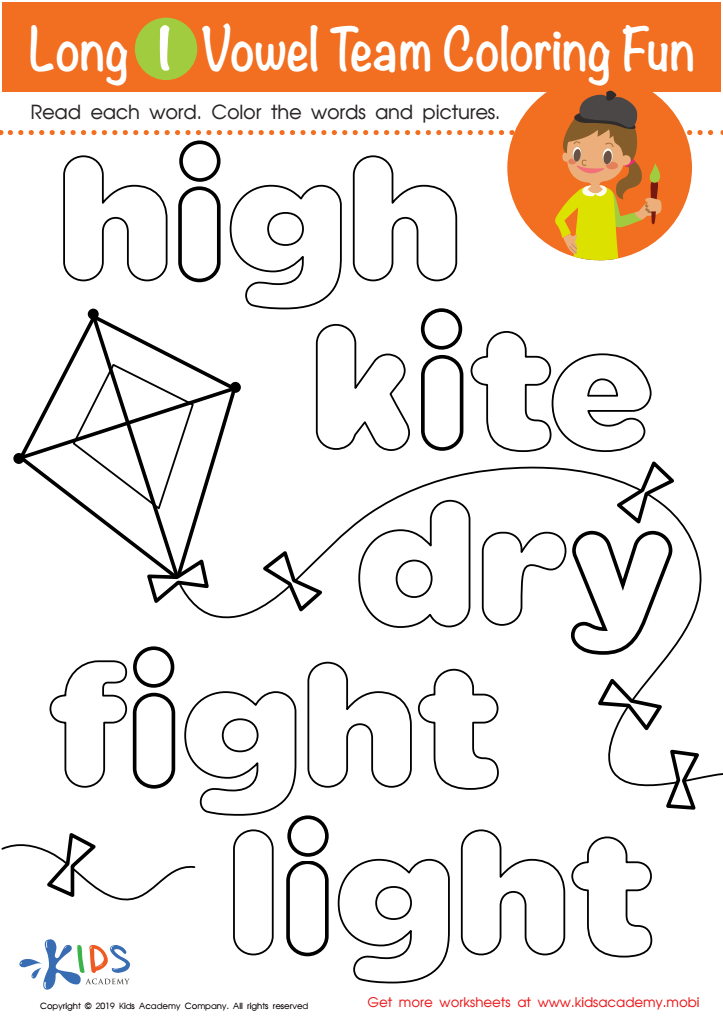
Long I Vowel Team Coloring Worksheet
 Assign to My Students
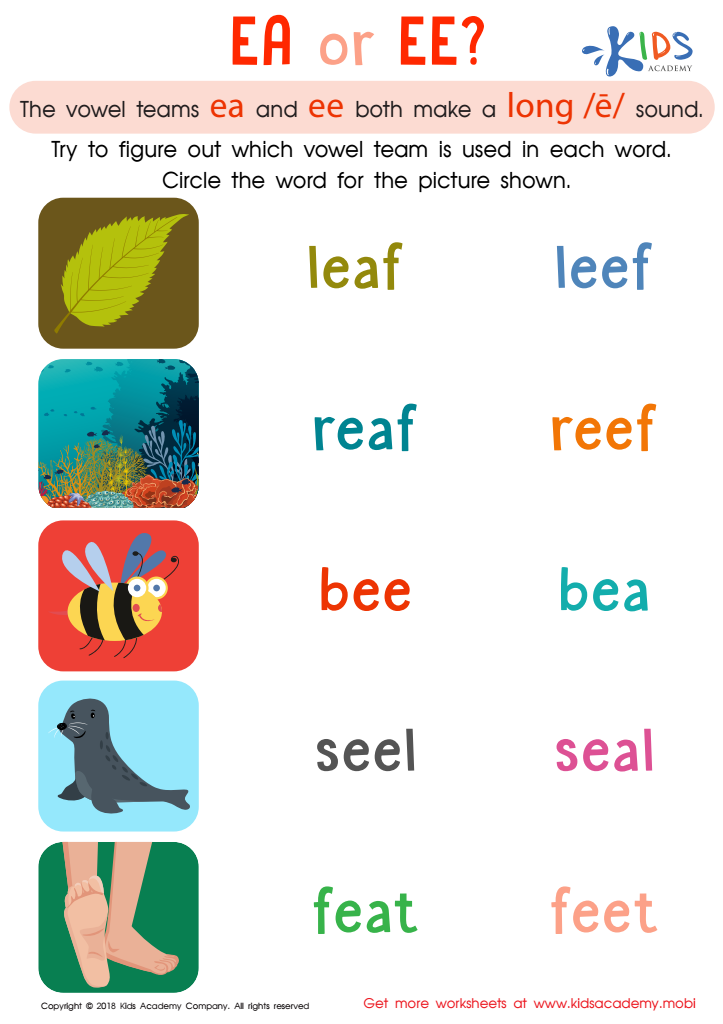
Reading: EA and EE Worksheet
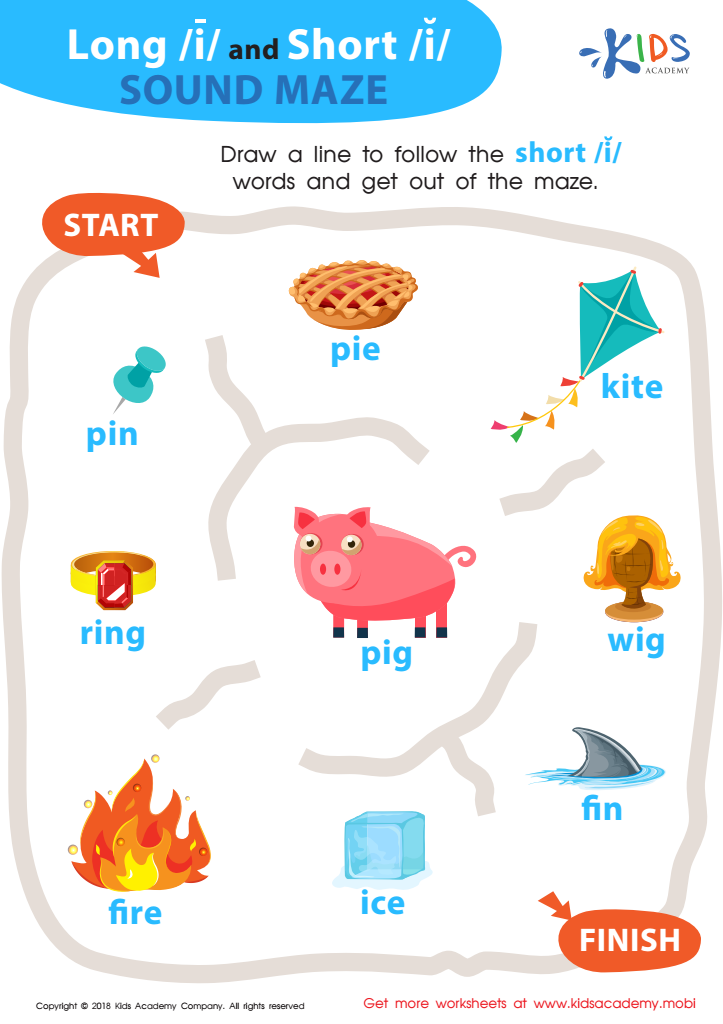
Reading: Long I and Short I Sound Maze Worksheet





Reading Improvement Normal Vowels for Ages 3-7 is crucial for fostering early literacy skills in young children. At this impressionable age, children are at a pivotal stage in their cognitive development where they begin to build foundational language skills. Understanding and recognizing normal vowels is essential for phonemic awareness, which lays the groundwork for reading fluency.
Parents and teachers play a vital role in this process as they provide support and encouragement to young readers. Introducing normal vowels in engaging and age-appropriate ways boosts a child’s confidence in their reading abilities. This foundational knowledge not only helps children better decode words but also enhances their overall language comprehension.
Moreover, a strong early reading background sets the stage for academic success in later years. The sooner children grasp vowel sounds and their applications, the more fluent they become, fostering a lifelong love for reading. Engaging with reading materials that emphasize vowel sounds can also stimulate a child’s imagination and cognitive skills.
Ultimately, investing time in reading improvement initiatives centered around normal vowels helps ensure that children not only achieve literacy milestones but also develop critical thinking and communication skills essential for their future learning and social interactions.






