
Sound differentiation Normal Vowels Worksheets for Ages 3-7
3 filtered results
Difficulty Level
Grade
Age
-
From - To
Subject
Activity
Standards
Explore our engaging Sound Differentiation Normal Vowels Worksheets designed specifically for children ages 3-7. These worksheets help young learners identify and differentiate between essential vowel sounds through fun and interactive activities. Tailored to promote phonemic awareness, each worksheet features vibrant illustrations and simple exercises that capture kids' attention while enhancing their understanding of vowel sounds. Perfect for home or classroom use, these resources support early literacy development and build vital skills foundational for reading. Help your child gain confidence in recognizing and pronouncing normal vowels with our exciting printable worksheets, expertly crafted to make learning fun!
Favorites
With answer key
Interactive
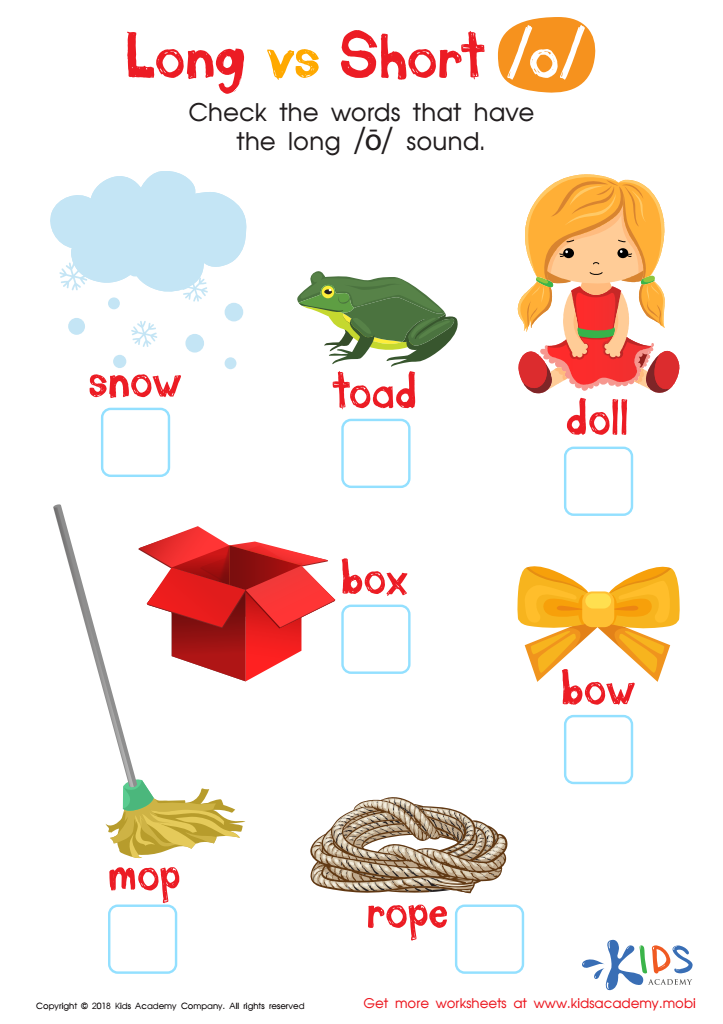
Long vs Short O Reading Worksheet
Help your child learn to identify the long and short «o» sound with this colourful worksheet. Guide them as they spot words with the long or short «o» sound. With practice, your child will find it easier to tell the difference between the two.
 Assign to My Students
Long vs Short O Reading Worksheet
Worksheet
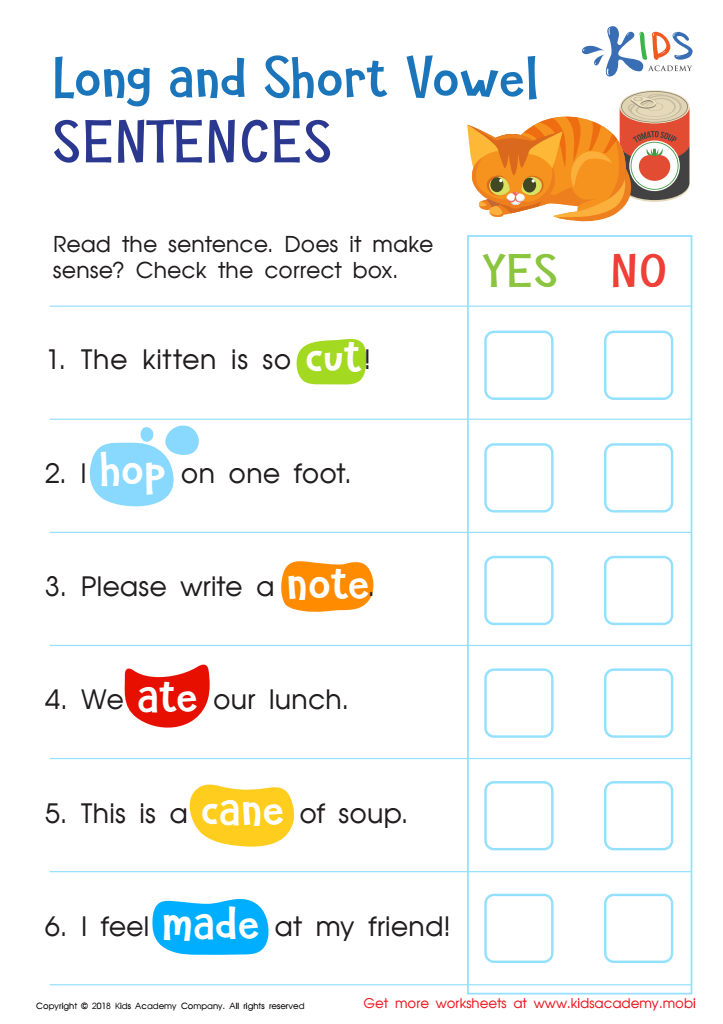
Long and Short Vowel Sentences: Assessment Worksheet
This printable worksheet helps kids practice differentiating between short and long vowel sounds. They'll use context clues to figure out which words make sense in simple sentences. A great way to build reading and writing skills!
Long and Short Vowel Sentences: Assessment Worksheet
Worksheet
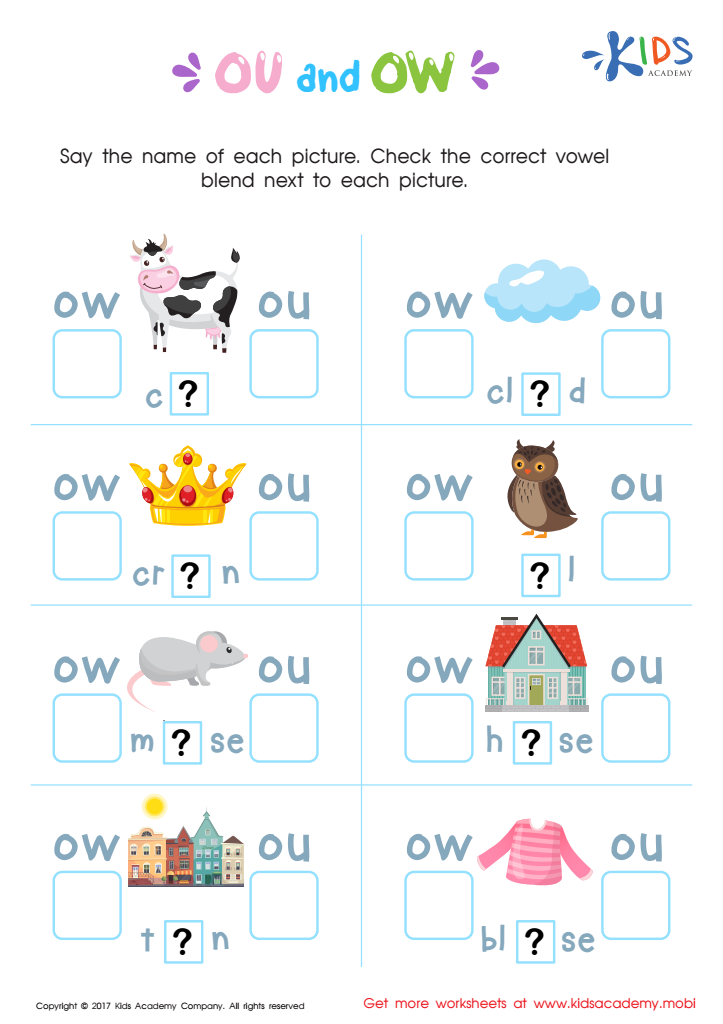
OU and OW Words Worksheet
Enhance your child's reading and spelling with this ou and ow words worksheet! Fun pictures and common words make mastering the diphthongs ou and ow easy and enjoyable.
OU and OW Words Worksheet
Worksheet
Join Kids Academy for Free
Who is primarily going to use this learning content?





Sound differentiation of normal vowels is crucial for young children's literacy and language development, especially for ages 3-7. This foundational period is marked by significant growth in phonemic awareness, where children learn to identify, produce, and manipulate sounds in spoken language. Understanding vowel sounds helps children decode words and build essential reading skills.
Parents and teachers should care about this because mastering vowel sounds supports overall communication abilities. In early literacy, recognizing and articulating different vowel sounds enables children to sound out words, leading to improved reading fluency and comprehension. This, in turn, boosts their confidence and fosters a love for reading.
Additionally, sound differentiation aids in effective spelling, as many spelling rules rely on vowel recognition. Teachers can use play-based strategies, songs, and games to make learning engaging. Parents can reinforce this at home through read-aloud sessions and interactive activities that emphasize vowel sounds.
Inclusion of sound differentiation practices in early education not only enhances literacy outcomes but also sets the stage for future academic success. By caring about this aspect of language development, parents and teachers contribute to nurturing proficient, confident readers who can thrive in an increasingly literacy-focused world.






