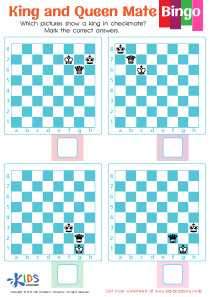
Understanding chess rules Normal Chess Worksheets for Ages 3-7
5 filtered results
-
From - To
Discover our "Understanding Chess Rules Normal Chess Worksheets" designed for children aged 3-7! These engaging worksheets introduce the fundamental rules of chess in a fun and accessible way, helping young learners develop critical thinking and strategic skills. With vibrant illustrations and interactive activities, kids will easily grasp concepts like piece movements, game objectives, and basic strategies. Our worksheets pave the way for a lifelong love of chess, promoting cognitive development while fostering patience and focus. Perfect for classrooms or home learning, these resources encourage creativity and intellectual growth. Start your child’s chess journey today with our carefully crafted educational materials!
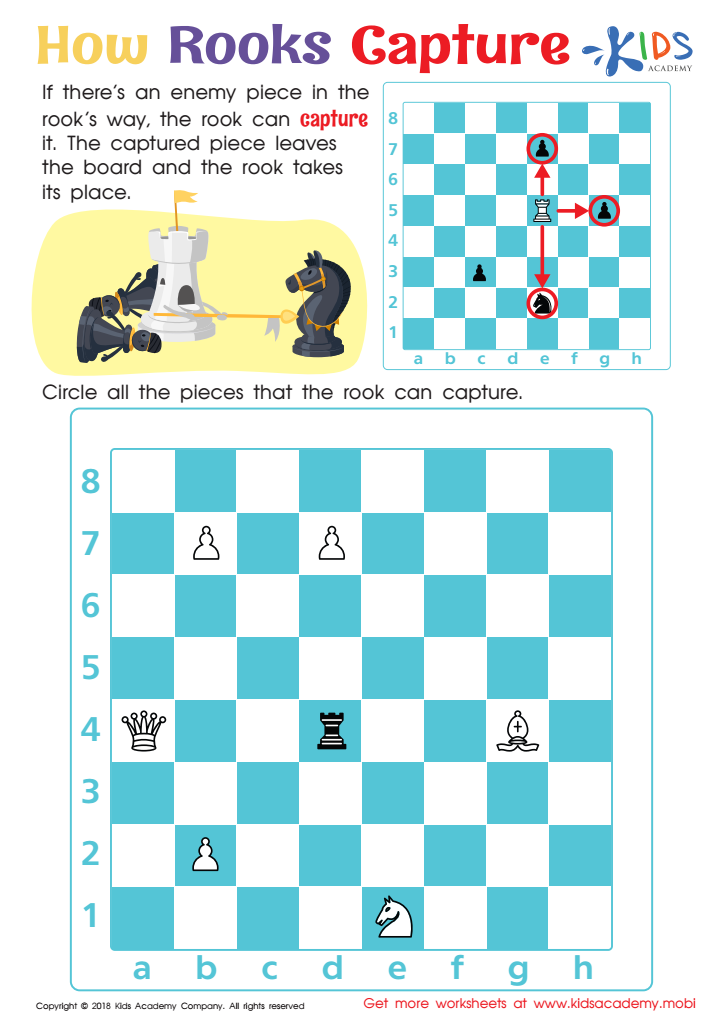
How Rooks Capture Worksheet
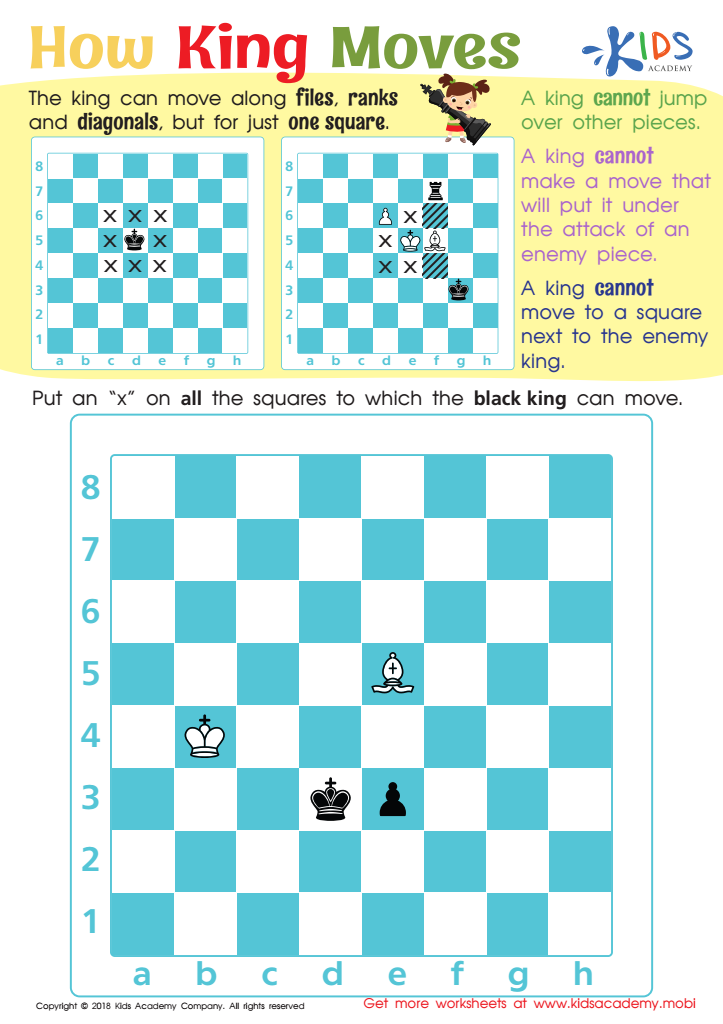
How King Moves Worksheet
 Assign to My Students
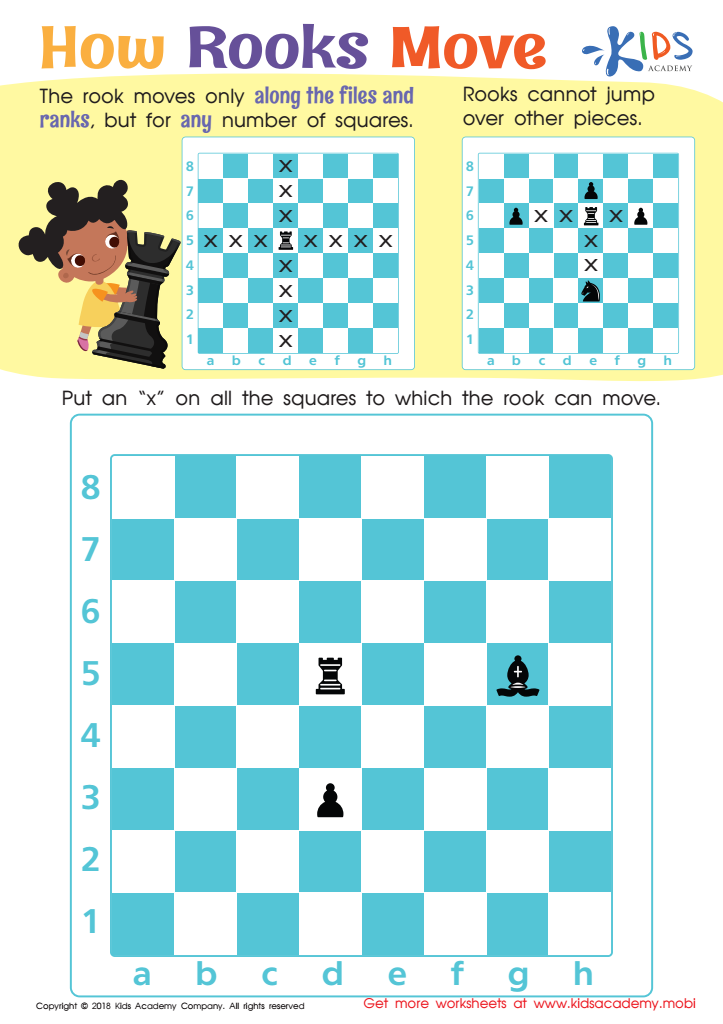
How Rooks Move Worksheet
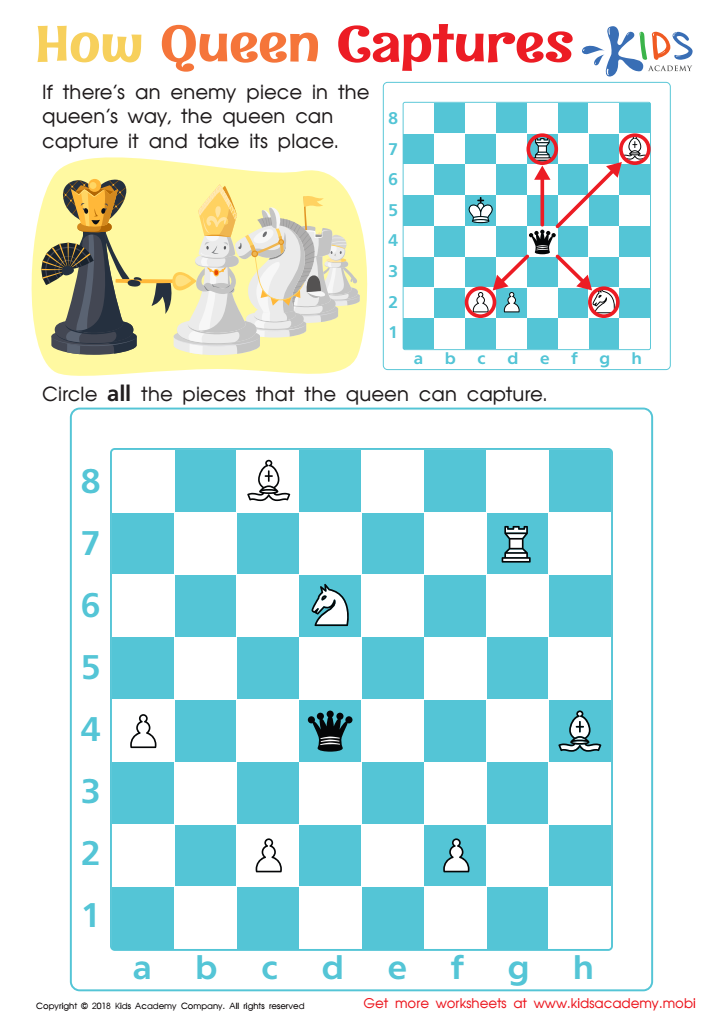
How Queen Captures Worksheet
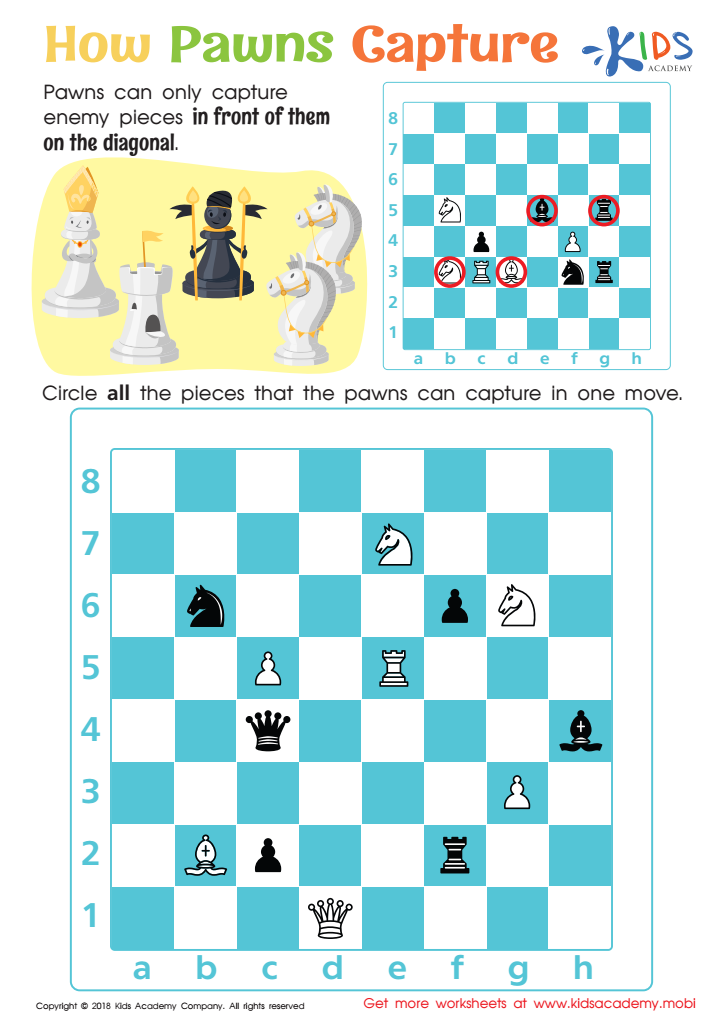
How Pawns Capture Worksheet






Understanding the rules of chess is crucial for parents and teachers of young children, as it offers numerous cognitive, social, and emotional benefits. For kids aged 3-7, learning chess can significantly enhance critical thinking and problem-solving skills. The game encourages strategic planning, as children must think ahead and consider their opponent's moves. This not only boosts their intellectual development but also fosters patience and concentration.
Moreover, chess is an excellent tool for teaching important values such as sportsmanship, respect, and perseverance. Instilling these traits in young learners can contribute to their overall social skills and emotional intelligence. Additionally, chess fosters creativity, allowing children to express themselves through their individual playing styles.
By engaging with the game alongside their children, parents and teachers can promote a positive learning environment, reinforcing essential life skills in a fun and interactive way. The experience also offers opportunities for bonding and building rapport, nurturing healthy relationships. Ultimately, caring about chess rules means empowering children with profound life skills that extend beyond the game itself, laying a strong foundation for their future academic and personal success.