Basic measurement concepts Normal Worksheets for Ages 3-7
3 filtered results
-
From - To
Welcome to our "Basic Measurement Concepts Worksheets" page, designed specifically for children aged 3-7. These engaging and colorful worksheets introduce young learners to essential measurement skills, such as length, height, weight, and volume. Our age-appropriate activities encourage hands-on exploration, making learning fun and interactive. With a variety of exercises, children will develop a strong foundation in measurement concepts, promoting critical thinking and problem-solving skills. Perfect for both home and classroom use, these printable worksheets will help your child master measurement basics while enjoying the process. Start your child's journey to becoming a measurement expert today!
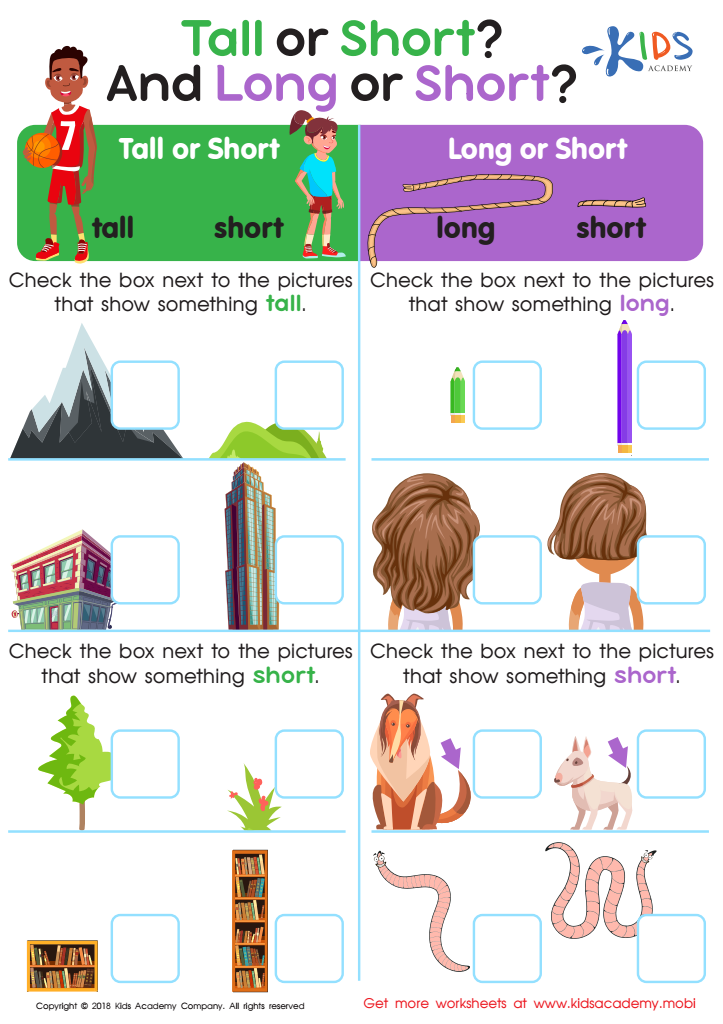
Tall or Short and Long or Short? Worksheet
 Assign to My Students
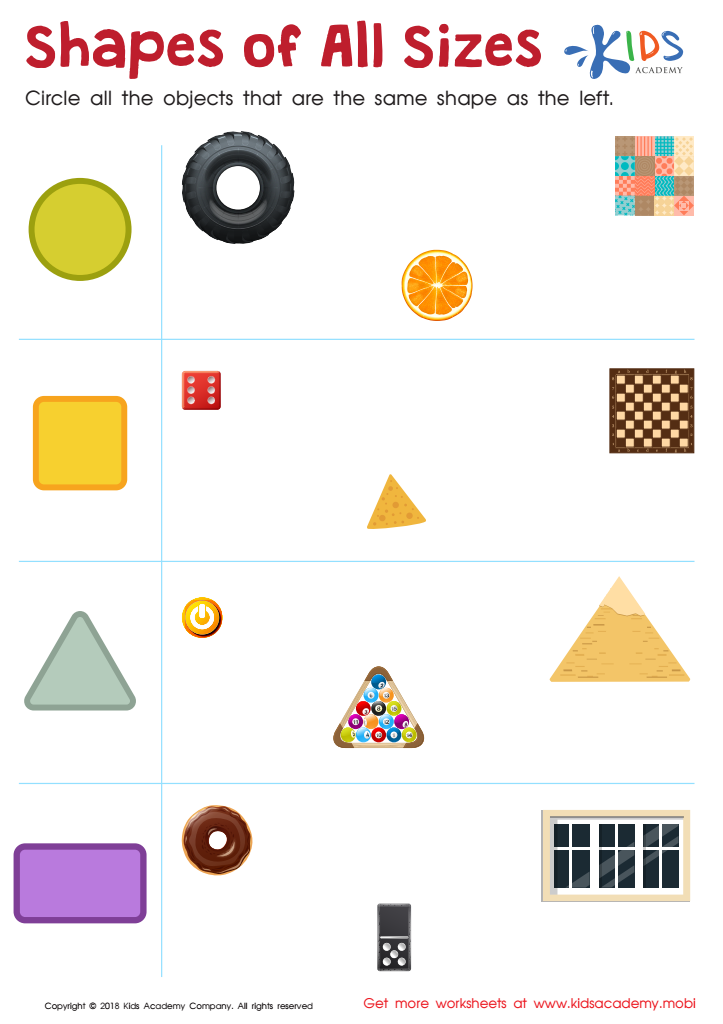
Shapes of All Sizes Worksheet
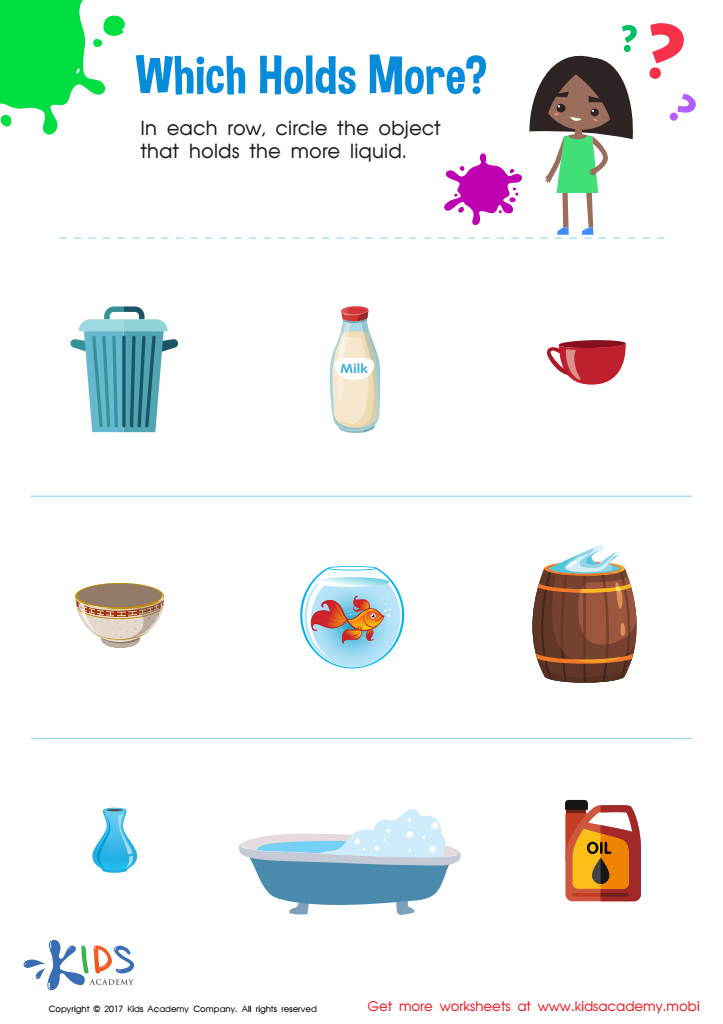
Which Holds More: Capacity Worksheet






Basic measurement concepts play a crucial role in the early development of children ages 3-7. This foundational knowledge enhances their cognitive abilities and helps them understand the world around them. Measurement concepts, such as length, weight, volume, and time, encourage children to engage in problem-solving and critical thinking. By presenting these concepts through engaging activities and games, parents and teachers can foster a natural curiosity in children.
Understanding measurement supports a child's ability to make comparisons and recognize attributes, which are essential for mathematical reasoning. For example, recognizing that something is "longer," "heavier," or "taller" introduces them to measurement language and lays the groundwork for future math skills.
Furthermore, measurement concepts can be integrated into daily routines, transforming everyday situations into learning opportunities. For instance, measuring ingredients while cooking or comparing the heights of plants in a garden can make learning dynamic and relevant.
Careful attention to basic measurement also promotes fine motor skills and hand-eye coordination through activities like building and crafting. This holistic approach helps children gain confidence and independence while cultivating a love for learning. In essence, parents and teachers should prioritize teaching measurement concepts as a stepping stone for lifelong skills and exploration.








