Contextual understanding Normal Worksheets for Ages 3-7
5 filtered results
-
From - To
Explore our engaging Contextual Understanding Worksheets specifically designed for children aged 3-7. These thoughtfully crafted materials help young learners develop critical reading comprehension skills through relatable scenarios and vivid illustrations. Each worksheet encourages children to make connections between words and their meanings, enhancing their ability to understand context in everyday situations. Ideal for both home and classroom use, these worksheets promote interactive learning and foster a love for reading. With a range of activities that cater to different learning styles, your little ones will build a strong foundation in language and comprehension effortlessly. Start their journey to mastery today!
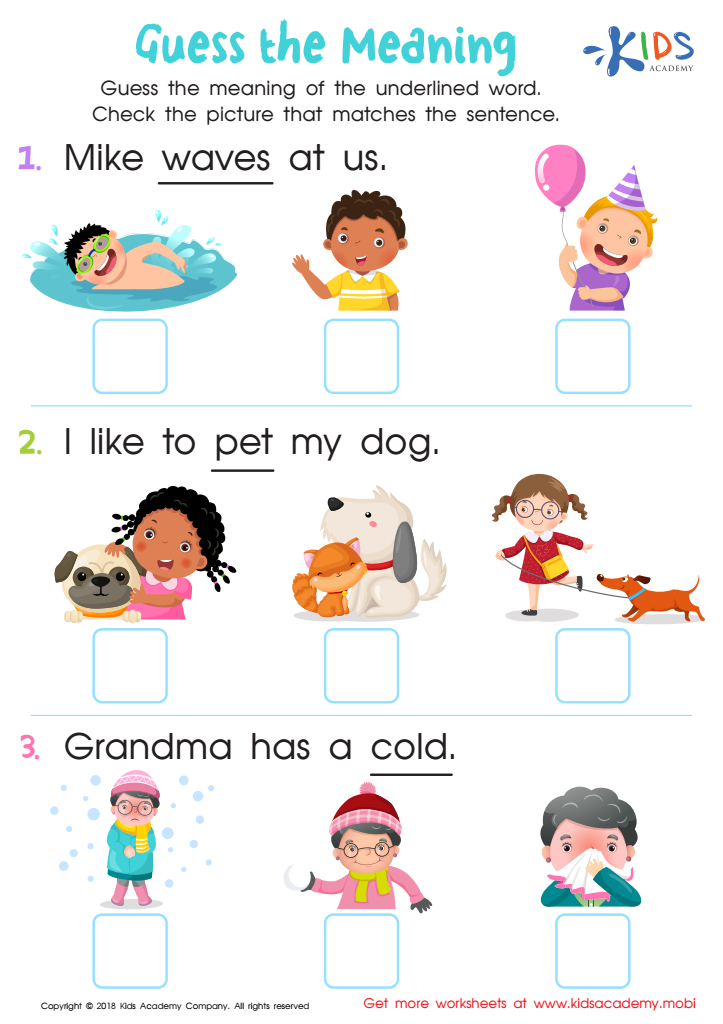
Guess the Meaning Worksheet
 Assign to My Students
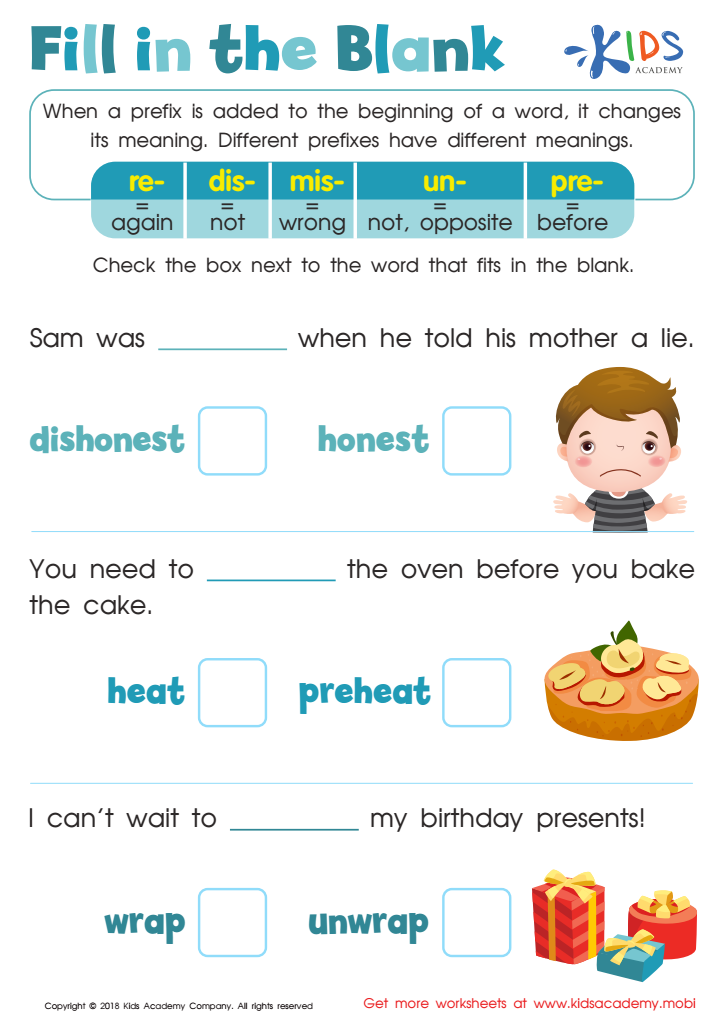
Reading: Fill in the Blank Worksheet
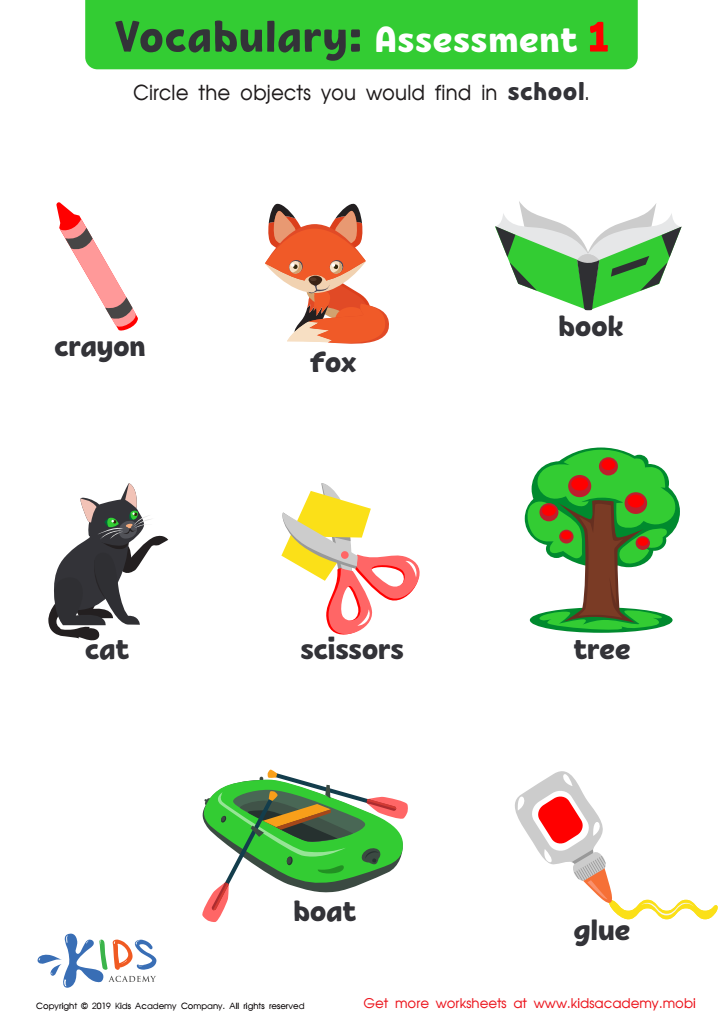
Vocabulary: Assessment 1 Worksheet
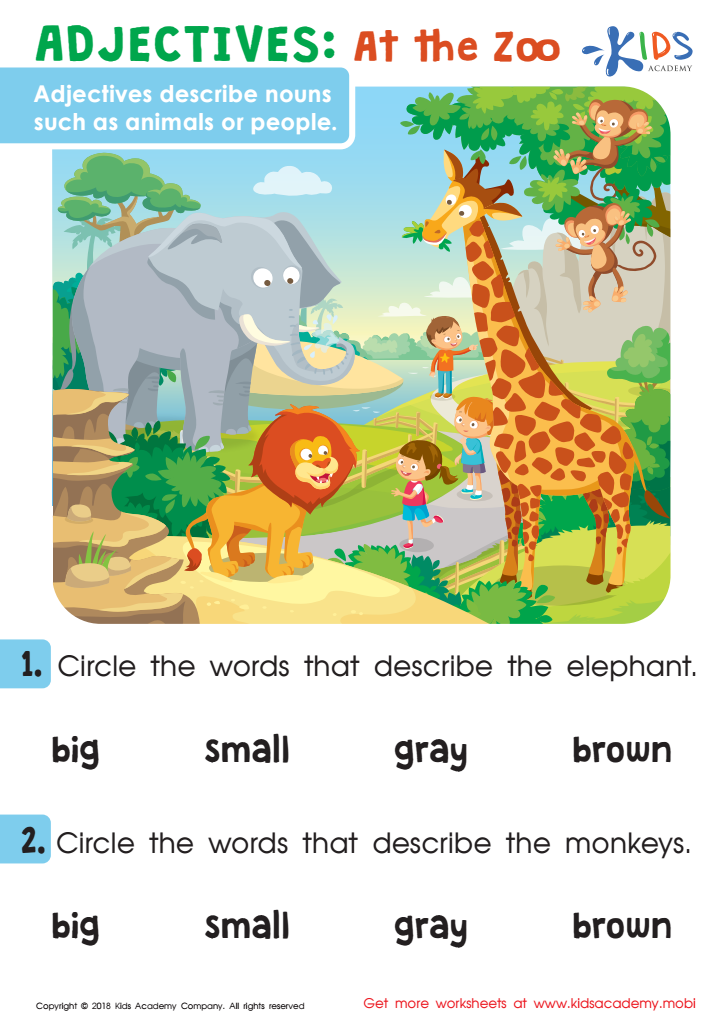
Adjectives: At The Zoo Worksheet
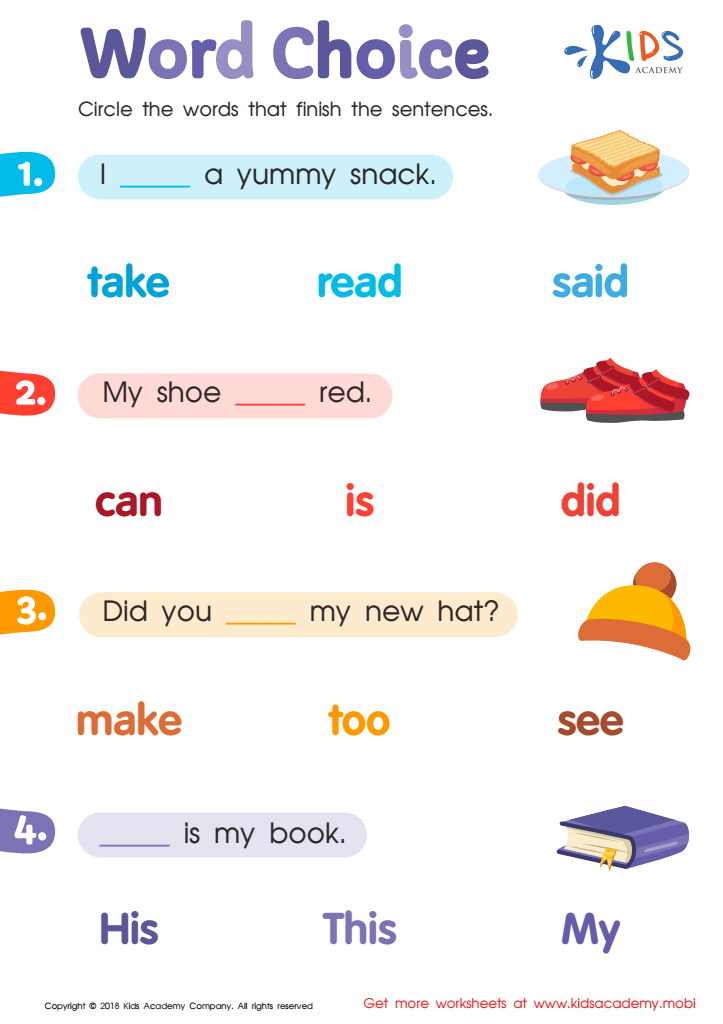
Word Choice Worksheet








Contextual understanding is crucial for children aged 3-7, as it forms the foundation for their cognitive and social development. At this age, children are naturally curious and learning rapidly, often through play and exploration. When parents and teachers prioritize contextual understanding, they help children make connections between new information and their prior experiences. This enhances comprehension, retention, and critical thinking skills.
For example, when children hear a story about animals in their local environment, relating this back to their real-life observations helps them gain deeper insights. They not only learn vocabulary but also grasp concepts such as ecosystems and community. Additionally, contextual understanding promotes empathy and social skills, as children begin to see situations from different perspectives and learn how their actions affect others.
Moreover, fostering an environment where context is emphasized encourages children to ask questions and develop a love of learning. It allows them to view challenges as opportunities for growth rather than obstacles. By caring about contextual understanding, parents and teachers play a vital role in nurturing well-rounded, empathetic, and inquisitive individuals who are prepared for future learning and collaboration in their communities.








