Differentiating shapes Normal Worksheets for Ages 3-7
3 filtered results
-
From - To
Explore our engaging "Differentiating Shapes Normal Worksheets" designed for children aged 3-7. These thoughtfully crafted worksheets provide young learners with a fun and interactive way to identify, compare, and categorize various shapes. Each activity promotes essential spatial awareness and critical thinking skills while fostering creativity through hands-on learning. With colorful illustrations and simple instructions, these worksheets are perfect for both classroom and at-home learning environments. Encourage your child’s early mathematical skills by helping them differentiate, recognize patterns, and make connections with shapes. Download our free worksheets today and make learning shapes an enjoyable adventure for your little ones!
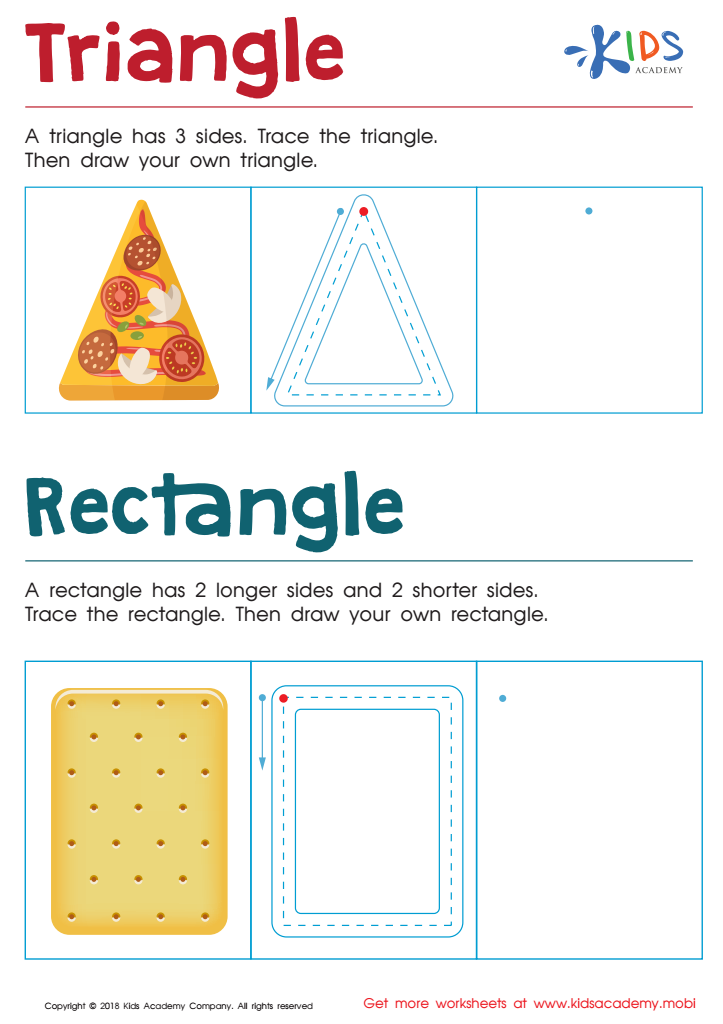
Triangle Rectangle Worksheet
 Assign to My Students
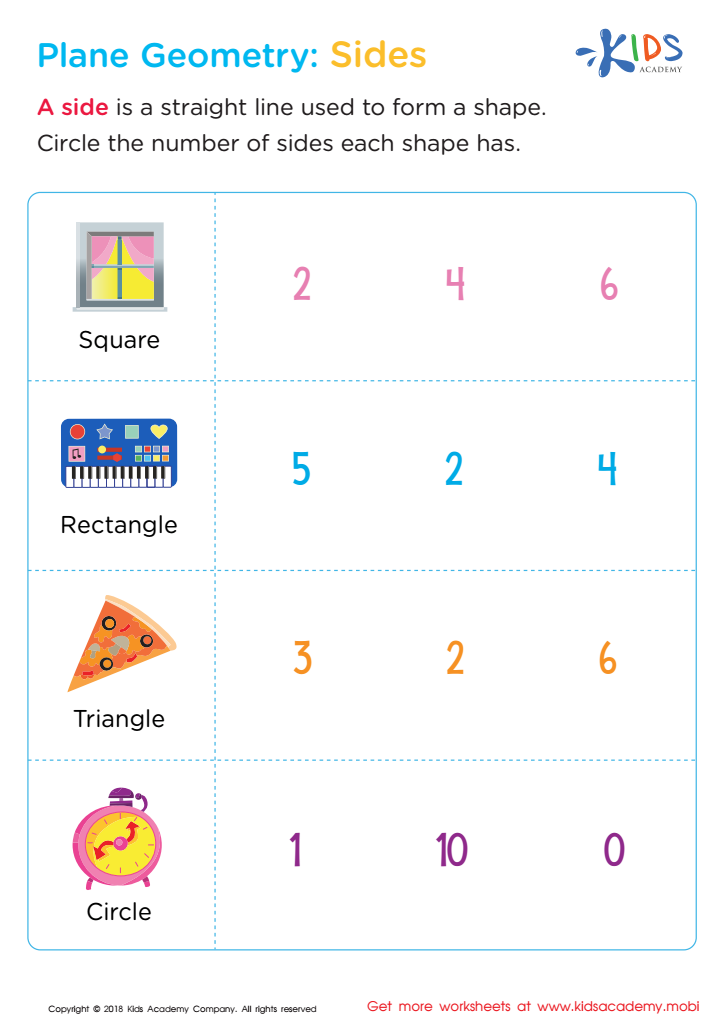
Plane Geometry: Sides Worksheet
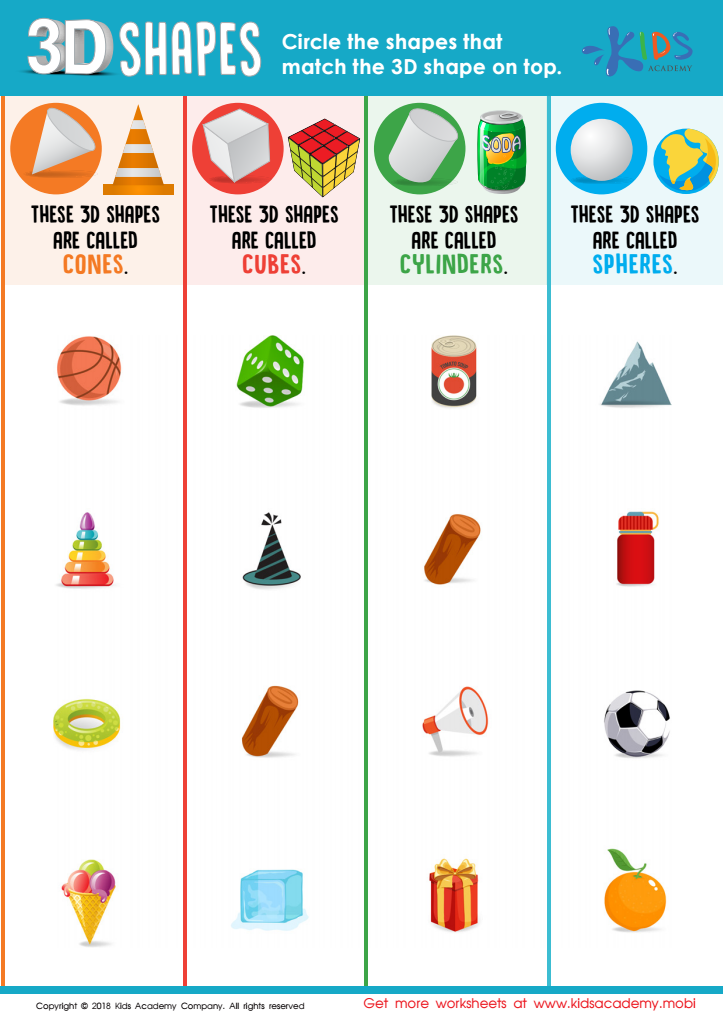
3D Shapes Worksheet






.jpg)

Differentiating shapes is crucial for children aged 3-7 as it lays the foundation for various cognitive skills and concepts. At this developmental stage, children are naturally curious and are honing their observational skills. By engaging in activities that focus on recognizing and differentiating shapes, they begin to understand important mathematical principles such as sorting, categorizing, and sequencing. These skills enhance their problem-solving abilities and critical thinking.
Moreover, early shape recognition supports literacy development, as children learn to associate shapes with letters and numbers. For instance, understanding that a triangle can resemble the letter A provides a visual aid for later reading and writing.
Additionally, differentiating shapes encourages fine motor skills through hands-on activities like drawing, cutting, and building with shapes. This sensory interaction promotes coordination and control, which are essential for future tasks like writing.
Furthermore, fostering an inclusive learning environment is vital, as some children's grasp on shapes may vary. Differentiation allows teachers to tailor lessons to address individual needs, ensuring each child progresses at their own pace.
In summary, prioritizing shape differentiation in early education cultivates essential cognitive and physical skills while promoting a love for learning in young children.








