Improve vocabulary Normal Worksheets for Ages 3-7
3 filtered results
-
From - To
Enhance your child's language skills with our "Improve Vocabulary Normal Worksheets for Ages 3-7". Carefully designed by experts at Kids Academy, these engaging activities are perfect for young learners. Each worksheet offers a fun and interactive way to help children expand their vocabulary, improve spelling, and understand word meanings through captivating exercises including matching, tracing, and picture-word associations. Ideal for preschoolers and early elementary students, our printable resources facilitate learning at home or in the classroom, making vocabulary development enjoyable and effective. Empower your child today with these essential linguistic tools!
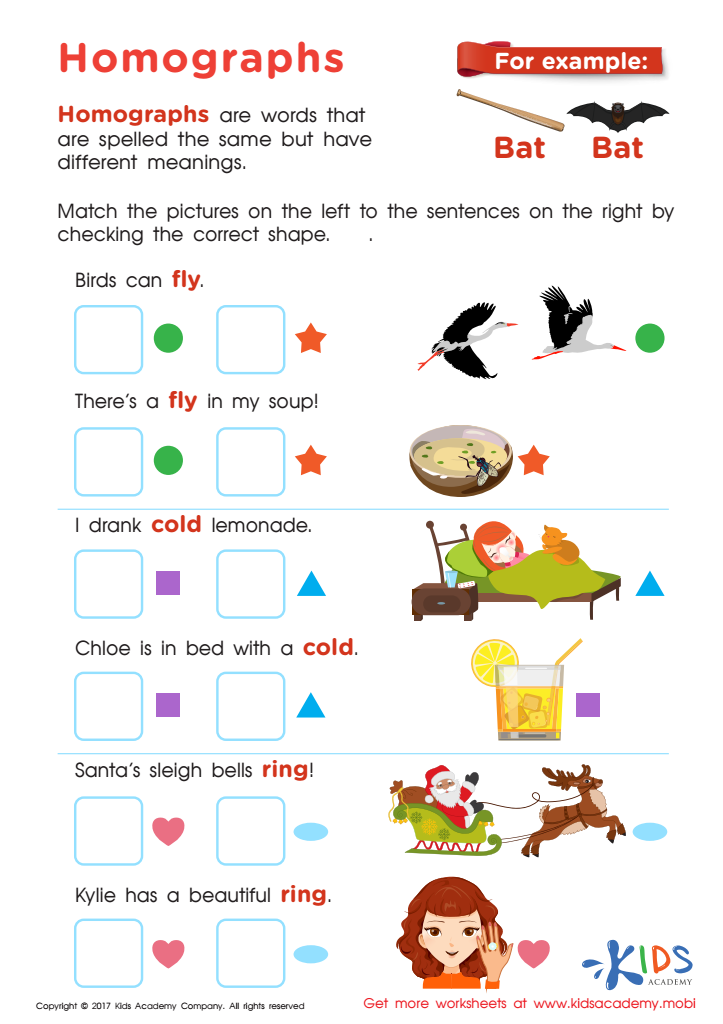
Homographs Free Printable Worksheet
 Assign to My Students
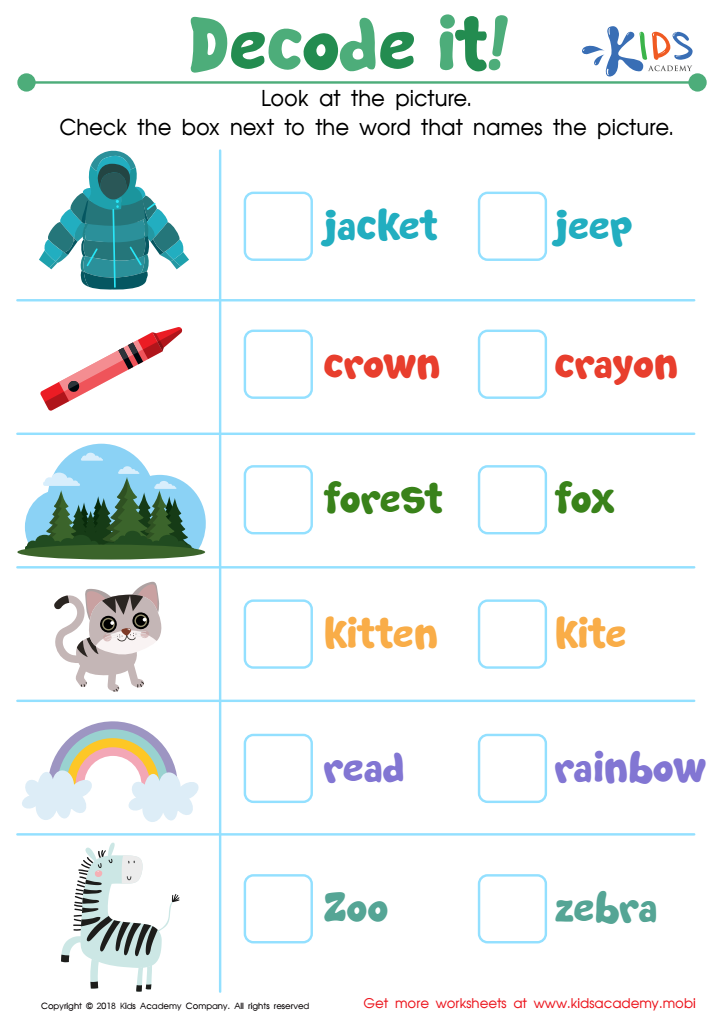
Reading: Decode It Worksheet
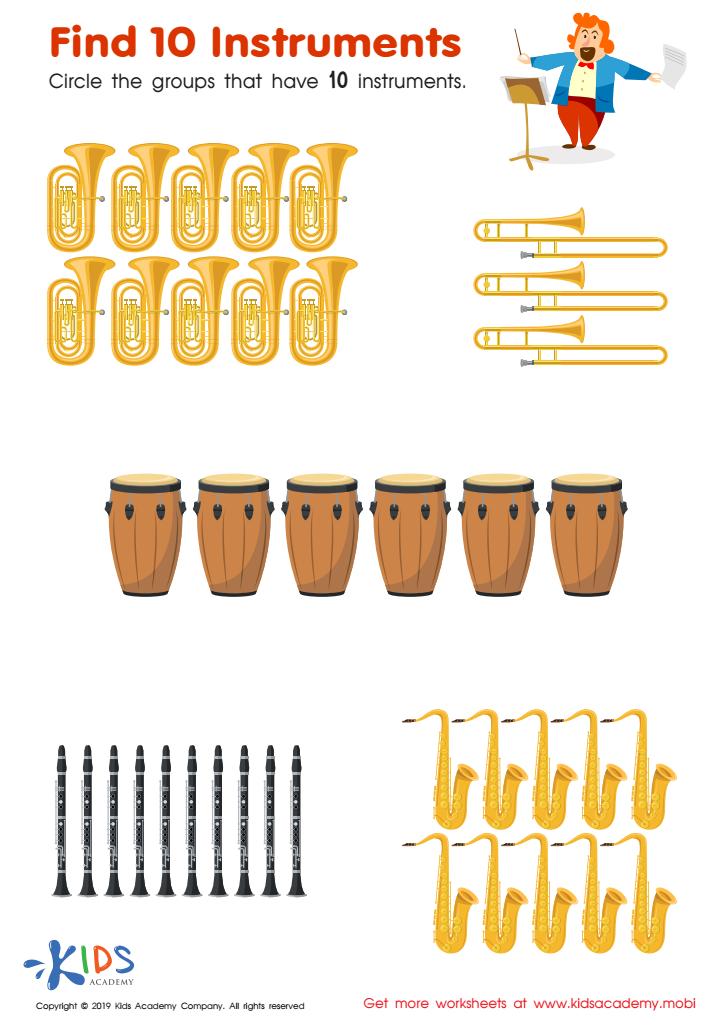
Find 10 Instruments Worksheet







In the crucial developmental window of ages 3-7, children experience significant growth in language acquisition, and improving vocabulary is foundational to this process. For parents and teachers, prioritizing vocabulary development can have profound and far-reaching benefits on a child's educational journey. Firstly, a robust vocabulary enhances communication skills, enabling children to express their thoughts, emotions, and needs more effectively. This skill is not only essential for social interactions but also for building self-confidence.
Additionally, early vocabulary acquisition is closely linked to reading comprehension and overall literacy. Children who enter school with a rich vocabulary find it easier to understand new concepts and perform better in academic settings. As academic instructions increasingly incorporate complex language, children with a strong vocabulary can keep pace more readily, reducing instances of frustration or disengagement.
Another critical aspect is cognitive development. Learning new words and their meanings helps children develop critical thinking and analytical skills. A varied vocabulary also provides the tools for curiosity and imaginative play, nurturing creativity and problem-solving abilities.
Ultimately, investing in vocabulary improvement during these formative years sets the stage for lifelong learning and success. By actively engaging in activities such as reading books, playing word games, and encouraging conversations, parents and teachers can foster an enriched language environment, ensuring children not only succeed but thrive academically and socially.








