Phonics improvement Normal Worksheets for Ages 3-7
3 filtered results
-
From - To
Discover engaging Phonics Improvement Worksheets designed specifically for children aged 3-7 at Kids Academy! These printable worksheets are tailored to enhance phonetic skills, making learning fun and effective. Our resources focus on letter recognition, sound blending, and segmenting, developing essential foundational skills in early literacy. Each worksheet features playful graphics and interactive activities that captivate young learners and support their educational journey. Perfect for homeschooling, classroom use, or supplemental learning, these worksheets provide an excellent way to reinforce phonics through practice and creativity. Empower your child’s reading abilities with our expertly crafted phonics worksheets today!
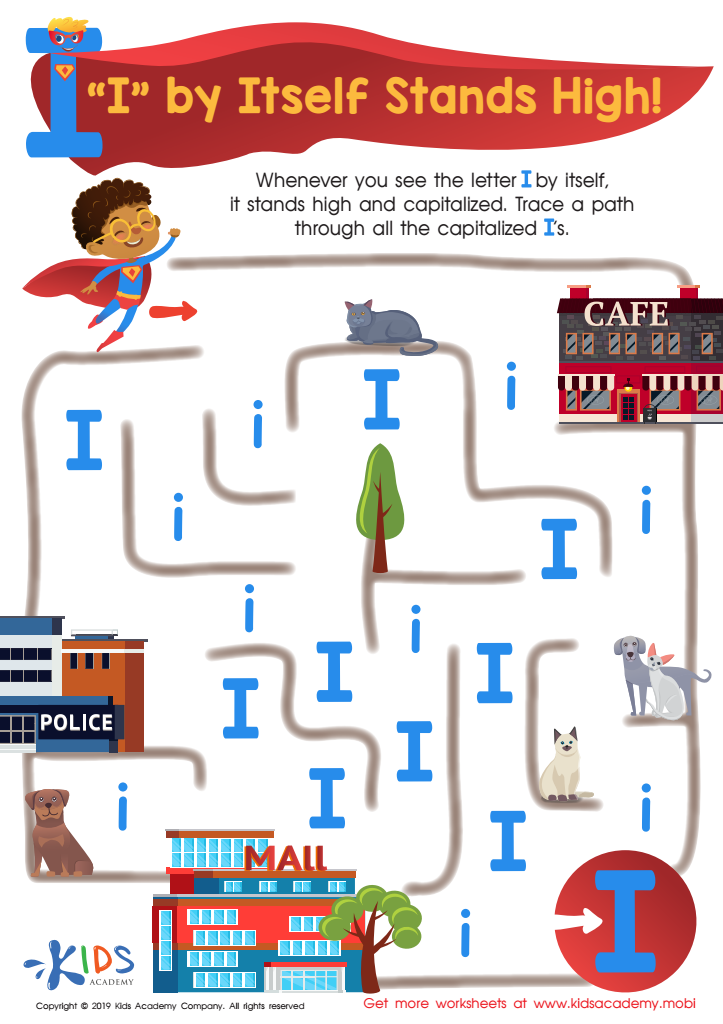
I Stands High Worksheet
 Assign to My Students
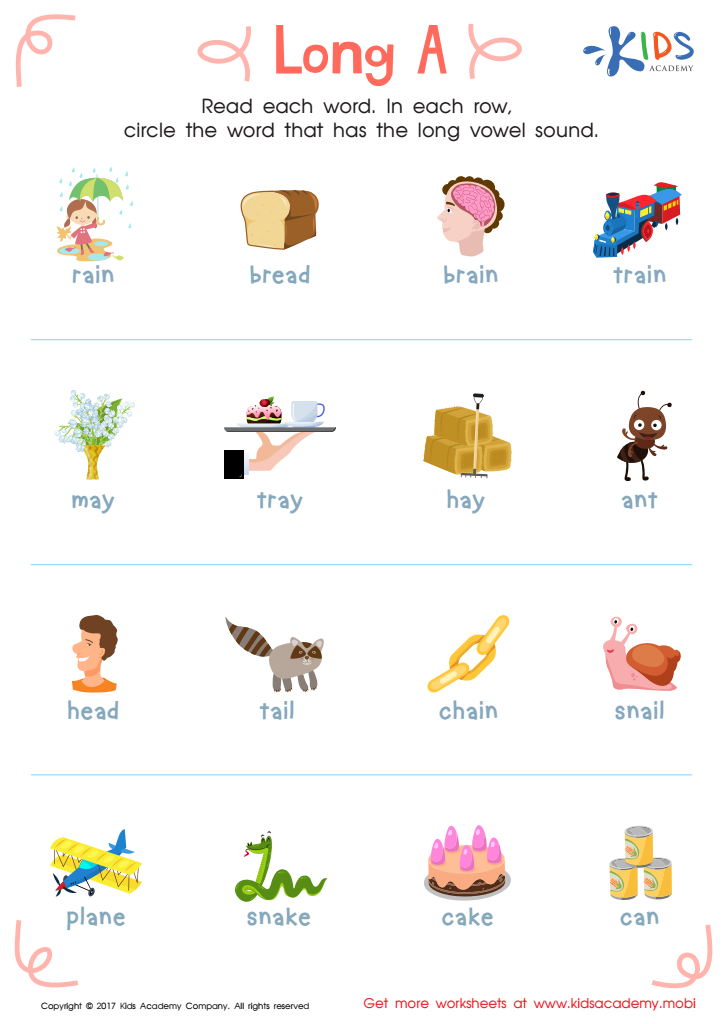
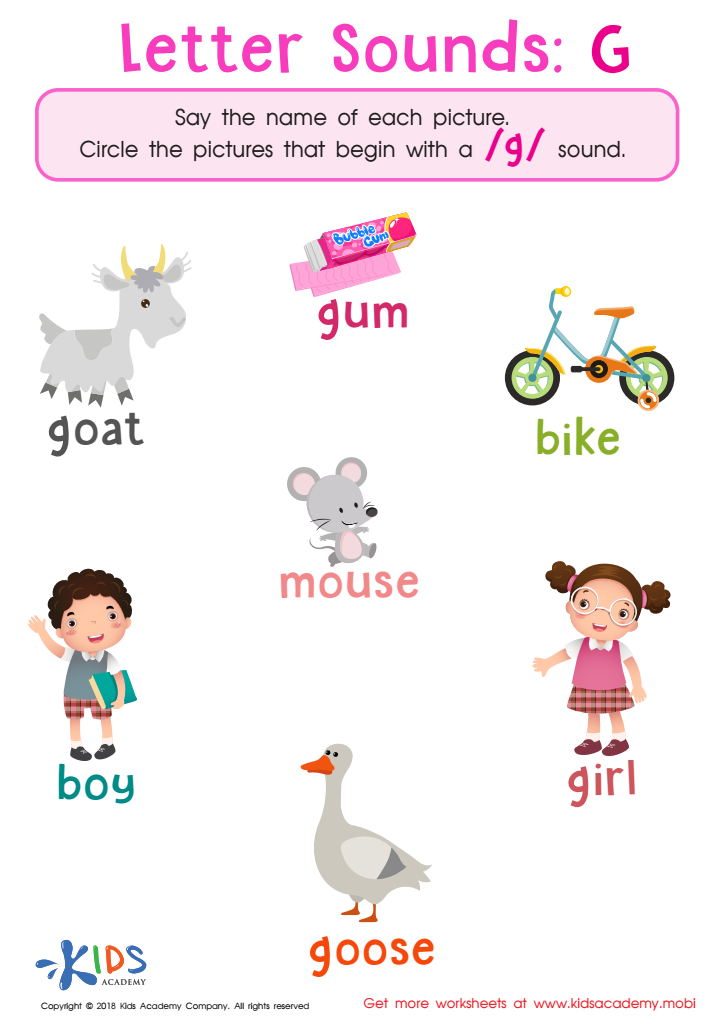
Letter G Sounds Worksheet





.jpg)


Phonics is a foundational building block in early literacy, crucial for children aged 3-7. It equips young learners with the skills to decode and understand written language, fostering a love for reading and enhancing comprehension. When parents and teachers prioritize phonics improvement, they are directly contributing to a child's reading fluency and vocabulary development.
At this formative age, children are particularly adept at grasping new concepts, making it an opportune time to introduce phonics. Effective phonics instruction aids in the development of essential skills such as letter recognition, sound matching, and blending, which unlock the ability to read independently. Furthermore, strong phonics skills can lead to higher academic performance across subjects, not just in reading.
Additionally, by engaging in phonics activities, parents and teachers promote an interactive learning environment that builds confidence and instills a passion for reading. When children succeed in reading, they are more likely to engage with other learning experiences, fostering overall cognitive development. Hence, prioritizing phonics improvement is not just about reading—it establishes a strong educational foundation that positively impacts a child's lifelong learning journey. Parent and teacher collaboration in this area is vital to ensure consistent reinforcement and support.








