
Practicing addition Normal Worksheets for Ages 3-7
3 filtered results
Difficulty Level
Grade
Age
-
From - To
Subject
Activity
Standards
Our "Practicing Addition Normal Worksheets for Ages 3-7" offer a fun and engaging way for young learners to build fundamental math skills. Designed with colorful illustrations and simple problems, these worksheets are perfect for introducing basic addition concepts. Each page encourages children to practice counting and combining numbers in a supportive and enjoyable manner, making learning accessible and enjoyable. Ideal for at-home practice or classroom activities, our worksheets are crafted to boost confidence and proficiency in early math skills, setting a strong foundation for future success. Download now and watch your child's arithmetic abilities flourish!
Favorites
With answer key
Interactive
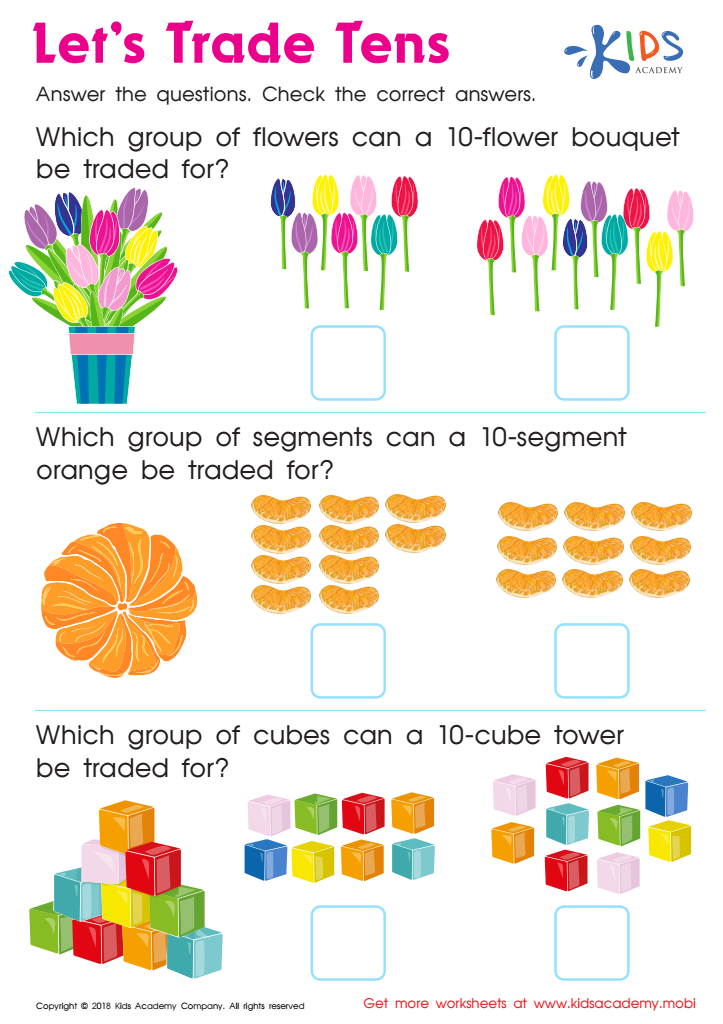
Lets Trade Tens Worksheet
This free worksheet strengthens counting and logic skills. Kids will enjoy exchanging flowers for bouquets, orange slices for a whole fruit, and cube towers for individual cubes. Combining numbers and problem solving is essential for first grade math. Seeing two options helps them understand how 10s look.
 Assign to My Students
Lets Trade Tens Worksheet
Worksheet
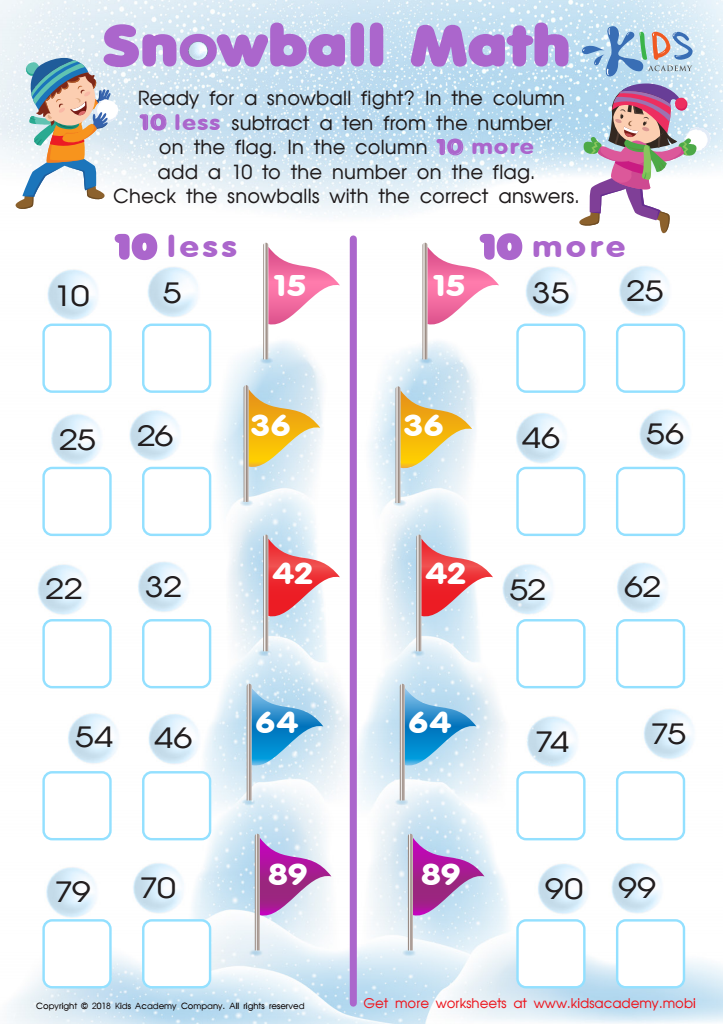
Snowball Math Worksheet
Kids can have a snowball fight and build math skills at the same time with this free worksheet. Kids can use tens to add and subtract for quick math equations and select the correct answers. No need to worry about getting cold either - these snowballs won't chill you!
Snowball Math Worksheet
Worksheet
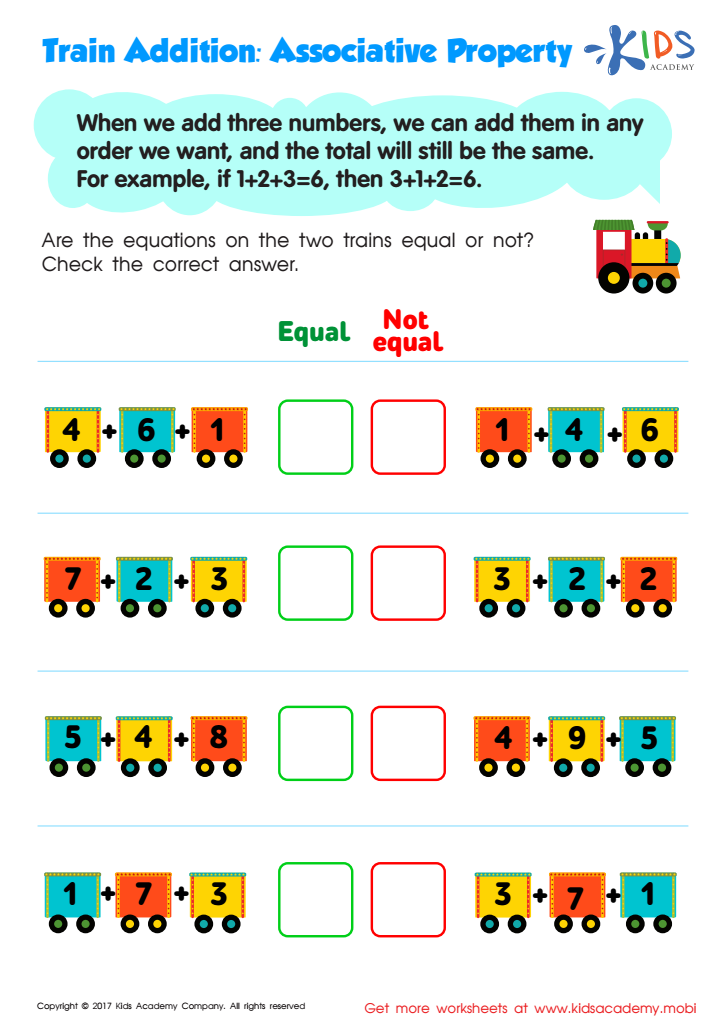
Train Addition: Associative Property Worksheet
The associative property of addition lets us add numbers in any order. Total will remain the same. Help kids practice this pre-algebra skill with a train-themed worksheet. It will help them understand if the equations are equal using this property.
Train Addition: Associative Property Worksheet
Worksheet
Join Kids Academy for Free
Who is primarily going to use this learning content?


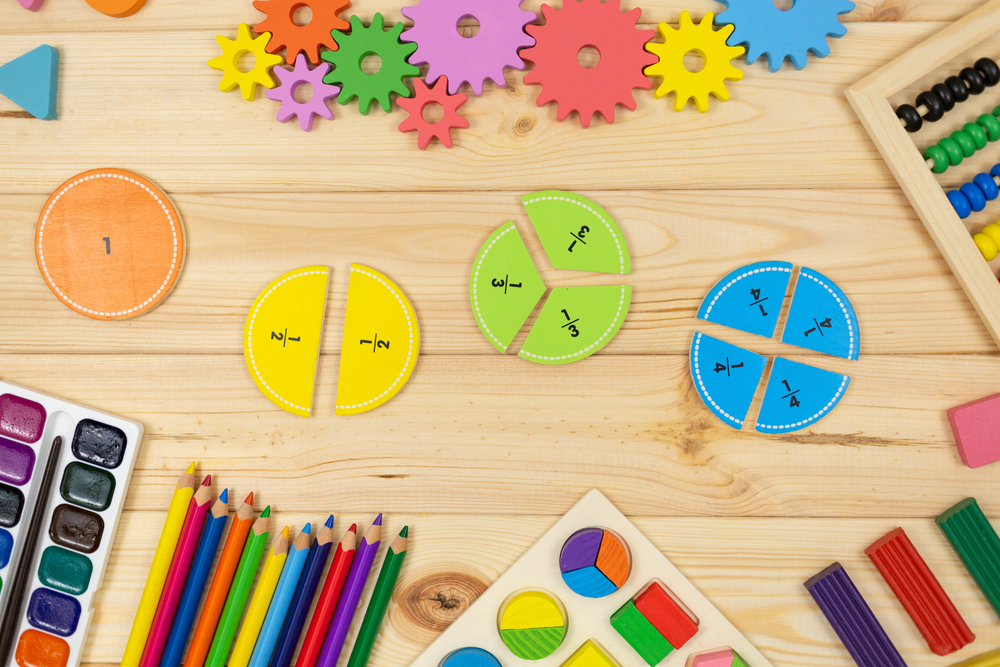





Practicing addition with children aged 3-7 is crucial for their cognitive and academic development. At this stage, young minds are exceptionally receptive, making it an ideal time to introduce fundamental arithmetic concepts. Early exposure to addition cultivates a strong mathematical foundation, which is essential for tackling more complex problems later on. Regular practice enhances number sense, allowing children to understand the value of numbers and their relationships, which is crucial not just for math, but for managing day-to-day activities involving measurements, time, or even money.
Moreover, practicing addition fosters critical thinking and problem-solving skills. It engages children's brains in logical reasoning and helps improve concentration and memory retention. These skills are transferable and beneficial across various subjects and life situations, boosting overall academic achievement and confidence.
For parents and teachers, making addition practice enjoyable through games, songs, or interactive activities can ignite a love for learning in children. This enthusiasm for maths can lead to positive attitudes towards education and lifelong learning. Early, regular practice in a supportive environment helps children overcome the anxiety often associated with math, paving the way for a smoother educational journey. In essence, it’s about equipping children with the tools they need for not just academic success, but for practical, everyday use and a brighter future.








