Sequencing events Normal Worksheets for Ages 3-7
4 filtered results
-
From - To
Discover our engaging Sequencing Events Normal Worksheets designed specifically for children aged 3 to 7. These printable resources help young learners develop critical thinking and comprehension skills by practicing the order of events in familiar scenarios. Each worksheet features colorful illustrations and simple prompts that encourage kids to arrange images or story segments sequentially. Perfect for use at home or in the classroom, these worksheets support early literacy and problem-solving abilities, making learning fun and interactive. Enhance your child’s understanding of narrative structure and boost their confidence in storytelling with our collection of sequencing activities today!
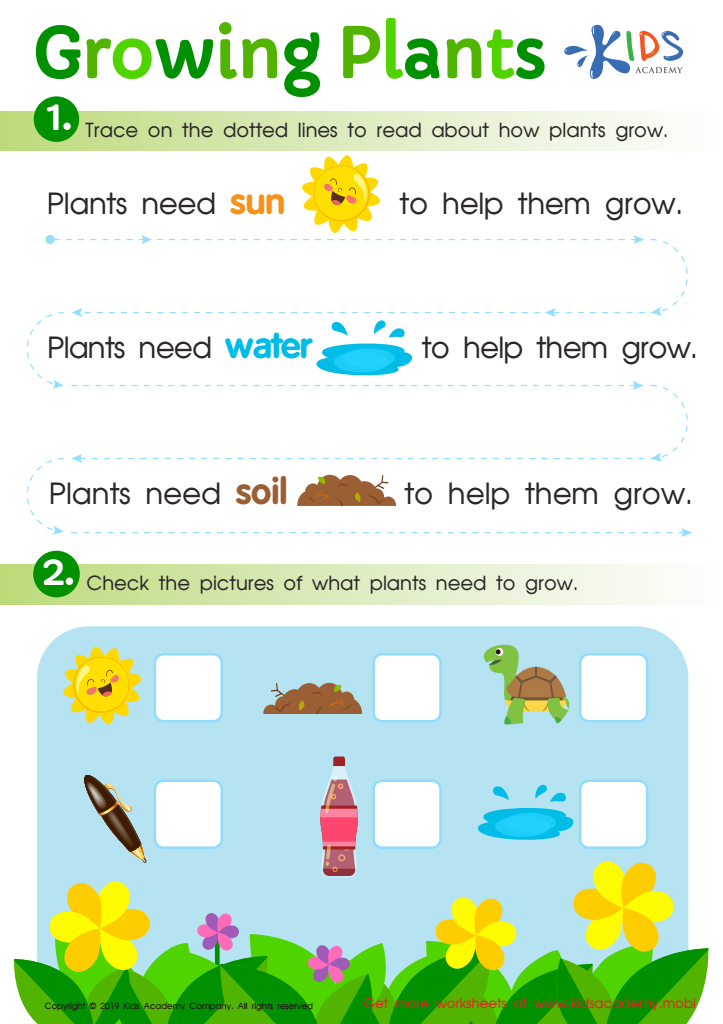
Growing Plants Worksheet
 Assign to My Students
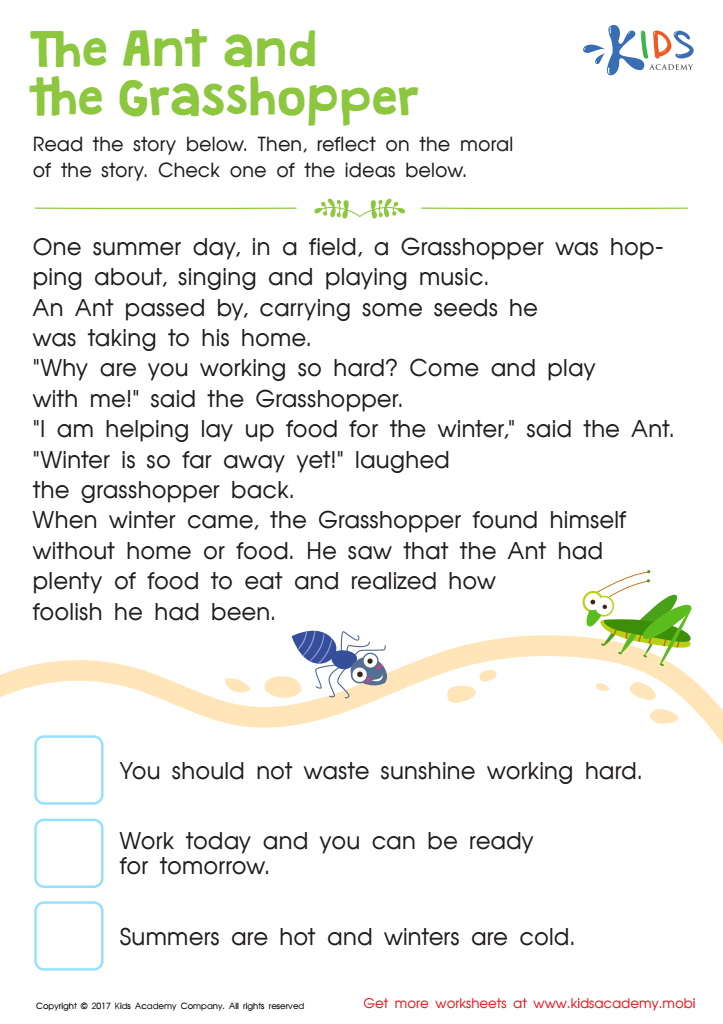
The Ant and The Grasshopper Printable

Emperor Penguin Journey Worksheet
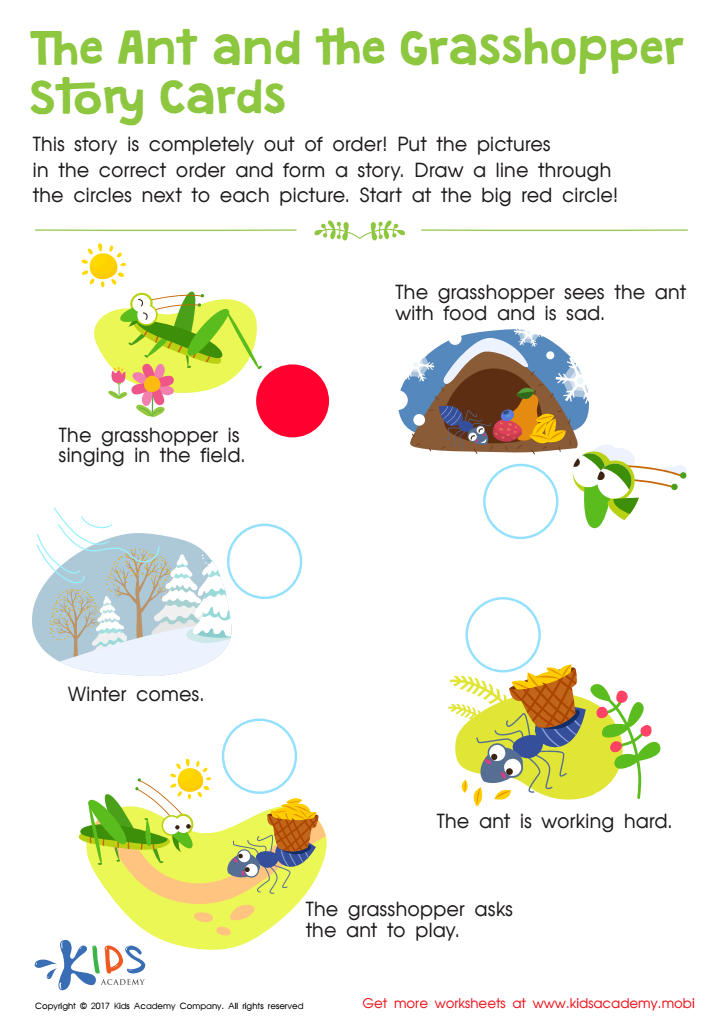
The Ant and The Grasshopper Worksheet






Sequencing events is a foundational skill critical for children's cognitive and language development, especially for ages 3-7. Understanding the order of events helps children comprehend narratives, enabling them to predict outcomes and understand cause-and-effect relationships. When parents and teachers emphasize sequencing, they enhance children’s reading comprehension and storytelling abilities, laying the groundwork for effective communication skills.
Additionally, sequencing supports critical thinking and problem-solving. As children learn to arrange events logically, they also learn to plan, make decisions, and foresee consequences. This skill extends beyond academics – facilitating their ability to follow instructions and engage in daily tasks, such as getting dressed or following a recipe.
Moreover, sequencing cultivates memory and attention skills, as children must recall information and stay focused on the progression of events. This practice also fosters creativity as they begin to analyze different storylines and imagine alternative outcomes. In a social context, sequencing helps children share experiences and engage in conversations, enhancing their inter-personal skills. Thus, supporting children's mastery of sequencing has lasting educational benefits and nurtures their overall development, making it essential for caregivers and educators to prioritize this skill.








