Spatial understanding Normal Worksheets for Ages 3-7
3 filtered results
-
From - To
Enhance your child's spatial understanding with our engaging worksheets designed for ages 3 to 7. These printable resources help young learners develop essential skills, such as recognizing shapes, understanding directions, and improving visual perception. Our age-appropriate activities encourage exploration and problem-solving, making learning fun and interactive. Each worksheet is crafted to cater to various learning styles, ensuring that every child can grasp important concepts at their own pace. By promoting early spatial skills, you prepare your little ones for future academic success. Discover our collection of worksheets today and support your child's journey in mastering spatial understanding!
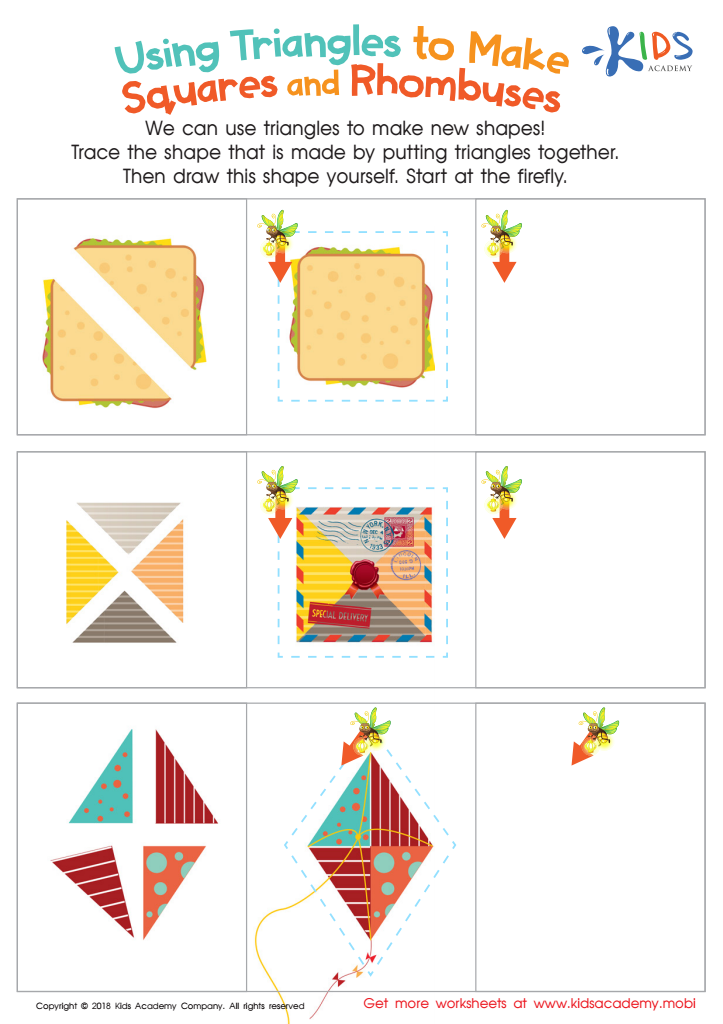
Using Triangles to Make Squares and Rhombuses Worksheet
 Assign to My Students
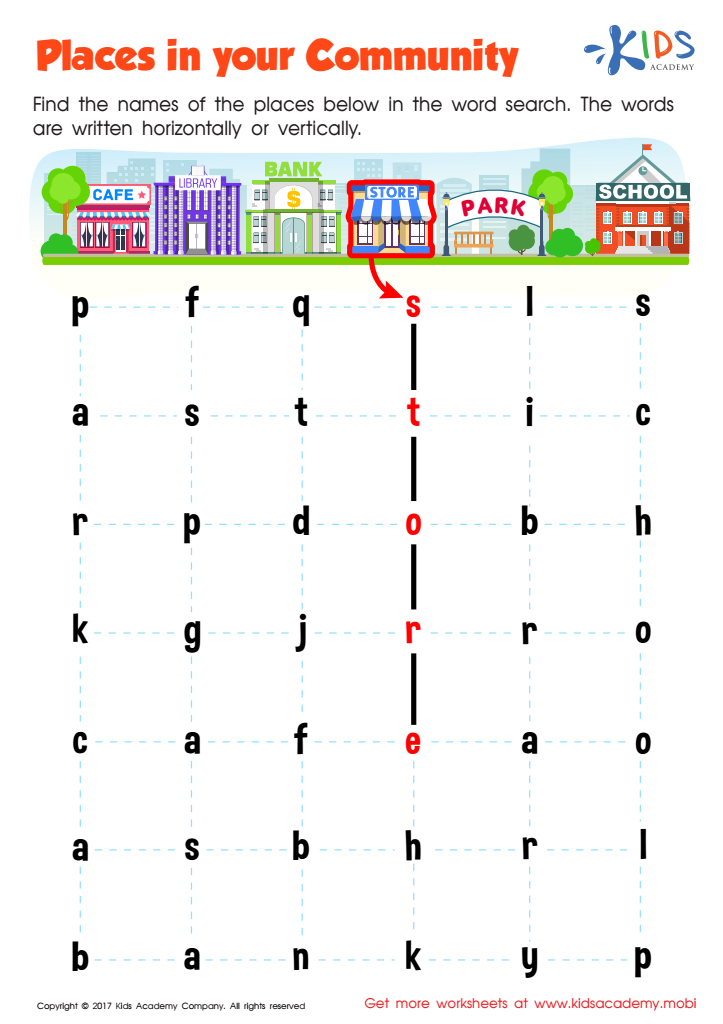
Places in Your Community Worksheet
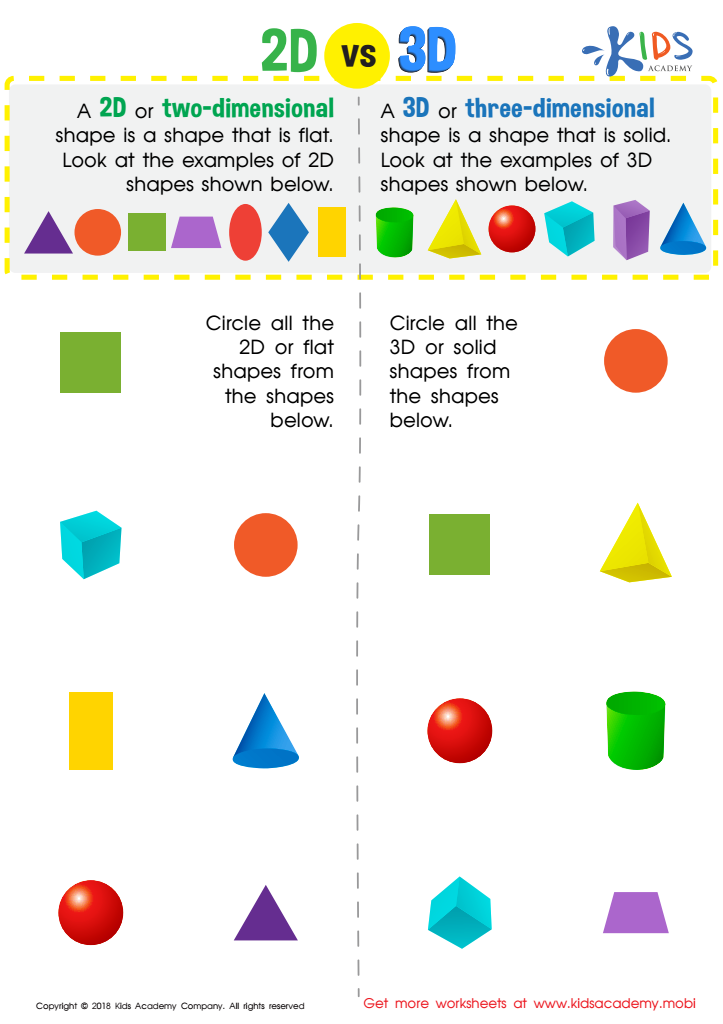
2D vs 3D Shapes Worksheet



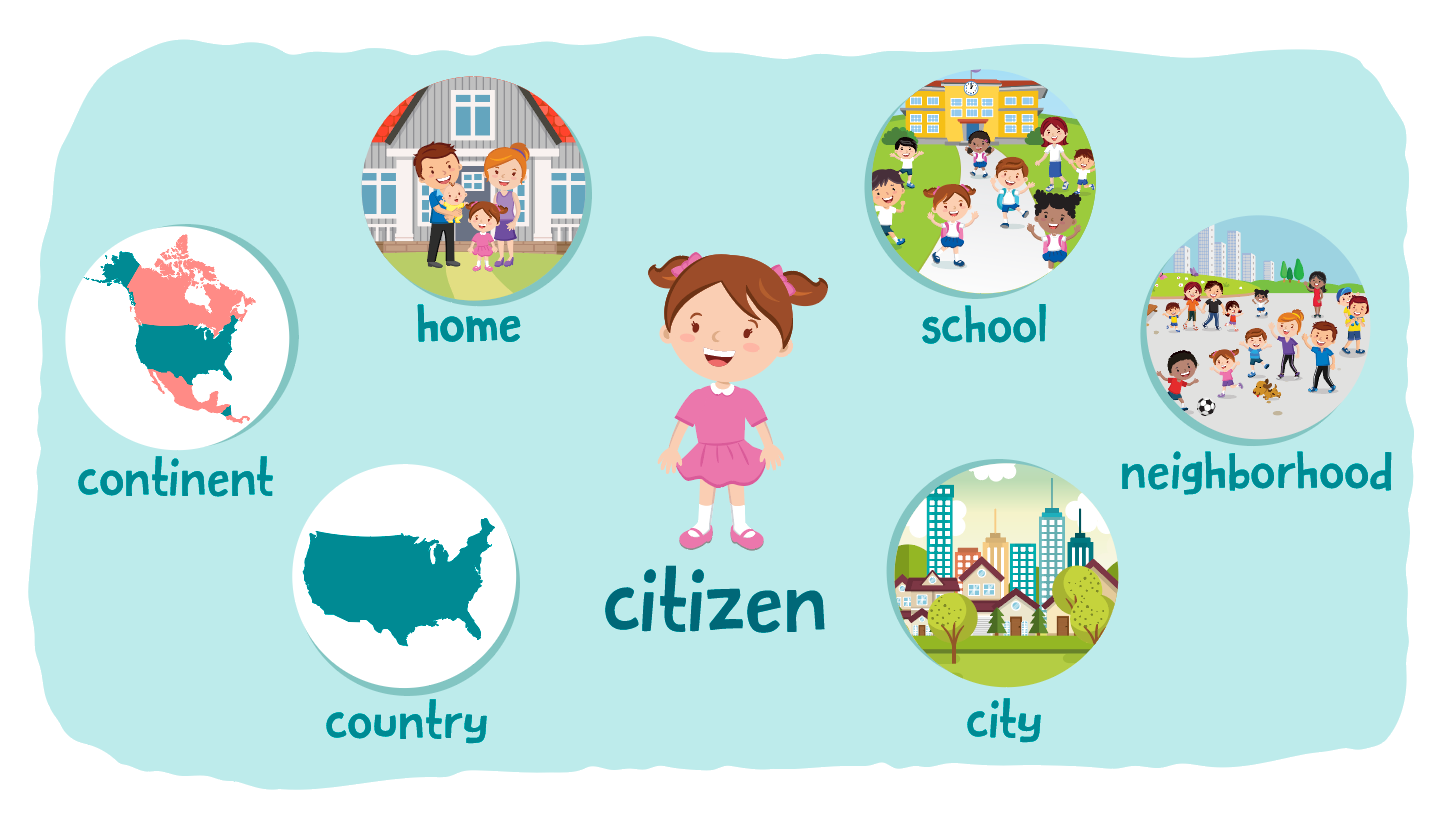


Spatial understanding is a critical cognitive skill that emerges during early childhood and plays a vital role in overall development. For children aged 3-7, this skill involves recognizing and manipulating objects in their environment, which helps them develop problem-solving abilities, logical thinking, and literacy skills.
Parents and teachers should prioritize spatial understanding because it lays the foundation for mathematical concepts such as geometry, measurement, and spatial reasoning. Children with strong spatial skills are more likely to excel in STEM subjects (science, technology, engineering, and mathematics), which are increasingly essential in today’s tech-driven world.
Moreover, spatial understanding nurtures creativity and imagination, allowing children to explore and manipulate their surroundings more effectively. Engaging children in activities like playing with puzzles, building blocks, and drawing enhances these skills and can lead to improved academic performance both in early education and beyond.
By fostering spatial understanding, parents and teachers equip children with critical life skills, empowering them to navigate the world confidently and creatively. Investing in this area early on can have lasting benefits, shaping how children approach learning and problem-solving throughout their lives.








