Subtraction skills Normal Worksheets for Ages 3-7
6 filtered results
-
From - To
Discover engaging and educational Subtraction Skills Normal Worksheets tailored for children ages 3-7. These fun and interactive printables from Kids Academy help young learners build a strong foundation in subtraction through a variety of exercises and activities. Designed to develop critical thinking and problem-solving skills, each worksheet offers a mix of visuals and simplicity, making learning subtraction enjoyable and effective. Ideal for both classroom use and homeschooling, our worksheets cater to different learning paces, ensuring every child can master subtraction at their own speed. Make learning subtraction a delightful and rewarding experience for your child today!
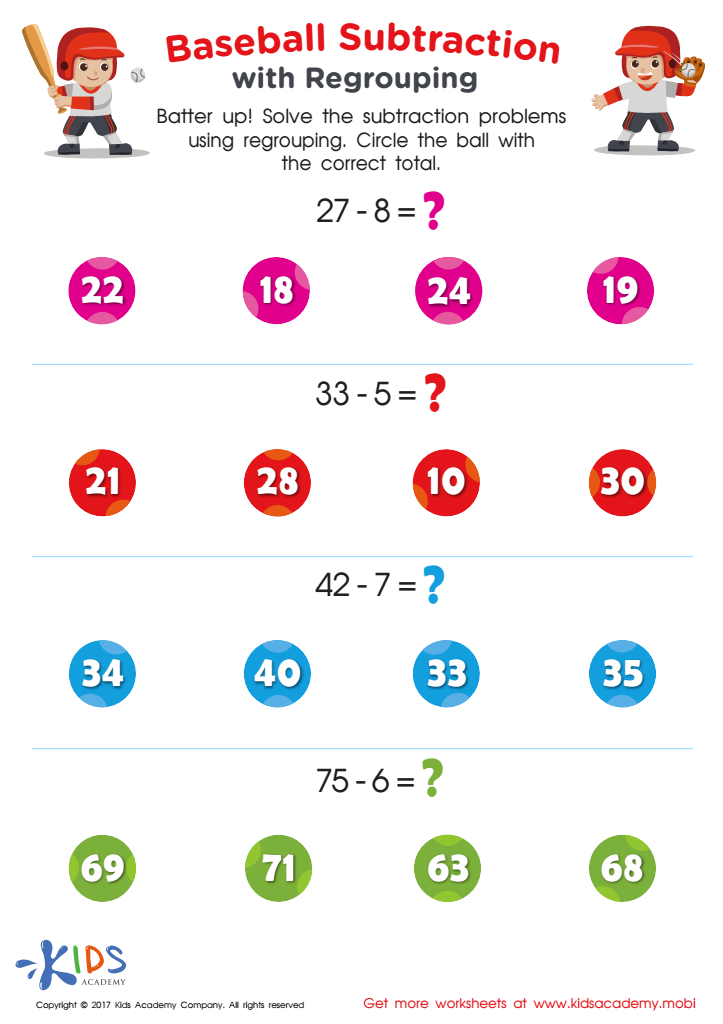
Subtraction With Regrouping for 2nd Grade Worksheet
 Assign to My Students
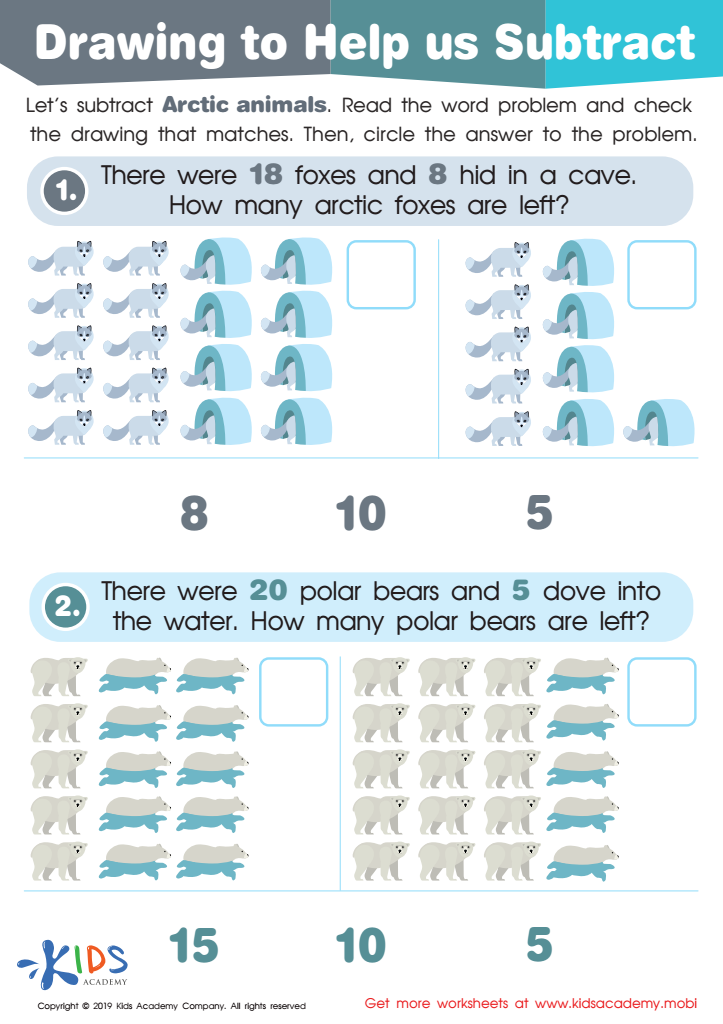
Drawing to Help Us Subtract Worksheet
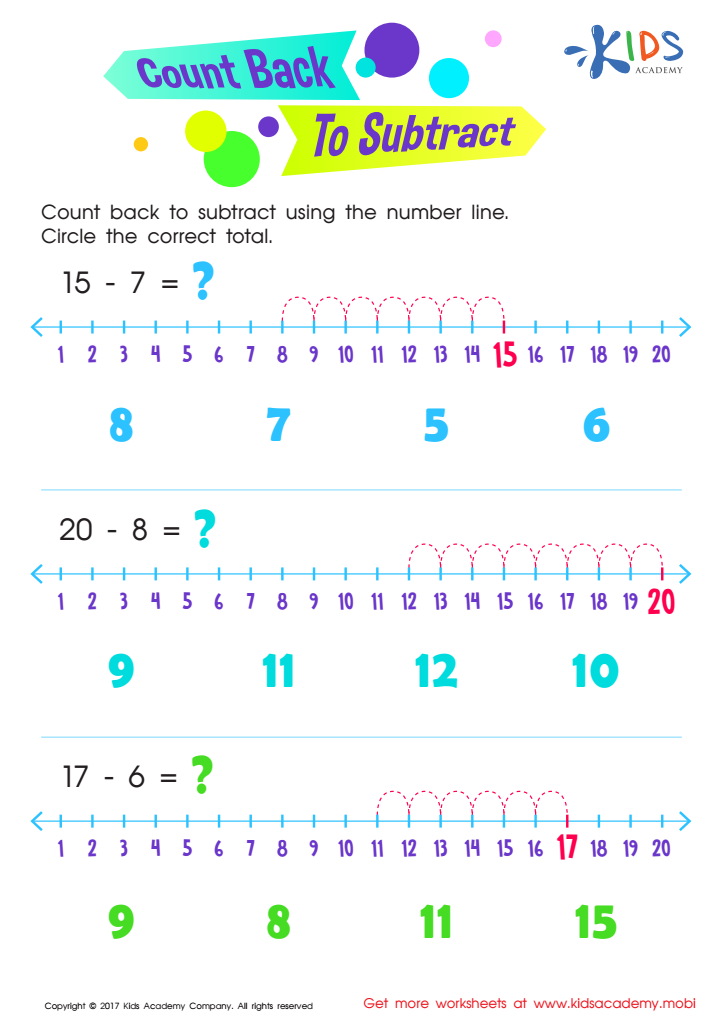
Count Back to Subtract Substraction Worksheet
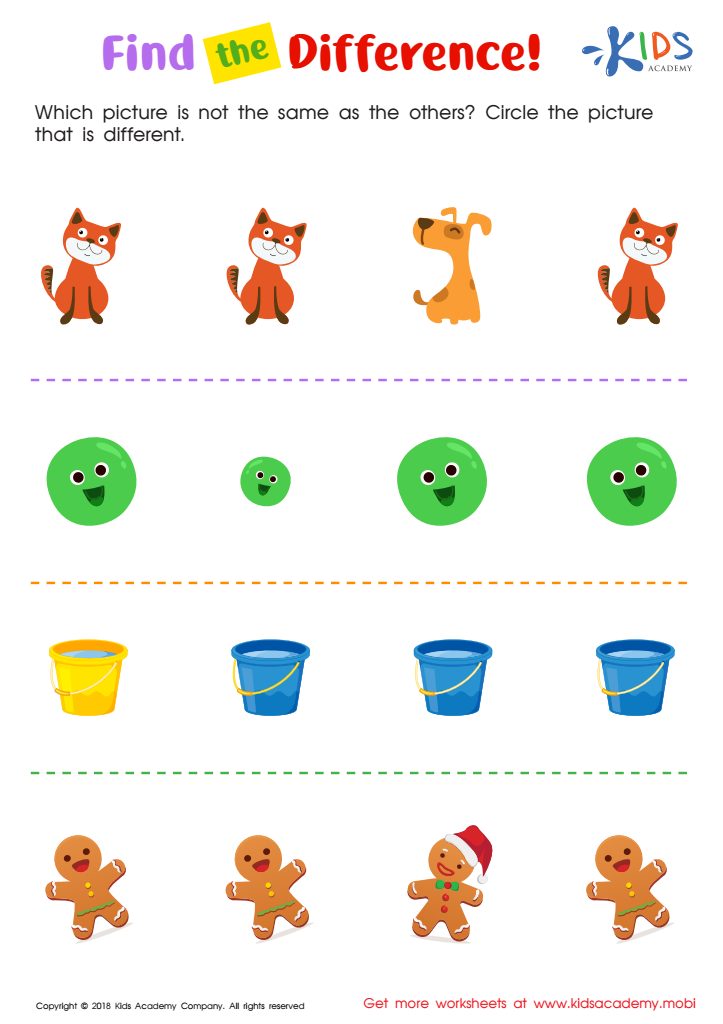
Find the Difference Worksheet
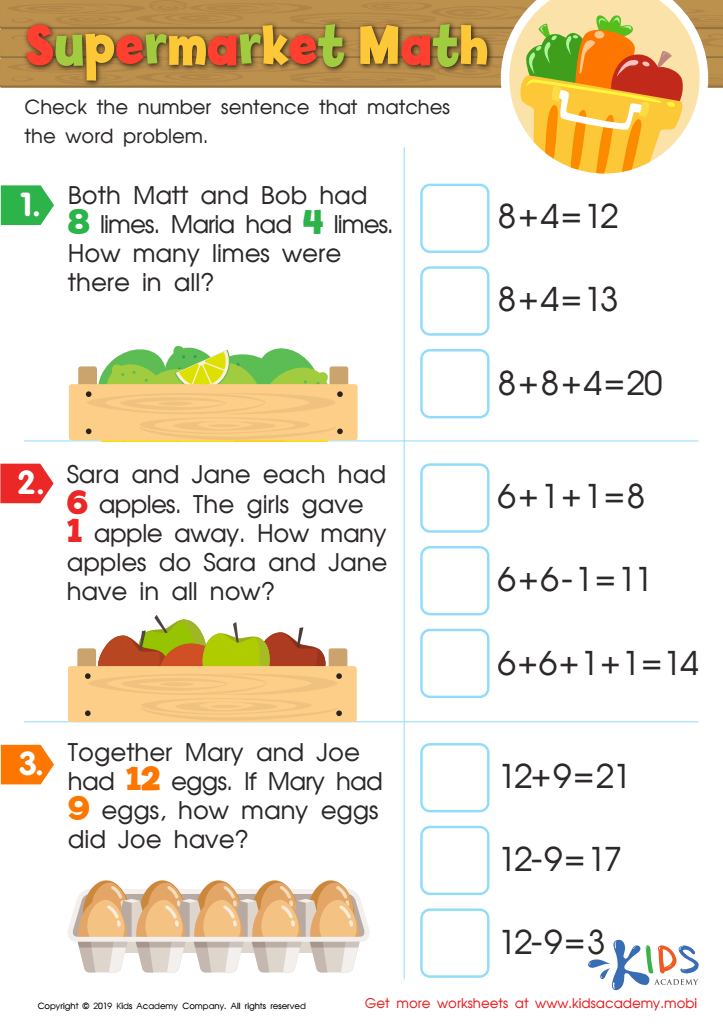
Supermarket Math Worksheet
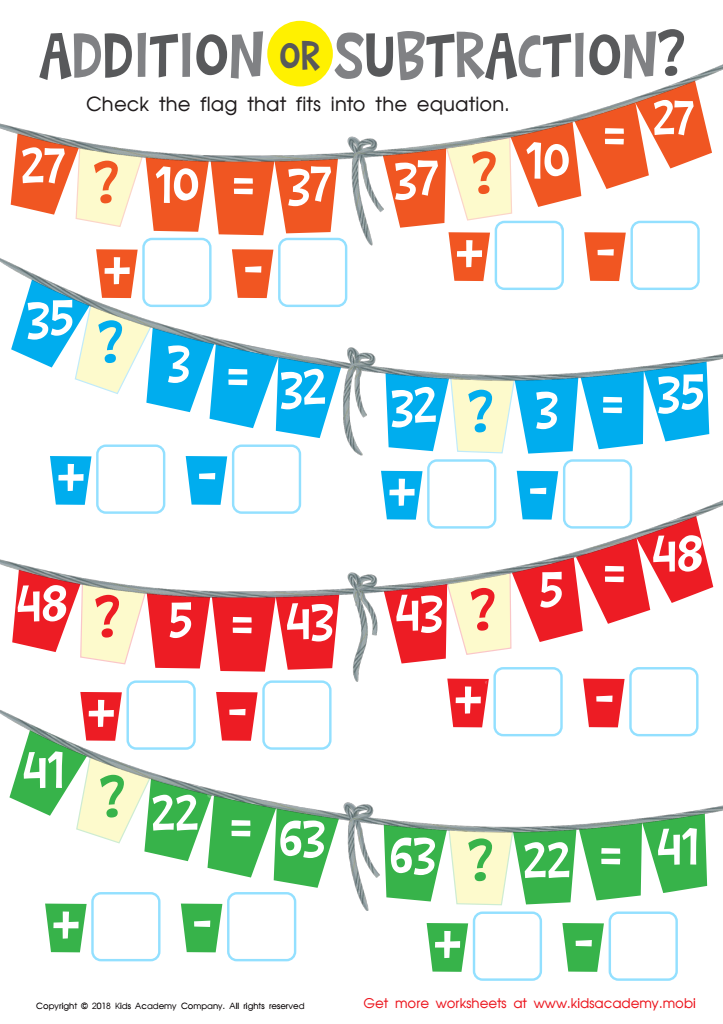
Addition or Subtraction? Worksheet




.jpg)



Parents and teachers should prioritize the development of subtraction skills in children aged 3-7 because these skills form a critical foundation for advanced mathematical learning and everyday problem-solving. At this developmental stage, young brains are particularly adept at grasping basic numerical concepts, and early mastery of subtraction enhances cognitive growth and numerical fluency. Understanding subtraction is not just about performing calculations; it nurtures logical thinking, pattern recognition, and analytical skills.
Daily life is rich with scenarios where subtraction is required, such as sharing snacks, distributing toys, or measuring ingredients, which reinforces practical learning. Having a solid grasp of subtraction also instills confidence in more complex mathematical concepts, improving overall academic performance. When children achieve comfort with subtraction early on, they are more likely to experience reduced math anxiety and a positive attitude towards learning in general.
Educators can effectively scaffold this by employing engaging, hands-on activities tailored to young learners’ interests. Tools like counting blocks, visual aids (such as picture books), and interactive games make the learning experience enjoyable and memorable. In a balanced developmental approach, ensuring strong subtraction proficiency sets the stage for continued educational successes, ultimately cultivating a dependable sense of accomplishment and a lifelong love for math.








