Pattern recognition Normal 2D Shapes Worksheets for Ages 3-7
3 filtered results
-
From - To
Discover our engaging collection of Pattern Recognition Worksheets focused on Normal 2D Shapes, specifically designed for children aged 3-7! These interactive worksheets promote early math skills by introducing young learners to circles, squares, triangles, and more through fun patterns and activities. Boost your child's cognitive development as they recognize, compare, and complete various shape patterns in a colorful format. Each worksheet encourages creativity while reinforcing essential math concepts, making learning enjoyable and effective. Perfect for classroom use or at-home practice, these resources provide a solid foundation in pattern recognition, helping your little ones gain confidence in their math abilities. Start exploring today!
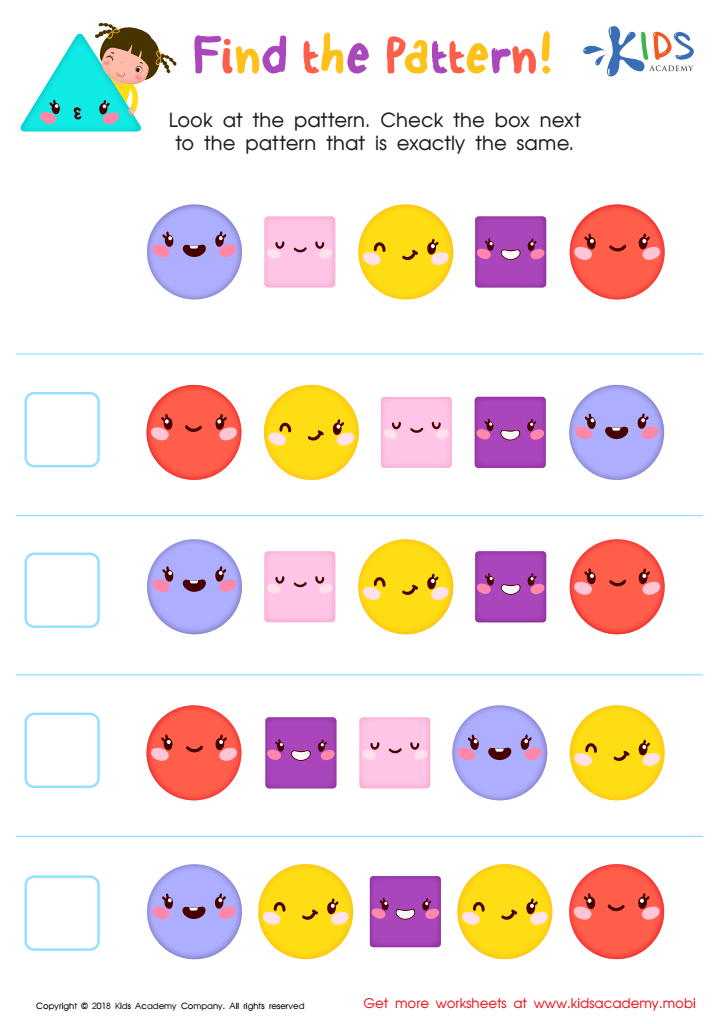
Find the Pattern Worksheet
 Assign to My Students








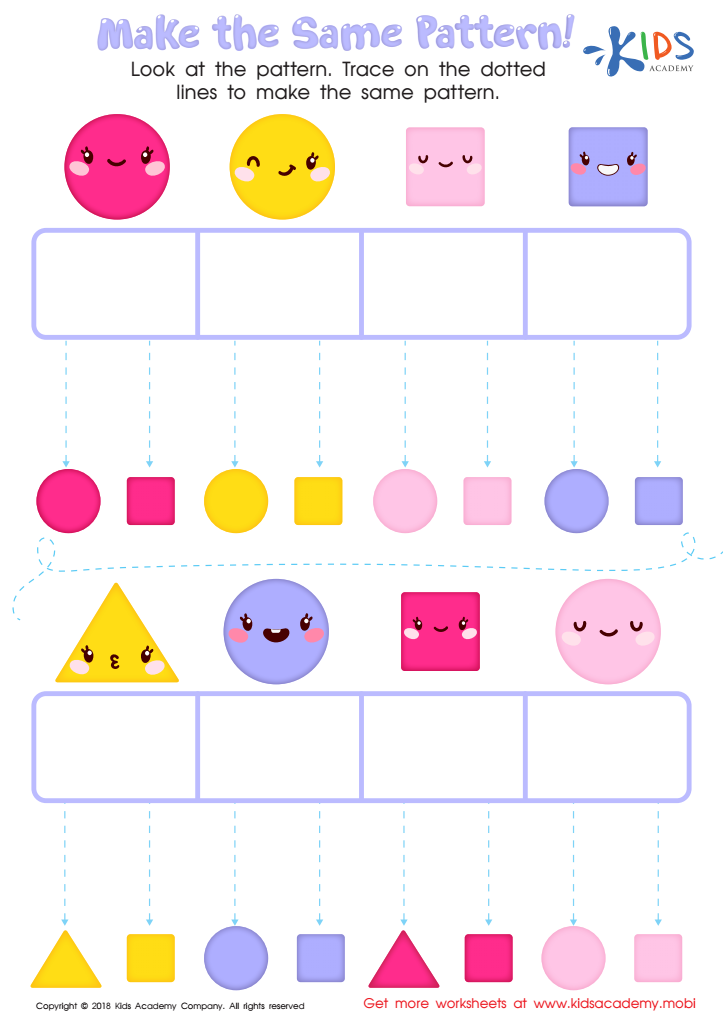
Make the Same Pattern Worksheet
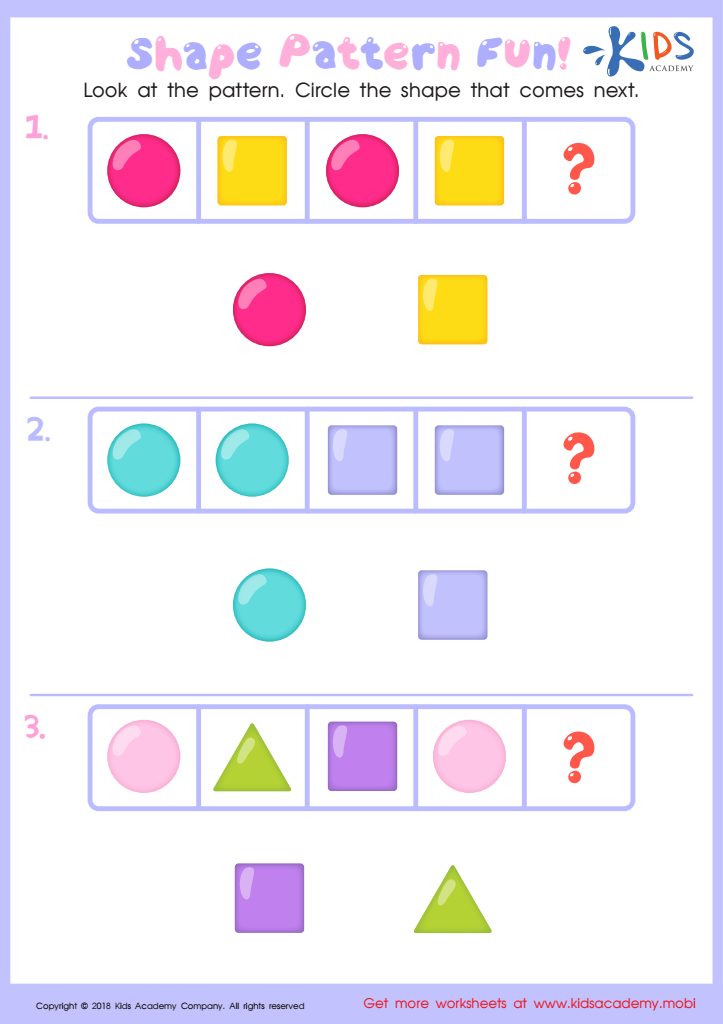
Shape Pattern Fun Worksheet








Pattern recognition, particularly in 2D shapes, plays a critical role in children’s cognitive and mathematical development from ages 3 to 7. During this formative stage, children are naturally curious and eager to explore the world around them. Understanding patterns and shapes helps them make sense of their environment. It enhances their spatial awareness, promotes problem-solving skills, and lays the groundwork for future math concepts, such as geometry and algebra.
As children learn to recognize and create patterns with various shapes, they foster critical thinking. This skill encourages them to predict what comes next in a sequence, strengthening their analytical abilities. Furthermore, engaging with shapes aids in developing fine motor skills through hands-on activities, such as drawing, cutting, and building with shapes.
For parents and teachers, emphasizing pattern recognition creates a supportive learning atmosphere. This not only helps to build foundational skills but also boosts children's confidence as they discover and articulate their observations. Ultimately, nurturing pattern recognition equips young learners with essential tools for academic success, while simultaneously nurturing their creativity and curiosity, making it an invaluable focus during these early years.