Basic subtraction skills Normal Addition & Subtraction Worksheets for Ages 3-7
3 filtered results
-
From - To
Discover essential basic subtraction skills with our engaging Normal Addition & Subtraction Worksheets designed for children aged 3-7. These worksheets offer fun and interactive activities that lay a strong foundation in mathematics. Young learners will explore simple subtraction concepts through colorful illustrations and relatable examples, helping them grasp the fundamentals of number operations. Each worksheet is tailored to suit varying learning levels, promoting confidence and boosting problem-solving abilities. Perfect for home or classroom use, these valuable resources encourage early math proficiency while making learning enjoyable! Give your child the tools they need to succeed in their mathematical journey today!
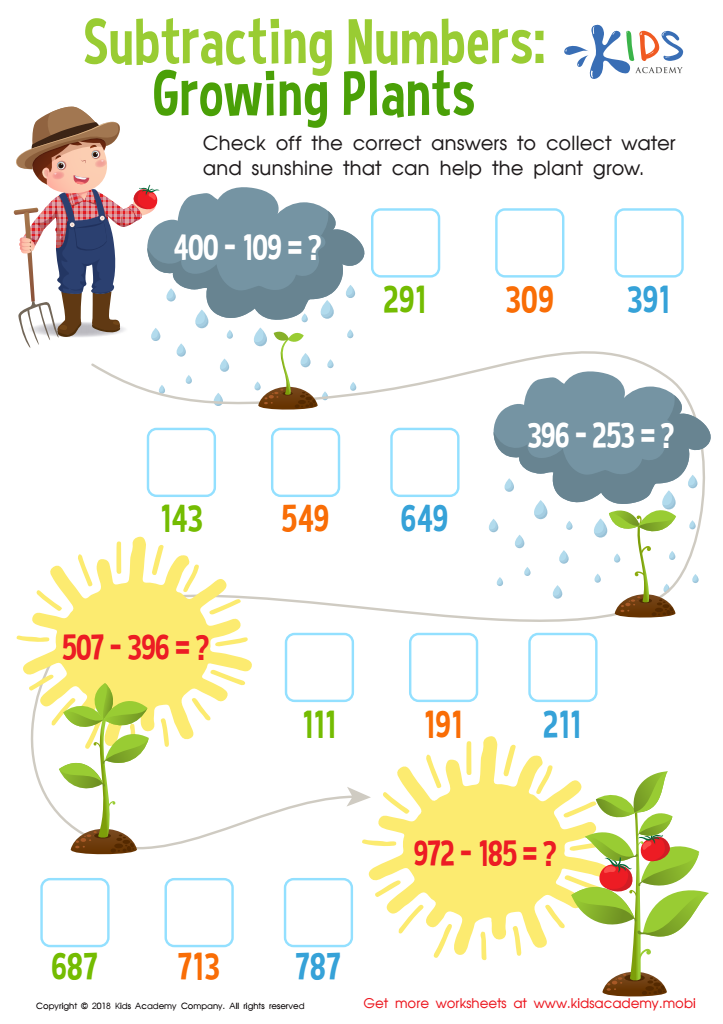
Subtracting Numbers: Growing Plants Worksheet
 Assign to My Students
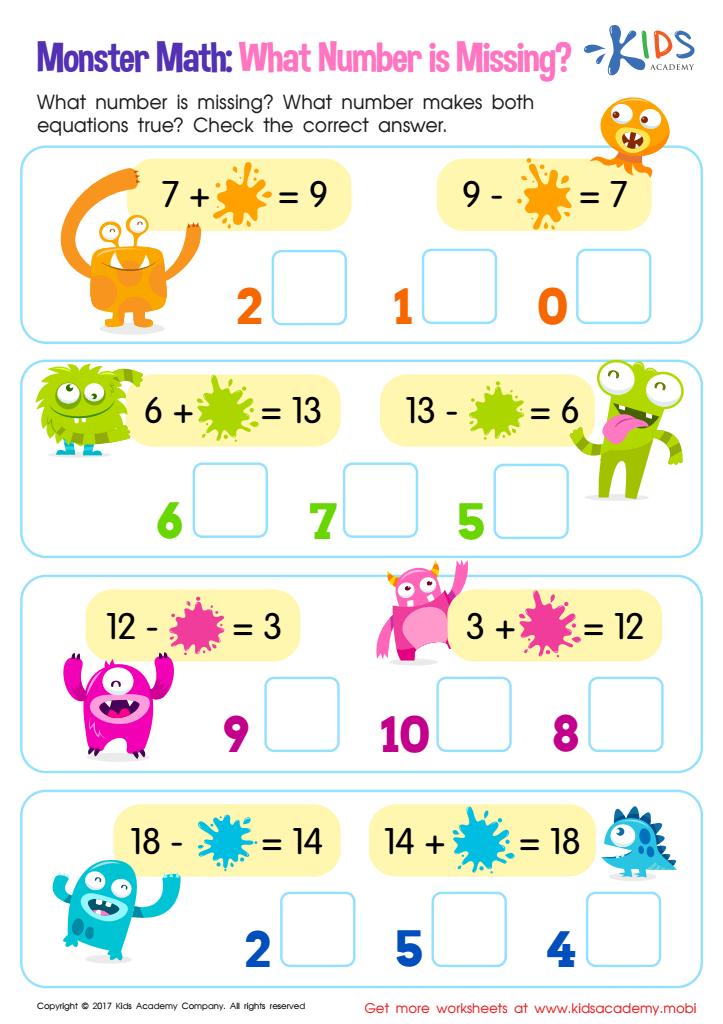
Missing Number: Monster Math Worksheet
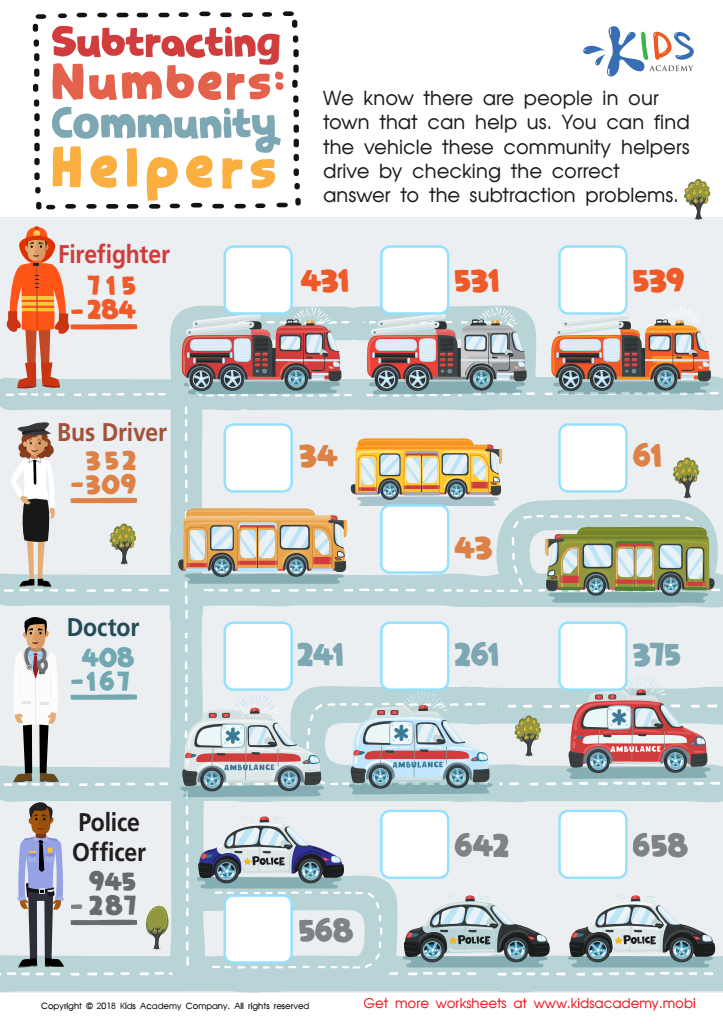
Subtracting Numbers: Community Helpers Worksheet








Parents and teachers should prioritize basic subtraction and normal addition skills for children aged 3 to 7 because these foundational concepts are critical for their overall cognitive development and future academic success. At this age, children develop essential logical thinking, problem-solving abilities, and numerical literacy, which are the building blocks for more complex math concepts in later years.
Mastering addition and subtraction enhances children's understanding of number relationships, fosters numerical fluency, and improves their ability to analyze and interpret everyday situations involving numbers. Moreover, these skills support achievements in various subjects beyond math, such as science and economics, where quantitative reasoning is vital.
Engaging in addition and subtraction activities can also improve fine motor skills through hands-on learning experiences. Furthermore, as children encounter and solve problems involving foundational math, they build self-confidence and a positive attitude towards learning.
Support from parents and teachers aids children in developing these skills effectively, often through fun, interactive methods that make learning enjoyable. This strong foundation not only prepares them for future academic challenges but also helps them navigate real-world situations that involve counting, budgeting, and spatial awareness, all of which are vital life skills.








