Fine Motor Skills Normal Addition Worksheets for Ages 3-7
3 filtered results
-
From - To
Our "Fine Motor Skills Normal Addition Worksheets for Ages 3-7" are specifically designed to enhance your child's mathematical abilities while simultaneously developing their fine motor skills. Perfect for children in preschool to early elementary grades, these worksheets provide engaging and age-appropriate addition exercises that challenge little minds. Activities focus on tracing, counting, and writing, fostering steady hand-eye coordination and precision. As kids solve problems, they also improve pencil control and dexterity. Make learning fun and foundational with our expertly crafted worksheets, ensuring your child builds essential skills for academic success and everyday tasks. Shop now and watch their skills thrive!

18 Candles Worksheet
 Assign to My Students
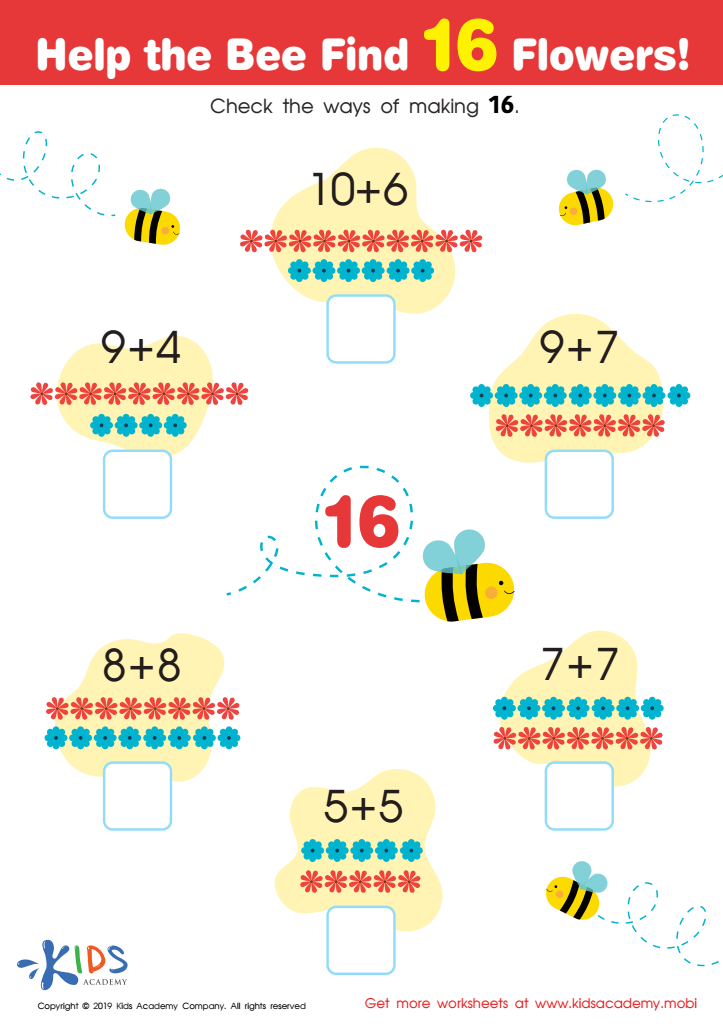
Help the Bee Find 16 Flowers Worksheet
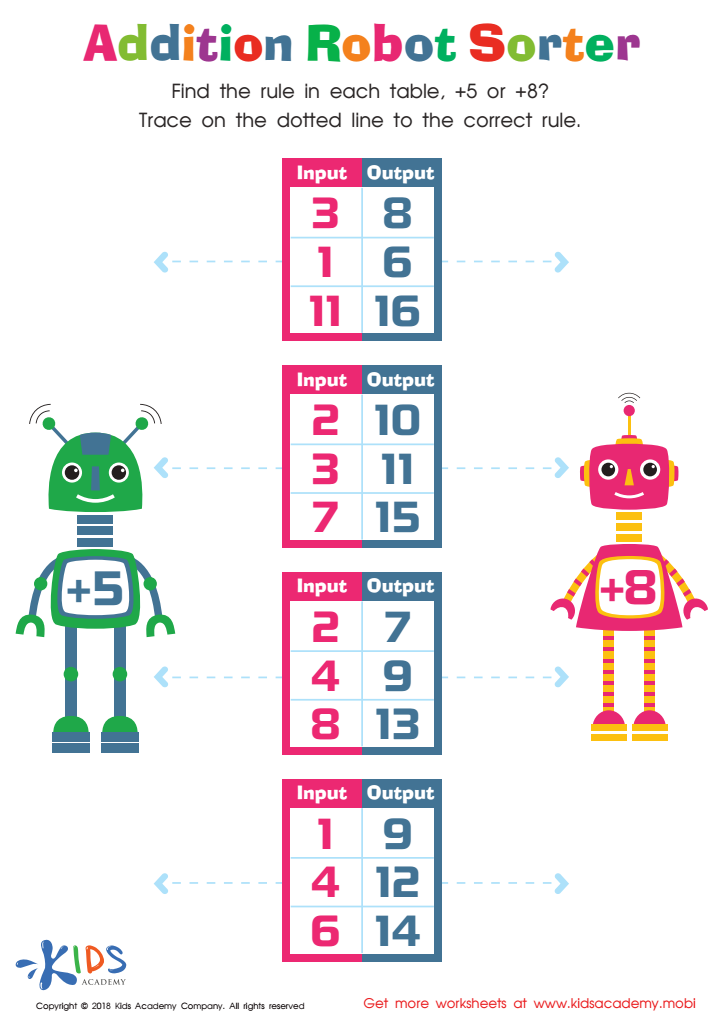
Addition Robot Sorter Worksheet








Fine motor skills are crucial for children aged 3-7 as they underpin many everyday activities and academic tasks. These skills involve the coordination of small muscles in the hands and fingers, enabling children to perform precise movements. Development in this area is essential for tasks such as writing, buttoning a shirt, or using utensils, which are foundational for independence and self-care.
For academic success, fine motor competence directly impacts a child's ability to write legibly, draw, cut with scissors, and manipulate small objects. These skills form the basis for literacy and numeracy learning activities. For instance, the ability to hold and control a pencil effectively aids in letter formation and contributes to overall literacy development.
Furthermore, having well-developed fine motor skills enhances a child's confidence and willingness to participate in classroom activities. It lessens their frustration in mastering essential tasks and fosters a positive attitude toward learning.
Parents and teachers should be attentive to the development of these skills to identify potential difficulties early. Providing age-appropriate activities such as playdough, puzzles, and arts and crafts can significantly nurture fine motor development. Encouraging practice through fun, engaging exercises ensures that children build the required dexterity and coordination, paving the way for both academic and personal success.