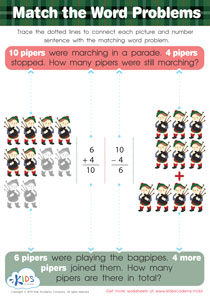
Mathematical reasoning Normal Addition Worksheets for Ages 3-7
3 filtered results
-
From - To
Unlock your child's mathematical potential with our "Mathematical Reasoning Normal Addition Worksheets" designed for ages 3-7. These engaging worksheets help young learners develop essential addition skills through fun and interactive exercises tailored to their developmental stage. Each worksheet incorporates colorful visuals and relatable scenarios to spark interest and enhance comprehension. By fostering logical thinking and problem-solving skills, these resources empower children to approach math with confidence. Suitable for homeschooling or classroom activities, our worksheets create an enjoyable learning experience that lays a solid foundation for future math success. Equip your child with the skills they need to thrive in mathematics!
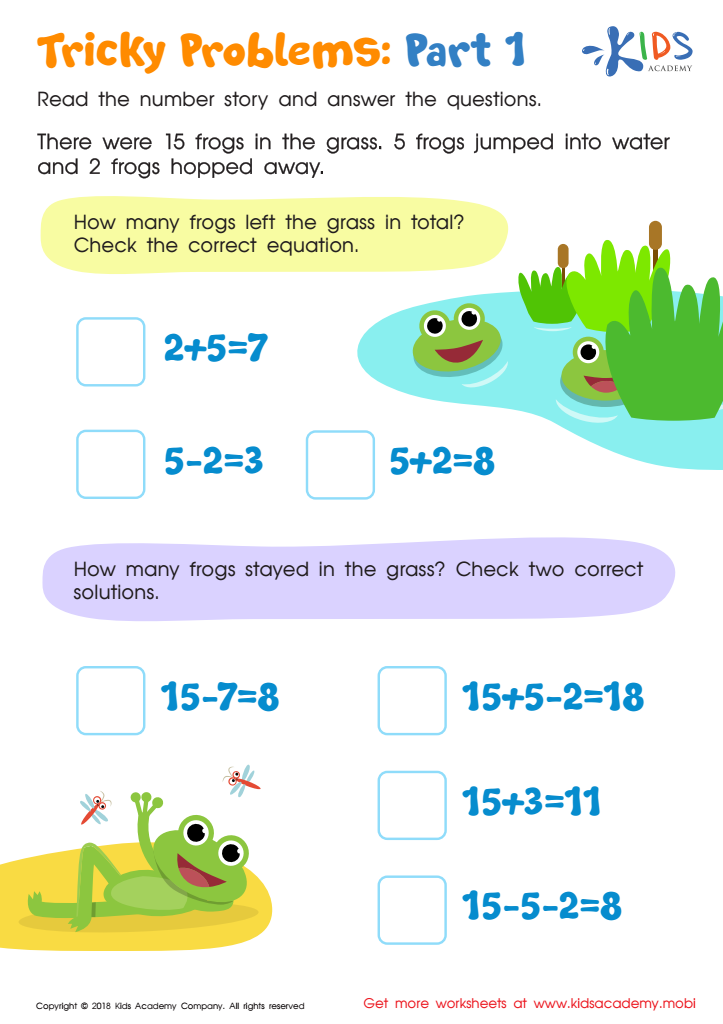
Tricky Problems Worksheet: Part 1
 Assign to My Students
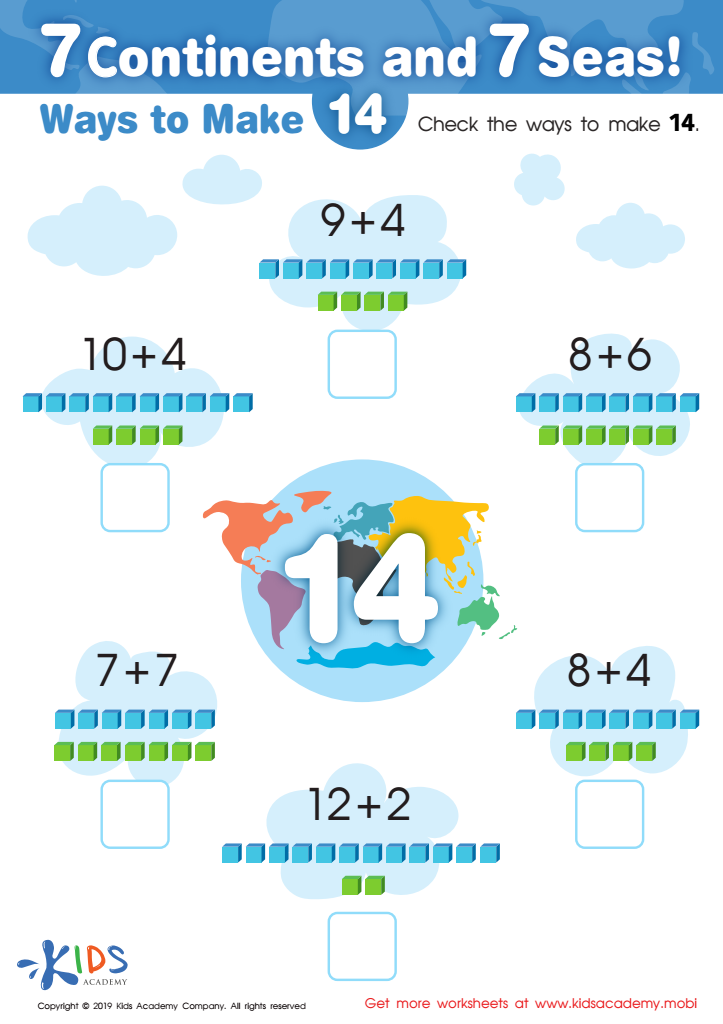
7 Continents and 7 Seas Worksheet
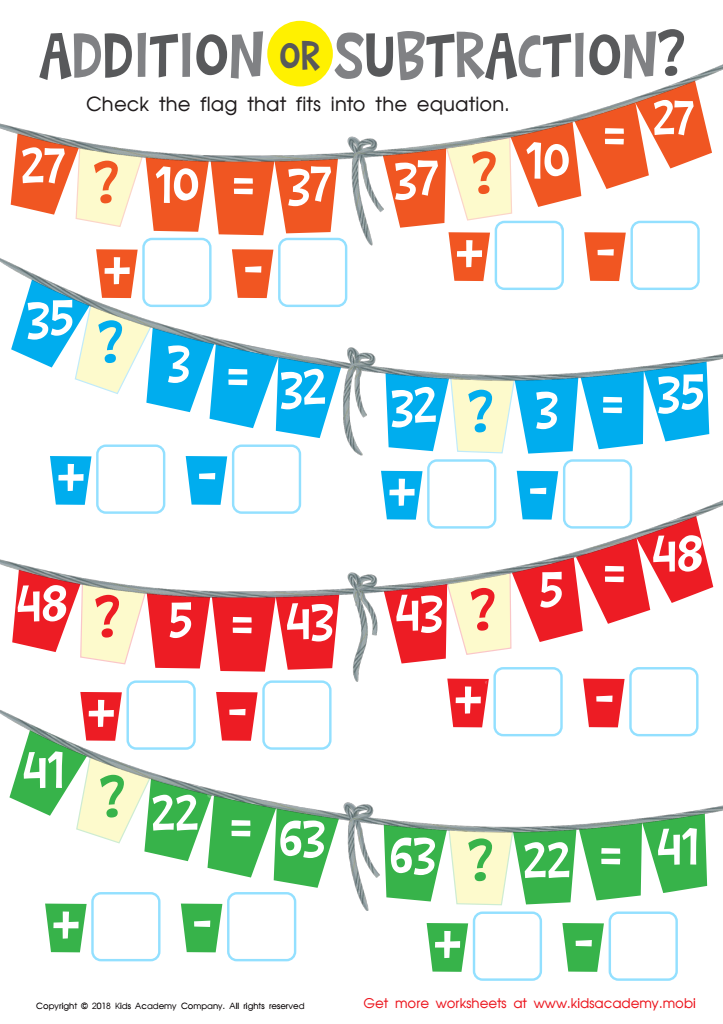
Addition or Subtraction? Worksheet








Mathematical reasoning, particularly normal addition, is foundational for children aged 3-7 as it fosters critical thinking and problem-solving skills essential for academic success. During these formative years, children develop their cognitive abilities, and understanding addition helps build a strong numeracy base. By engaging in simple addition, children learn to recognize patterns and relationships, which are crucial for their overall mathematical development.
Parents and teachers should prioritize mathematical reasoning in early education because early mastery of addition not only enhances a child's ability to perform basic calculations but also encourages confidence in their mathematical abilities. This skill matures logical reasoning necessary for higher-level math concepts.
Moreover, learning addition fosters a sense of achievement among young learners, enhancing their self-esteem. Active involvement in mathematical reasoning can help create a positive attitude towards lifelong learning.
Involving parents and teachers in this process promotes consistency, enabling children to practice and apply addition in real-life situations. Math is everywhere, and children will benefit from experiences that make concepts relevant and engaging, thus better preparing them for future academic challenges. Fostering these skills early provides a solid foundation that supports future learning in mathematics and various other disciplines.