Differentiating shapes Normal Geometry Worksheets for Ages 3-7
3 filtered results
-
From - To
Engage your young learners with our Differentiating Shapes Normal Geometry Worksheets, specially designed for children aged 3-7. These interactive worksheets make shape recognition and differentiation fun and educational. With colorful illustrations and age-appropriate activities, children will explore various shapes, enhancing their visual perception and critical thinking skills. Our expertly crafted exercises encourage creativity while supporting early math development. As students identify, draw, and compare shapes, they build confidence and foundational math skills. Perfect for both classroom and home use, these printable worksheets are a valuable resource for educators and parents dedicated to fostering early learning in geometry. Start your child's math journey today!
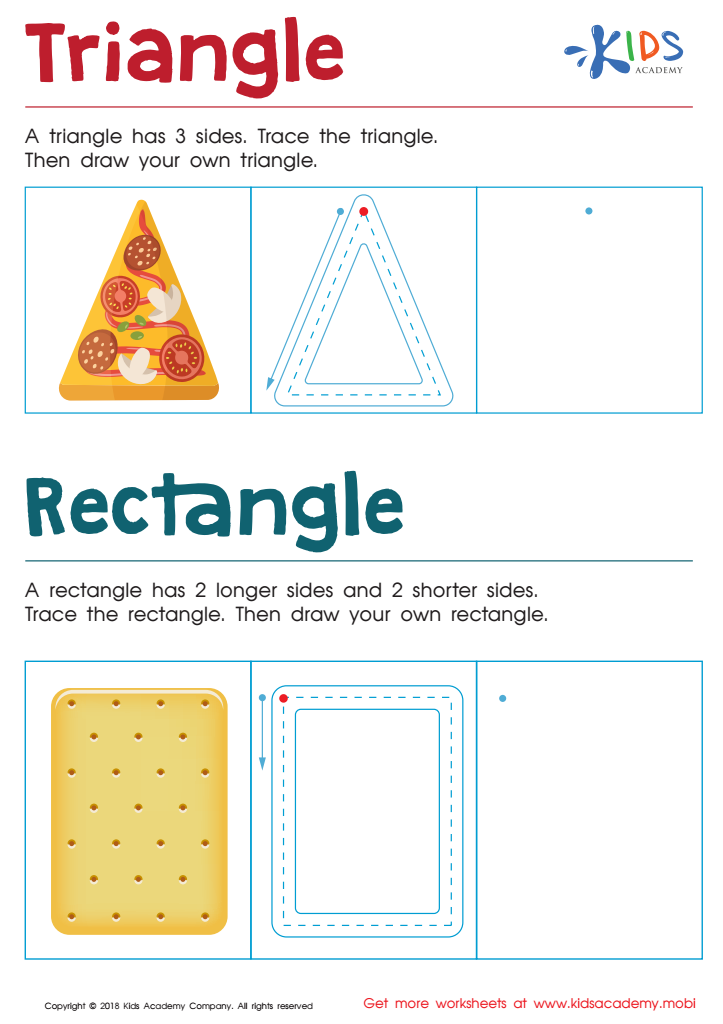
Triangle Rectangle Worksheet
 Assign to My Students











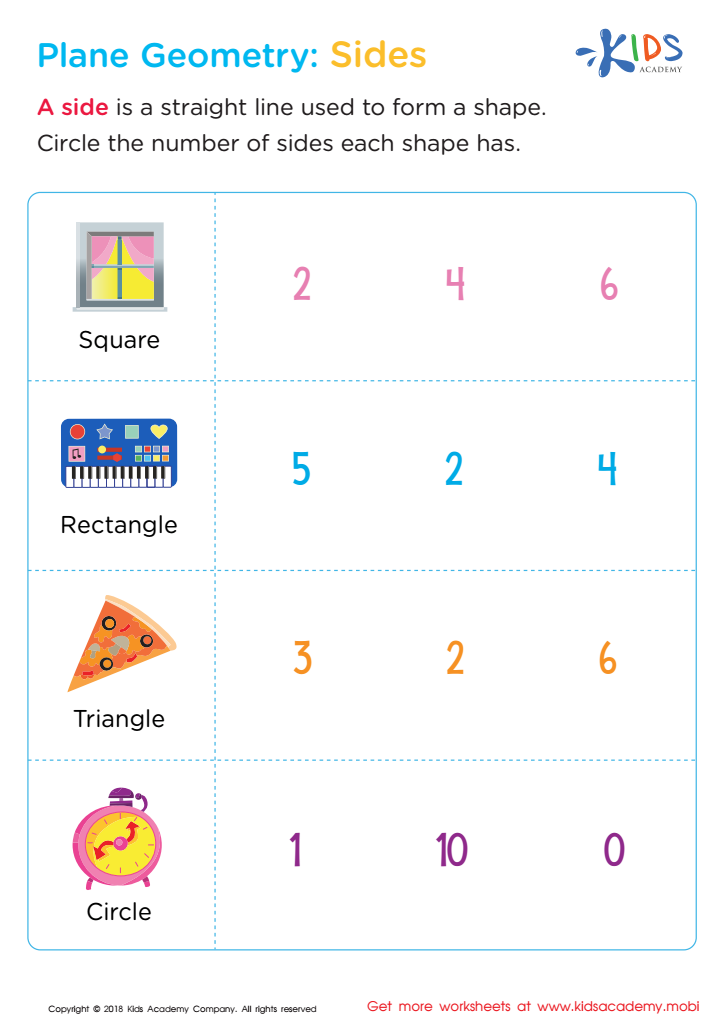
Plane Geometry: Sides Worksheet
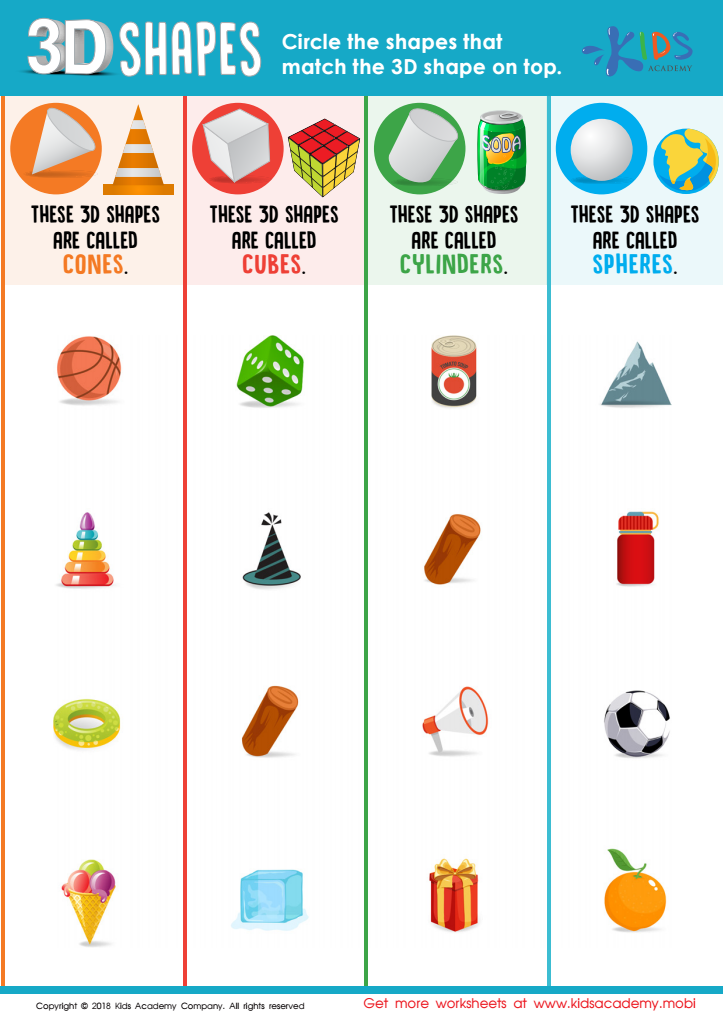
3D Shapes Worksheet








Differentiating shapes in early geometry for children aged 3-7 is crucial for several reasons. At this developmental stage, children are naturally curious and eager to explore their environments. By introducing different shapes and encouraging shape recognition, we foster not only their cognitive skills but also their problem-solving abilities. Understanding basic geometric shapes lays the foundation for more complex mathematical concepts they will encounter in later years.
Parents and teachers should care about differentiating shapes because it enhances spatial reasoning skills, crucial for predicting outcomes in various academic areas, including math and science. Engaging children in activities that involve identifying, comparing, and manipulating shapes promotes critical thinking and supports language development as children learn to describe their observations and reasoning.
Moreover, early geometry concepts can influence everyday tasks such as art, building blocks, and even navigating spaces. Offering differentiated instruction helps meet the varying needs of learners, ensuring that every child finds success and engagement in the subject matter. By valuing shape discrimination, we help instill a love of learning, setting a solid foundation for future educational pursuits. Overall, incorporating shape differentiation in early education supports well-rounded development and prepares children for the complexities of later academic challenges.








