Spatial reasoning Normal Geometry Worksheets for Ages 3-7
3 filtered results
-
From - To
Explore our engaging Spatial Reasoning Normal Geometry Worksheets designed for ages 3-7. These worksheets, available at Kids Academy, foster essential geometry skills through fun activities that bolster spatial awareness, critical thinking, and problem-solving in young learners. Featuring colorful shapes, puzzles, and interactive tasks, our printable resources are perfect for enhancing your child's ability to understand and manipulate objects in space. Prepare your child for future math success in an enjoyable, effective way with our age-appropriate, expertly crafted worksheets. Give your little learners a head start in geometry at Kids Academy!
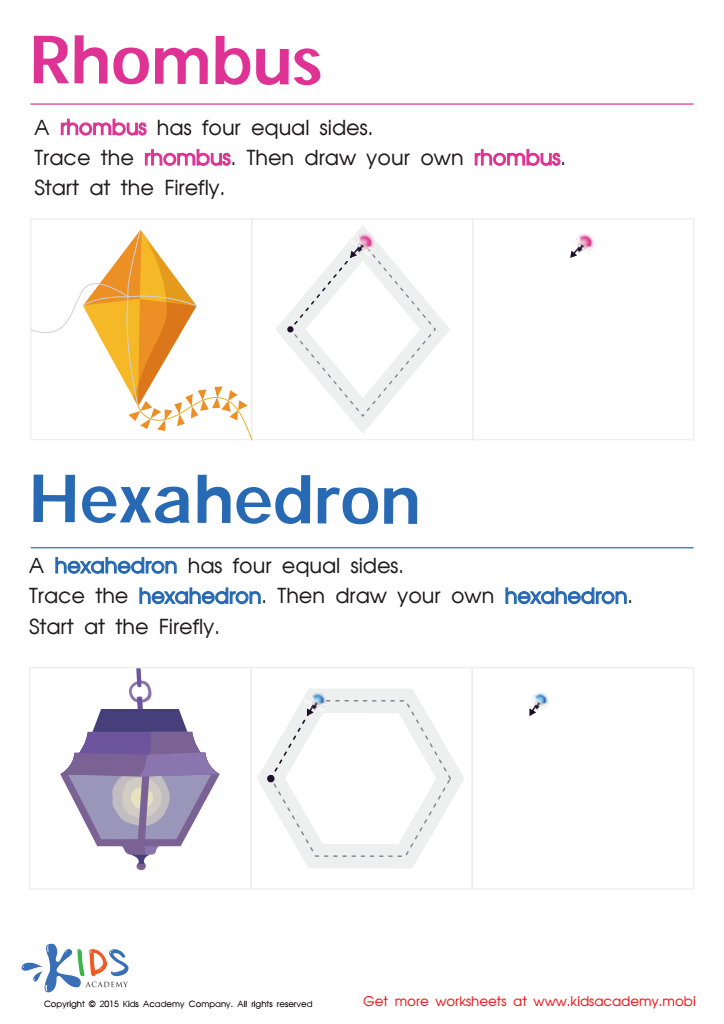
Draw a Rhombus And a Hexahedron Printable
 Assign to My Students











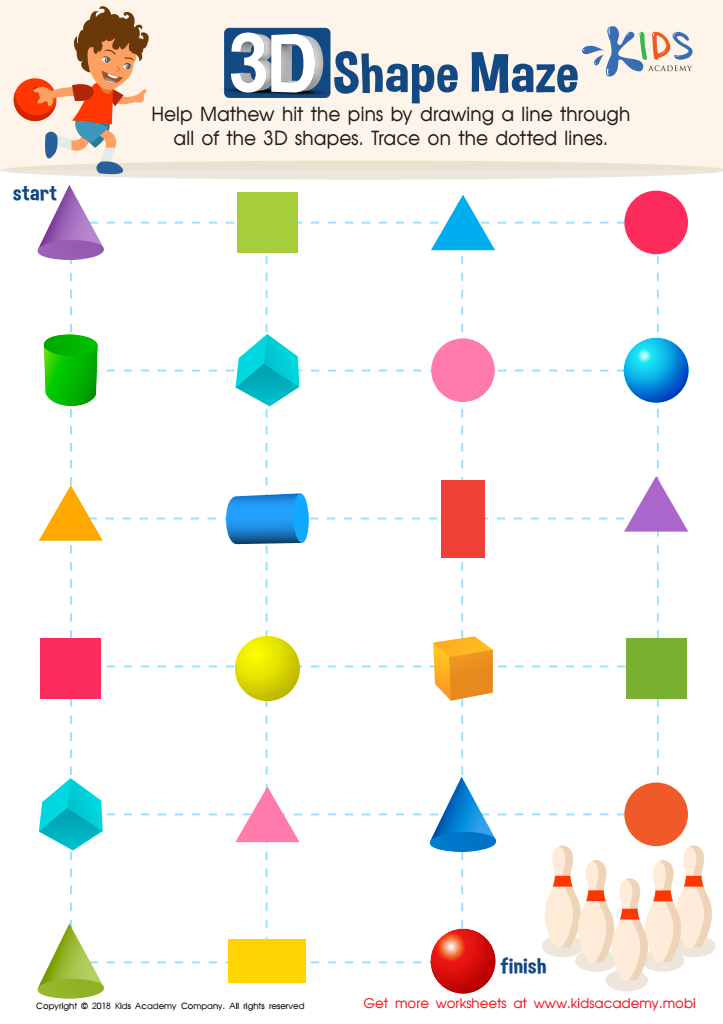
Shapes Maze Geometry Worksheet
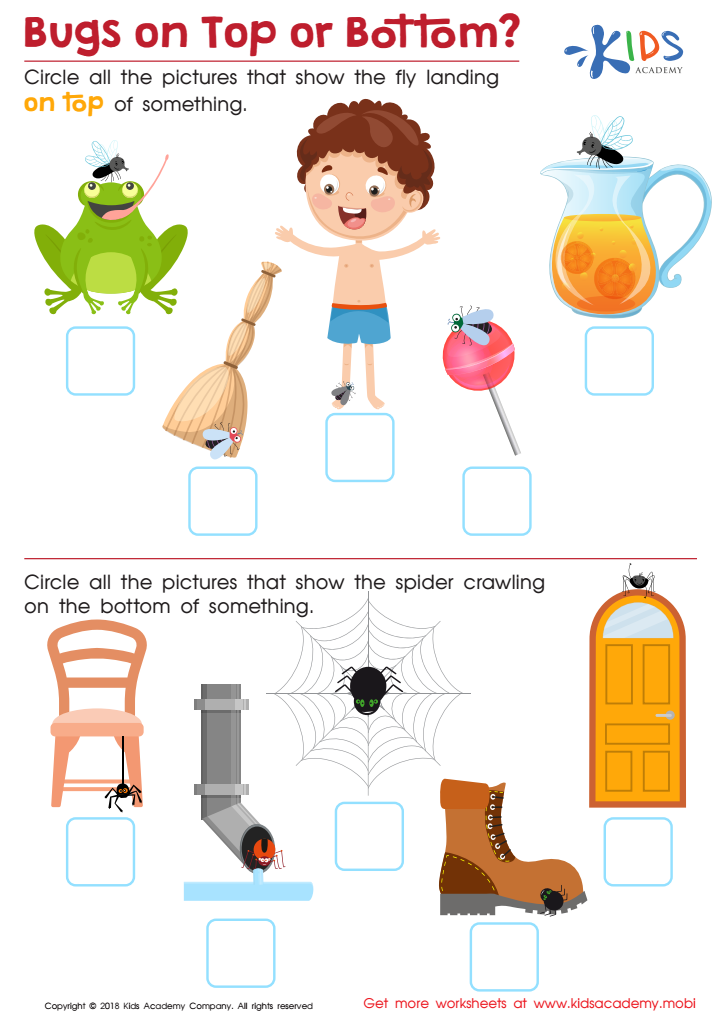
Bugs on Top or Bottom? Worksheet








Spatial reasoning, particularly in the context of normal geometry, is crucial for young children aged 3-7 as it forms the foundation for many essential cognitive skills. Firstly, it enhances problem-solving abilities. When children play with blocks, arrange puzzles, or navigate shapes, they develop an understanding of how spaces and forms relate to one another. This underpins more complex mathematical concepts they'll encounter later on.
Moreover, spatial reasoning supports academic achievement across various subjects. Studies have shown that strong spatial skills correlate with better performance in science, technology, engineering, and mathematics (STEM). For example, being able to visualize the outcome of rotating an object or understand the parts of a whole are skills used in both geometry and daily life.
Additionally, fostering spatial skills at an early age aids in developing fine motor skills. Activities that involve spatial reasoning, like drawing shapes, stacking objects, or sorting, help refine coordination and precision.
Apart from academic and motor skills, spatial reasoning helps in developing critical life skills. Children learn directions, improve memory as they recall object placements, and gain confidence in their ability to tackle more complex tasks. Therefore, parents and teachers should prioritize spatial reasoning exercises in early education, laying a strong foundation for both academic and personal development.








