
Developing analytical thinking Normal Numbers Worksheets for Ages 3-7
3 filtered results
Difficulty Level
Grade
Age
-
From - To
Subject
Activity
Standards
Unlock your child's potential with our "Developing Analytical Thinking Normal Numbers Worksheets" designed for ages 3-7. These engaging, printable activities turn learning numbers into an interactive, fun experience that fosters analytical thinking from an early age. Each worksheet is crafted to challenge young minds, promoting problem-solving skills and number comprehension through playful exercises. Our well-structured tasks help children grasp foundational math concepts effortlessly while keeping their curiosity piqued. Ideal for preschoolers and young learners, these worksheets pave the way for academic success. Visit our website to nurture your child's analytical abilities in a creative, enjoyable manner.
Favorites
With answer key
Interactive
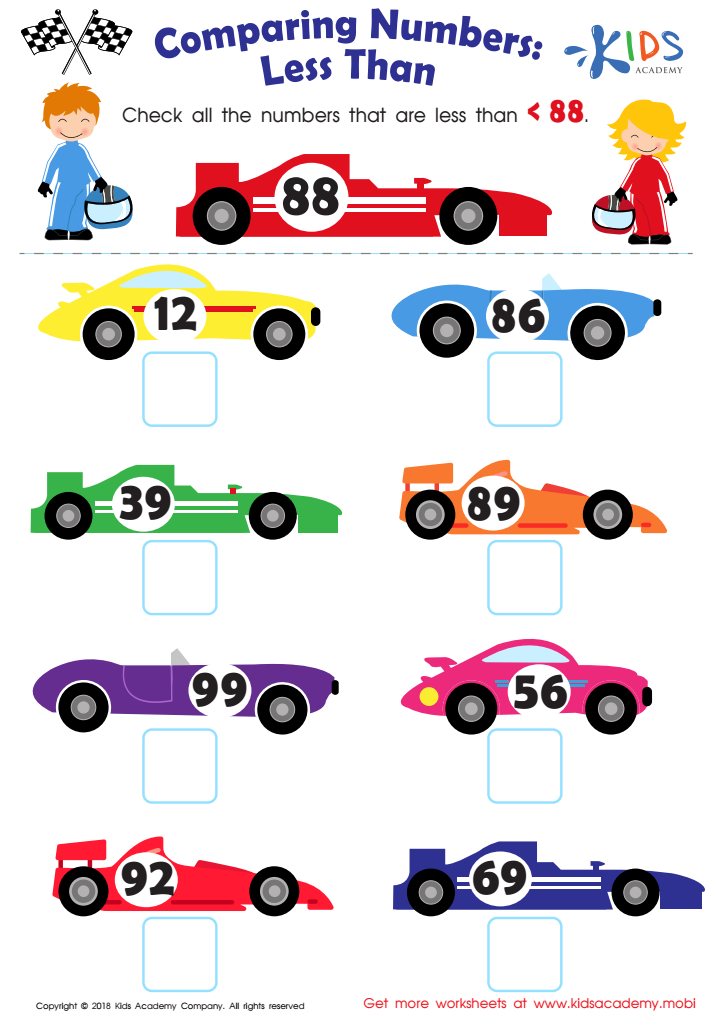
Less Than Worksheet
Compare numbers with your child using this fun worksheet! Paintings of sports cars add visuals to the task of counting up to 88. Make learning enjoyable with this colorful activity - your child will stay engaged and eager to learn more.
 Assign to My Students
Less Than Worksheet
Worksheet
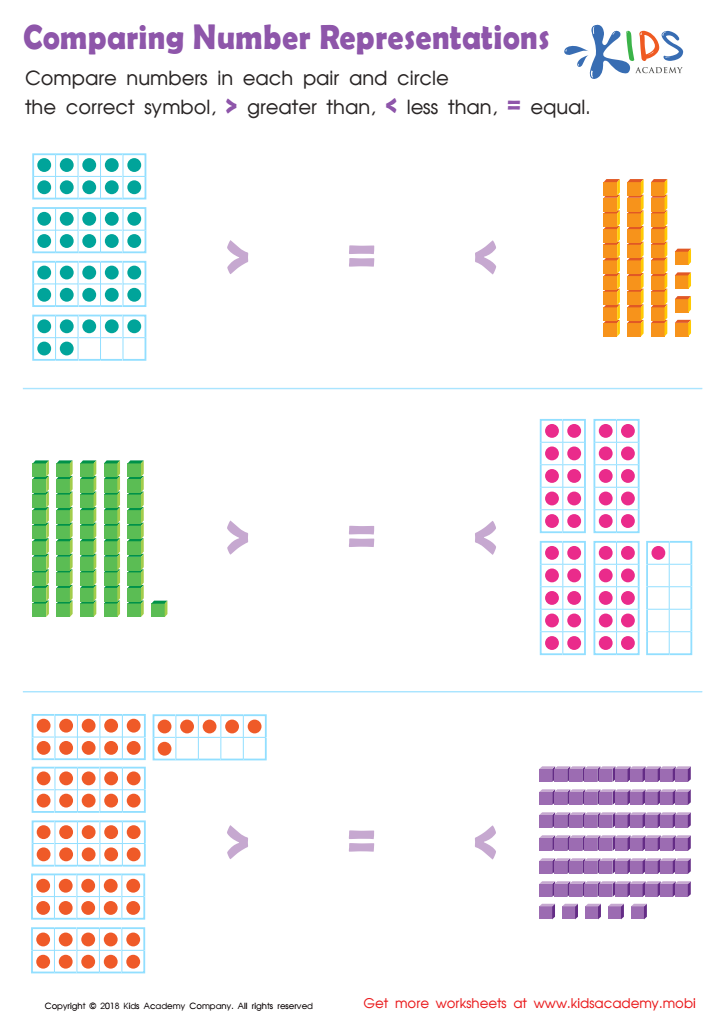
Comparing Number Representations Worksheet
Children need number representation skills to develop efficient computation and number sense. This free worksheet gives them practice with ten frames and place value blocks. They compare numbers and select the right comparative symbol: <, > or =. This helps them build a solid foundation for math.
Comparing Number Representations Worksheet
Worksheet
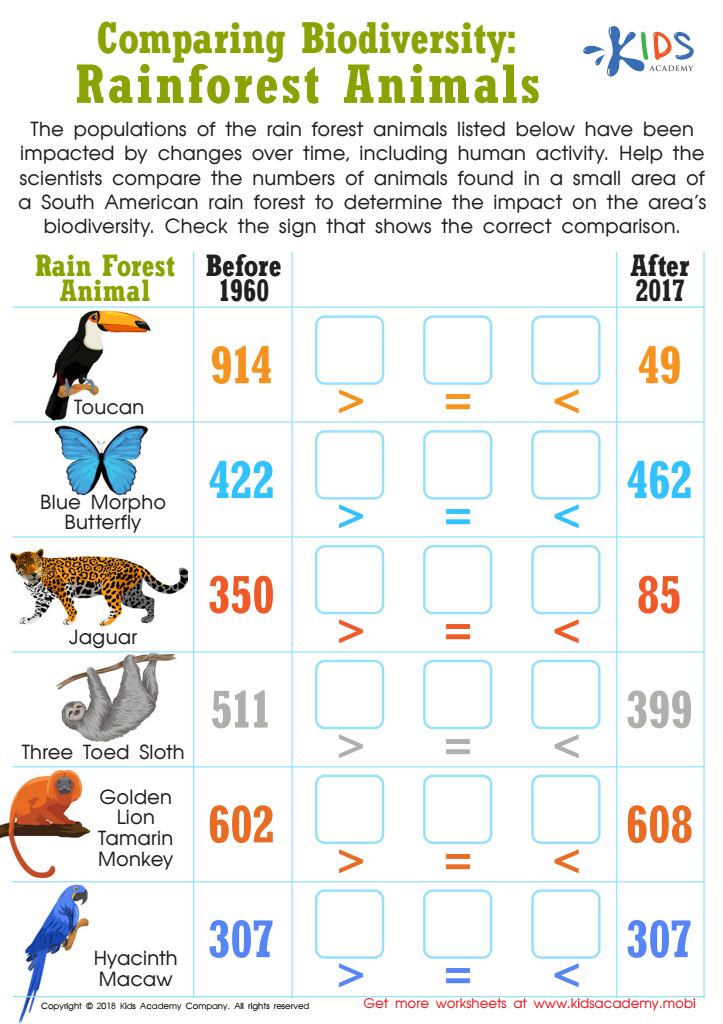
Comparing Biodiversity: Rainforest Animals Worksheet
This dynamic PDF worksheet combines fun and education. Kids will explore rainforest animals and biodiversity, comparing numbers from 1960 to 2017. They'll strengthen number sense and reasoning skills while learning about area biodiversity and its effects. A perfect mix of math and social science!
Comparing Biodiversity: Rainforest Animals Worksheet
Worksheet
Join Kids Academy for Free
Who is primarily going to use this learning content?





.jpg)


Developing analytical thinking in young children aged 3-7 is critical for laying a strong foundation for their future learning and cognitive abilities. Parents and teachers should prioritize this because analytical thinking fosters problem-solving skills, which are essential not only for mathematics and science but for day-to-day decision making and understanding complex situations as children grow. Skills such as pattern recognition, logical reasoning, and critical thinking begin taking shape at this age when their brains are highly malleable.
Incorporating normal numbers into early childhood analysis supports clear comprehension of basic numerical operations and their practical applications in real-life scenarios. For instance, understanding the concept of adding or subtracting items strengthens numerical fluency and gives children confidence in handling everyday tasks like sharing toys or counting objects.
Moreover, engaging young minds in activities that promote analytical thinking can cultivate curiosity and a love for learning, encouraging them to ask questions and explore solutions independently. This not only enhances academic performance but also nurtures creativity and perseverance through challenges.
Overall, fostering these skills early can create a more adaptable and capable generation, equipped with the tools to efficiently navigate and contribute meaningfully to an increasingly complex world. By focusing on these developmental milestones, parents and teachers provide invaluable support to a child’s lifelong educational journey.








