Counting practice Normal Math Worksheets for Ages 3-7 - Page 2
27 filtered results
-
From - To
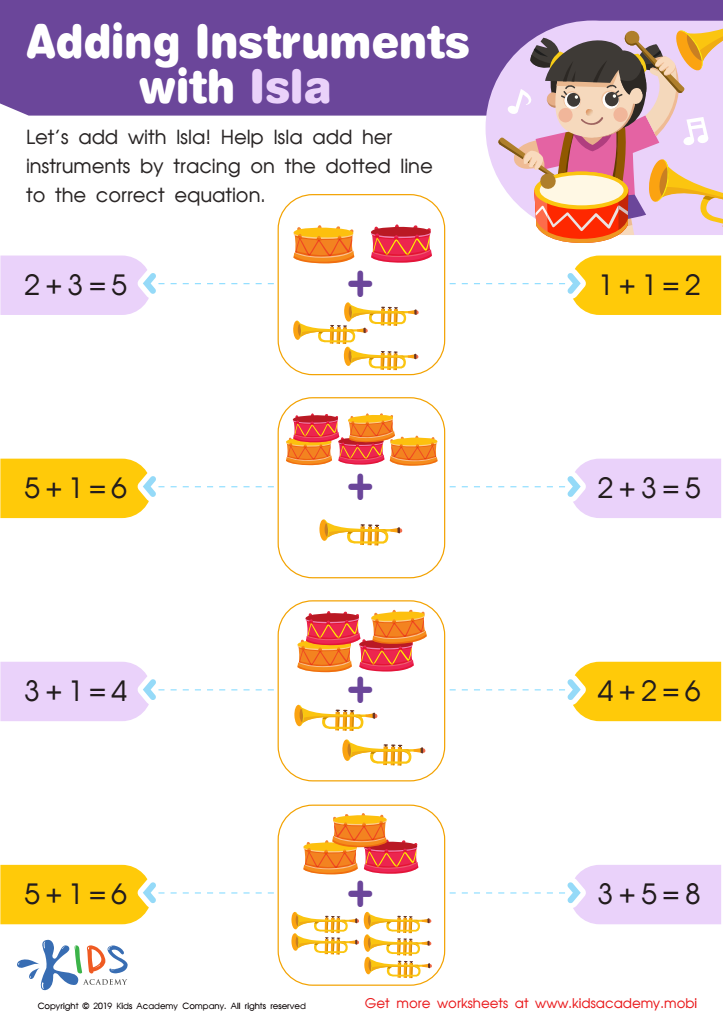
Adding Instruments with Isla Worksheet
 Assign to My Students
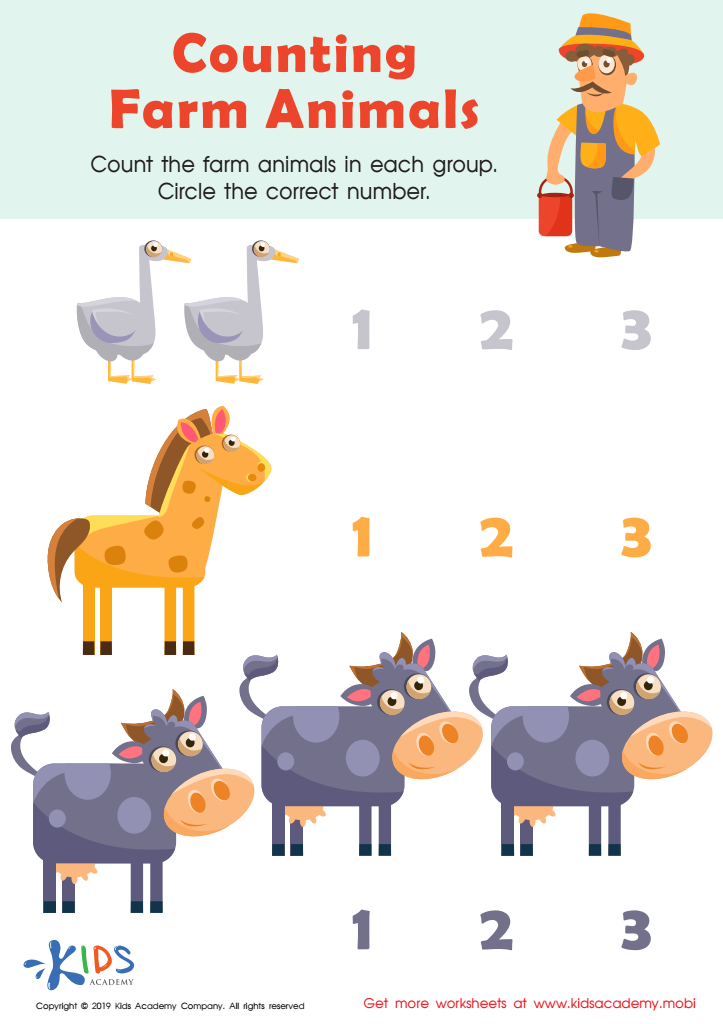
Counting Farm Animals Worksheet
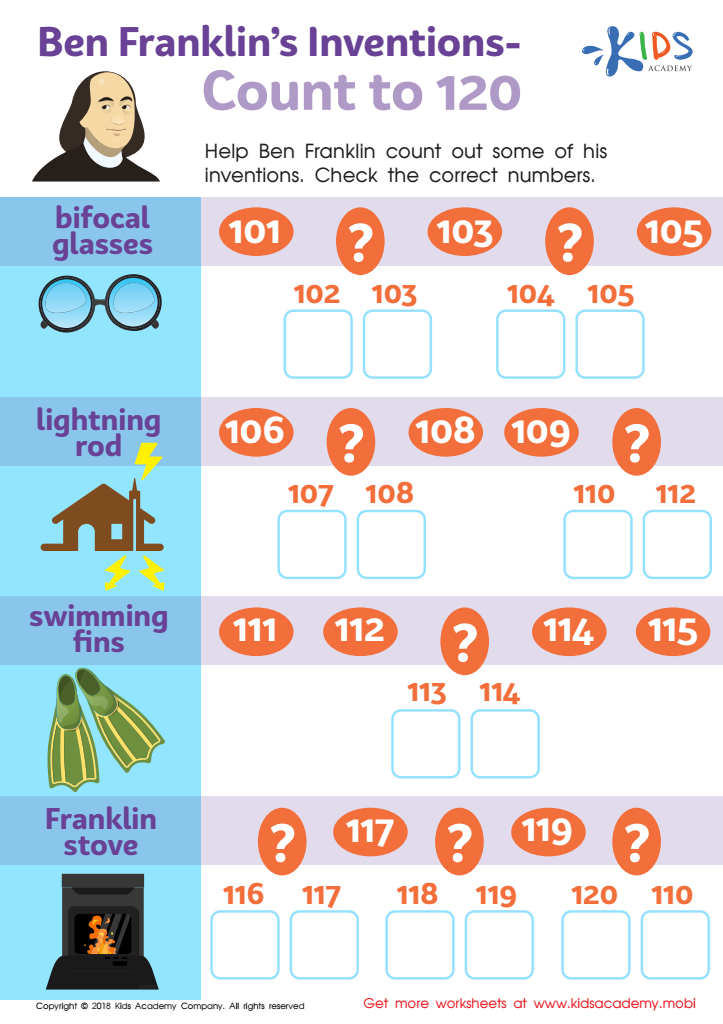
Ben Franklin’s Inventions – Count to 120 Worksheet








Counting practice for children aged 3-7 is crucial as it forms the foundation for their future mathematical understanding and problem-solving skills. At this early age, children are developing cognitive abilities and a sense of numbers, which are essential for more complex mathematical concepts they will encounter later.
Parents and teachers should prioritize counting practice because it helps children understand number order (ordinality) and quantity (cardinality). By consistently practicing counting, children learn to recognize patterns, make comparisons, and understand basic operations like addition and subtraction. This foundation is not just about memorizing numbers but about grasping the concepts that numbers represent.
Furthermore, counting practice enhances cognitive development. It aids children in developing memory, focus, and the ability to follow sequences. These skills are transferable to other academic areas and daily life, fostering overall intellectual growth.
Engaging in counting activities also builds confidence, as children experience the pleasure of learning new concepts and mastering tasks. This positive reinforcement encourages a lifelong interest in learning and problem-solving.
In essence, incorporating counting practice into daily routines ensures children develop essential skills that support their overall academic journey and life skills, making it a critical focus for parents and educators alike.








