Understanding number relationships Normal Math Worksheets for Ages 3-7
3 filtered results
-
From - To
Discover engaging math worksheets designed for children ages 3-7 to help them grasp and understand number relationships. Our expertly crafted activities focus on foundational skills such as counting, comparing quantities, and recognizing number patterns. These worksheets create a fun and interactive learning experience, enabling young learners to build a strong mathematical foundation. Perfect for parents and educators, our resources simplify the teaching process while keeping kids captivated. Boost your child’s confidence and enthusiasm in math with our vibrant, easy-to-use worksheets tailored to nurture proficiency and a love for numbers. Explore more at Kids Academy!
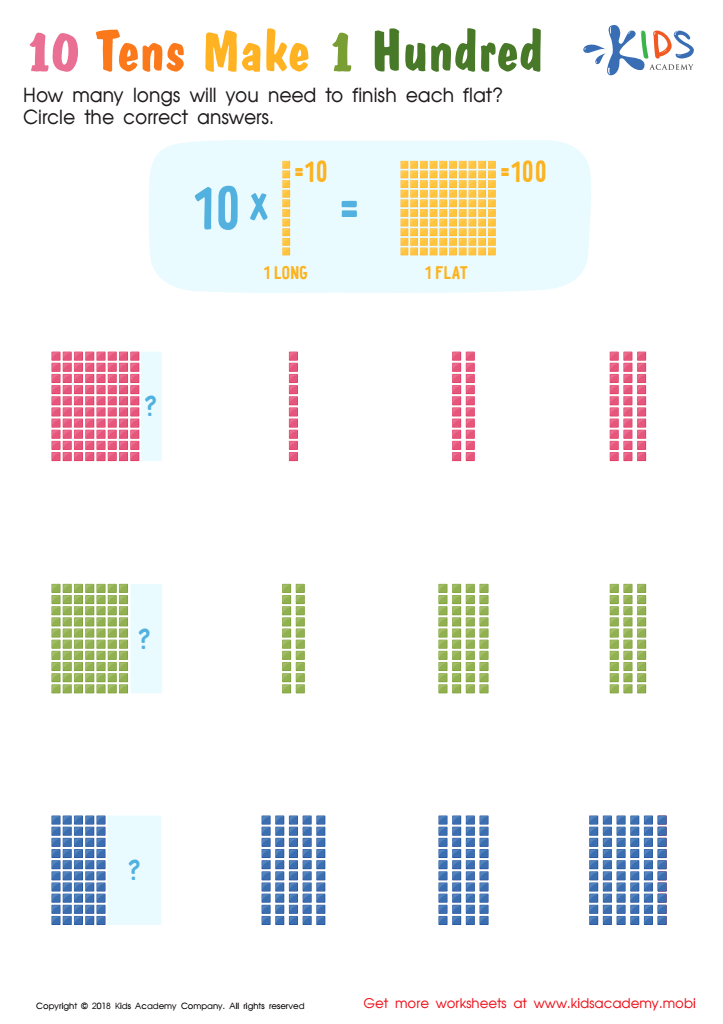
10 Tens Make 1 Hundred Worksheet
 Assign to My Students
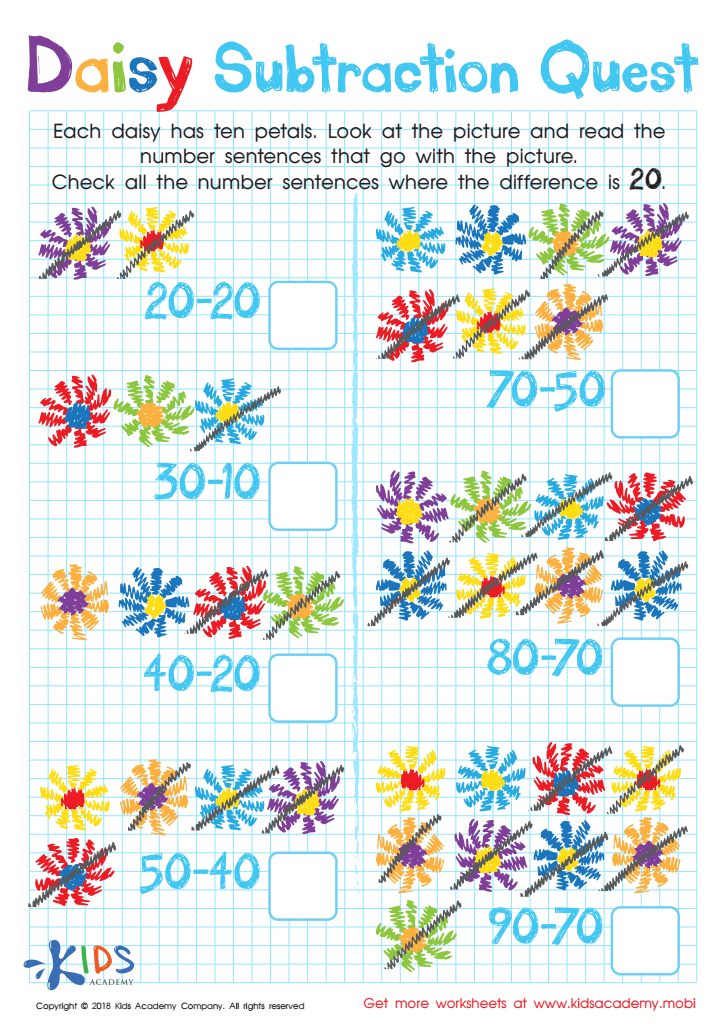
Daisy Subtraction Quest Worksheet
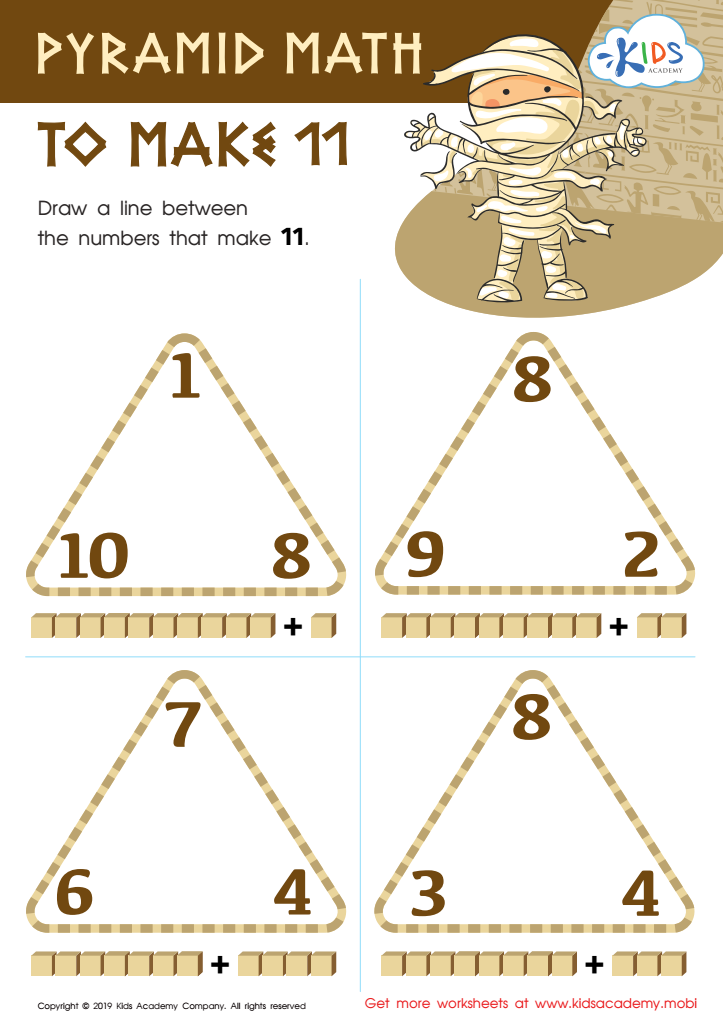
Pyramid Math to Make 11 Worksheet


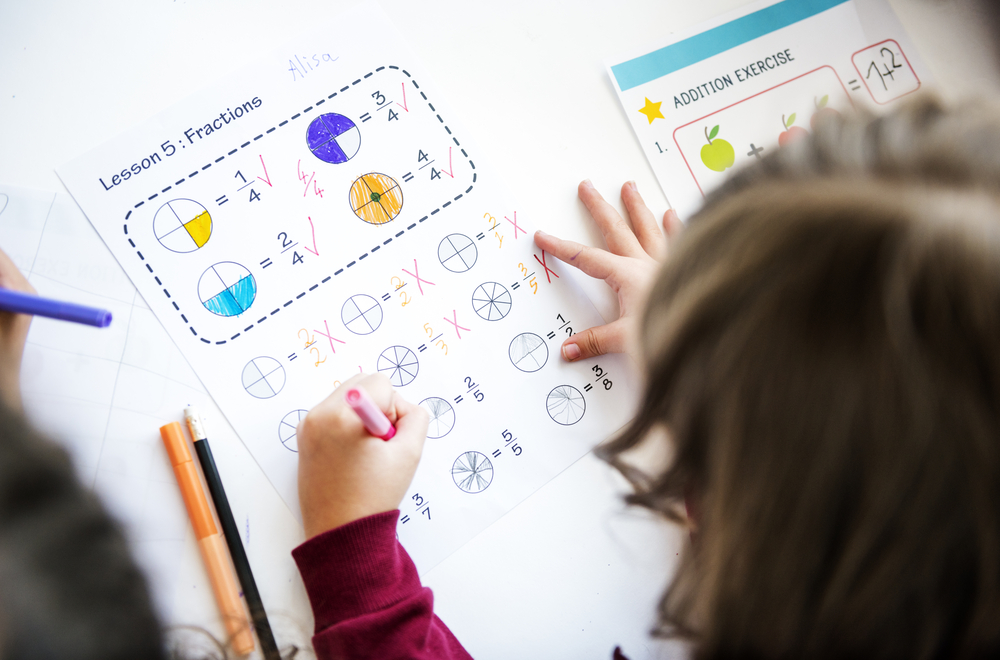




Understanding number relationships, particularly in the age range of 3-7, is foundational for a child’s mathematical development. For both parents and teachers, fostering these skills early on is crucial. Firstly, it establishes a strong numerical foundation, enabling children to grasp more complex mathematical concepts as they progress in their education. By understanding basic relationships like more than, less than, and equal to, as well as recognizing numerical patterns, children develop critical thinking and problem-solving skills.
Moreover, early mastery of number relationships promotes confidence in mathematical abilities. Young learners who understand these concepts tend to approach math with a more positive attitude, reducing anxiety often associated with the subject in later years. This early success can instill a love for learning and pave the way for academic achievement not only in math but across all subjects.
In practical daily life, these skills are essential. Children apply number relationships when they share equally, compare quantities, or make decisions based on numerical information. Early proficiency supports not only academic success but also helps children navigate their world more effectively and confidently.
In summation, early comprehension of number relationships ensures that children are well-equipped for their future educational journeys and real-life challenges, making it a vital focus for both parents and teachers.








