Critical Thinking Normal Word Problems Worksheets for Ages 3-7
3 filtered results
-
From - To
Enhance your child's critical thinking skills with our engaging Critical Thinking Normal Word Problems Worksheets designed for ages 3-7. These thoughtfully crafted activities stimulate young minds by combining problem-solving with fun scenarios that children can easily relate to. Each worksheet encourages creativity and logic, guiding kids to analyze situations, develop reasoning skills, and build a strong foundation in math concepts. Perfect for home or classroom use, our printable worksheets are designed to cater to various learning styles. Foster essential cognitive skills while keeping learning enjoyable and interactive with our vibrant, kid-friendly designs. Let your little ones embark on a critical thinking adventure today!
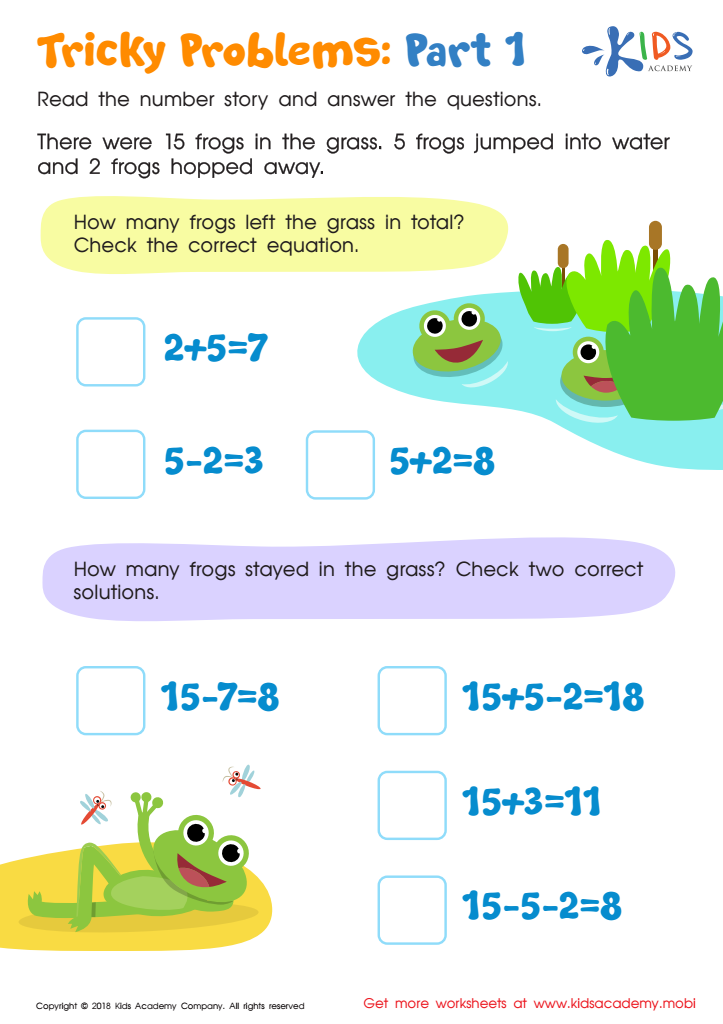
Tricky Problems Worksheet: Part 1
 Assign to My Students
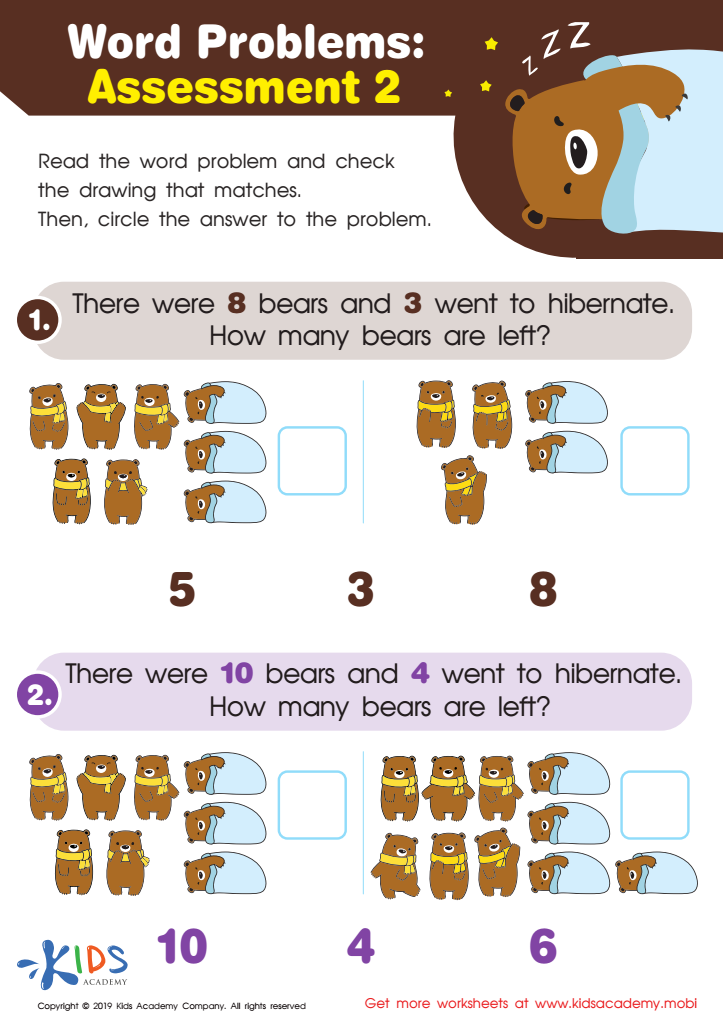
Word Problems: Assessment 2 Worksheet
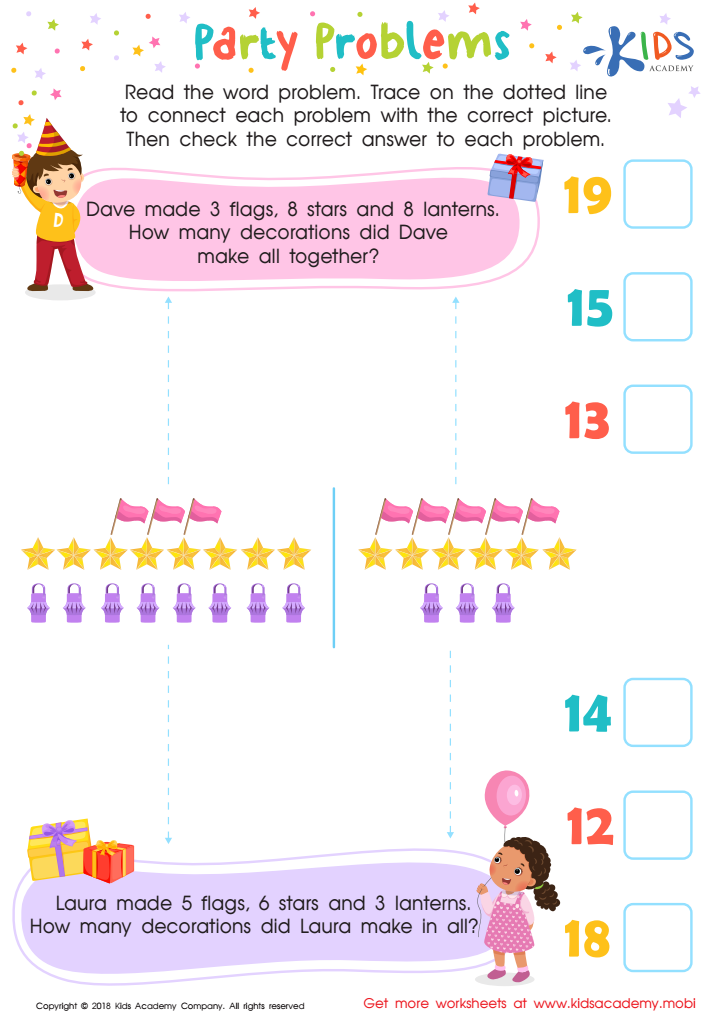
Party Problems Worksheet








Critical thinking is an essential skill that lays the foundation for effective problem-solving and decision-making abilities in young children. For ages 3-7, engaging in Critical Thinking Normal Word Problems nurtures cognitive development and fosters a curious mindset.
First, these problems encourage children to analyze situations by translating everyday scenarios into understandable concepts. As they tackle simple questions, kids learn to discern relevant information, which sharpens their reasoning abilities. This skill has profound implications for their academic future, as critical thinking becomes increasingly necessary in more complex subjects.
Moreover, word problems enhance language development. Children practice articulation, comprehension, and vocabulary enrichment while deciphering the context of a problem. This dual focus on math and language is vital for a holistic educational approach.
Parents and teachers should care about these word problems as they help create a safe space for trial and error, promoting resilience and a growth mindset. Rather than merely memorizing facts, children learn the joy of exploration and flexibility in thought processes. Ultimately, integrating Critical Thinking Normal Word Problems into early education not only prepares children for future learning but also equips them with life skills that extend beyond the classroom.








