Filters

132 filtered results

Clear all filters
Favorites
With answer key
Interactive

132 filtered results

Difficulty Level

Grade


Subject

    Check out this FREE Trial Lesson on Building Vocabulary for age 3-7!

    Distinguish Between Similarly Spelled Words

    Favorites
    With answer key
    Interactive
    • 3-7
    • Building Vocabulary
    • Normal
    Reading: IGH as Long I Worksheet
    Reading: IGH as Long I Worksheet

    Reading: IGH as Long I Worksheet

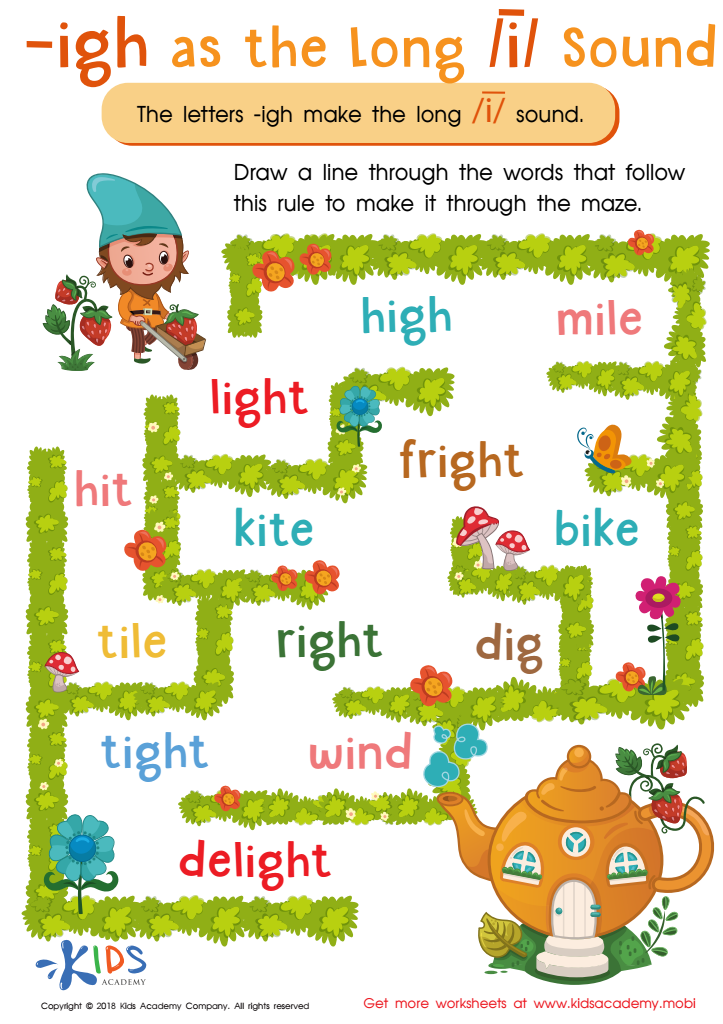
    Kids can have fun and learn with this maze! They'll look for and read words with the 'long I' sound spelled 'igh'. Most words ending with 'T' have this spelling. Decode words while learning about long vowel sounds and their spellings.
    Reading: IGH as Long I Worksheet
    Worksheet
    Helpful Health Worksheet
    Helpful Health Worksheet

    Helpful Health Worksheet

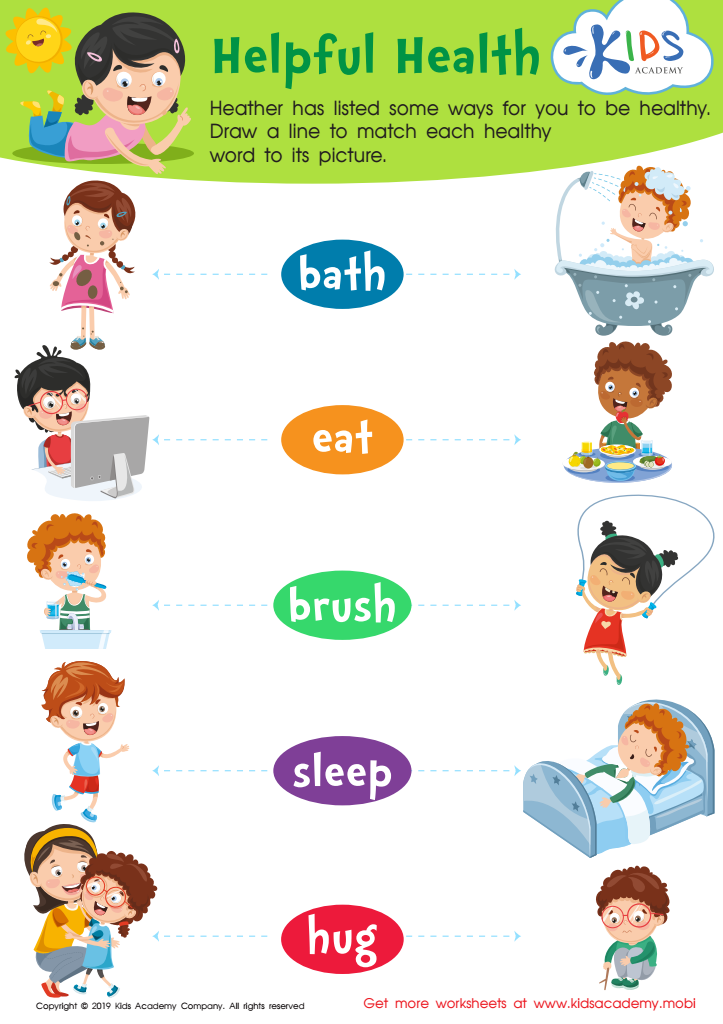
    Kids can learn healthy habits with this free worksheet! With their pal Heather, they'll trace lines to connect health words with pictures like brushing teeth, hugging, and getting enough sleep. It's a great way to help young ones understand healthy activities.
    Helpful Health Worksheet
    Worksheet
    Context Clues and Homophones Worksheet
    Context Clues and Homophones Worksheet

    Context Clues and Homophones Worksheet

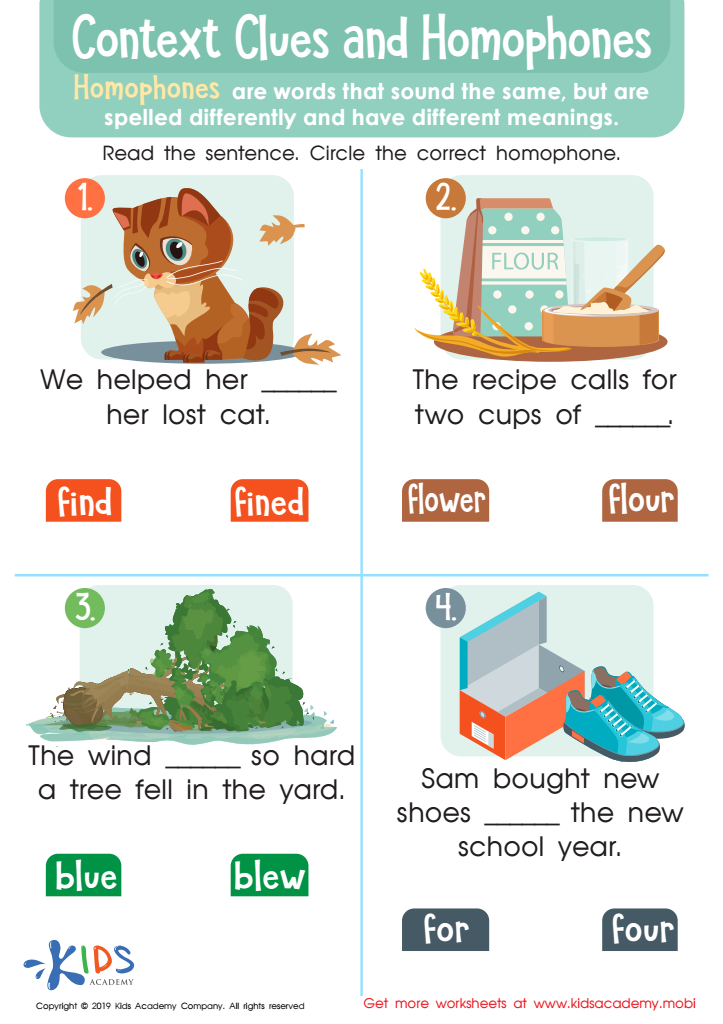
    Make sure kids understand what homophones are (words that sound the same, different spellings, meanings). Give examples and look at the printout. Read each sentence and sound out words. Help them pick the right one and circle it.
    Context Clues and Homophones Worksheet
    Worksheet
    Verb worksheet for grade 2
    Verb worksheet for grade 2

    Verb Worksheet

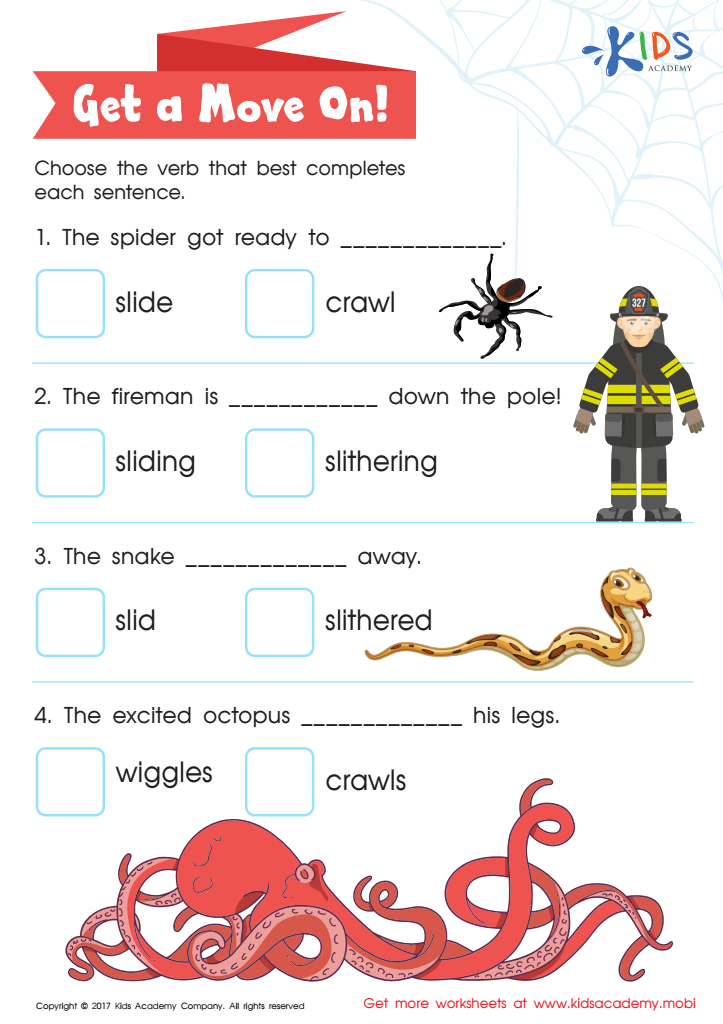
    Help your child learn verbs with this fun verb worksheet for grade 2! Firemen slide down poles, spiders crawl - they'll learn while they select the right verb in each sentence.
    Verb Worksheet
    Worksheet
    Pair Pears Worksheet
    Pair Pears Worksheet

    Pair Pears Worksheet

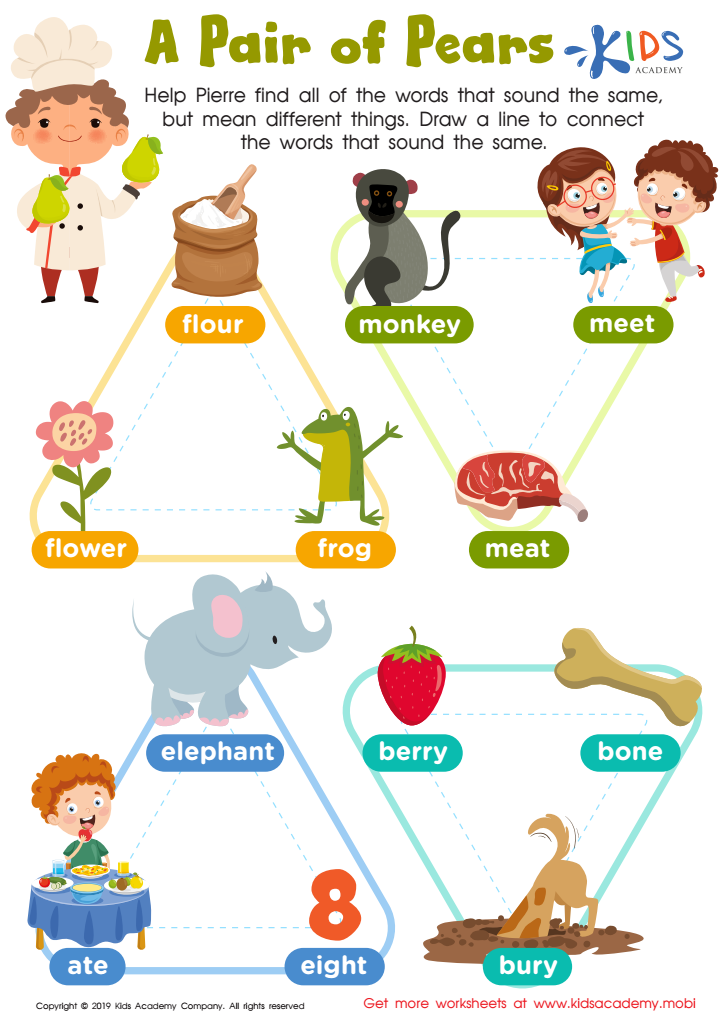
    Young readers can have difficulty knowing when to use the right homophone. This free worksheet helps them use familiar imagery to understand better by connecting words that sound similar but are spelled and mean different things. Students will trace the lines to form a picture and have a reference image to differentiate between the different homophones.
    Pair Pears Worksheet
    Worksheet
    Sight Words Worksheet: B Words
    Sight Words Worksheet: B Words

    "B" Words Printable Sight Words Worksheet
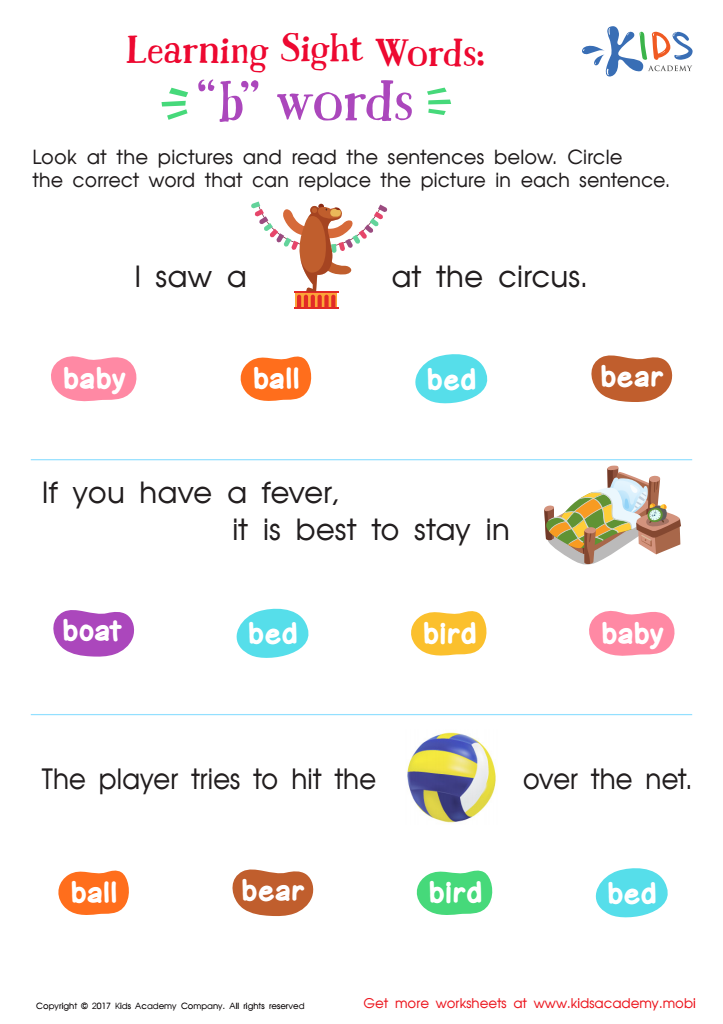
    Kids will learn sight words quickly with this fun worksheet! "B" Words offers guided practice with simple sentences and pictures. Build your child's reading confidence with this helpful worksheet and watch them become a master!
    "B" Words Printable Sight Words Worksheet
    Worksheet
    Puss in Boots Vocabulary Worksheet
    Puss in Boots Vocabulary Worksheet

    Puss in Boots Vocabulary Worksheet

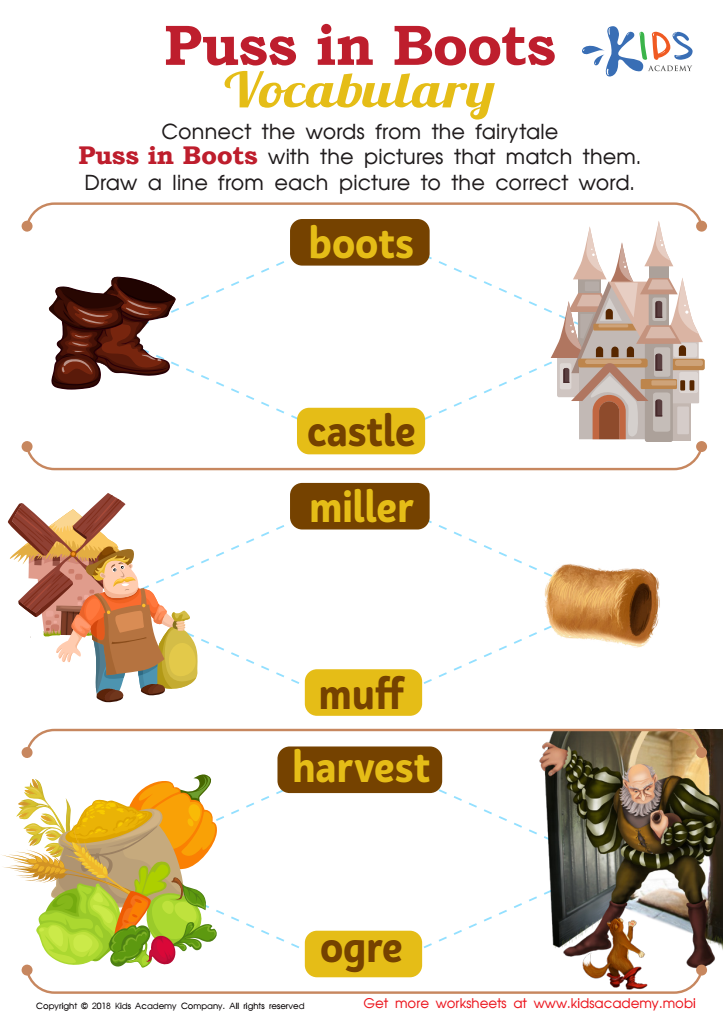
    Let your kids enjoy story-telling while learning at the same time. Help them learn from the fairytale, Puss in Boots, by connecting words from the worksheet with the matching pictures. Ask them to draw a line between each picture and corresponding word to build their vocabulary.
    Puss in Boots Vocabulary Worksheet
    Worksheet
    Rabbit Facts Worksheet
    Rabbit Facts Worksheet

    Rabbit Facts Worksheet

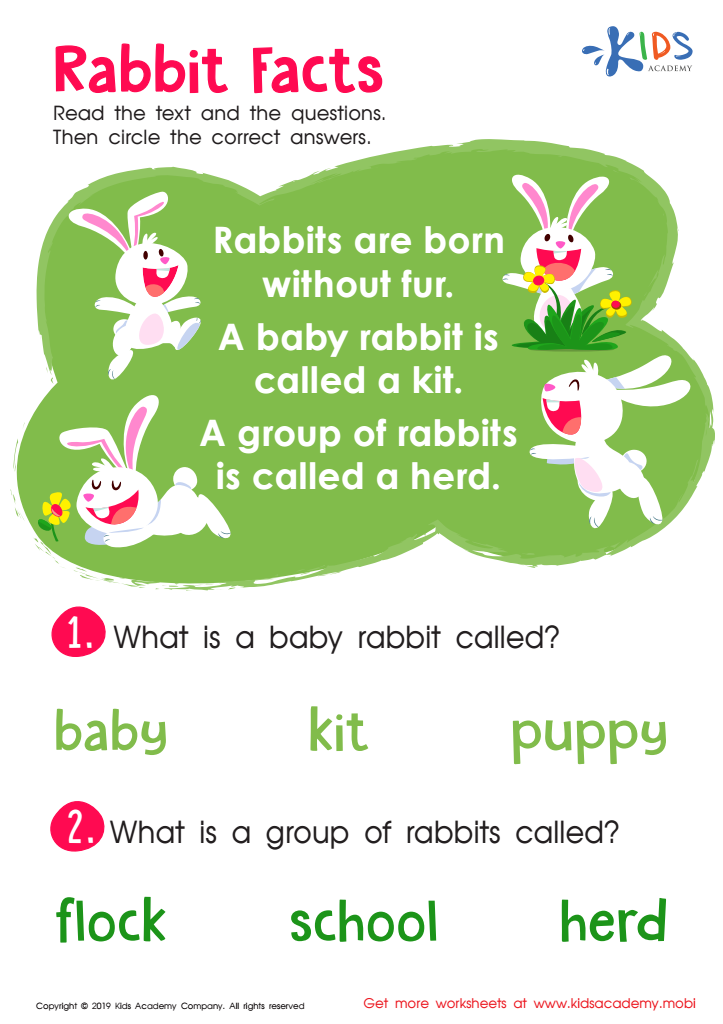
    Reading comprehension skills can be strengthened with this fun PDF about fluffy rabbits. It helps kids recall and retell details from the text while engaging them in the topic. This encourages success in reading comprehension.
    Rabbit Facts Worksheet
    Worksheet
    Sensory Words Worksheet
    Sensory Words Worksheet

    Sensory Words Worksheet

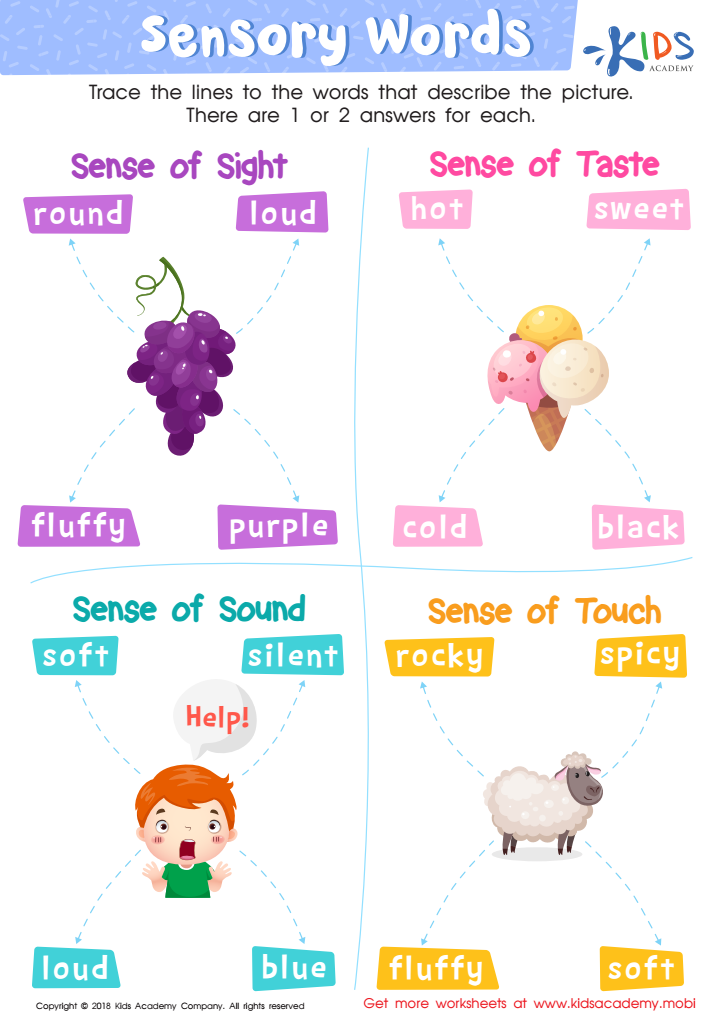
    This worksheet helps students explore sensory words by looking at pictures and selecting one or two words to describe how it looks, feels, tastes, smells or sounds. Adding sensory words to texts makes them more interesting and helps students comprehend stories and articles better.
    Sensory Words Worksheet
    Worksheet
    Princess and the Pea Questions Worksheet
    Princess and the Pea Questions Worksheet

    Princess and the Pea Questions Worksheet

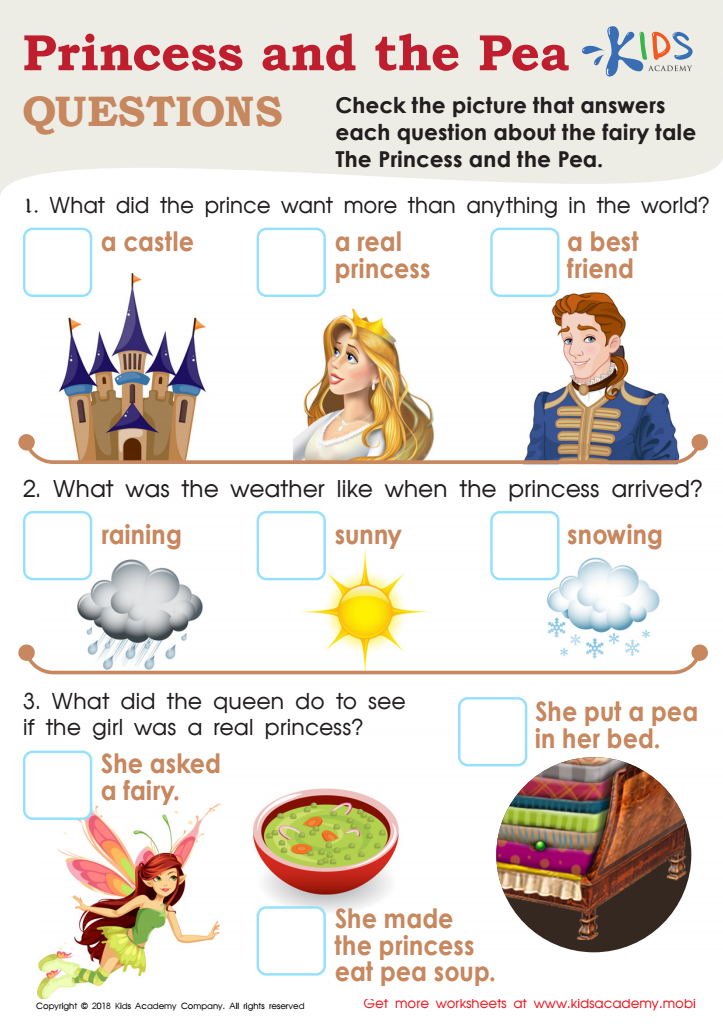
    Your kid knows The Princess and the Pea inside-out? Test their knowledge with this worksheet. Ask your little one to read the questions and match each one to the picture. It's a fun way to see just how much attention they've paid to their bedtime story.
    Princess and the Pea Questions Worksheet
    Worksheet
    Picture Match Worksheet
    Picture Match Worksheet

    Picture Match Worksheet

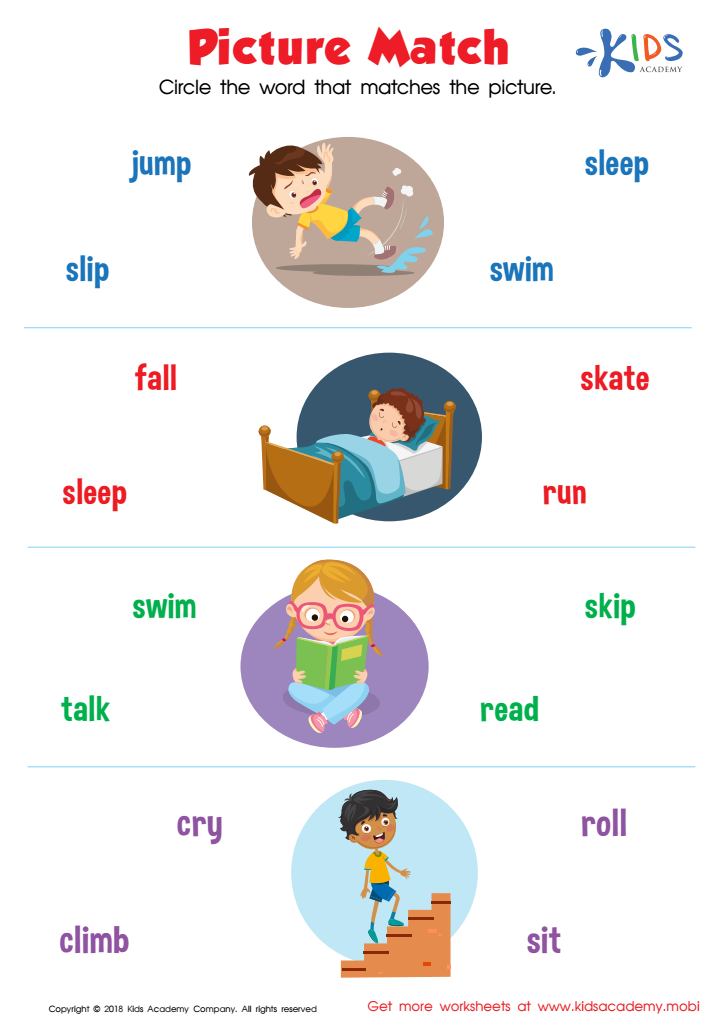
    If your kids can read, this exercise will be a breeze. Show the pictures and ask them what's happening. Read the words and see if they can identify any of them and help them circle the word that matches the picture. Simple!
    Picture Match Worksheet
    Worksheet
    Trace Read You Like Worksheet

    Trace Read You Like Worksheet

    Trace Read You Like Worksheet

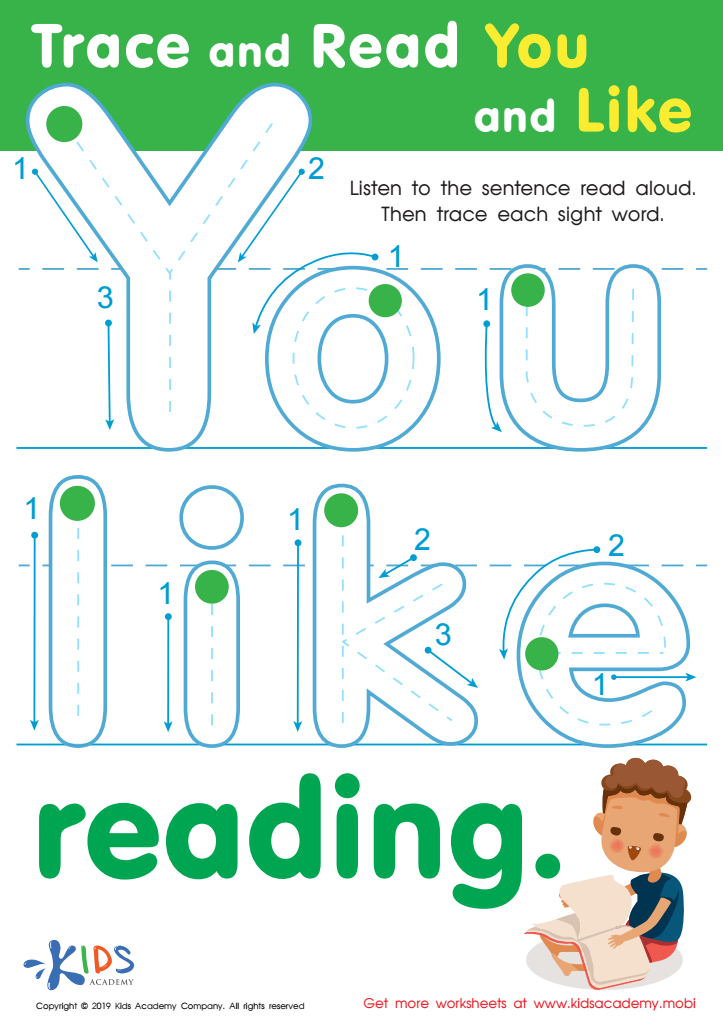
    Sight words help children become confident and fluent readers. This free worksheet encourages success with basic 'you' and 'like' words. Writing them with traceable lines and green dots shows motion and builds sight word vocabulary. Help your child master the basics and boost their reading progress!
    Trace Read You Like Worksheet
    Worksheet


    ... 5 6

    Building vocabulary in children ages 3-7 is crucial for their overall development, and parents or teachers should prioritize it for several reasons. First, a rich vocabulary enhances communication skills. The ability to express thoughts clearly and understand others facilitates better social interactions and relationships, leading to improved emotional well-being.

    Second, vocabulary development is linked to academic success. Children with a strong vocabulary tend to perform better in reading and writing, core components of early education. Language skills are foundational for learning across all subjects, and a well-developed vocabulary can enhance comprehension and problem-solving abilities.

    Third, vocabulary building stimulates cognitive growth. When children learn new words, they expand their thought processes and perspectives, fostering creativity and critical thinking. Engaging in vocabulary-rich activities—such as reading together, playing word games, or having rich conversations—encourages curiosity and a love for language.

    Lastly, investing time in vocabulary development nurtures a positive attitude towards learning. When children feel confident in their language abilities, they are more eager to participate in classroom discussions and engage in educational activities. Thus, parents and teachers who prioritize vocabulary building are setting the stage for lifelong learning and success.