
Phonics practice Normal Building Vocabulary Worksheets for Ages 3-7
5 filtered results
Difficulty Level
Grade
Age
-
From - To
Subject
Activity
Standards
Enhance your child's literacy skills with our "Phonics Practice Normal Building Vocabulary Worksheets" designed for ages 3-7. These engaging worksheets focus on phonics principles to help young learners improve their vocabulary and reading comprehension. Packed with interactive activities, each worksheet provides opportunities for children to recognize sounds, blend letters, and develop essential decoding strategies. Our easy-to-follow exercises promote phonetic awareness while keeping learning fun and exciting! Perfect for both classroom and home use, these resources will empower young learners and set a solid foundation for their reading journey. Explore our collection today and watch your child's confidence soar!
Favorites
With answer key
Interactive
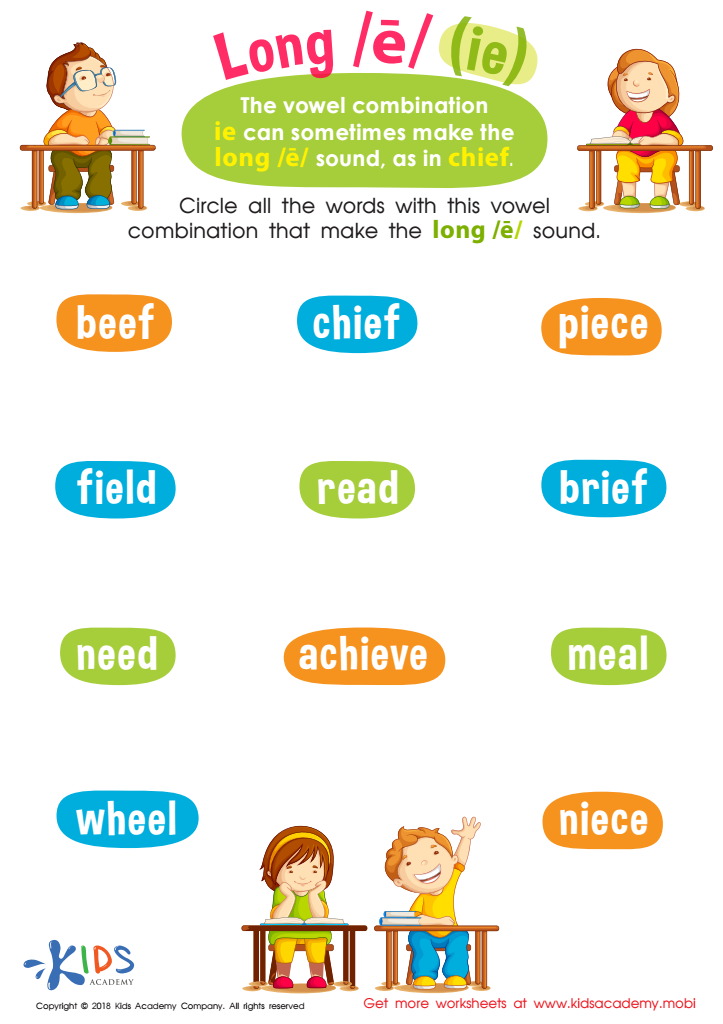
Reading: Long E and IE Worksheet
Ask your child to name some words with the long /e/ sound they hear every day. Then, read aloud all the words in the worksheet with them. Ask them to circle the words containing ie that make this sound.
 Assign to My Students
Reading: Long E and IE Worksheet
Worksheet











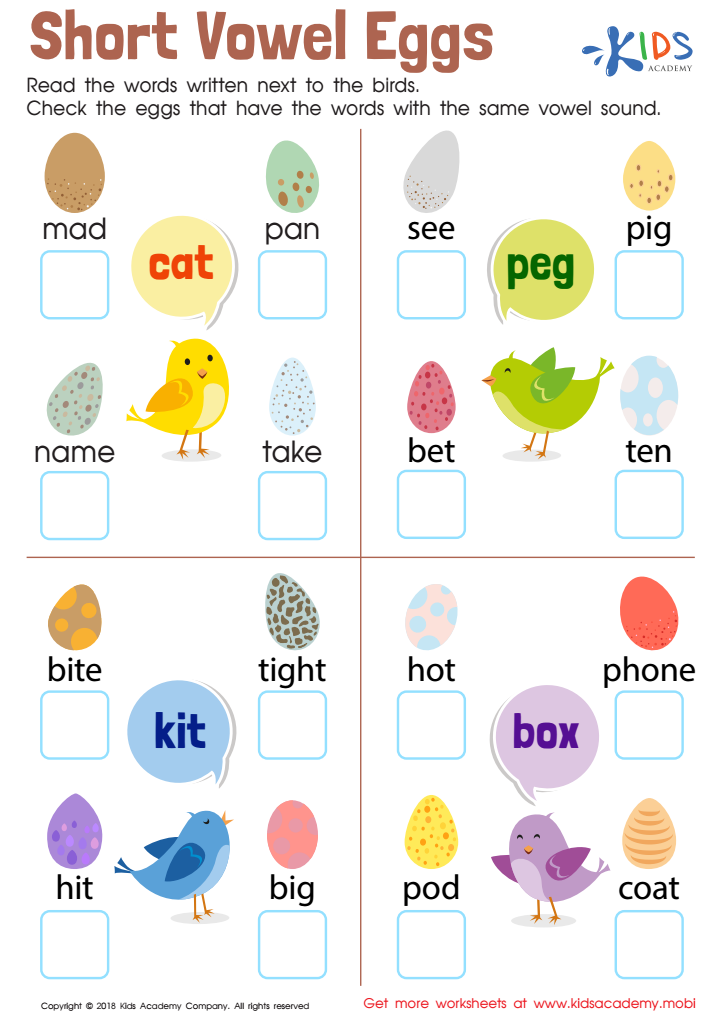
Short Vowel Eggs Worksheet
Your students will love helping these birdies pick the short vowel eggs! Have them read the words in the thought bubbles, then check off the boxes with the same short vowel sounds. The bright colors of this free Worksheet will draw them in and get them practicing their vowels!
Short Vowel Eggs Worksheet
Worksheet
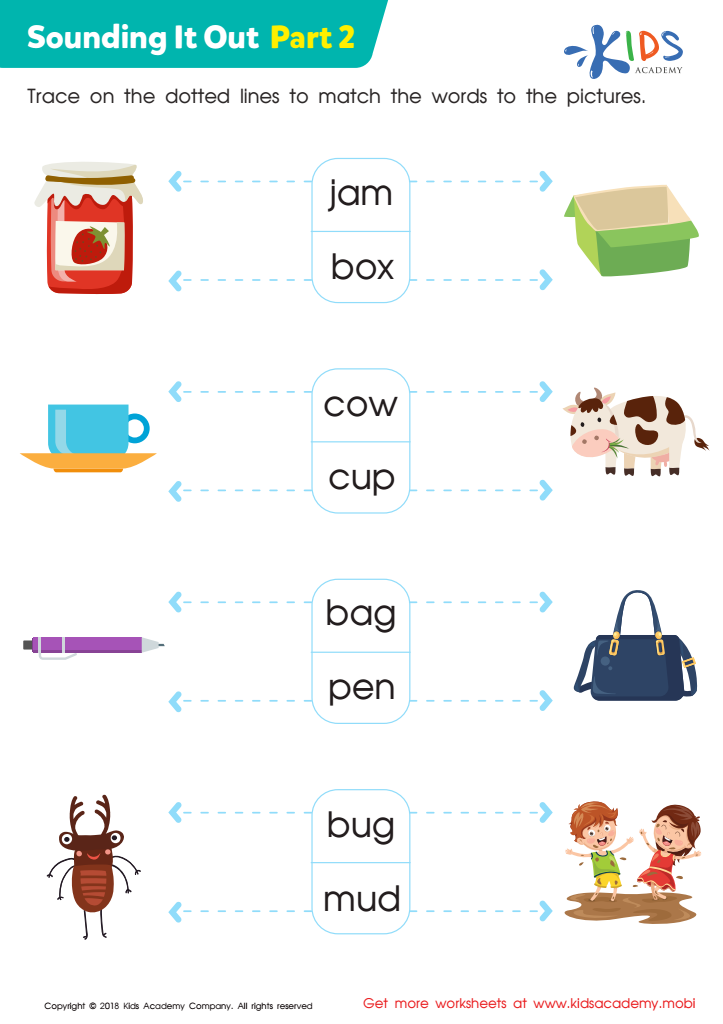
Sounding it Out: Part 2 Worksheet
Mastering phonics is key for kids to learn to read! This free worksheet uses fun pictures to help them sound out words. Ask them to name the images, then use the hints to say each word. Kids will become accomplished readers in no time!
Sounding it Out: Part 2 Worksheet
Worksheet
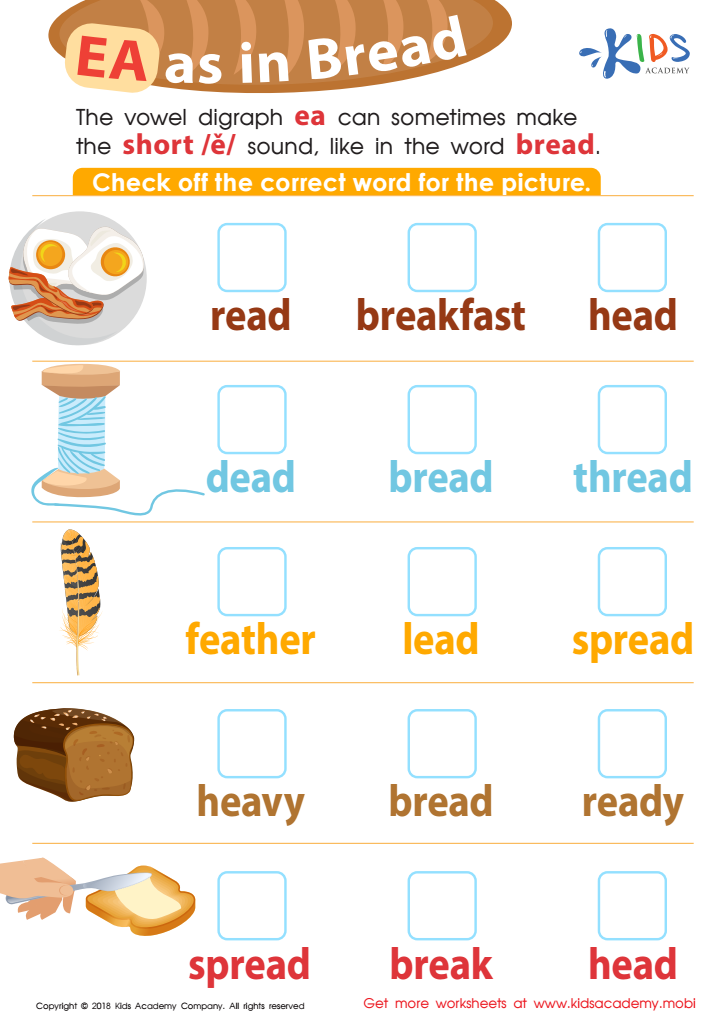
Reading: EA as in Bread Worksheet
The vowel digraph ea can be read in two ways. Examples of the long sound are "read" and "lead"; examples of the short sound are "bread" and "head". Ask your kids to give you more examples and then have them check off the correct word for the pictures on this worksheet. This will help them understand the ea sound.
Reading: EA as in Bread Worksheet
Worksheet
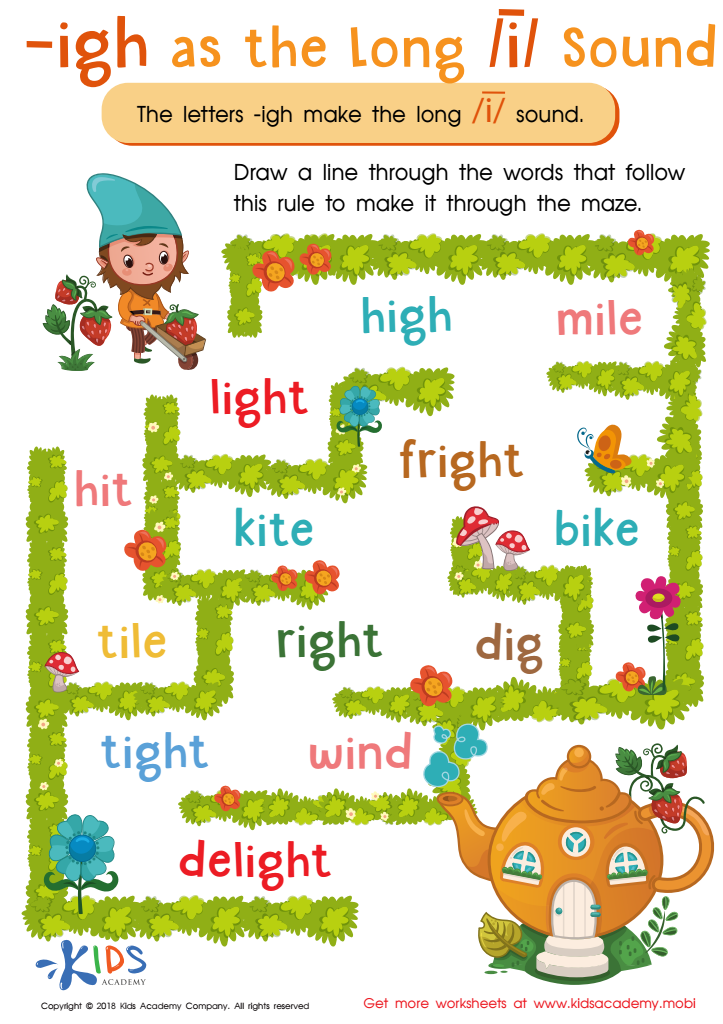
Reading: IGH as Long I Worksheet
Kids can have fun and learn with this maze! They'll look for and read words with the 'long I' sound spelled 'igh'. Most words ending with 'T' have this spelling. Decode words while learning about long vowel sounds and their spellings.
Reading: IGH as Long I Worksheet
Worksheet
Join Kids Academy for Free
Who is primarily going to use this learning content?







Phonics practice and vocabulary building are crucial components of early childhood education, particularly for children aged 3-7. During this developmental stage, children are eagerly learning to read and write, skills critical for academic success and lifelong learning. Phonics helps children understand the relationship between letters and sounds, which is fundamental to decoding words. This awareness not only accelerates their ability to read but also boosts their confidence in expressing themselves in writing.
Moreover, building a robust vocabulary is essential at this age. A rich vocabulary enhances comprehension skills, enabling children to understand stories and instructions better. As they encounter new words, they develop a deeper connection with language, which fosters critical thinking and improved communication skills.
For parents and teachers, engaging in phonics and vocabulary activities creates opportunities for meaningful interactions. These practices encourage a love for reading and language, enriching children's educational experiences. Moreover, they help identify and address any potential learning challenges early on. By investing time in phonics practice and vocabulary building, caregivers lay the groundwork for a child's future academic success and emotional well-being, creating readers who develop a passion for learning throughout their lives.








