Rhyming skills development Normal Reading Worksheets for Ages 3-7
3 filtered results
-
From - To
Enhance your child's literacy journey with our Rhyming Skills Development Worksheets, specially designed for ages 3-7. These engaging printable resources focus on fundamental reading skills, helping young learners recognize and produce rhymes, a vital component of early reading proficiency. Our worksheets feature vibrant illustrations and interactive activities that make learning fun and captivating. Parents and educators can easily incorporate these into home or classroom settings, fostering a love for reading while building phonemic awareness. Explore our collection to support your child’s growth in rhyming, vocabulary, and overall reading capabilities, laying a strong foundation for their academic success. Start today!
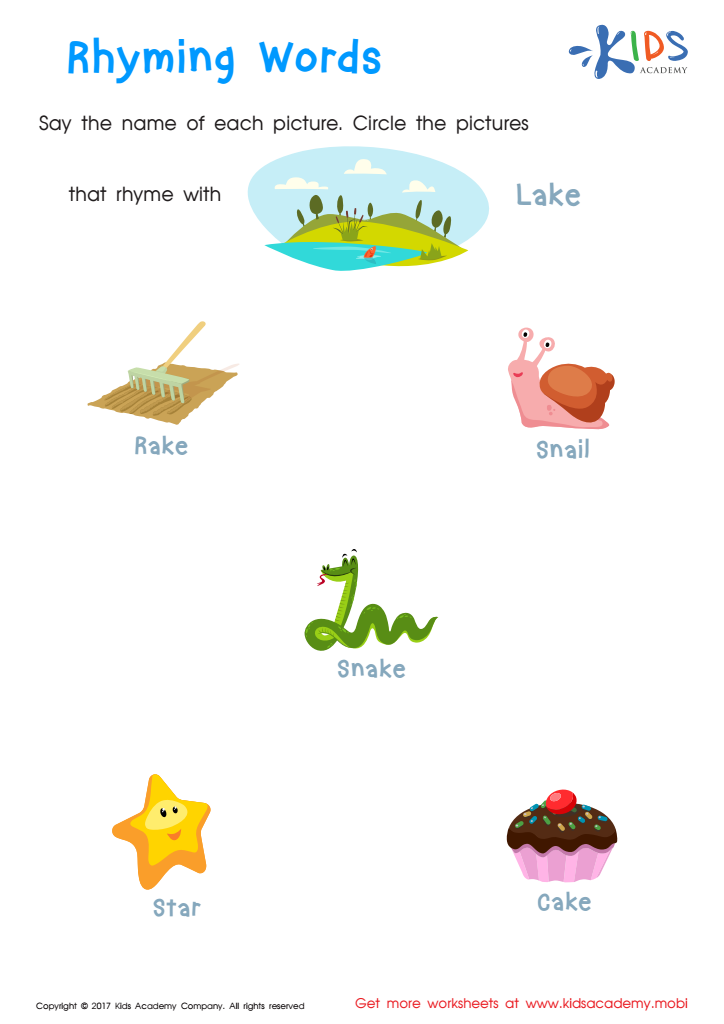
Rhyming Words Rhyming Worksheet
 Assign to My Students
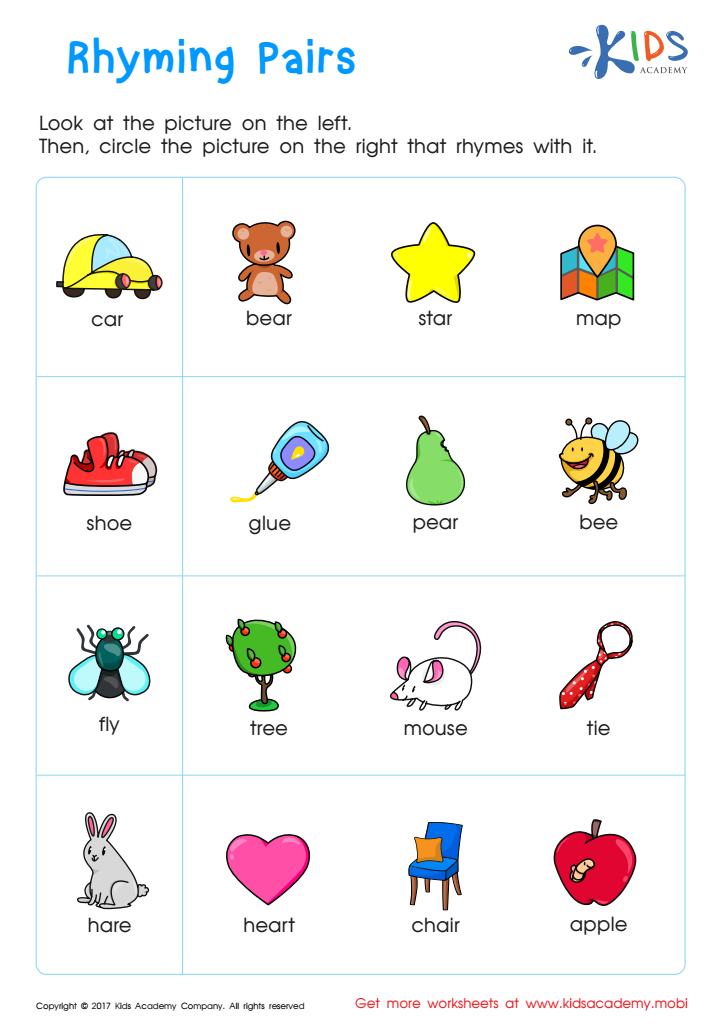
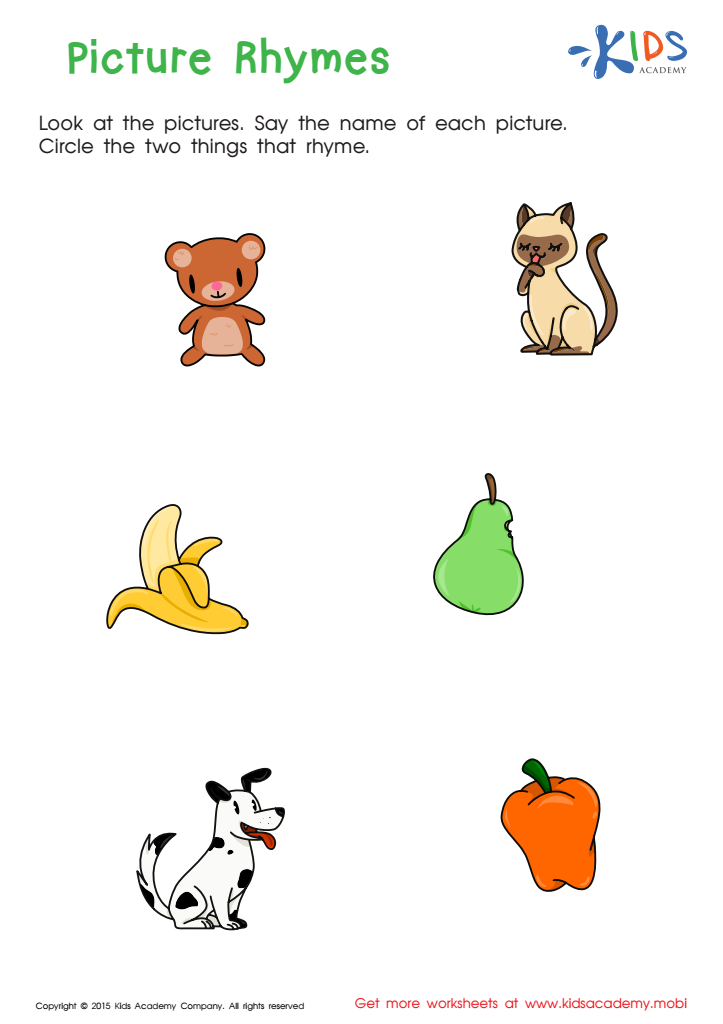
First Words: Picture Rhymes Worksheet





.jpg)

Rhyming skills play a crucial role in early literacy development for children aged 3 to 7. Parents and teachers should prioritize this skill because it lays the foundation for successful reading and writing. Rhyming helps children improve their phonemic awareness, which is essential for understanding the sounds in words. It enables them to recognize and anticipate sounds, an important element for decoding new words.
Additionally, engaging with rhymes enhances vocabulary development. When children immerse themselves in rhythmic patterns and sounds, they are exposed to a broader range of words, improving their language skills. Rhymes also foster listening skills, encouraging children to listen closely and identify sound patterns, which will aid in spelling and overall fluency in reading.
Moreover, using rhymes in literature and activities makes learning enjoyable and interactive. This playful aspect through songs, nursery rhymes, and games aids in maintaining children's attention and fosters a love for reading.
By understanding the significance of rhyming, parents and teachers can support children's literacy journey, equipping them with critical skills for academic success while nurturing a lifelong interest in reading. Ultimately, investing in rhyming skills now can profoundly impact a child's future educational achievements.








