Filters

14 filtered results

Clear all filters
Favorites
With answer key
Interactive

14 filtered results

Difficulty Level

Grade


Explore our engaging Vocabulary Building Normal Reading Worksheets, specially designed for children aged 3-7! These resources focus on enhancing language skills through fun activities, helping young learners expand their vocabulary in an enjoyable way. Our printable worksheets include colorful illustrations, relatable themes, and a variety of interactive exercises that foster comprehension and retention. Perfect for home or classroom use, these worksheets support early literacy development and encourage a love for reading. Watch as your child's confidence and linguistic ability grow with each completed activity. Start building a strong vocabulary foundation today with our creative learning tools!

Check out this FREE Trial Lesson on Reading for age 3-7!

Answer Questions About Unknown Words in a Story

Favorites
With answer key
Interactive
  • 3-7
  • Vocabulary Building
  • Reading
  • Normal
Birthday Words Worksheet

Birthday Words Worksheet

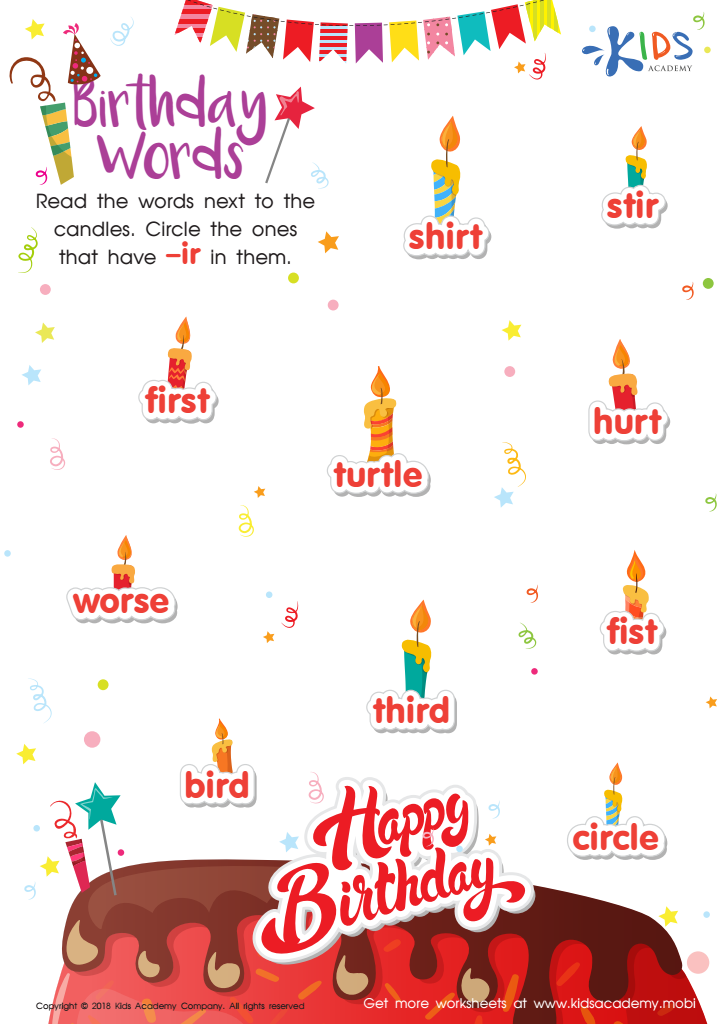
Kids adore birthday parties! Whether it's theirs or a friend's, the event is a huge draw for kids. This fun birthday-themed worksheet teaches kids to identify the letter combination -ir. Get them to scan and circle the colorful words that contain -ir. It's an exciting PDF page they won't want to miss!
Birthday Words Worksheet
Worksheet
Poem: My New Kite Worksheet

Poem: My New Kite Worksheet

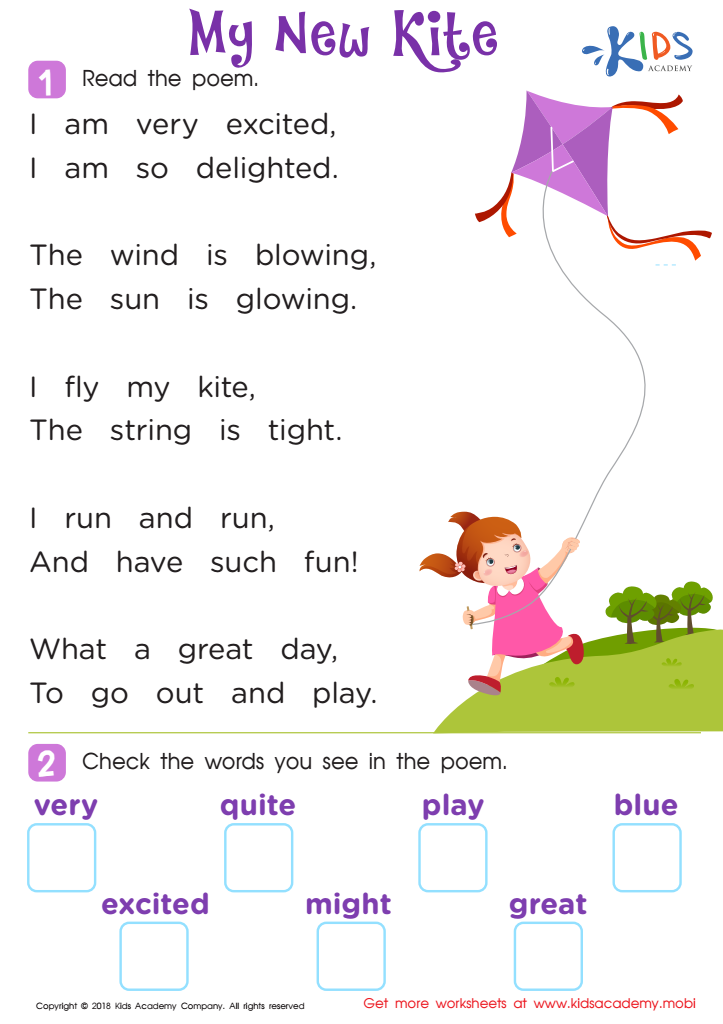
Read a cheerful poem with your child and have them check the boxes next to the words that appear. Then, ask them to identify rhyming words, noting that these won't appear at the bottom of the page. This is a delightful reading activity to help your child remember what they read.
Poem: My New Kite Worksheet
Worksheet
Reading: Fill in the Blank Worksheet

Reading: Fill in the Blank Worksheet

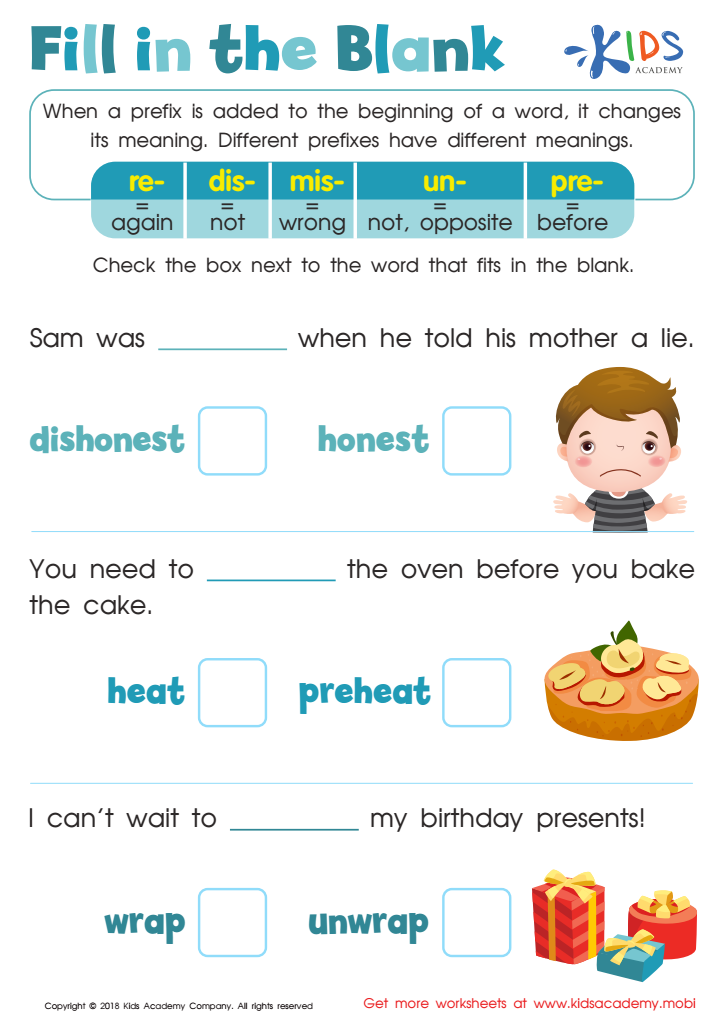
Students can practice understanding the meaning of common prefixes with this worksheet. They read sentences and pick the correct word with the appropriate prefix to complete it. Downloadable and a great addition to reading and vocabulary resources, this helps improve comprehension with mastery of the skill!
Reading: Fill in the Blank Worksheet
Worksheet
What Am I? Worksheet

What Am I? Worksheet

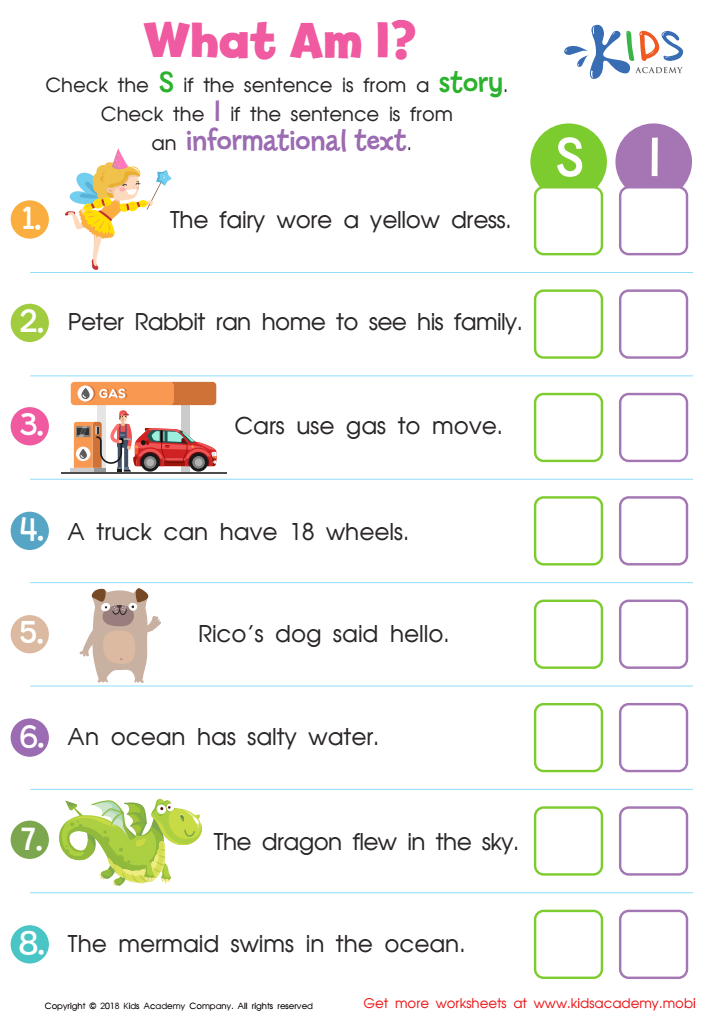
This worksheet assesses students' ability to differentiate between stories and texts they read for facts. Students learn to distinguish between reading for pleasure and reading for information. It includes statements from both a story and an informational text, and students must decide what type of text it is.
What Am I? Worksheet
Worksheet
Three Little Pigs Vocabulary Worksheet

Three Little Pigs Vocabulary Worksheet

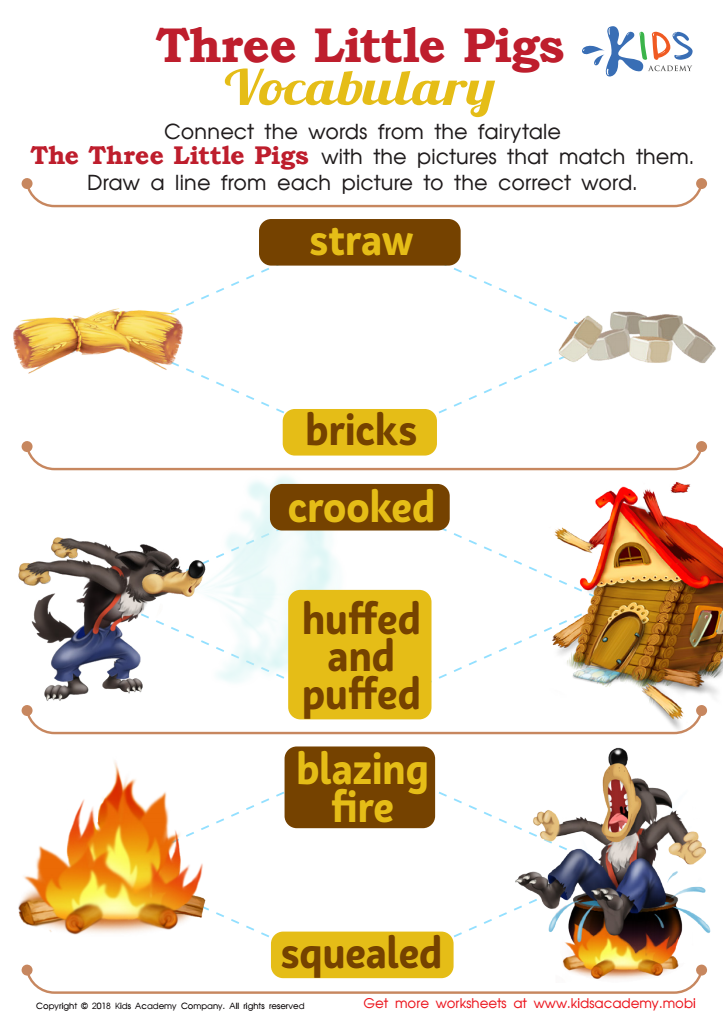
Read the Three Little Pigs to your children. Have them use the tracing sheet to connect the story words with the pictures. This is a fun and educational way to help them build their vocabulary.
Three Little Pigs Vocabulary Worksheet
Worksheet
Little Elephant's Birthday Worksheet

Little Elephant's Birthday Worksheet

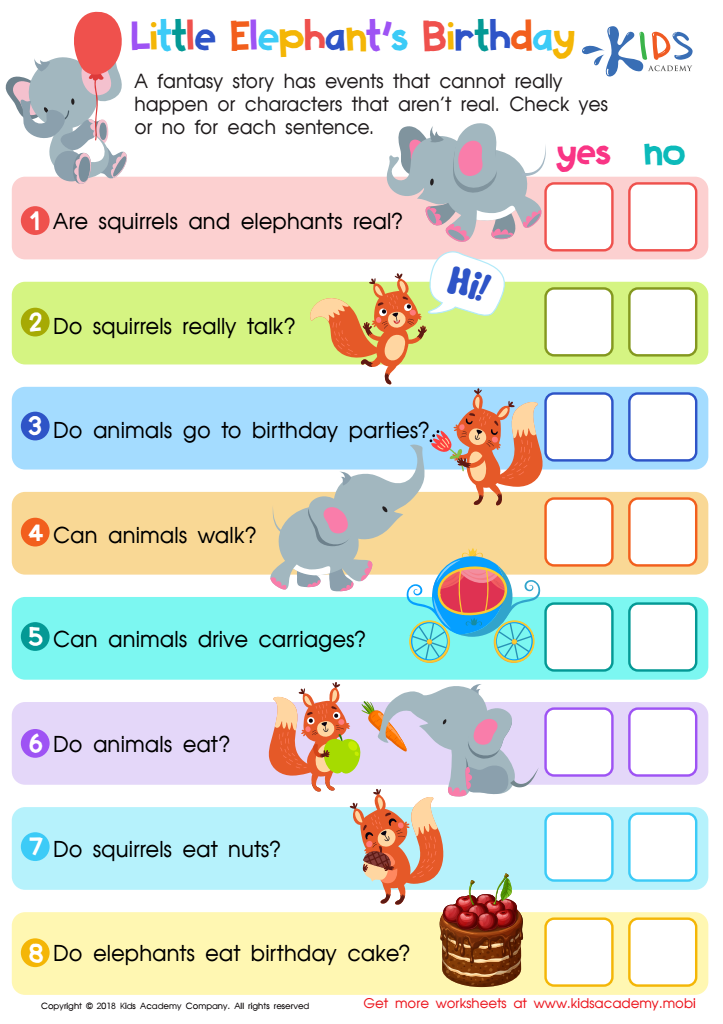
It's Little Elephant's birthday! Help your students celebrate with this fun worksheet full of colors and pictures. Deciding which questions are facts and which are fiction will help them differentiate between fantasy stories and reality. Let them have fun learning why certain elements of fantasy can't be true!
Little Elephant's Birthday Worksheet
Worksheet
The Boy Who Cried Fox Worksheet

The Boy Who Cried Fox Worksheet

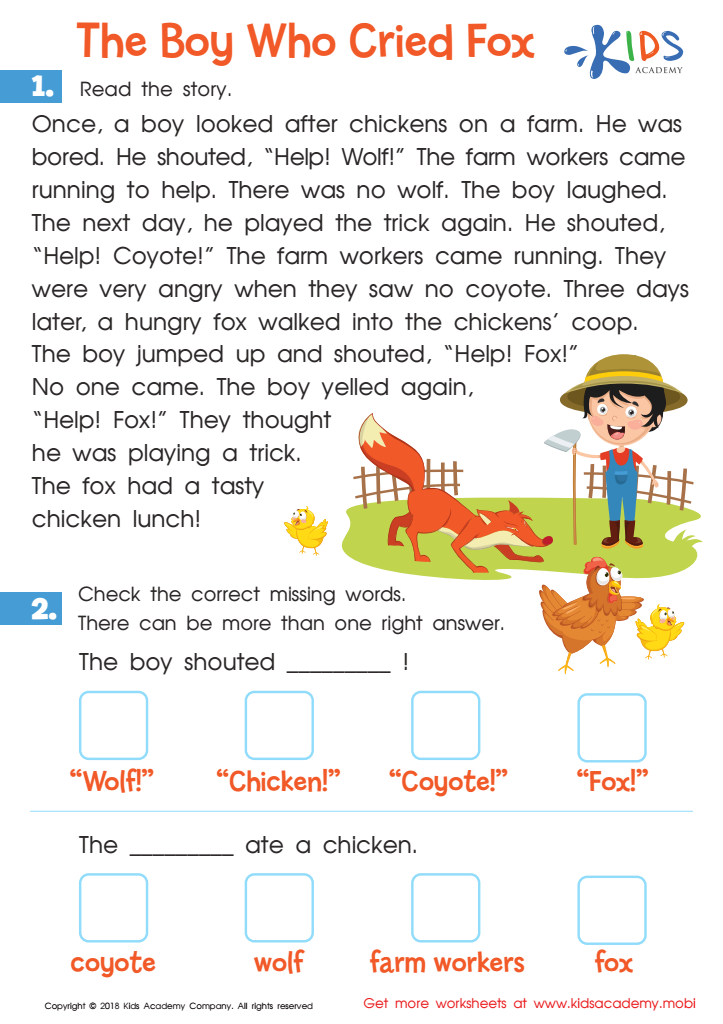
This worksheet encourages students to recall details from a story and answer questions to test their comprehension. Perfect for reading lessons, enrichment, or extra help.
The Boy Who Cried Fox Worksheet
Worksheet
Enough Is Enough (ough) Worksheet

Enough Is Enough (ough) Worksheet

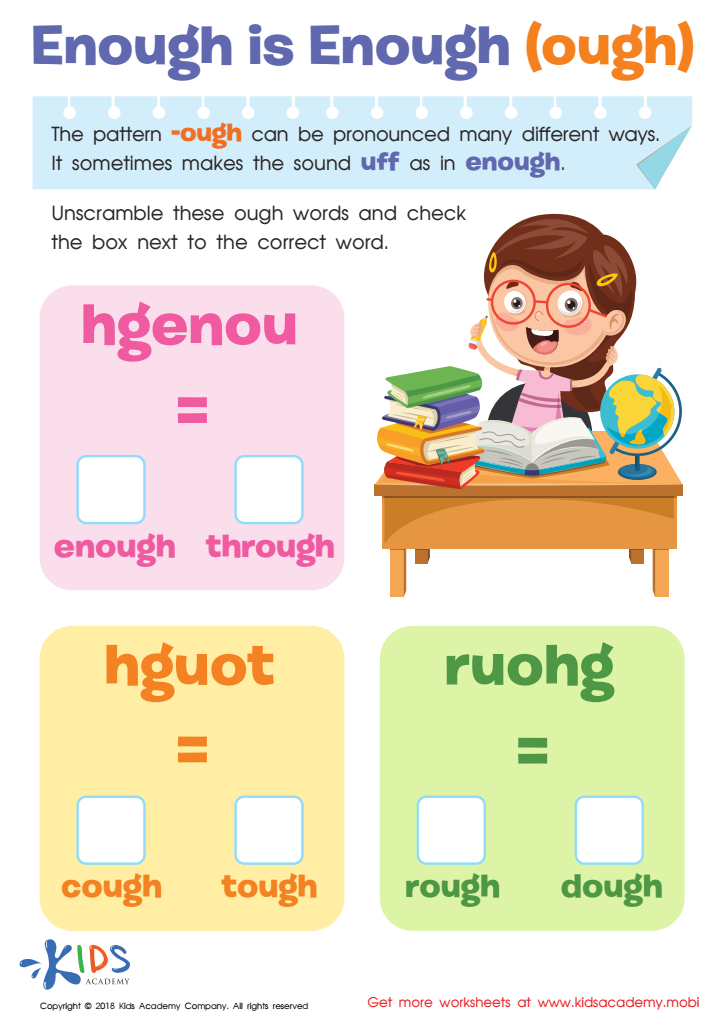
As your students learn more about reading and pronouncing words, they can explore how some word patterns can be said differently. The 'ough' pattern, for instance, can be pronounced several ways. 'Enough' has the 'uff' sound. Provide your students with examples of words pronounced similarly and help them unscramble 'ough' words on this worksheet, ticking the box for the correct word.
Enough Is Enough (ough) Worksheet
Worksheet
Feeling Words: The Boy Who Cried Wolf Worksheet

Feeling Words: The Boy Who Cried Wolf Worksheet

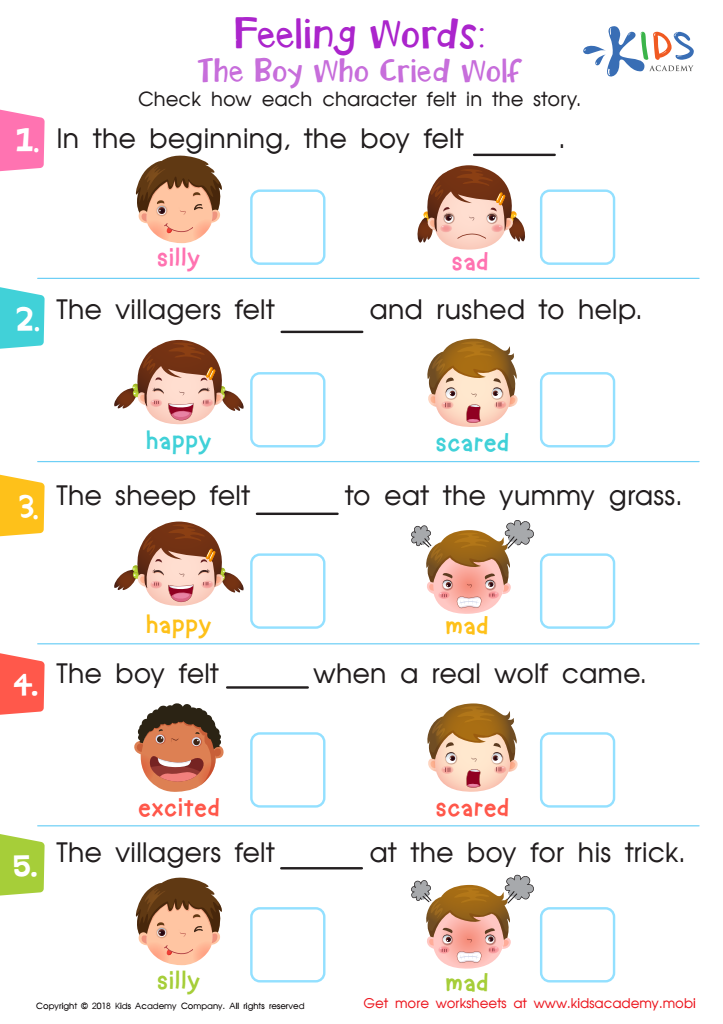
This worksheet helps students infer characters' traits and feelings by reading The Boy Who Cried Wolf. They choose the correct emotion for each character to improve their story comprehension. A great resource for the reading classroom, it teaches an essential comprehension skill.
Feeling Words: The Boy Who Cried Wolf Worksheet
Worksheet
Reading: Find the Prefixes Worksheet

Reading: Find the Prefixes Worksheet

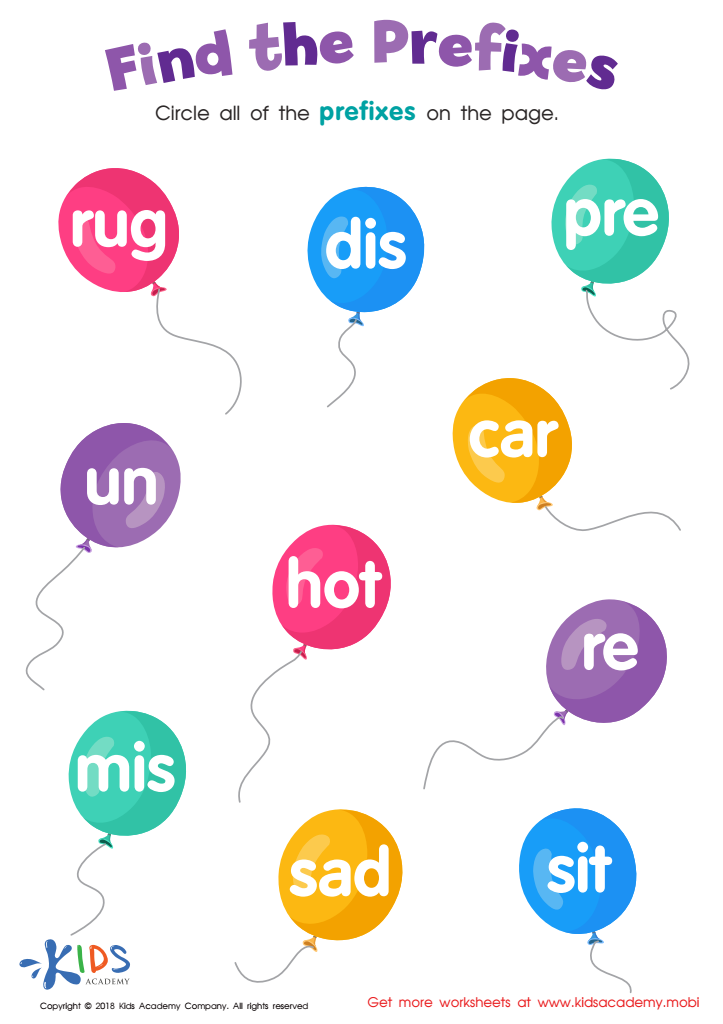
Students are asked to circle all prefixes on this worksheet and brainstorm a list of words that have them. It's a great tool for teaching vocabulary and helps students understand new and unfamiliar words by recognizing how prefixes change meaning.
Reading: Find the Prefixes Worksheet
Worksheet
Reading: Prefix Search Worksheet

Reading: Prefix Search Worksheet

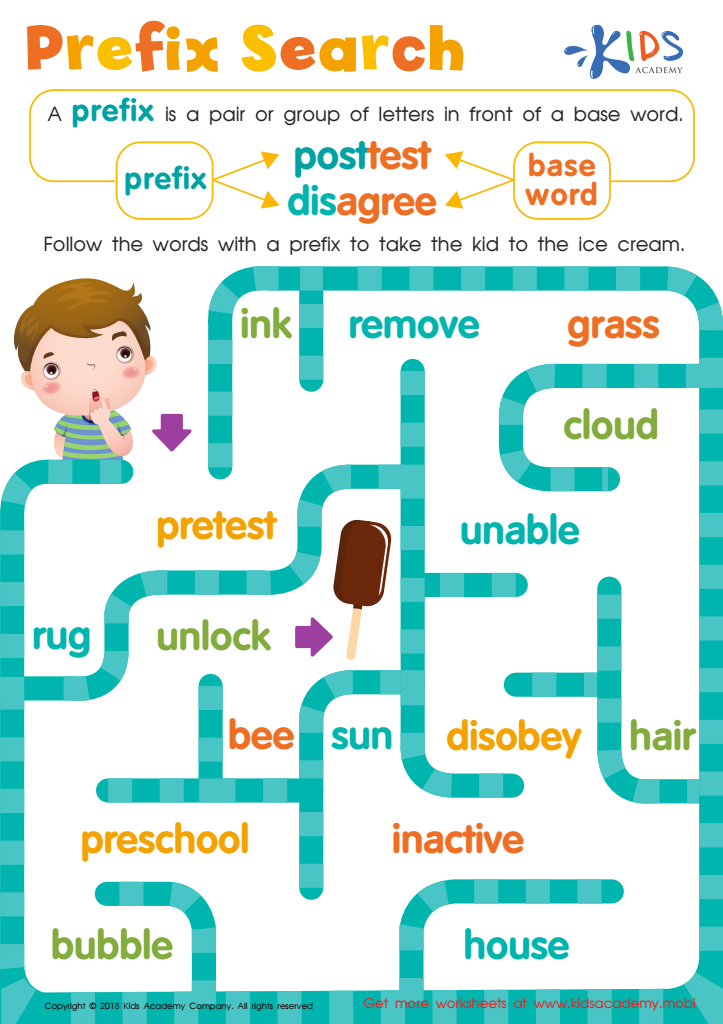
Maze your way through prefixes! This worksheet helps students practice reading new words with a prefix and figuring out the base word. An understanding of prefixes gives students the skills to comprehend new words. A fun and useful activity for the reading classroom!
Reading: Prefix Search Worksheet
Worksheet
Sight Words: A Day at the Park Worksheet

Sight Words: A Day at the Park Worksheet

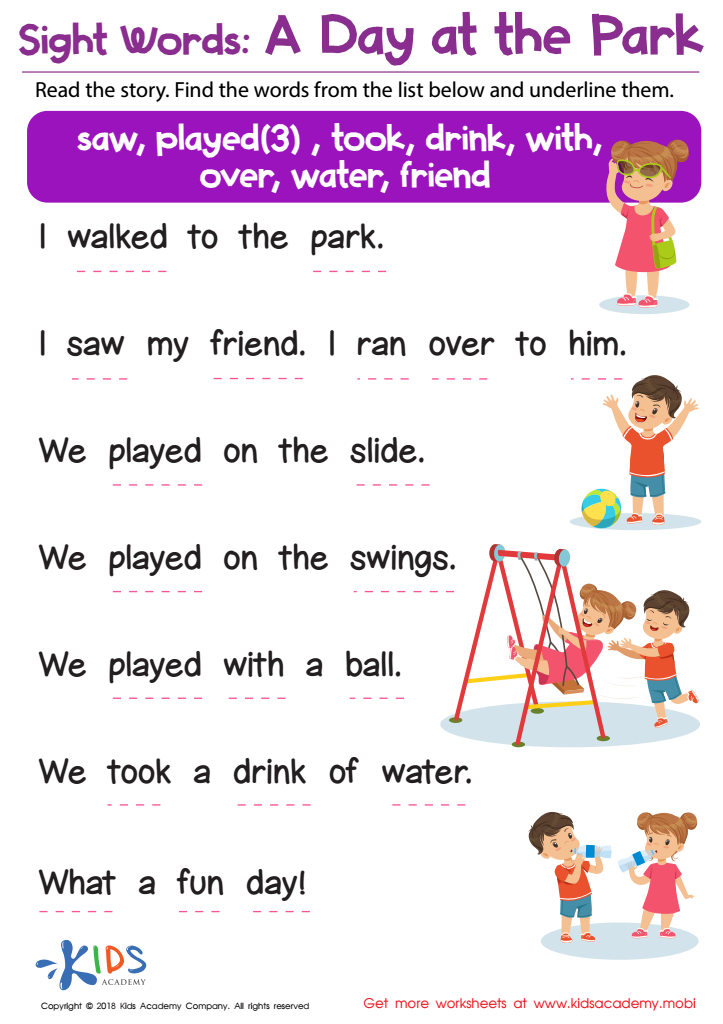
This worksheet offers kids practice reading sight words in a story. With picture clues and repetitive wording, they'll work with words that can't be sounded out to reinforce their learning. This is an important step in the reading process that helps kids become more confident readers.
Sight Words: A Day at the Park Worksheet
Worksheet
Worksheet: The Boy Who Cried Wolf

The Boy Who Cried Wolf Worksheet

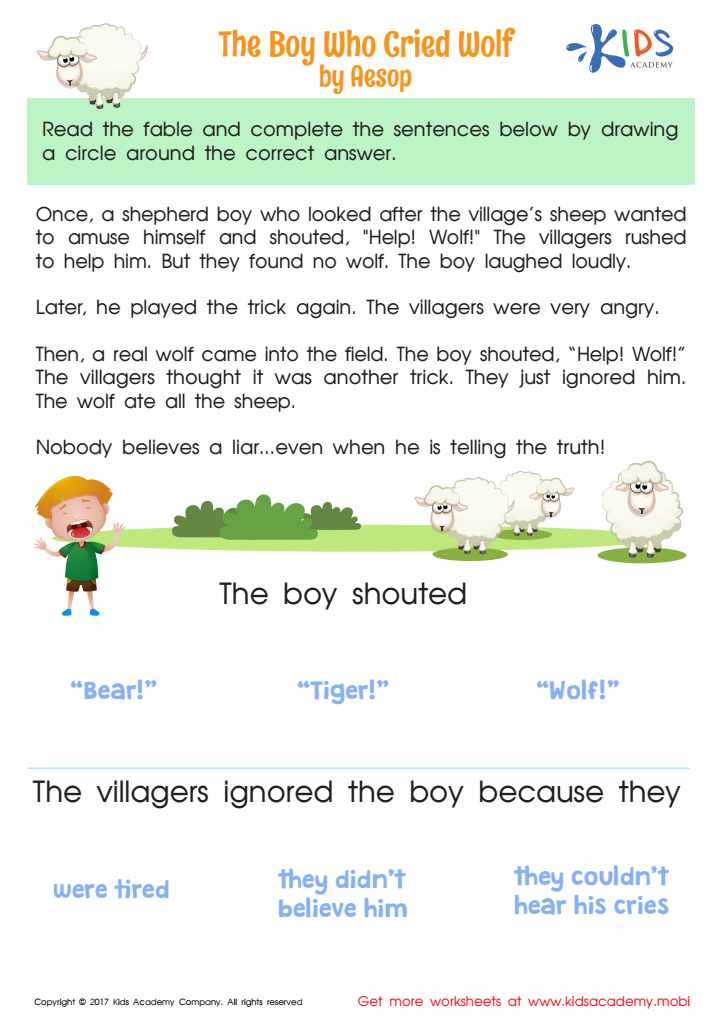
Test your child's reading comprehension with The Boy Who Cried Wolf worksheet. Read the fable, then answer the questions. Use the text to help your child check their answers are correct. Boost reading skills in a fun, interactive way!
The Boy Who Cried Wolf Worksheet
Worksheet
Animal Word Search Worksheet


Animal Word Search Worksheet

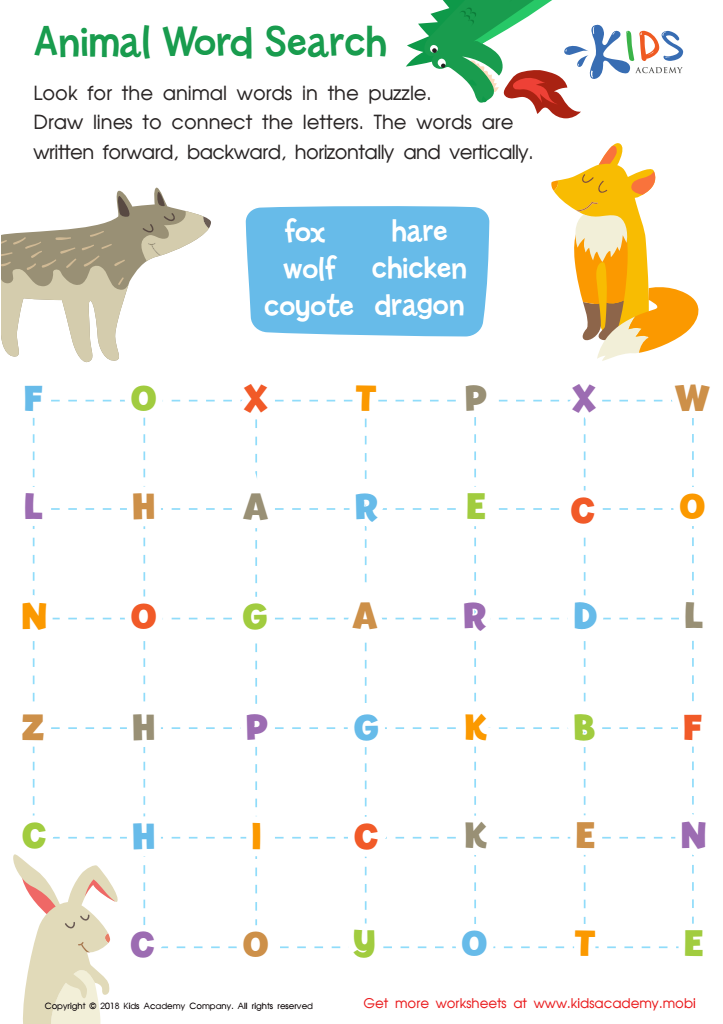
Students can have fun and strengthen spelling and vocabulary skills with this word search worksheet. Search for animal words and circle the letters in the puzzle. Words can be found forwards, backwards, horizontally or vertically, providing a great challenge to foster critical thinking skills. An enriching activity for all ages!
Animal Word Search Worksheet
Worksheet


Vocabulary building during the early years, particularly for children aged 3-7, is crucial for several reasons. Firstly, a strong vocabulary lays the foundation for reading comprehension. As children encounter new words, they not only learn to recognize them but also to understand their meanings in context. This enhances their ability to grasp stories and information, making reading a more enriching experience.

Secondly, vocabulary development is linked to overall cognitive growth. Engaging with diverse words enhances critical thinking, communication skills, and creativity. When children have a broad vocabulary, they are better equipped to express their thoughts, ask questions, and engage in conversations, which are essential skills for school readiness and social interactions.

Moreover, a rich vocabulary encourages a love for reading and learning. When children encounter engaging texts that introduce them to new words, they become curious and motivated to explore further. This intrinsic motivation can lead to lifelong reading habits, benefiting them beyond their school years.

Finally, early vocabulary exposure helps bridge the achievement gap often seen between children from different socio-economic backgrounds. By investing time in vocabulary building through reading, conversation, and play, parents and teachers can provide children from all backgrounds with the tools they need to succeed academically and socially.