Vocabulary enhancement Normal Reading Comprehension Worksheets for Ages 3-7 - Page 2

Filters

28 filtered results

Clear all filters
Favorites
With answer key
Interactive

28 filtered results

Difficulty Level

Grade


Check out this FREE Trial Lesson on Reading Comprehension for age 3-7!

Decode Two Syllable Words

Favorites
With answer key
Interactive
  • 3-7
  • Vocabulary enhancement
  • Reading Comprehension
  • Normal
Dinosaurs Worksheet
Dinosaurs Worksheet

Dinosaurs Worksheet

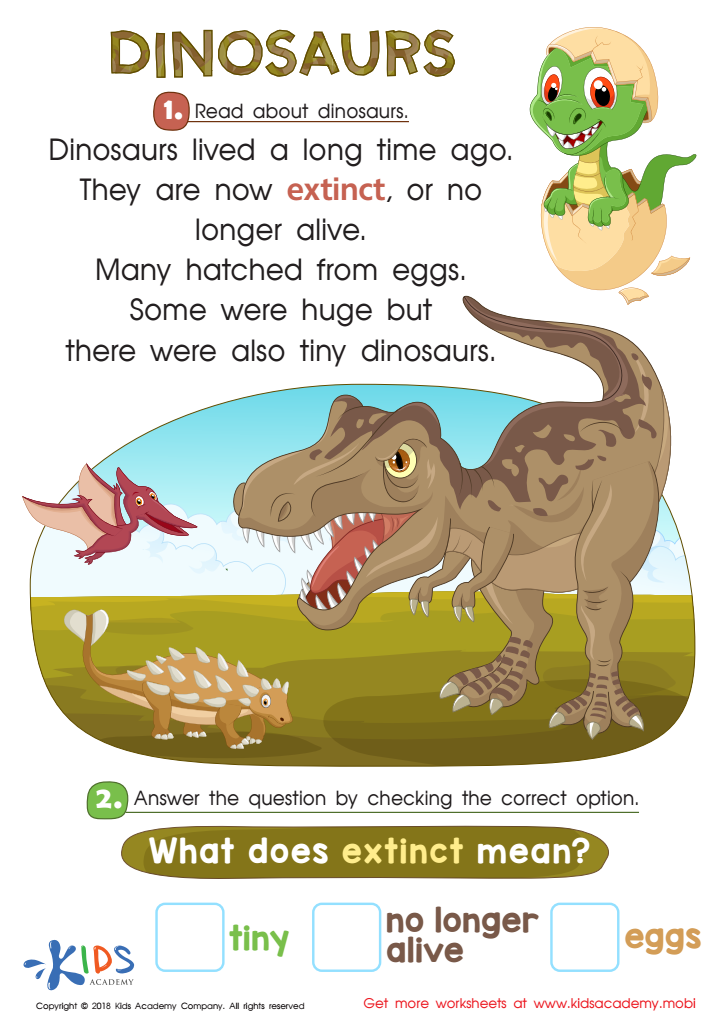
Kids are often fascinated by dinosaurs, creatures that roamed the Earth before man. Sadly, they are now extinct. To learn more, read facts on this worksheet to your kids and help them answer the question at the end by selecting the correct option.
Dinosaurs Worksheet
Worksheet
Reading: What's Word Worksheet

Reading: What's Word Worksheet

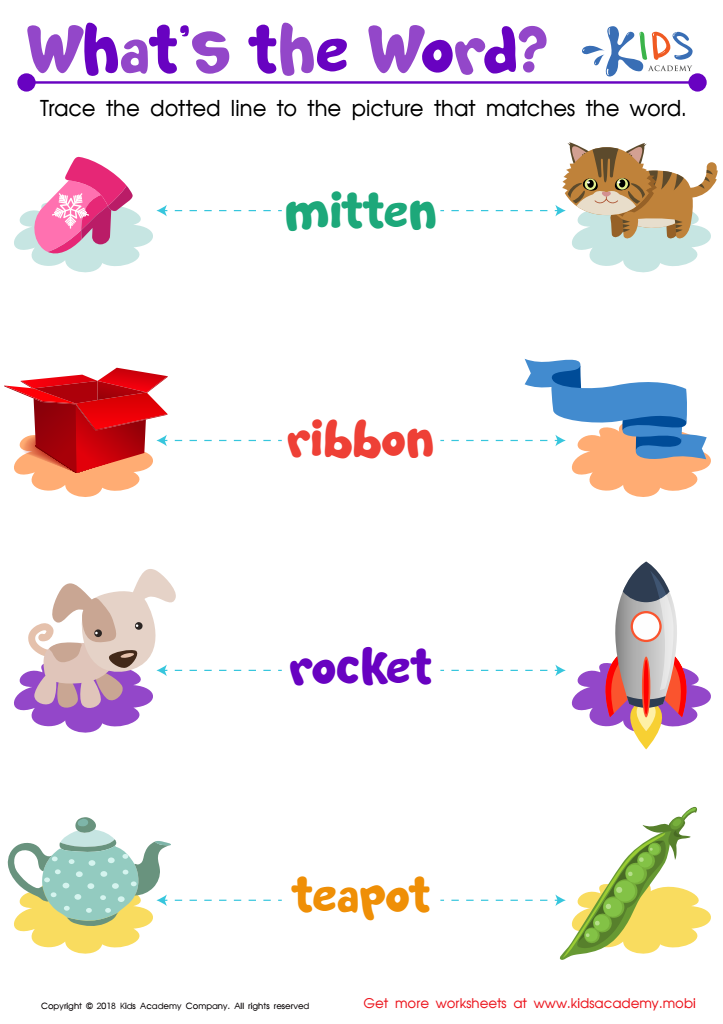
Teaching reading? This worksheet can help! Students read the word and draw a line to the picture for clues if needed. This will boost their vocabulary and fluency, increasing confidence and reading skills. Watch their progress as new words are added!
Reading: What's Word Worksheet
Worksheet
A Day at the Park Worksheet

A Day at the Park Worksheet

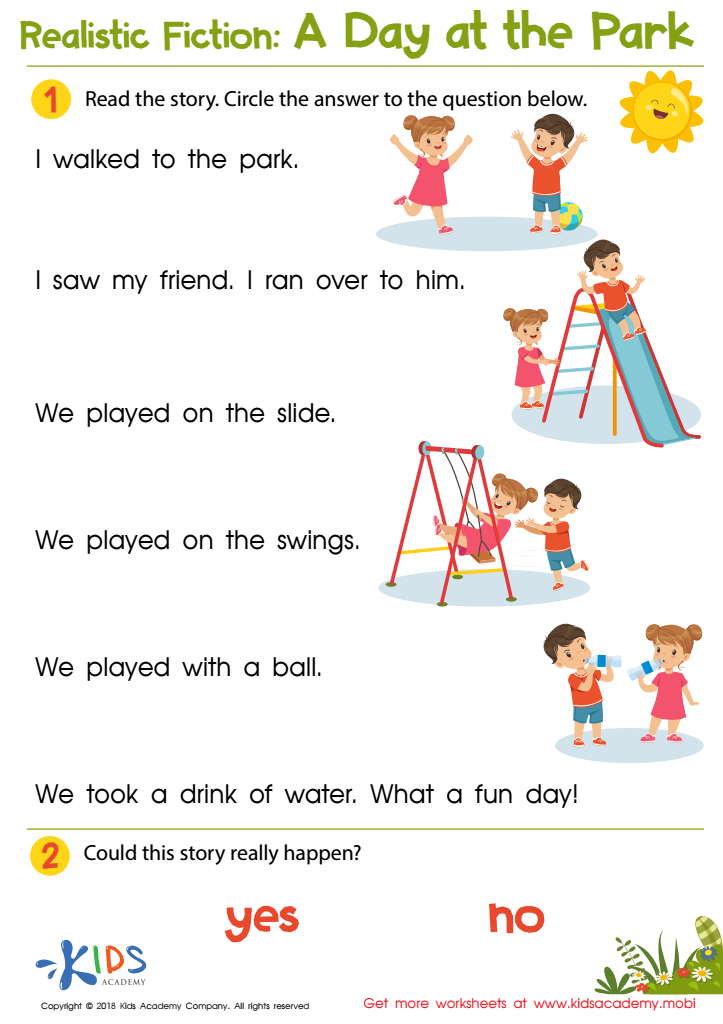
Kids as young as preschool-age can be taught to evaluate stories! Use this fun worksheet about a day at the park. Read each sentence aloud, looking at the pictures. Ask your child if the events in the story could happen in real life - if yes, circle yes, otherwise circle no. When finished, discuss with them the genre, realistic fiction.
A Day at the Park Worksheet
Worksheet
Look at the Pictures: The Princess and the Pea Worksheet


Look at the Pictures: The Princess and the Pea Worksheet

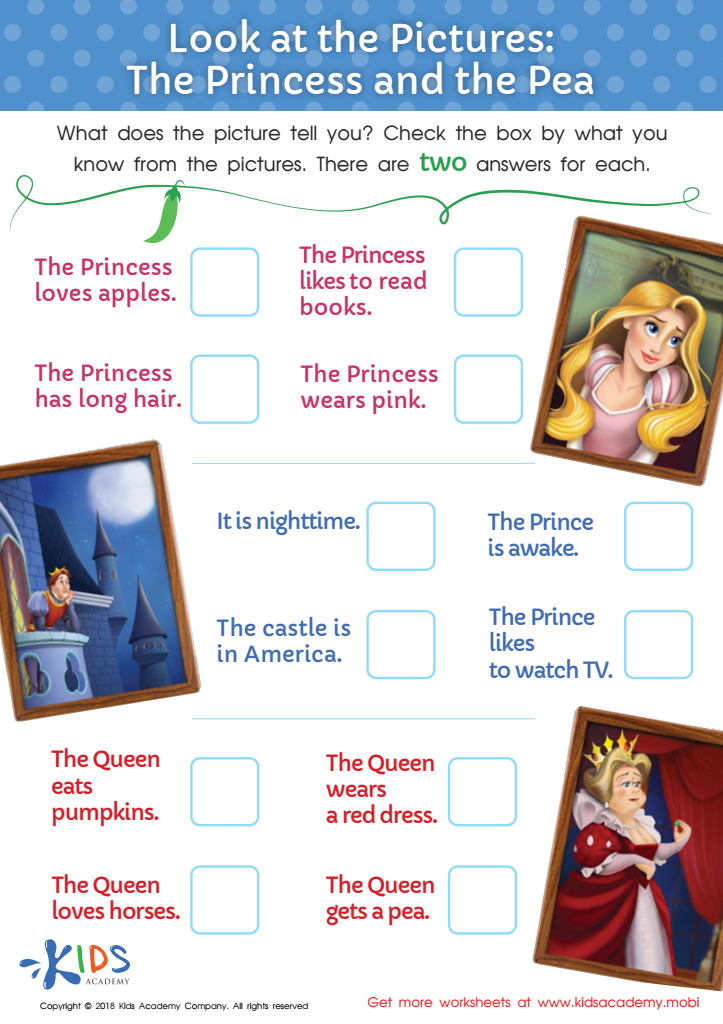
Early readers can benefit from picture clues to understand stories and text. Looking at images helps them learn the meaning of words and comprehend events. Use this worksheet on The Princess and the Pea to let students observe and learn from the pictures. It's a great way to help them comprehend early reading materials.
Look at the Pictures: The Princess and the Pea Worksheet

Worksheet


Enhancing vocabulary and reading comprehension in children aged 3-7 is crucial for multiple reasons. During these formative years, children's brains are incredibly receptive to learning new words and grasping the fundamentals of language, setting the stage for future academic success and effective communication skills. A robust vocabulary can significantly enhance a child's ability to understand and engage with the world around them.

First, a strong vocabulary is directly linked to improved reading comprehension. When children know the meanings of words they encounter, they are better equipped to understand the context, ideas, and narratives in texts. This foundational skill is vital, as reading comprehension is a cornerstone of all learning activities across subjects such as math, science, and social studies.

Secondly, having a rich vocabulary allows children to articulate their thoughts, emotions, and needs clearly and confidently. This boosts their self-esteem and leads to more meaningful interactions with peers and adults, fostering social-emotional development.

Lastly, early vocabulary development can predict academic performance and literacy levels in later years. Children with a well-developed vocabulary are often better prepared for the rigors of formal education, making early interventions in language development not just beneficial but essential. Hence, parents and teachers investing in vocabulary enrichment and reading comprehension lay the groundwork for lifelong learning and success.