Vocabulary enhancement Normal Rhyming Words Worksheets for Ages 3-7
6 filtered results
-
From - To
Boost your child's language development with our Vocabulary Enhancement Normal Rhyming Words Worksheets designed for ages 3-7. Perfectly crafted, these printable activities enhance vocabulary and phonemic awareness, making learning enjoyable and engaging. Each worksheet offers a plethora of rhyming exercises that help children recognize sound patterns, nurturing their reading and pronunciation skills. With colorful illustrations and age-appropriate challenges, our worksheets are an essential tool for early education. Whether you're a parent or a teacher, incorporate these worksheets into your routine to foster a love for language and improve your child's reading readiness. Start exploring the world of rhymes today!
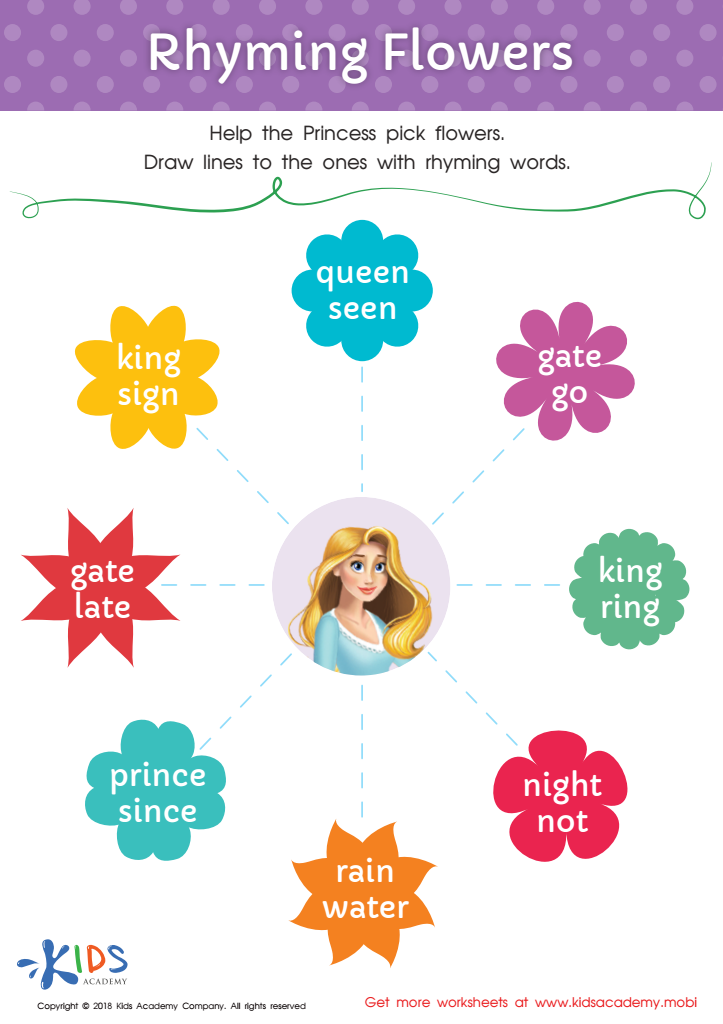
Rhyming Flowers Worksheet
 Assign to My Students
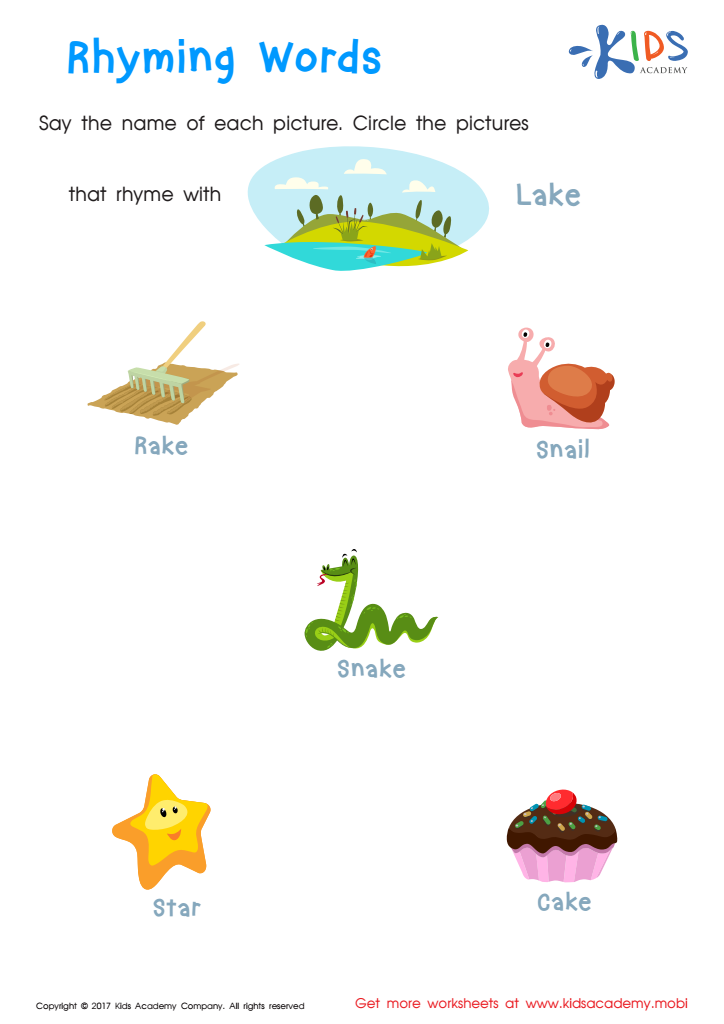
Rhyming Words Rhyming Worksheet
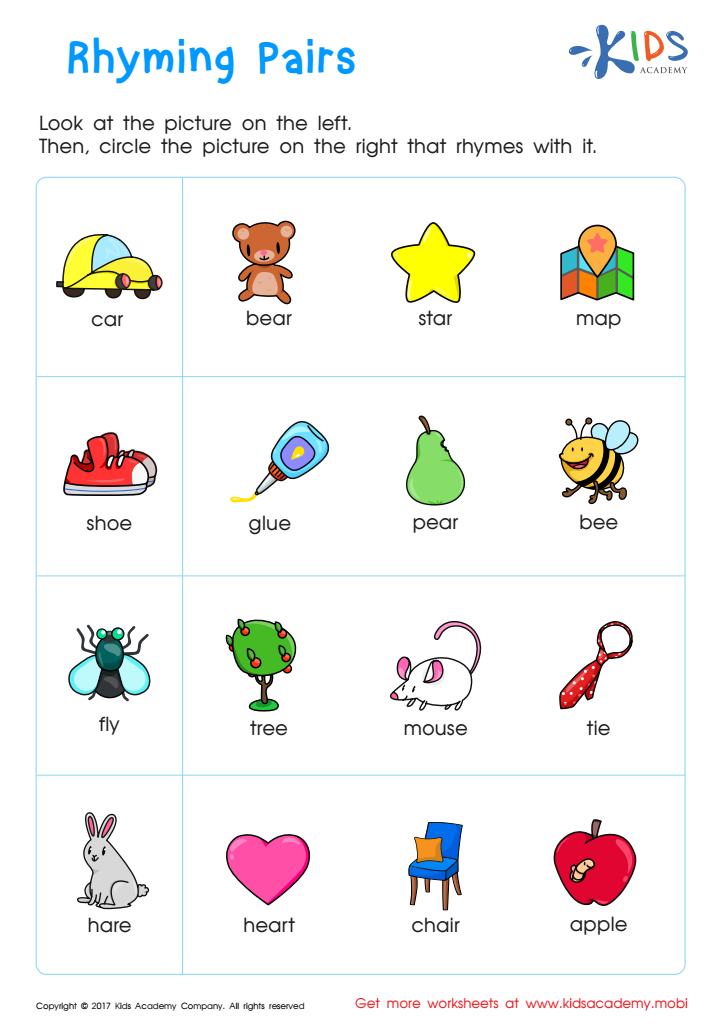
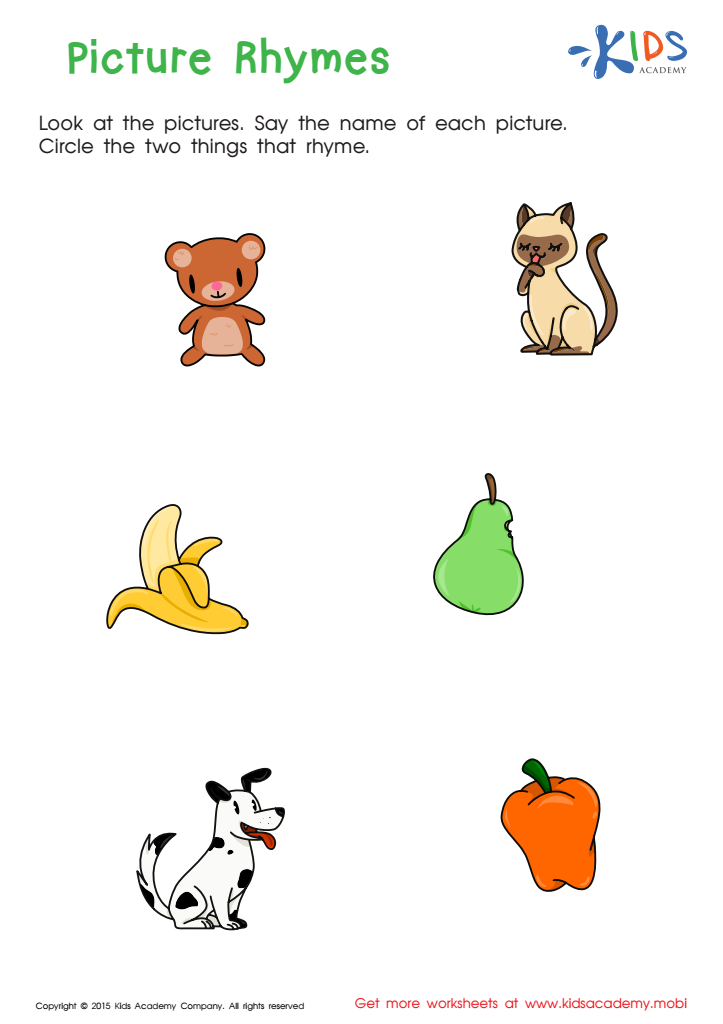
First Words: Picture Rhymes Worksheet
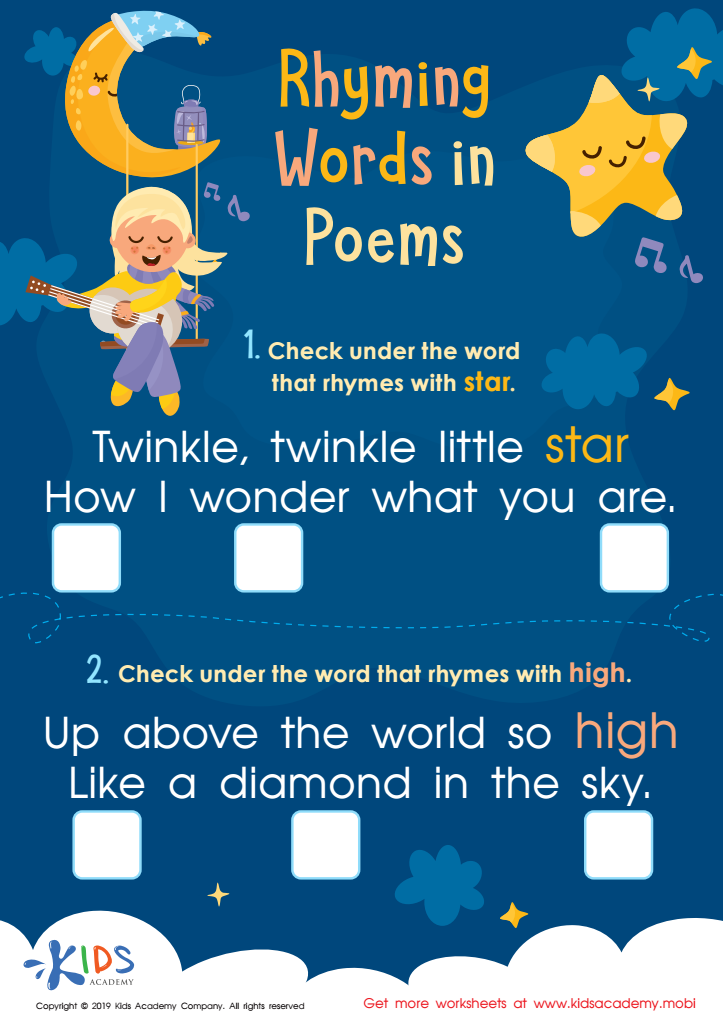
Rhyming Words in Poems Worksheet
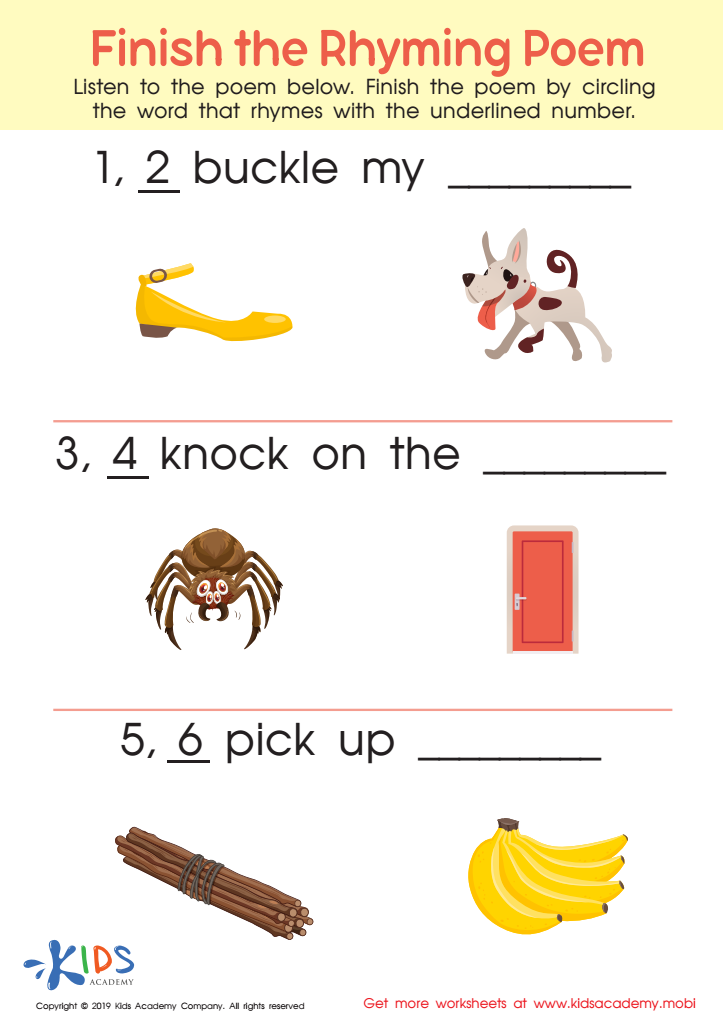
Finish Rhyming Poem Worksheet


.jpg)





Vocabulary enhancement and exposure to rhyming words during the ages of 3-7 are critical for several reasons. During these formative years, children's brains are highly receptive to language acquisition. Enhancing their vocabulary provides the building blocks for better communication skills, academic success, and emotional expression. By enriching their lexicon, young learners are better equipped to comprehend more complex ideas and instructions, setting a solid foundation for future learning.
Rhyming, in particular, plays a unique role in linguistic and cognitive development. Normal rhyming words help children recognize patterns in language, which aids in phonemic awareness—a crucial step toward reading proficiency. When children listen to and create rhymes, they practice hearing and manipulating the sounds within words, a skill essential for decoding words in print. Moreover, rhyming activities are inherently engaging and entertaining, making learning enjoyable and reinforcing retention.
Encouraging vocabulary enhancement through rhymes also fosters improved auditory discrimination and memory. As children play with sounds, they are better able to distinguish between similar phonetic elements, enhancing their listening and comprehension skills. Additionally, the repetitive nature of rhyming helps solidify word retention. Investing in vocabulary and rhyming skills at this age leads to more confident readers, effective communicators, and enthusiastic learners, providing lifelong benefits.








