Categorization skills Normal Animals Worksheets for Ages 3-7
3 filtered results
-
From - To
Enhance your child's learning experience with our engaging Categorization Skills Worksheets focused on normal animals, designed specifically for ages 3-7. These fun, printable worksheets help young learners develop essential categorization abilities by grouping animals based on various characteristics. Tailored for early grade educational settings, our resources encourage critical thinking and problem-solving while promoting animal awareness. Children will enjoy sorting through colorful images and interactive activities, making learning both enjoyable and effective. Perfect for home or classroom use, these worksheets are an excellent way to inspire curiosity about the natural world and foster foundational skills necessary for academic success.
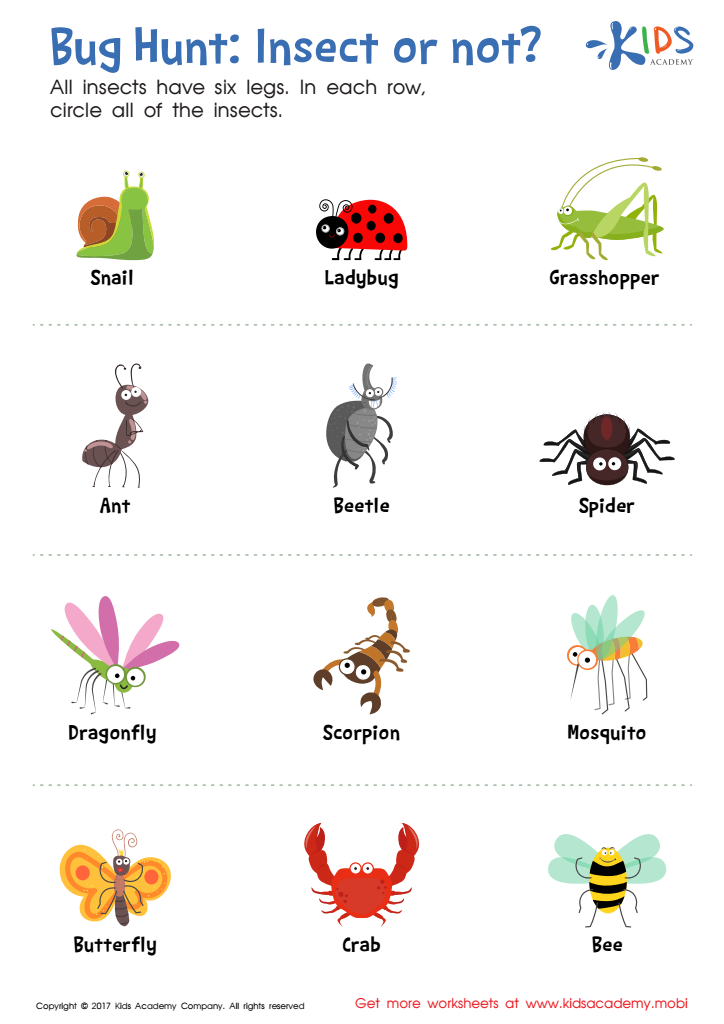
 Assign to My Students
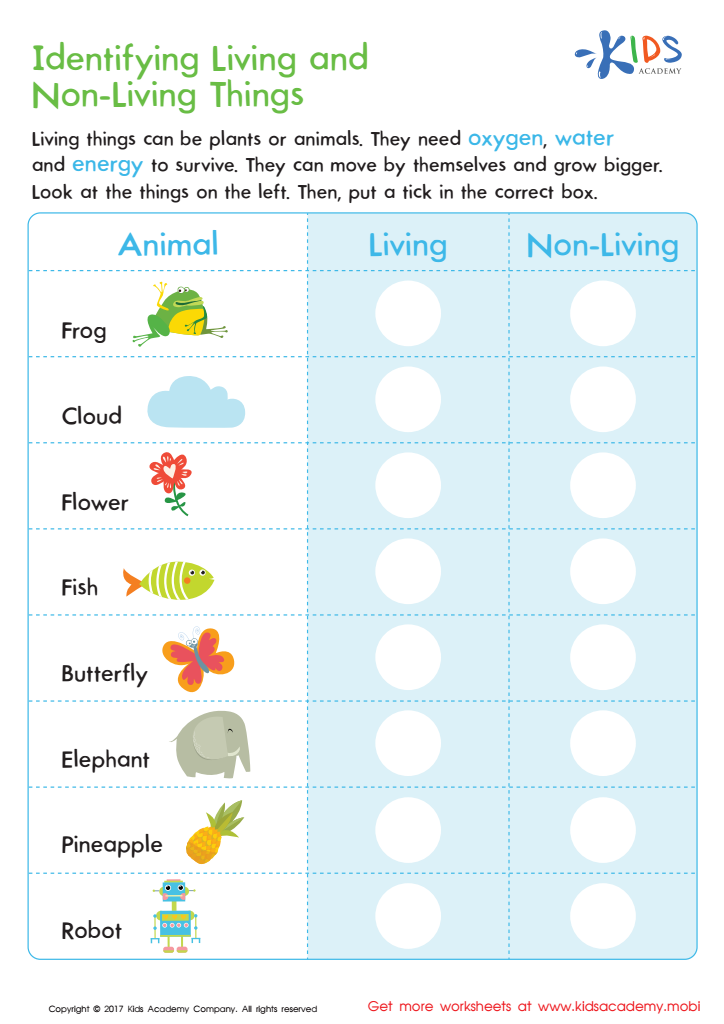
Identifying Living or Non–living Worksheet
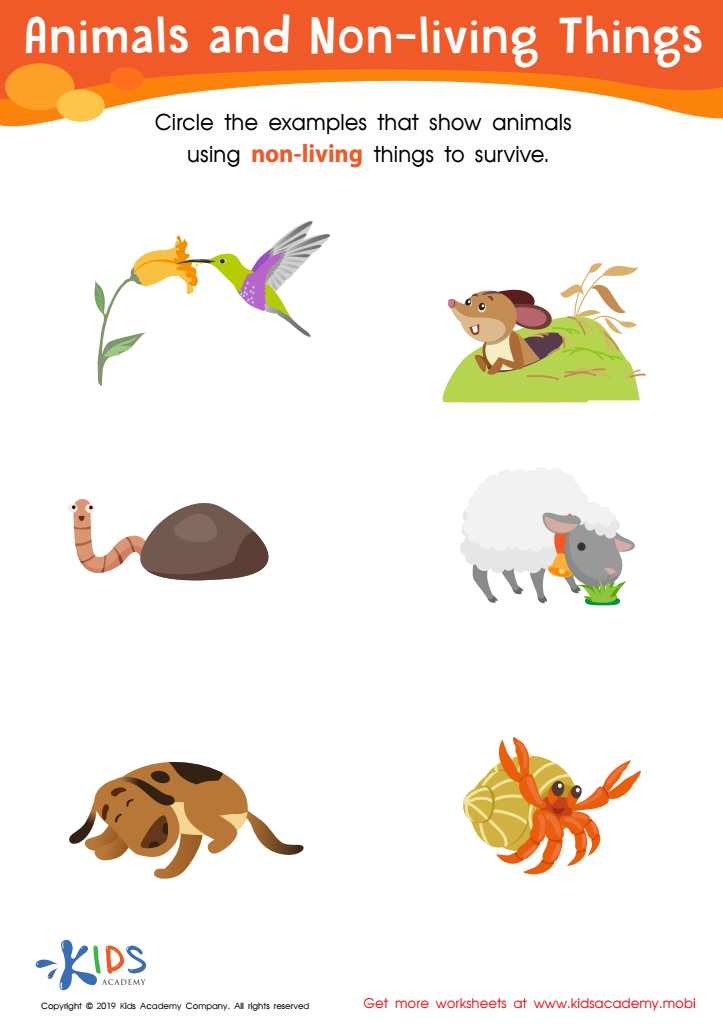
Animals and Non-Living Things Worksheet




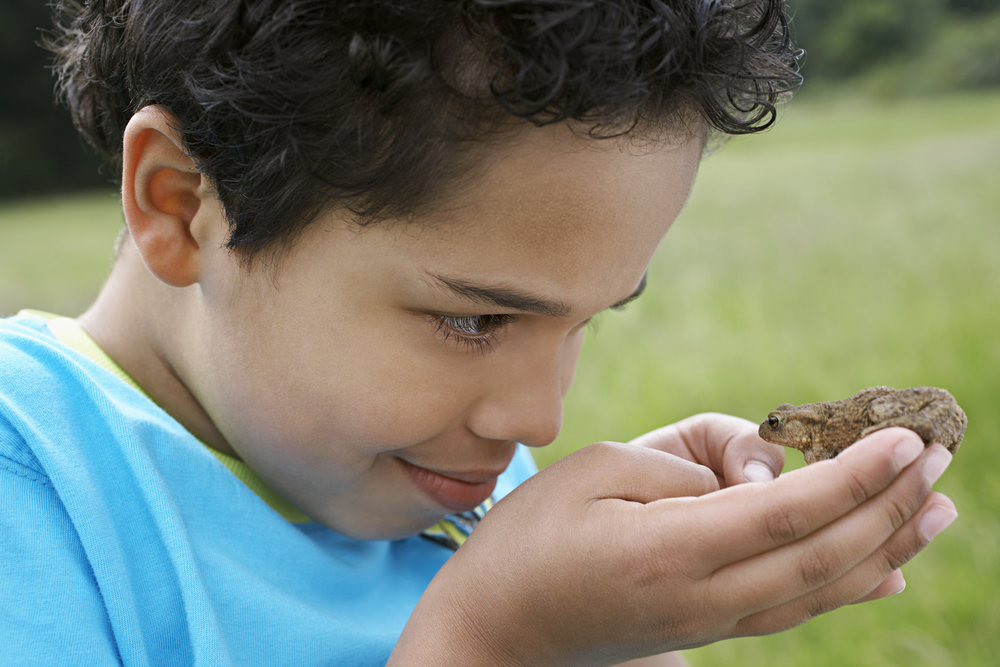


Categorization skills play a crucial role in early childhood development, specifically for children aged 3-7. During these formative years, children are naturally curious and eager to make sense of the world around them. Understanding Normal Animals, including their characteristics and classifications, encourages cognitive development and critical thinking.
When parents or teachers emphasize categorization skills through animals, children learn to identify, compare, and sort various species. This not only enhances their vocabulary but also aids in the recognition of patterns, similarities, and differences. For example, they can categorize animals by habitat, size, or color. Engaging in such activities boosts their analytical skills, laying a foundation for problem-solving in later education.
Moreover, animals can evoke emotional connections, promoting empathy and understanding of diverse life forms. Learning about Normal Animals fosters a sense of wonder and responsibility towards the environment—qualities essential for future caretakers of the planet.
Ultimately, supporting the development of categorization skills in young children empowers them to explore, understand, and interact with their surroundings effectively and fosters a lifelong love of learning. Parents and teachers should make this a priority to ensure the holistic growth of their children.








