Animal Classification Normal Science Worksheets for Ages 3-7
5 filtered results
-
From - To
Discover our engaging "Animal Classification Normal Science Worksheets" designed for children ages 3-7! These worksheets introduce young learners to the fascinating world of animals and help them understand how to classify creatures based on their characteristics. With colorful designs and age-appropriate activities, your child will explore different animal groups such as mammals, birds, reptiles, and more. Our printable resources promote critical thinking, enhance vocabulary, and foster a love for science in early learners. Perfect for classrooms or home education, these worksheets are a fun way to spark curiosity about the animal kingdom while developing essential cognitive skills!
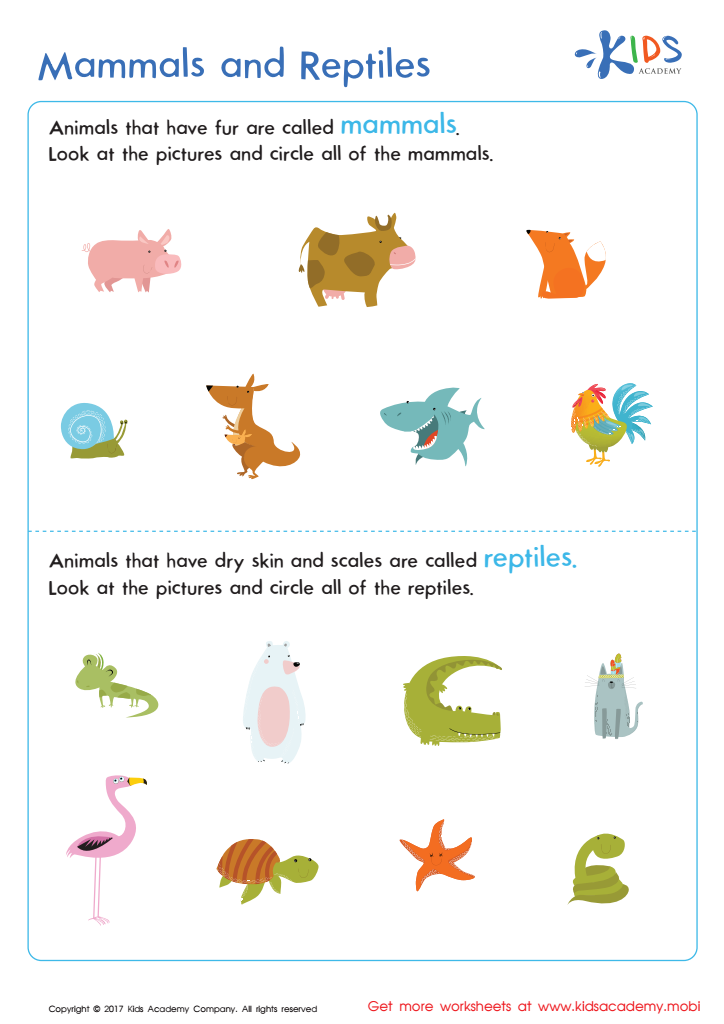
Mammals and Reptiles Worksheet
 Assign to My Students
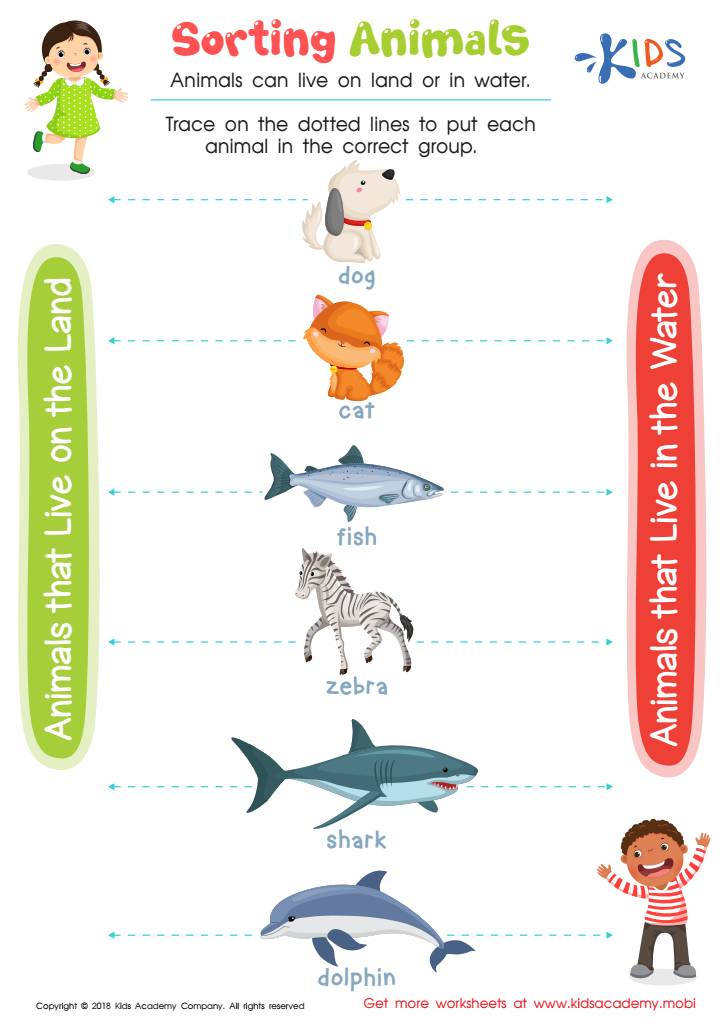
Sorting Animals Worksheet
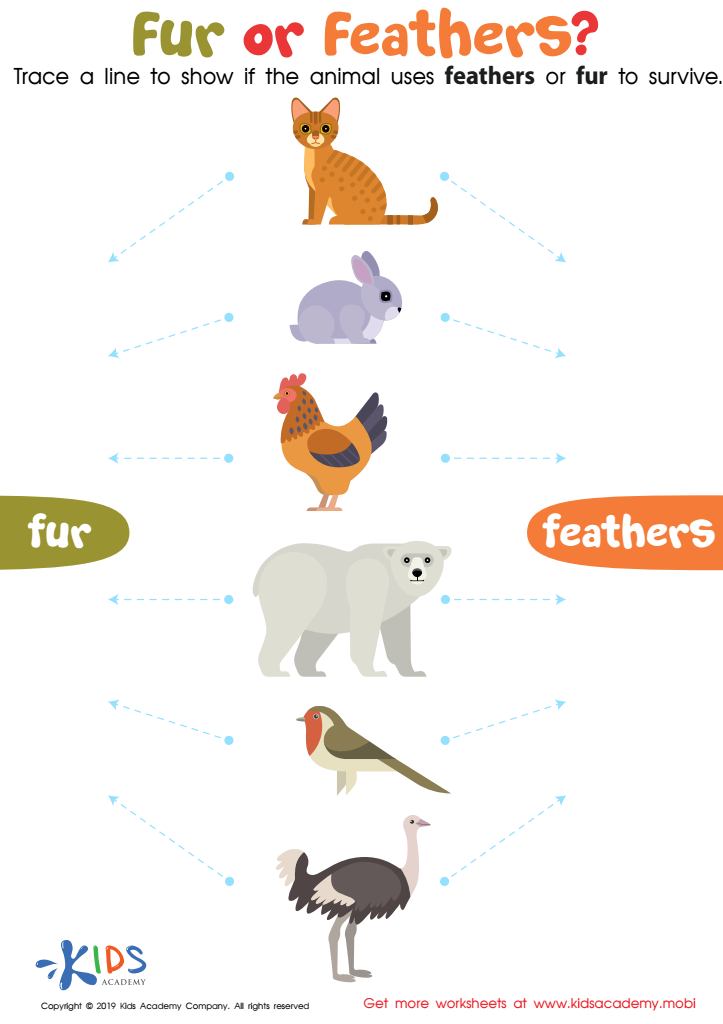
Fur or Feathers? Worksheet
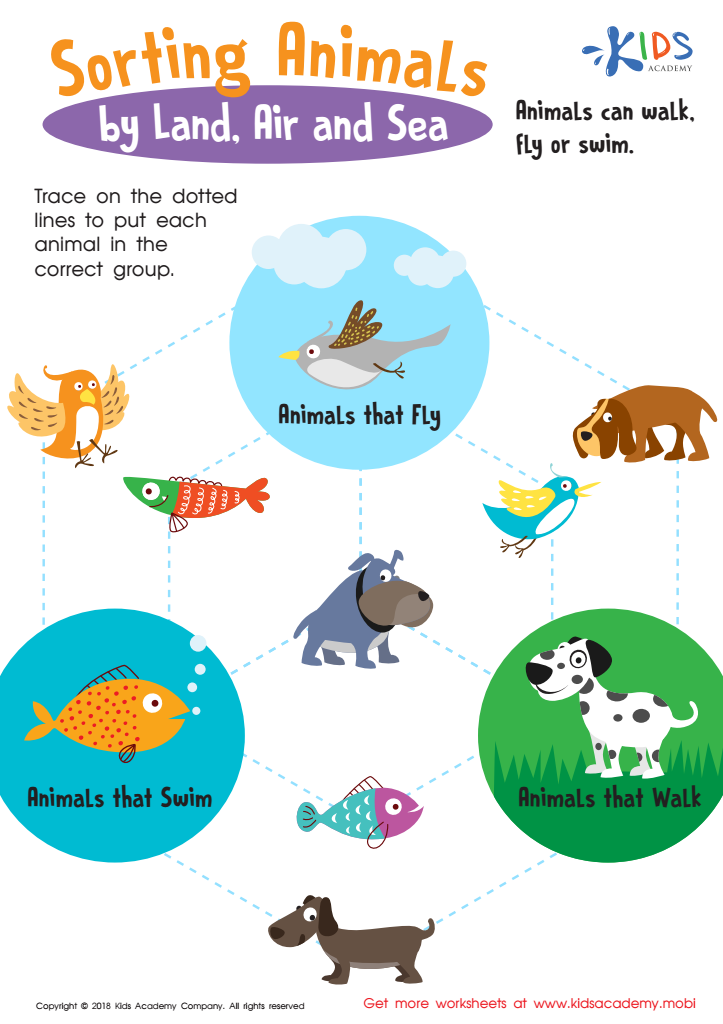
Sorting Animals by Land, Air and Sea Worksheet
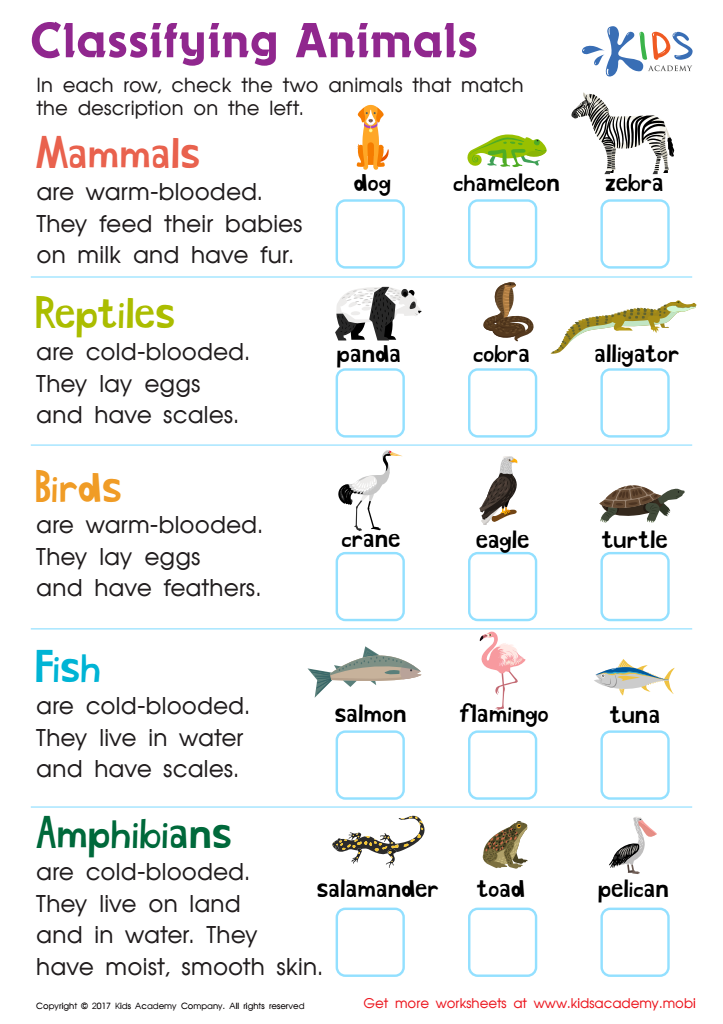
Classifying Animals Worksheet



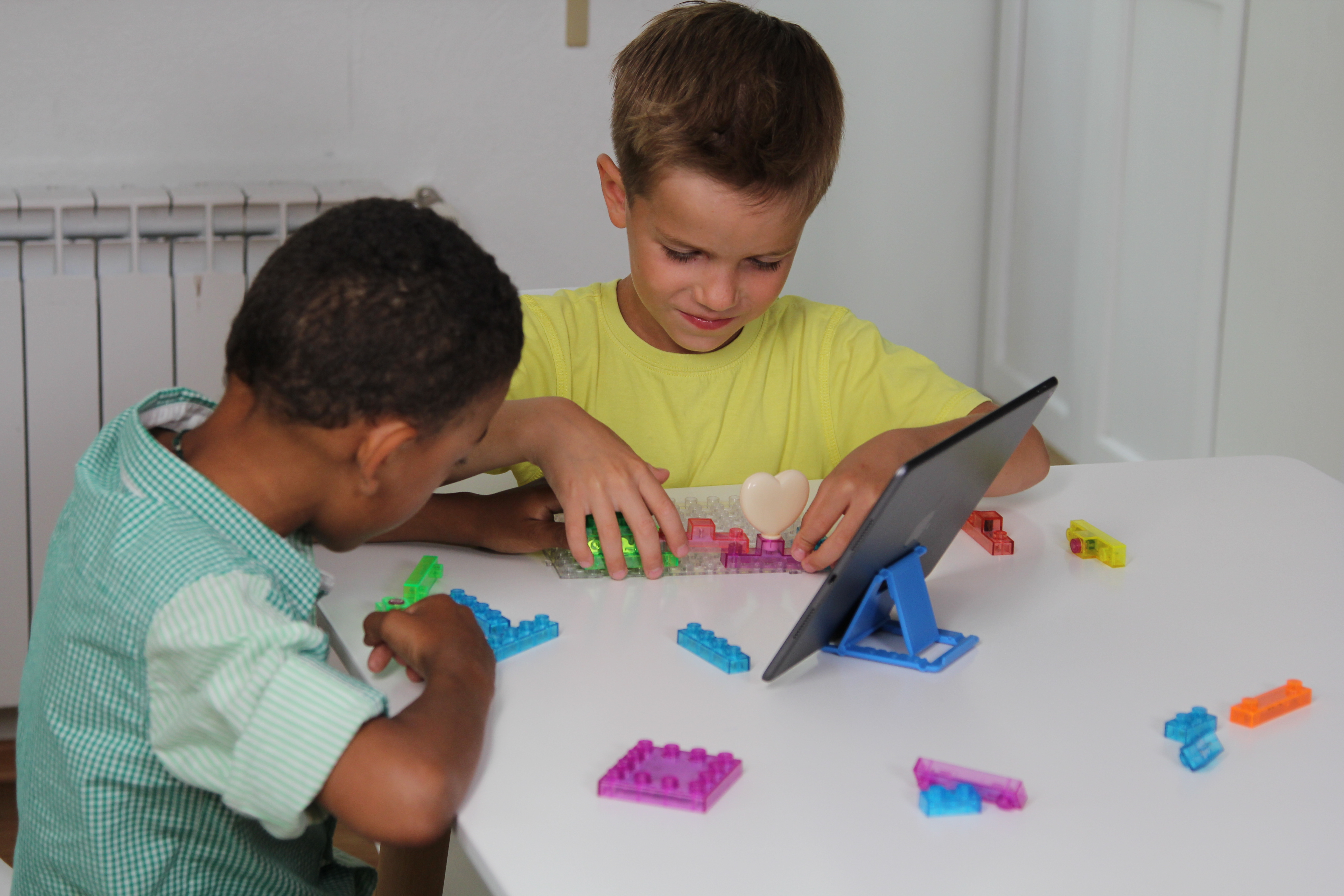



Animal classification is a fascinating subject that introduces young learners to the diversity of life on our planet. For parents and teachers, understanding this topic is crucial for several reasons. First, it fosters curiosity and a love for learning. By exploring different animal groups—such as mammals, reptiles, birds, and amphibians—children can develop observational skills and begin to ask questions about the world around them.
Second, animal classification supports critical thinking. Kids learn to categorize and differentiate, which enhances their cognitive skills and sets the foundation for scientific reasoning. This kind of thinking not only applies to science but can benefit all areas of learning.
Additionally, early exposure to animal classification encourages empathy and awareness of environmental issues. Understanding the needs and behaviors of various animals helps children appreciate biodiversity and the importance of conservation efforts, which is vital in today's context of climate change.
Moreover, engaging with animal classification can be fun and interactive! Using games, songs, and stories, parents and teachers can make learning exciting, stimulating a child’s imagination. By prioritizing animal classification, they offer children essential tools for exploration and understanding of our complex world, paving the way for lifelong learning and stewardship.







