Understanding forces Normal Science Worksheets for Ages 3-7
3 filtered results
-
From - To
Discover the world of forces with our "Understanding Forces" science worksheets for ages 3-7. These fun and educational printables, available on Kids Academy, introduce young learners to the basics of force, motion, and energy. Engaging activities and age-appropriate illustrations help children grasp concepts in a hands-on way, fostering a love for science. Perfect for early learners, our worksheets encourage curiosity and critical thinking, laying a strong foundation for future STEM learning. Make science exciting and accessible for your little ones with our expertly designed resources tailored just for them. Visit Kids Academy to start learning today!
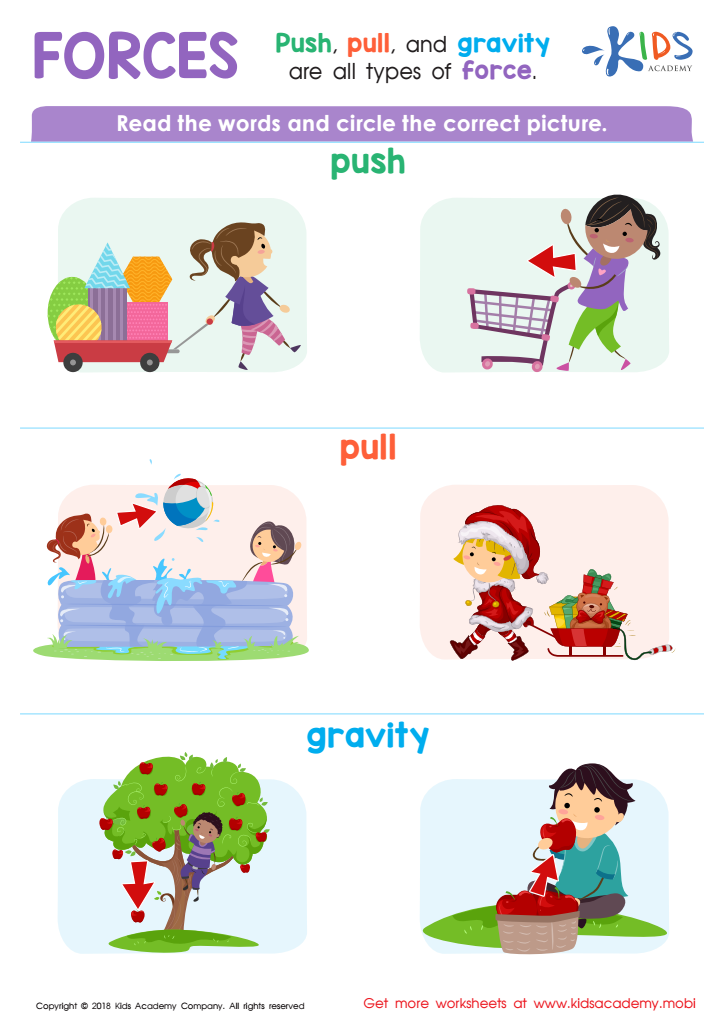
Forces Worksheet
 Assign to My Students
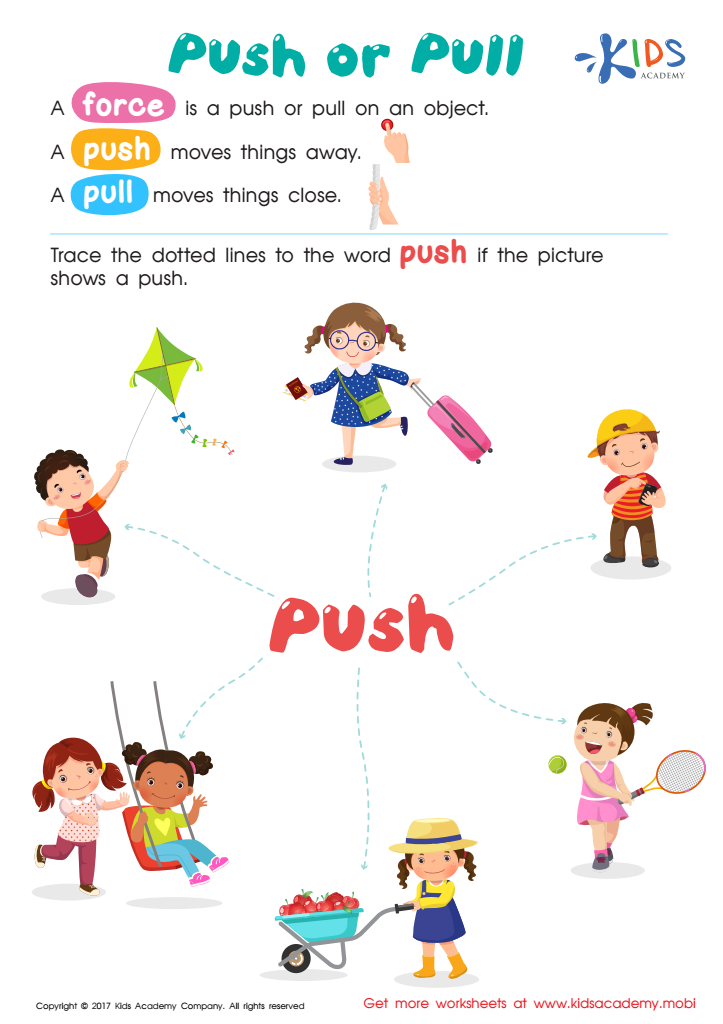
Push or Pull Worksheet
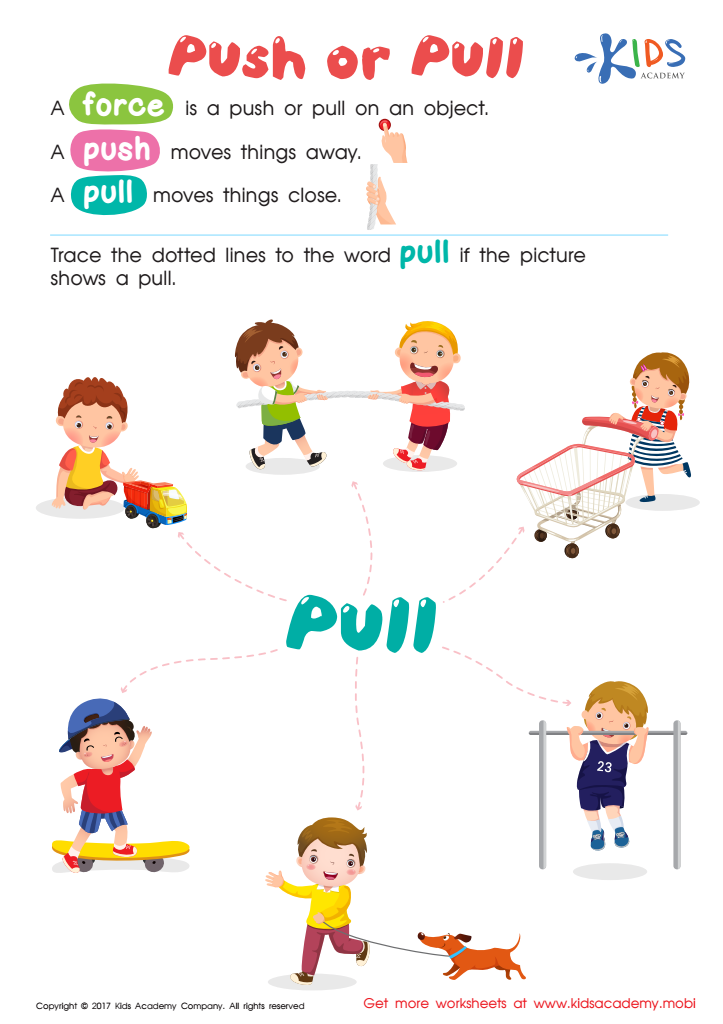
Pull or Push Worksheet







Understanding basic scientific concepts, such as forces, is crucial even for young children aged 3-7, and it should be a concern for both parents and teachers. At this stage, children's brains are highly receptive to new information, and introducing them to fundamental principles like normal forces helps lay a strong foundation for future learning.
Normal forces are simply the forces that surfaces exert to support the weight of an object resting on them. When children push a toy car, they are interacting with these forces. By learning about concepts like pushing, pulling, and gravity in simple, relatable ways, children develop curiosity and critical thinking skills. This early introduction to physical science encourages them to ask questions, make observations, and understand the world around them more intuitively.
Incorporating basic science into daily activities can also make learning more engaging and fun. Hands-on activities, such as building with blocks or playing with water, become more meaningful when children grasp the underlying principles. This not only boosts cognitive development but also enhances problem-solving skills and spatial awareness.
Moreover, familiarity with scientific ideas early on can demystify the subject, making science more approachable and decreasing anxiety or resistance as they encounter more complex topics in later schooling. Therefore, both parents and teachers play a vital role in nurturing a lifelong interest in science by prioritizing early education in fundamental concepts like normal forces.







