Visual perception improvement Normal Science Worksheets for Ages 3-7
3 filtered results
-
From - To
Enhance your child's visual perceptual skills with our engaging Normal Science Worksheets designed for ages 3-7. Ideal for young learners, these worksheets focus on developing essential skills like shape recognition, pattern differentiation, and visual discrimination through entertaining activities. Each worksheet is thoughtfully crafted to stimulate your child's curiosity and foster a love for learning. With colorful illustrations and age-appropriate challenges, kids will enjoy improving their visual perception while exploring science concepts. Perfect for classroom use or homeschooling, our worksheets make learning fun and interactive, laying a strong foundation for future success in school. Discover the joy of learning today!
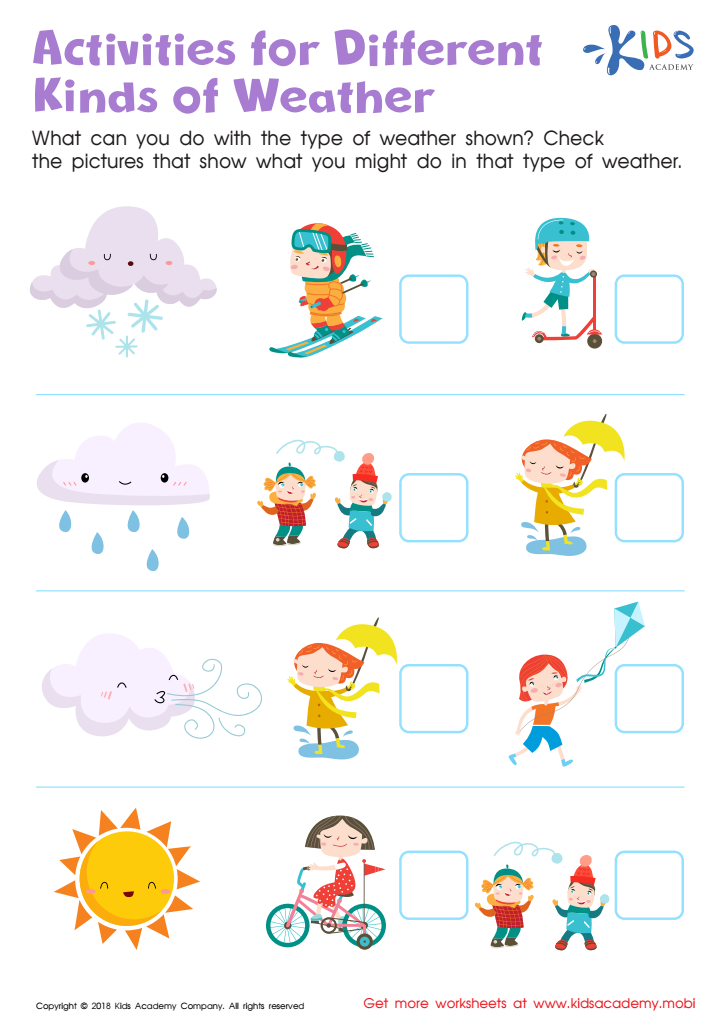
Activities for Different Kinds of Weather Worksheet
 Assign to My Students
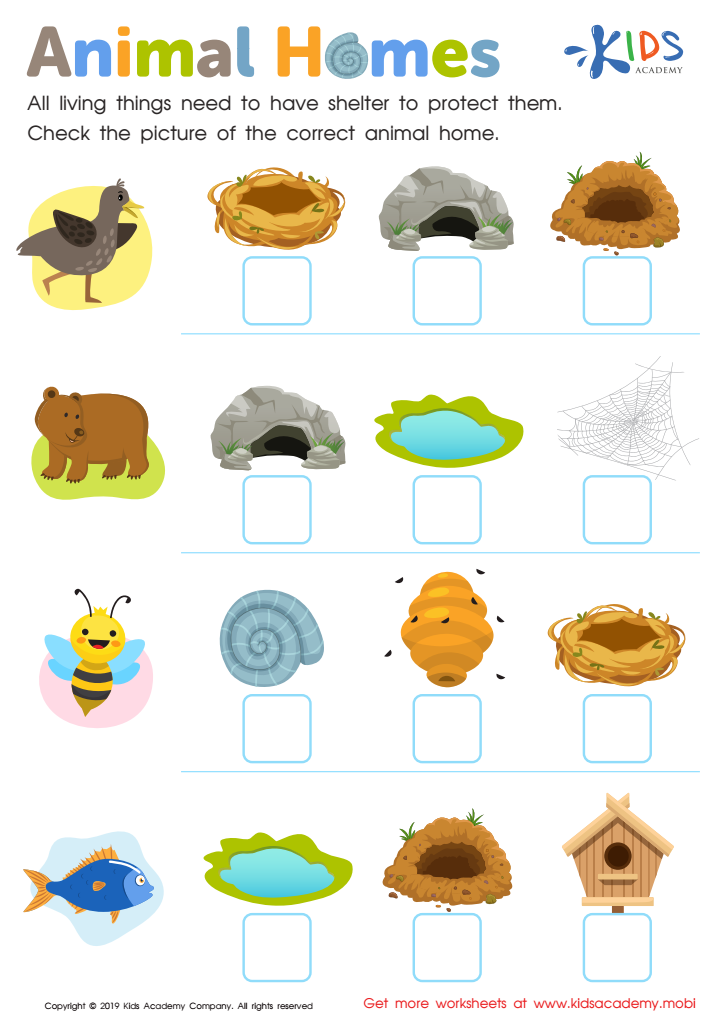
Animal Homes Worksheet
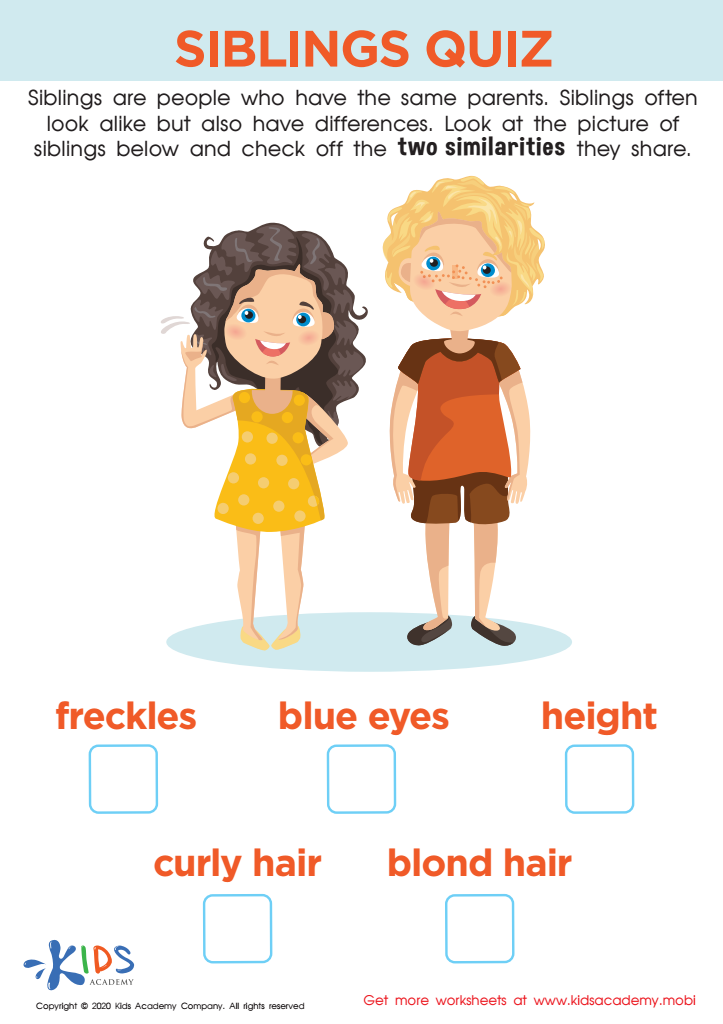
Siblings Quiz Worksheet








Visual perception is a critical skill that develops early in childhood and significantly influences a child's overall learning and development. For parents and teachers, engaging with activities that enhance visual perception in children aged 3 to 7 is vital because these skills serve as the foundation for a variety of academic and social competencies.
At this crucial developmental stage, children refine their ability to interpret and respond to visual information, which impacts their success in literacy, mathematics, and everyday tasks. Improved visual perception aids in recognizing letters and numbers, understanding spatial relationships, and enhancing coordination. As children engage in activities that require visual discrimination—for instance, puzzles, matching games, or sorting—multiple cognitive skills are exercised simultaneously.
Furthermore, strong visual perception skills are linked to a child’s ability to follow directions, learn new concepts, and socialize effectively. With many learning styles emerging by age seven, teachers and parents must address these aspects to foster holistic growth.
Cultivating visual perception in early years helps to identify potential learning challenges and encourages children to interact with their environment more confidently. Overall, prioritizing this development enriches children's educational experiences and builds a foundation for lifelong learning.







