Visual Perception Skills Normal Science Worksheets for Ages 3-7
4 filtered results
-
From - To
Enhance your child's learning journey with our "Visual Perception Skills Normal Science Worksheets" designed for ages 3-7. These engaging worksheets help young learners develop crucial visual perception abilities, fostering their ability to interpret information through sight. Activities focus on shape recognition, pattern matching, and color differentiation, making learning both enjoyable and effective. Perfect for homeschooling or supplemental practice, our worksheets encourage curiosity and exploration of the natural world. With fun illustrations and captivating exercises, children will not only improve their visual skills but also build confidence in their scientific understanding. Unlock your child's potential with our comprehensive resources today!
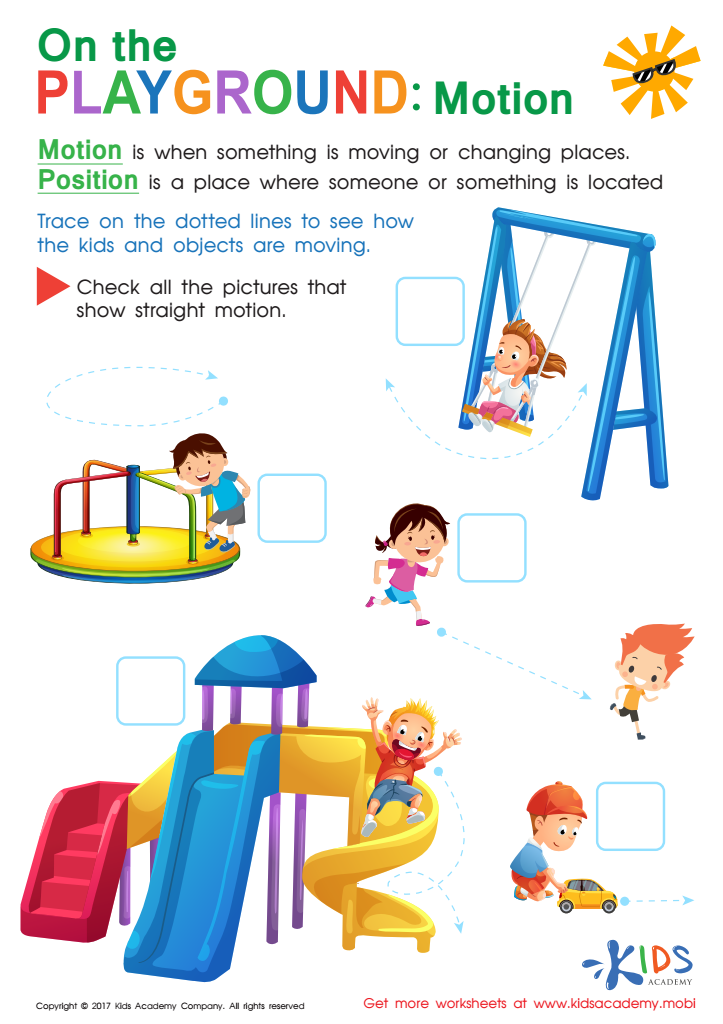
Position and Motion Worksheet
 Assign to My Students
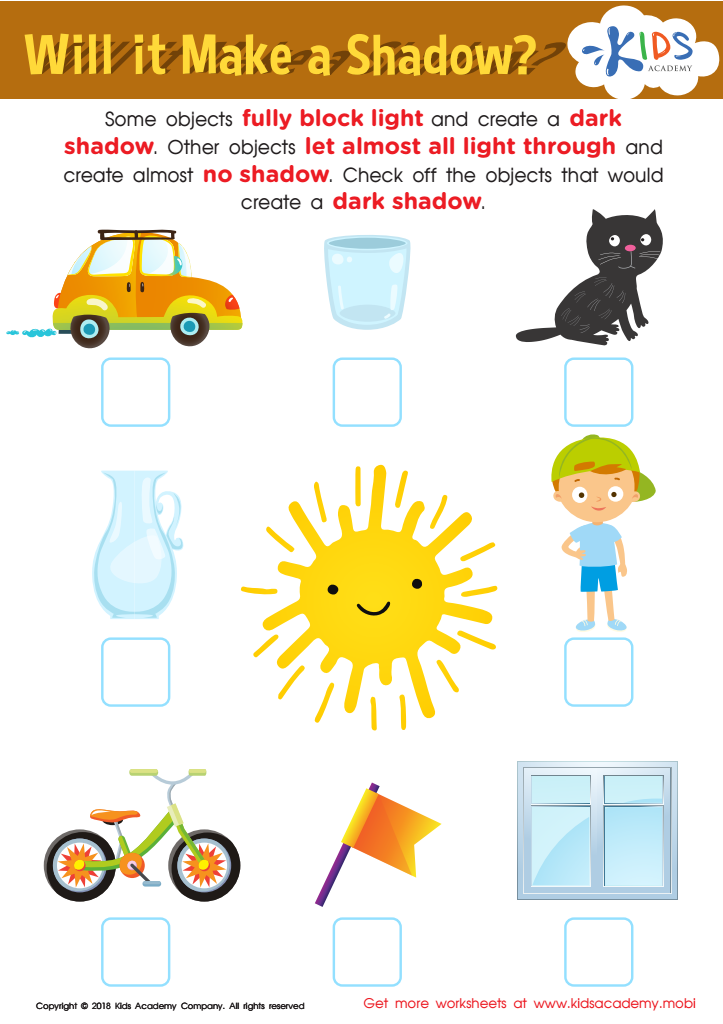
Will It Make a Shadow? Worksheet
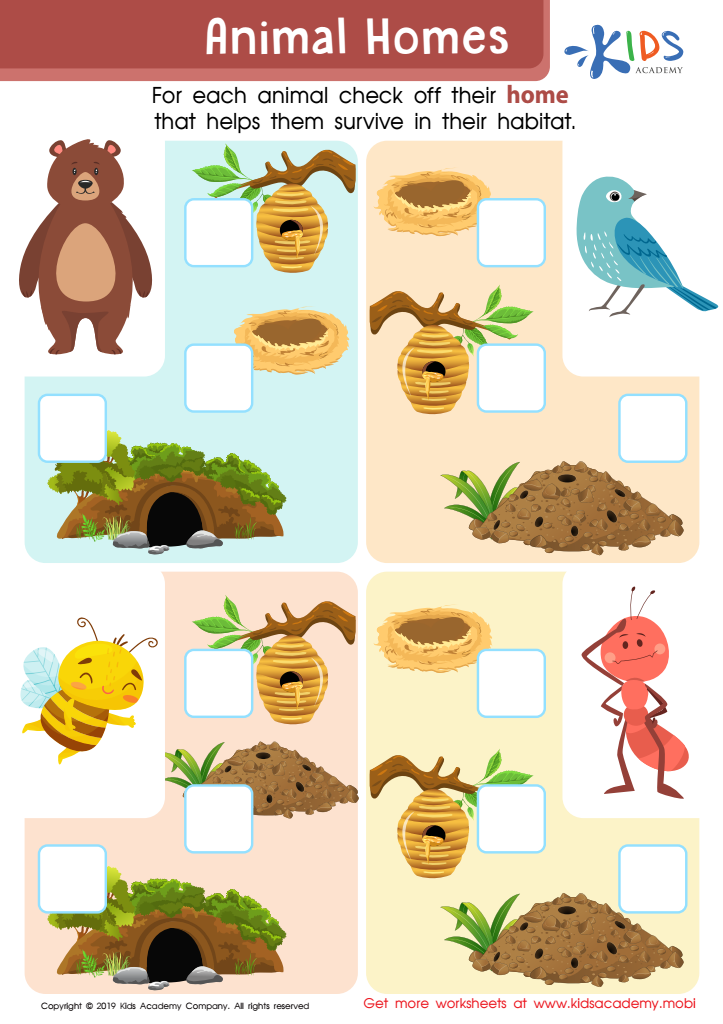
Animal Homes Worksheet
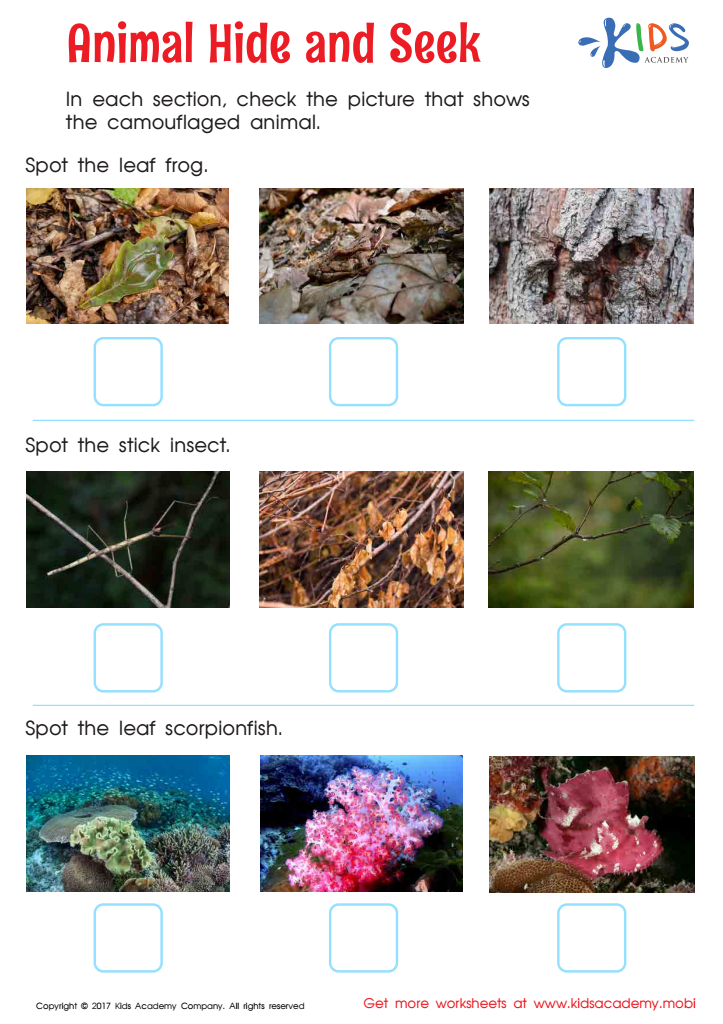
Animal Hide and Seek Worksheet








Visual perception skills are crucial for children's development, particularly in the early years (ages 3-7). These skills encompass the ability to interpret and make sense of visual information, which is foundational for learning and problem-solving. Parents and teachers should care about these skills because they directly impact a child's academic success and overall development.
Children use visual perception skills to recognize shapes, understand spatial relationships, and follow directions—aptitudes essential for reading, writing, and math. For instance, being able to differentiate between letters and numbers is vital for literacy and numeracy. Strong visual perception is also linked to fine motor skills, which are necessary for tasks like cutting with scissors and holding a pencil.
Moreover, children with well-developed visual perception skills tend to have increased confidence in their abilities, leading to more positive social interactions and engagement in classroom activities. Recognizing the importance of these skills enables parents and teachers to incorporate targeted activities—such as puzzles, sorting games, and pattern recognition exercises—into daily routines. By fostering visual perception skills, adults play a vital role in preparing children for a successful and enriching learning experience. Investing in these early skills lays a strong foundation for lifelong learning.







