Observational skills Normal Our Planet and Environment Worksheets for Ages 3-7
6 filtered results
-
From - To
Explore the wonders of our planet with our Observational Skills Normal Worksheets designed for ages 3-7! These engaging resources help young learners sharpen their observational skills by observing nature, identifying plants and animals, and understanding their environments. Each worksheet features vibrant illustrations and age-appropriate activities that encourage children to use their senses, fostering curiosity about the world around them. Perfect for classrooms or home learning, these worksheets promote critical thinking and environmental awareness. Dive into interactive learning experiences that not only enhance observation but also support a deeper appreciation for our planet’s beauty and diversity. Jumpstart your child’s journey today!
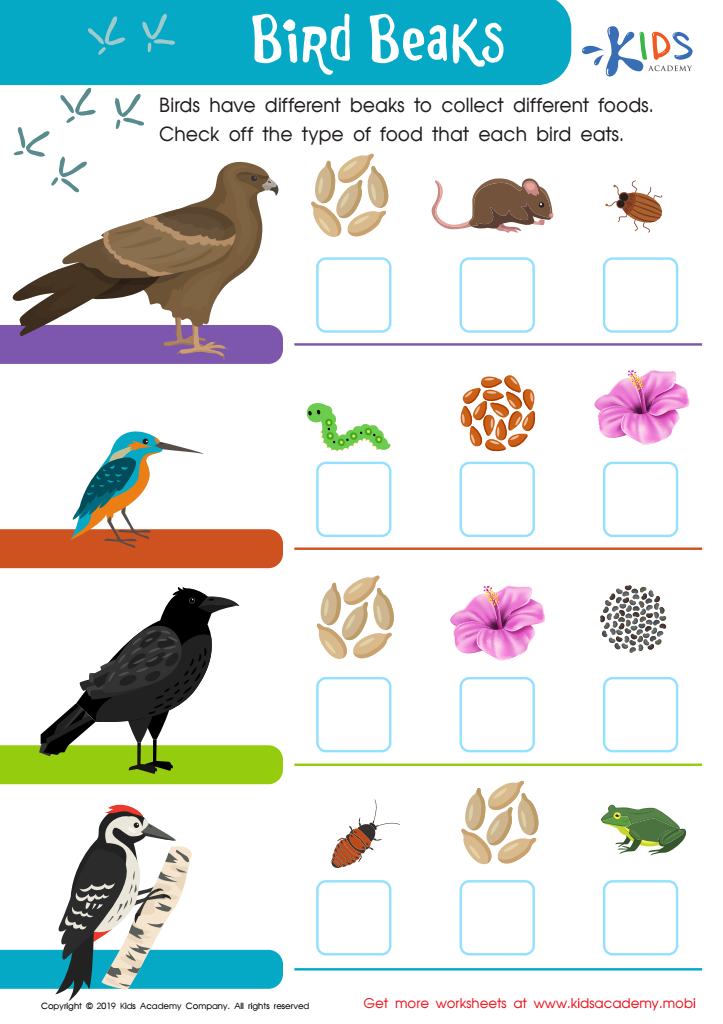
Bird Beaks Worksheet
 Assign to My Students
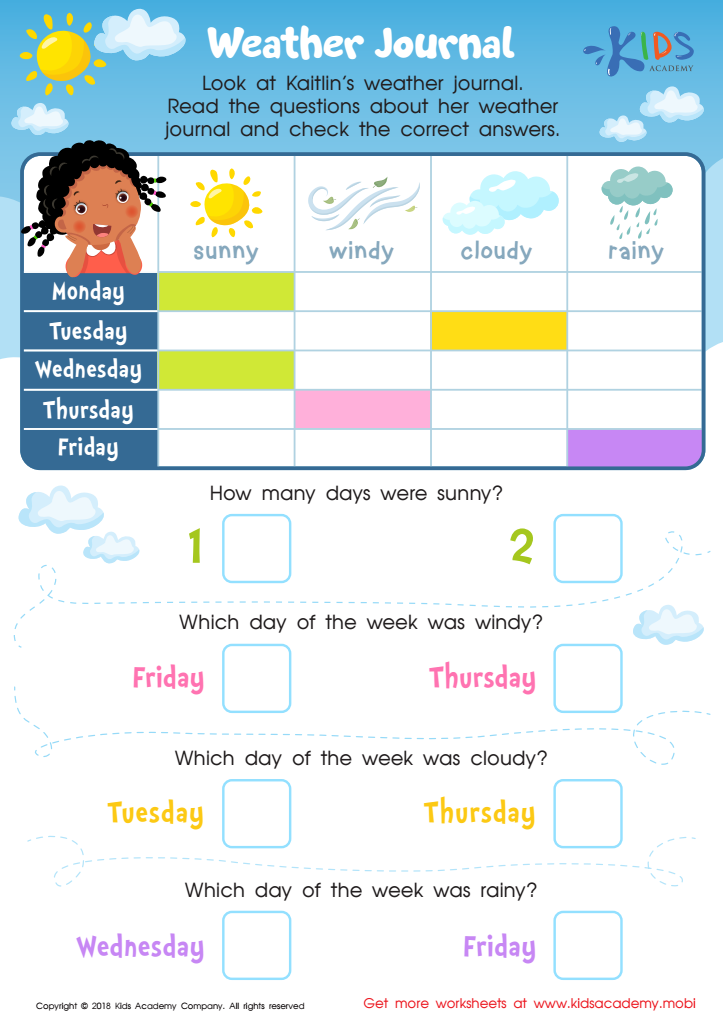
Weather Journal Worksheet
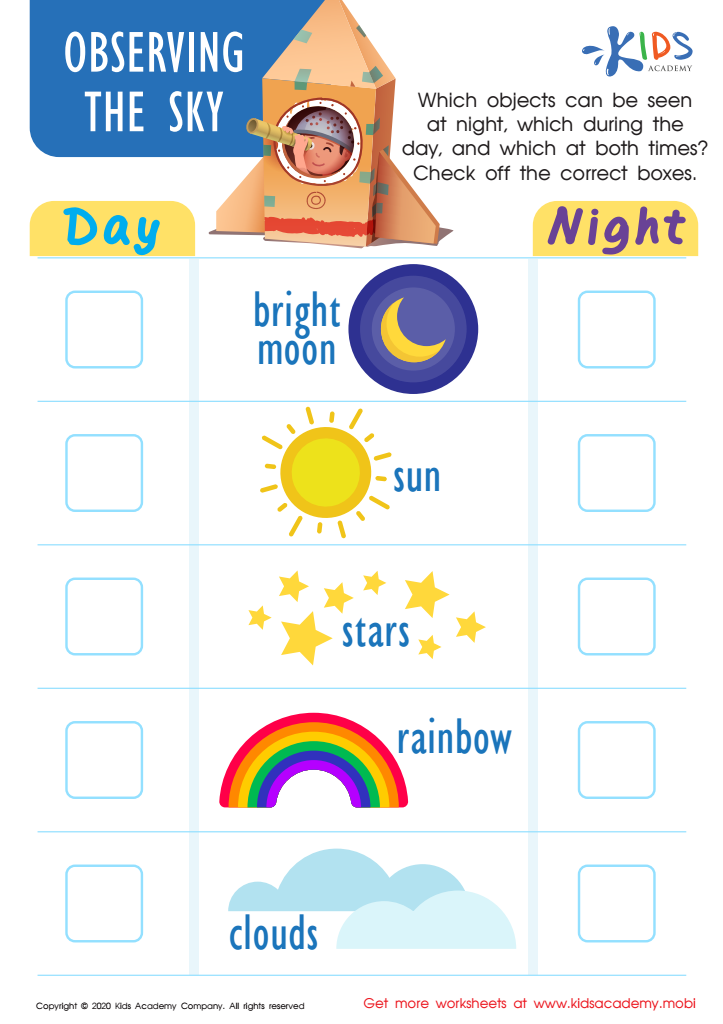
Observing the Sky Worksheet
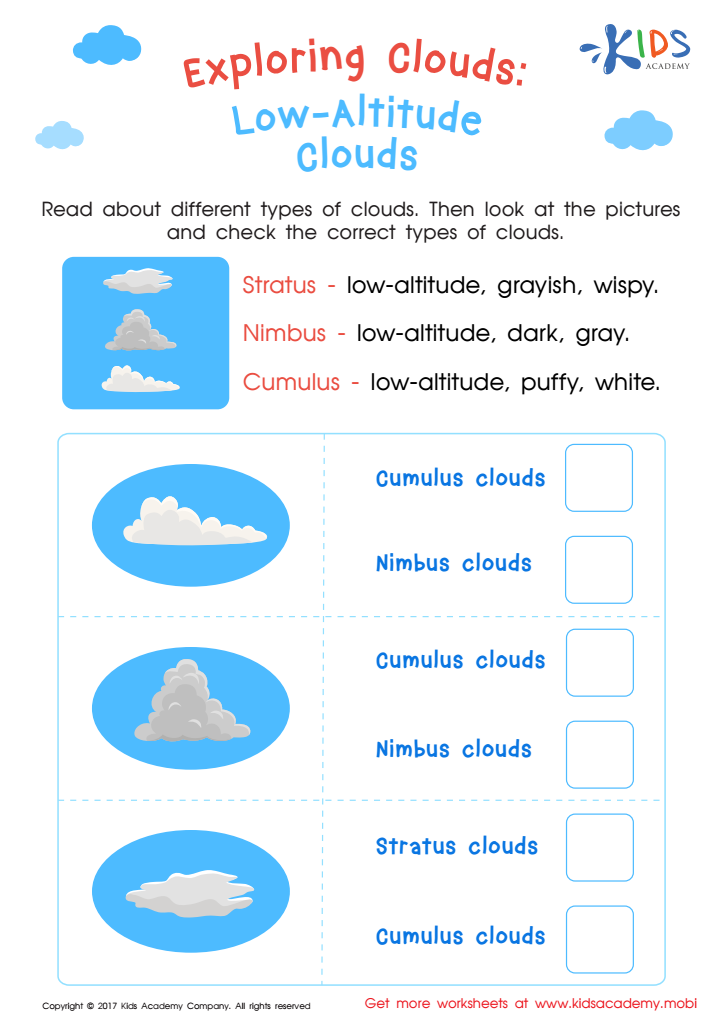
Exploring Clouds: Low Altitude Clouds Printable
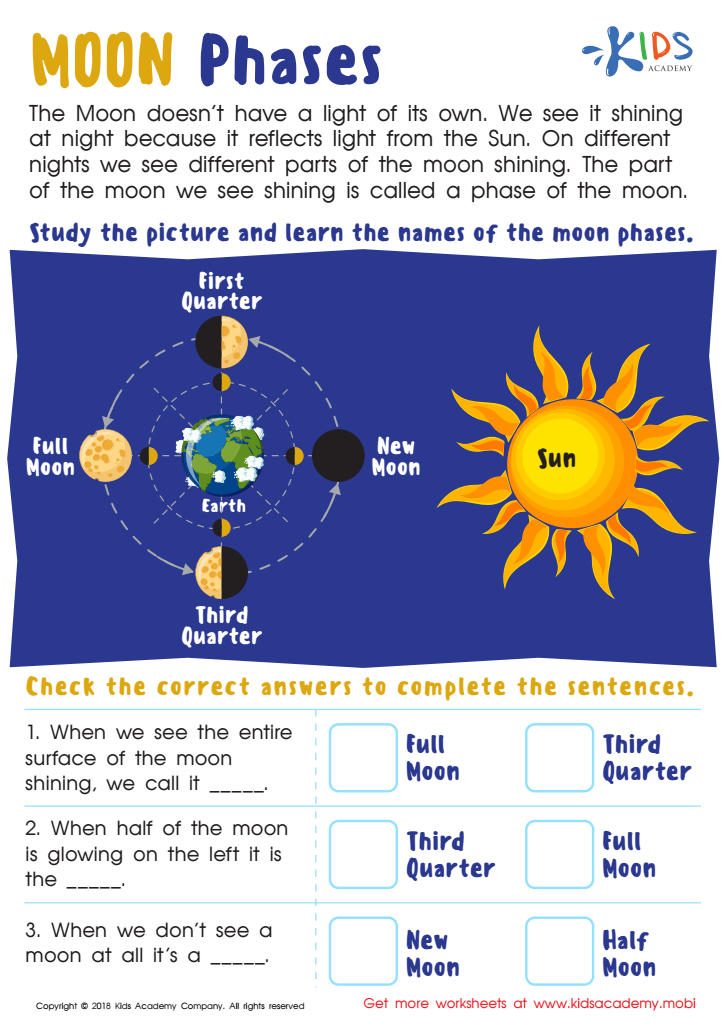
Moon Phases Worksheet
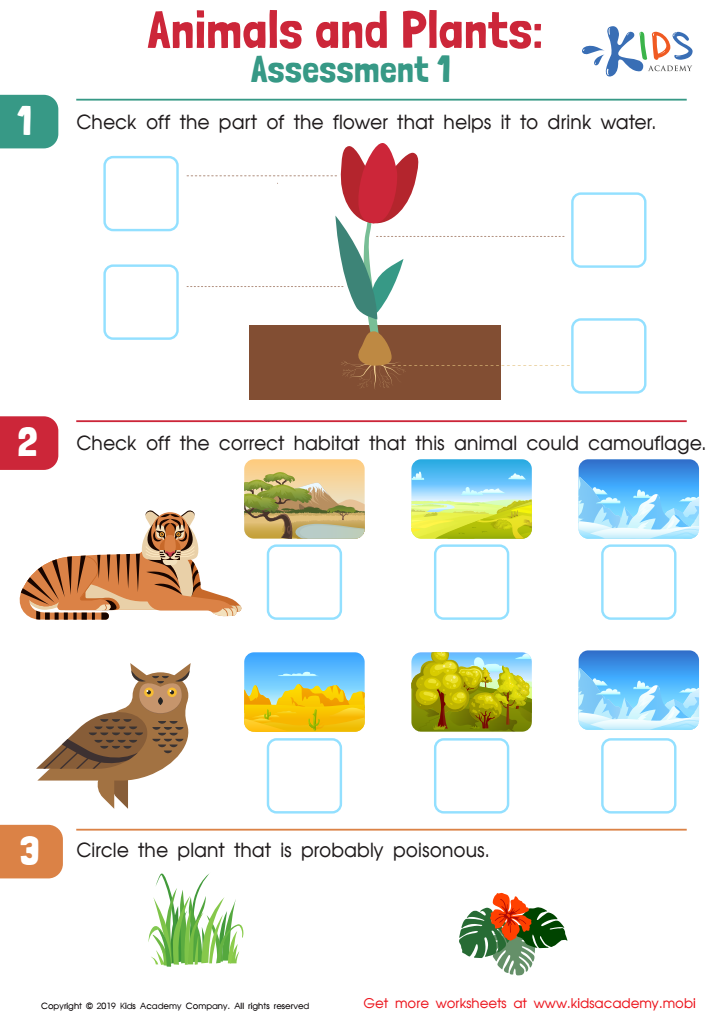
Animals and Plants: Assessment 1 Worksheet





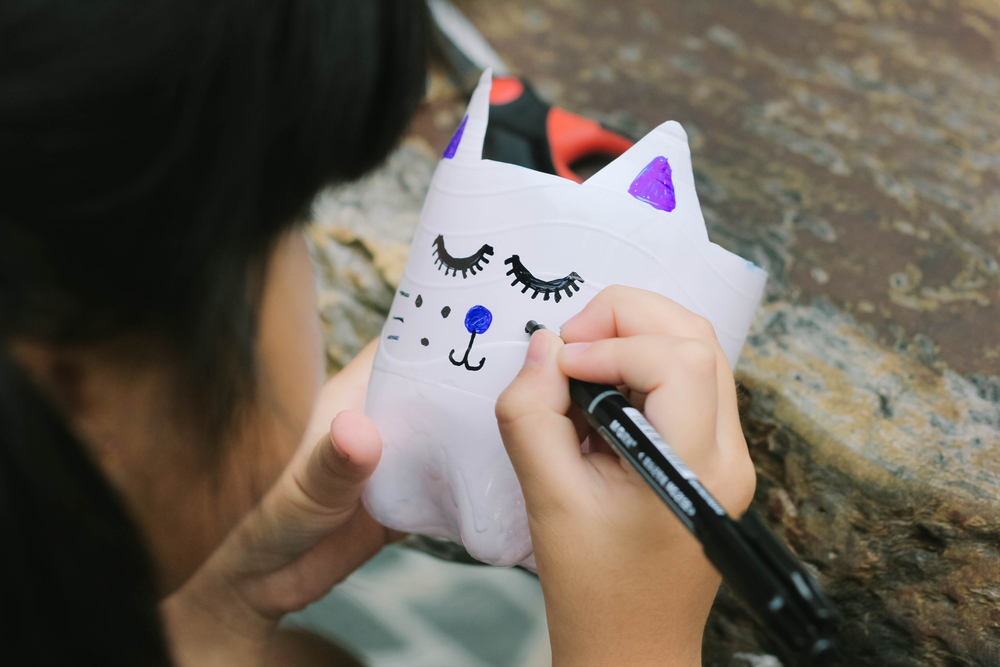

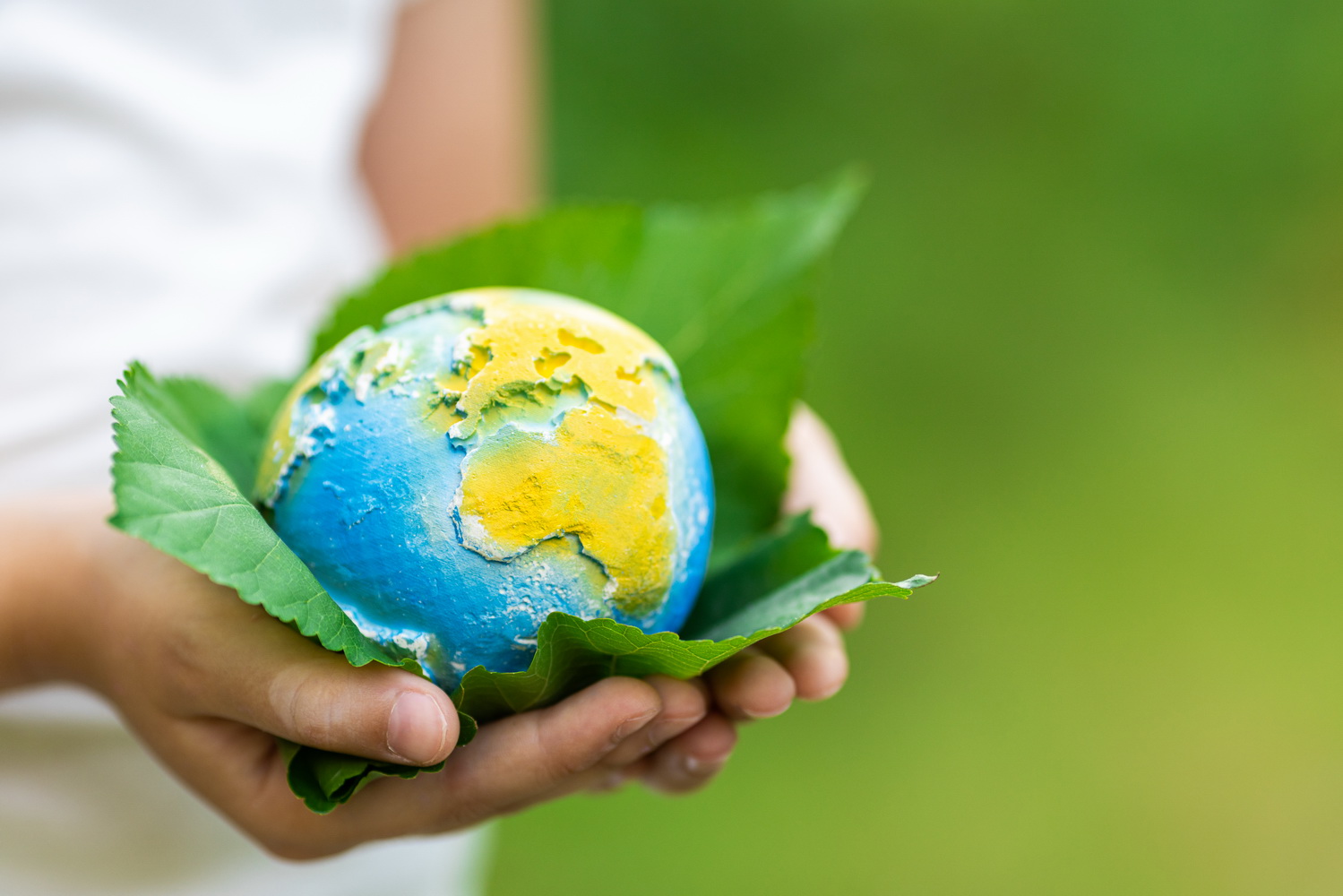
Observational skills form a crucial foundation for young children, particularly in understanding our planet and environment. For parents and teachers of children aged 3-7, nurturing these skills is essential as they foster curiosity, critical thinking, and a connection with the natural world. At this developmental stage, children are naturally inquisitive, making it the perfect time to engage them in exploring their surroundings.
Developing strong observational skills helps children notice details, recognize patterns, and understand relationships in their environment. When they learn to observe, they become more aware of the diverse ecosystems, local wildlife, and seasonal changes. This awareness promotes empathy towards living beings and encourages respectful and responsible behaviors towards our planet.
Furthermore, integrating observational activities into daily routines can enhance children's vocabulary, comprehension, and scientific thinking. It also supports their cognitive and social-emotional development, providing opportunities for collaboration and discussion. Parents and teachers play a pivotal role in guiding children's focus and fostering their enthusiasm for exploration, ensuring future generations inherit a healthier and more sustainable planet. By prioritizing observational skills, we are equipping children not only with knowledge but with the inspiration to become stewards of our environment.







