Categorizing objects Normal Physical Science Worksheets for Ages 3-7
3 filtered results
-
From - To
Explore our engaging "Categorizing Objects Normal Physical Science Worksheets," specially designed for children ages 3-7. These interactive worksheets enhance early learning by encouraging young students to group objects based on size, color, shape, and other characteristics. With vibrant visuals and age-appropriate tasks, your little learners will develop essential critical thinking and observational skills. Ideal for both classroom settings and at-home learning, these worksheets promote hands-on experiences that make science fun and relatable. Help your child understand the world around them while fostering a love for discovery with our comprehensive collection. Dive into the fascinating theme of categorization today!
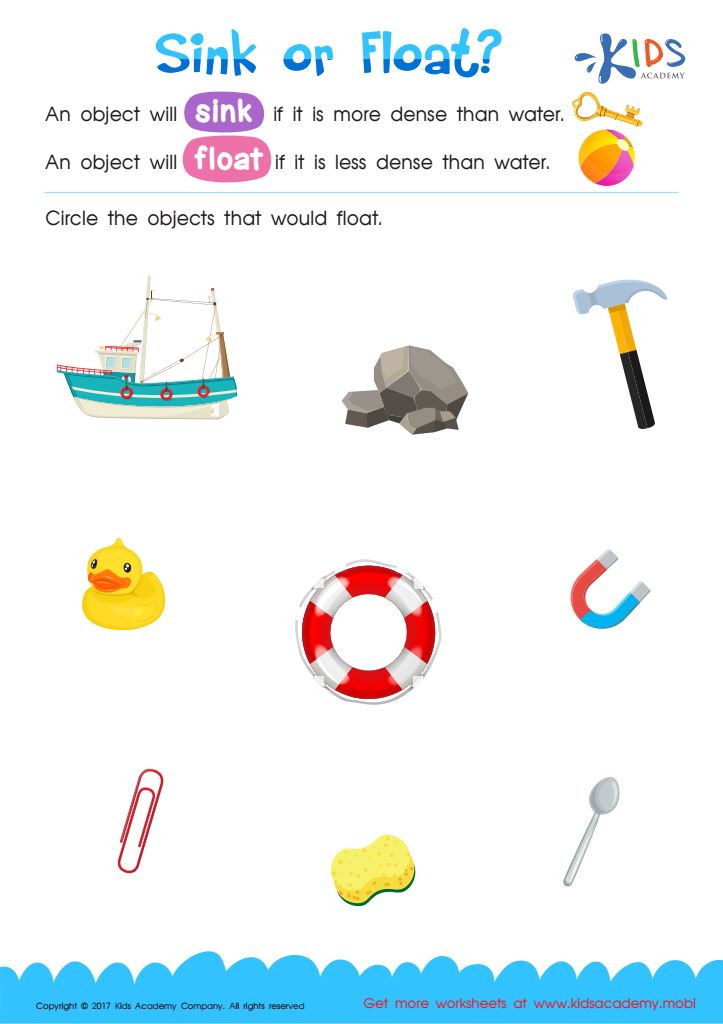
Sink or Float Printable
 Assign to My Students
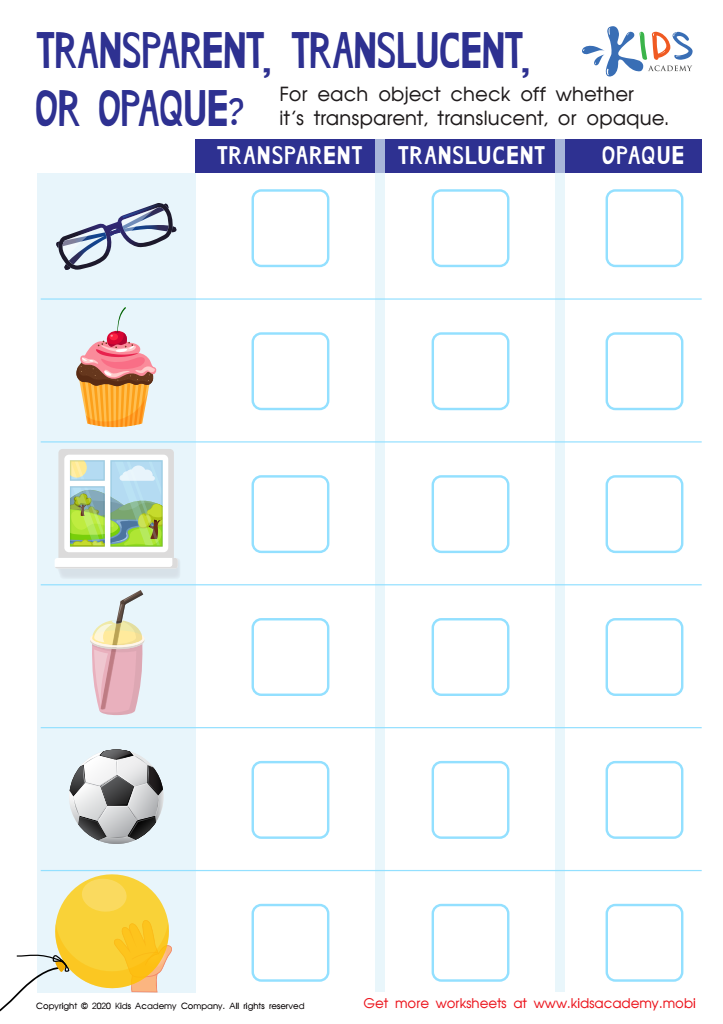
Transparent, Translucent, or Opaque Worksheet
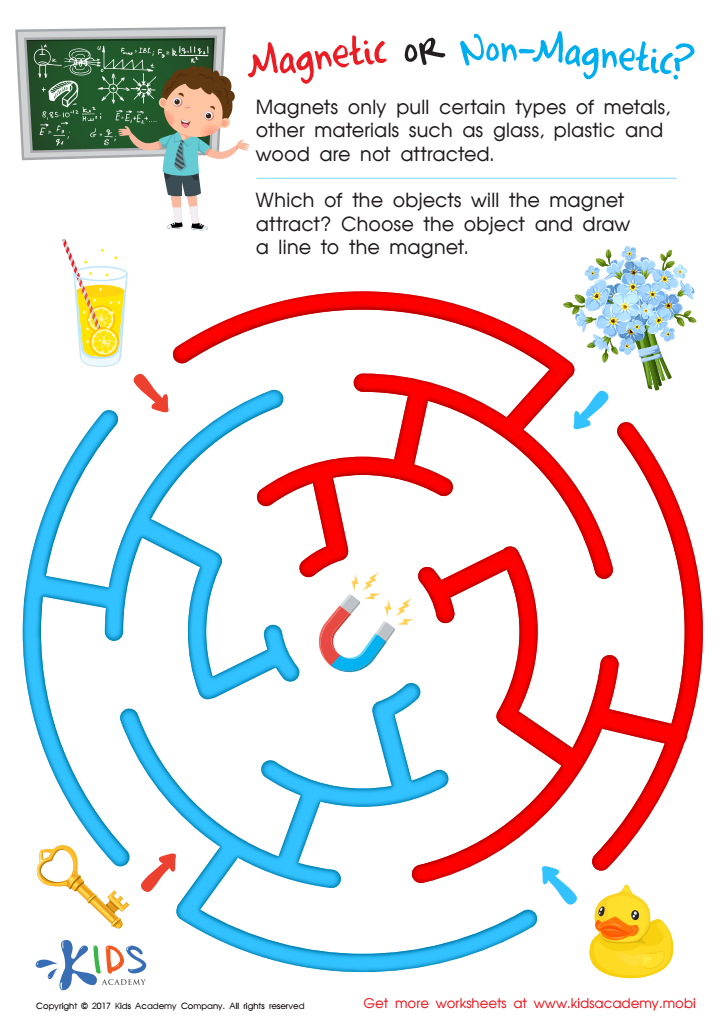
Magnetic or Non–Magnetic Worksheet







Categorizing objects is a fundamental aspect of early childhood education, particularly in the domain of normal physical science for ages 3 to 7. This process helps children develop critical thinking, problem-solving skills, and cognitive abilities. When parents and teachers engage children in categorization activities, they provide opportunities for young learners to make sense of the world around them.
Firstly, categorizing objects fosters observation skills. Children learn to identify key characteristics and differences among items, which is essential for scientific inquiry. For example, grouping animals by habitats (land, sea, air) helps them understand the natural world, promote curiosity, and investigate different ecosystems.
Secondly, this practice enhances vocabulary development. As children categorize objects, they encounter new terms related to shapes, colors, sizes, and functions, enriching their language skills and supporting literacy.
Furthermore, categorization nurtures social skills. Collaborative sorting exercises encourage teamwork, communication, and respect for diverse opinions. It builds a foundation for interdisciplinary learning by integrating science experiences with art and mathematics.
In summary, prioritizing the categorization of objects in early education helps children not only grasp scientific principles but also supports their overall development, setting them on a path for lifelong learning and curiosity.







