
Observational skills Normal Physical Science Worksheets for Ages 3-7
3 filtered results
Difficulty Level
Grade
Age
-
From - To
Subject
Activity
Standards
Unlock your child's curiosity with our Observational Skills Normal Physical Science Worksheets for Ages 3-7. Developed by educators, these interactive worksheets encourage young learners to explore the world around them. By enhancing their observational skills, kids will learn to notice, record, and ponder different physical science phenomena. Featuring playful diagrams, engaging activities, and age-appropriate language, these worksheets simplify complex concepts, making science fun and accessible. Perfect for reinforcing classroom learning or supplementary home education, our resources lay the foundation for a lifetime of scientific inquiry and discovery. Download today to spark your child’s fascination with the wonders of physical science!
Favorites
With answer key
Interactive
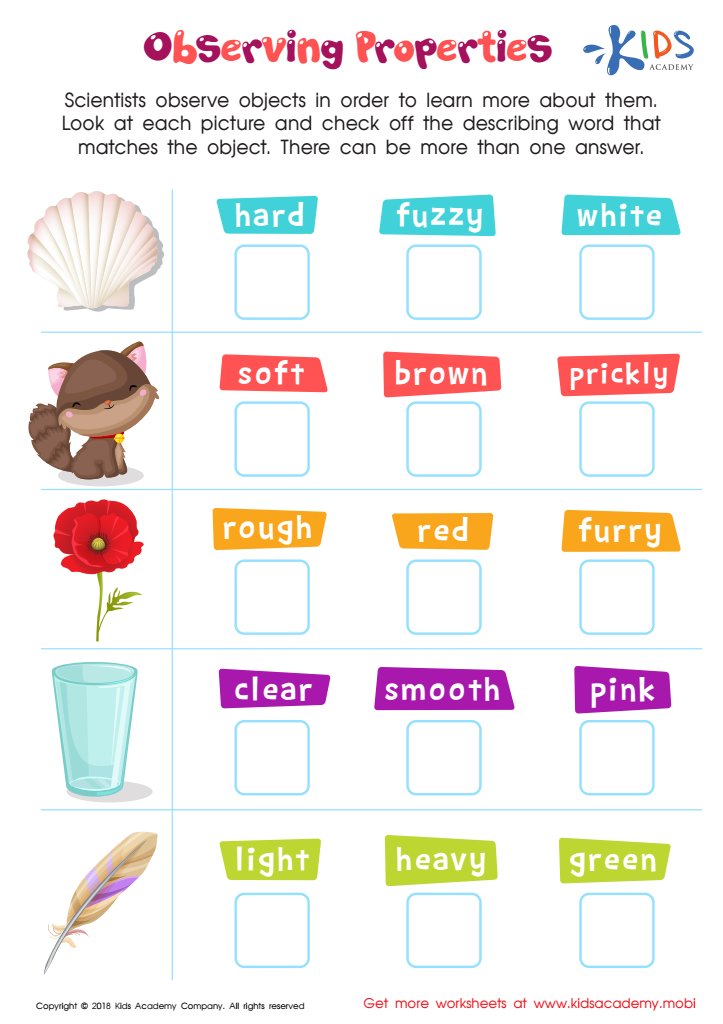
Observing Properties Worksheet
Encourage your kid's interest in science with this fun worksheet! Let them identify the five objects on the left, then choose the most accurate word from the options on the right. There might be more than one answer, so remind them to take their time observing the objects.
 Assign to My Students
Observing Properties Worksheet
Worksheet
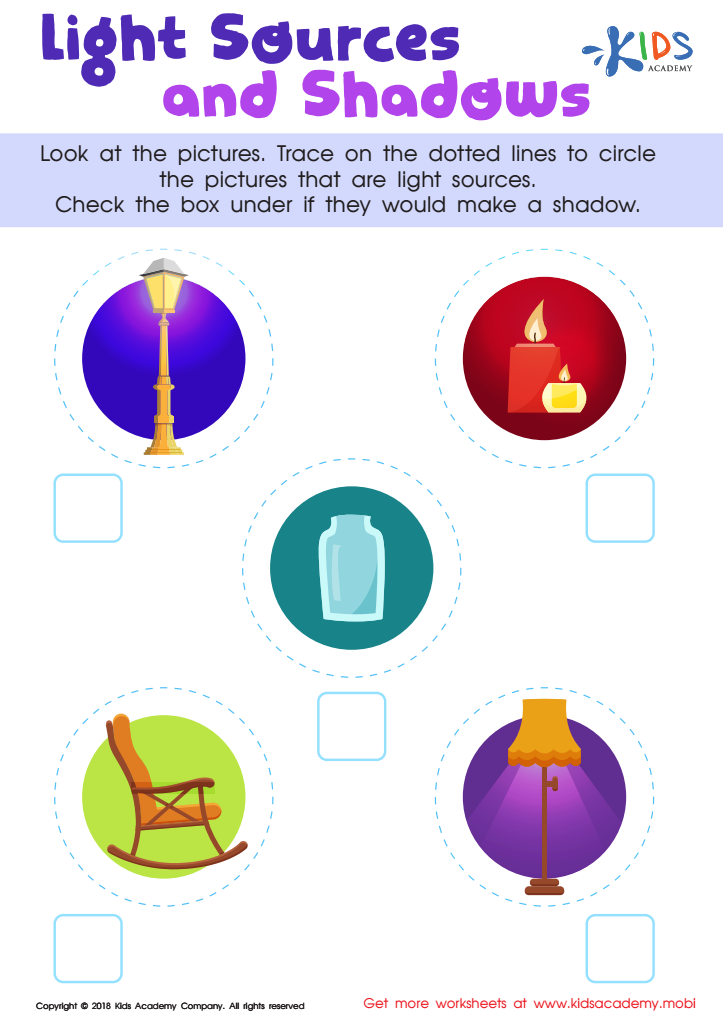
Light Sources and Shadows Worksheet
During the day, the sun radiates bright light. At night, when it's time for bed, the sun sets and darkness takes over. To light our way, we use other sources of light. With your students, trace the dotted lines around the pictures of light sources and check the boxes under the objects that will cast shadows.
Light Sources and Shadows Worksheet
Worksheet
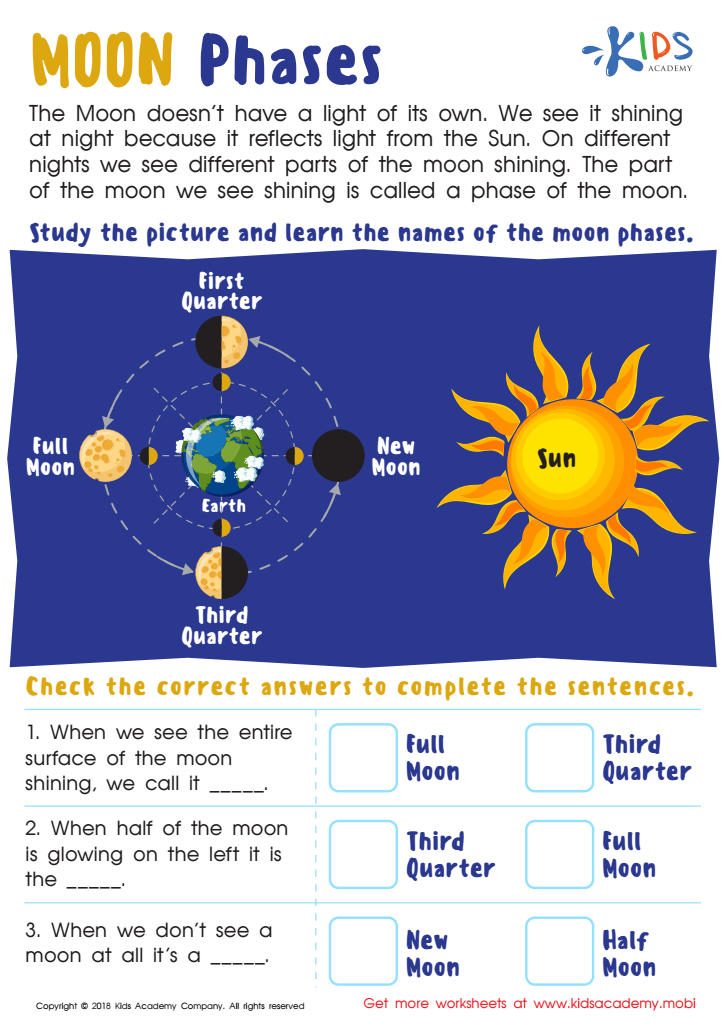
Moon Phases Worksheet
Gaze up at the night sky and the moon's appearance may change from night to night. Encourage your child to learn more about the sun, the moon, and space with this science worksheet. Have them read the text then study the picture. Finally, read the sentences and check the answers to identify the moon's phases.
Moon Phases Worksheet
Worksheet
Join Kids Academy for Free
Who is primarily going to use this learning content?







.jpg)
Observational skills in normal physical science for young children, ages 3-7, are foundational for their cognitive and emotional development. During these formative years, children's brains are highly receptive to exploring and understanding their environment. Encouraging observational skills allows them to cultivate curiosity and a love for learning, which are crucial for lifelong learning and critical thinking.
Parents and teachers play a vital role in guiding these young minds to observe, ask questions, and make sense of the world around them. When children examine plants, observe the weather, or notice how objects move, they begin to develop essential scientific processes like hypothesis formulation, experimentation, and conclusion drawing. These activities also enhance their attention to detail and focus, which are important not only in sciences but in all areas of life.
Moreover, fostering observational skills in early physical science can help with language development as children learn to describe what they see, ask questions, and communicate their findings. This interaction nurtures their vocabulary and verbal skills. Emotionally, it builds confidence as children realize they can understand and influence their surroundings.
In essence, supporting observational skills at a young age sets the stage for academic success and nurtures adaptable, inquisitive, and resilient individuals ready to tackle future challenges both in school and in life.







