Weather identification Normal Weather Worksheets for Ages 3-7
4 filtered results
-
From - To
Introduce your little ones to the fascinating world of weather with our "Weather Identification Normal Weather Worksheets" tailored for ages 3-7. These engaging worksheets are designed to help young children recognize and understand various weather conditions, from sunny skies to rainy days. Packed with fun activities like matching, coloring, and identifying weather symbols, these resources encourage early science skills and stimulate curiosity about the environment. Ideal for both home and classroom use, these worksheets promote learning through play, making weather education enjoyable and accessible. Foster a love for nature and science in your child today with our creative weather identification resources!
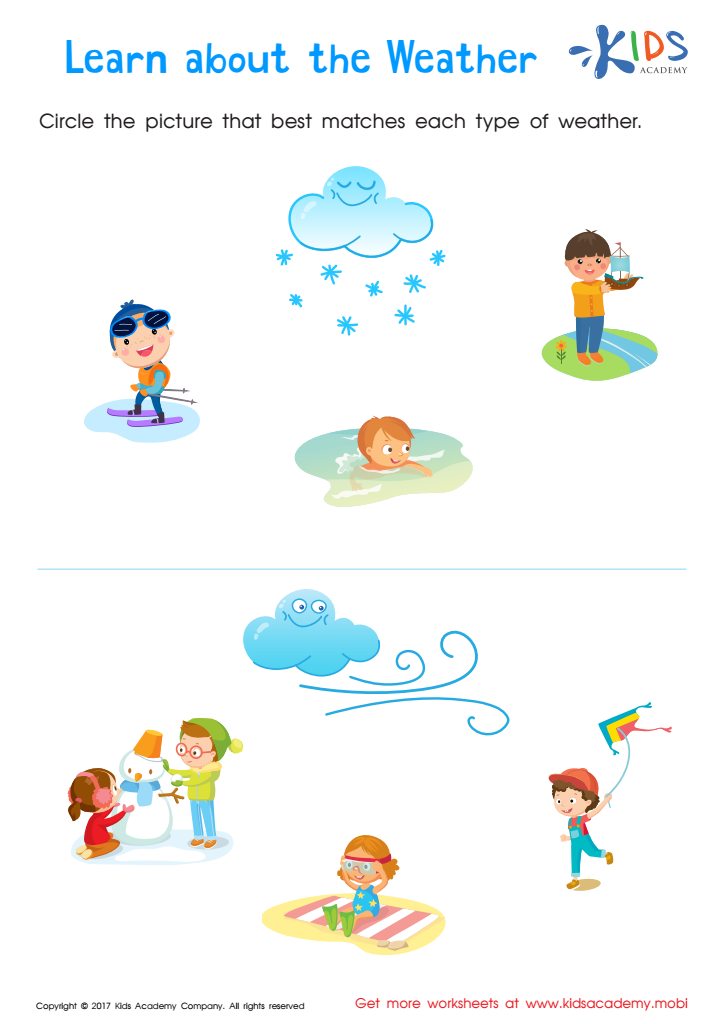
About the Weather Printable
 Assign to My Students
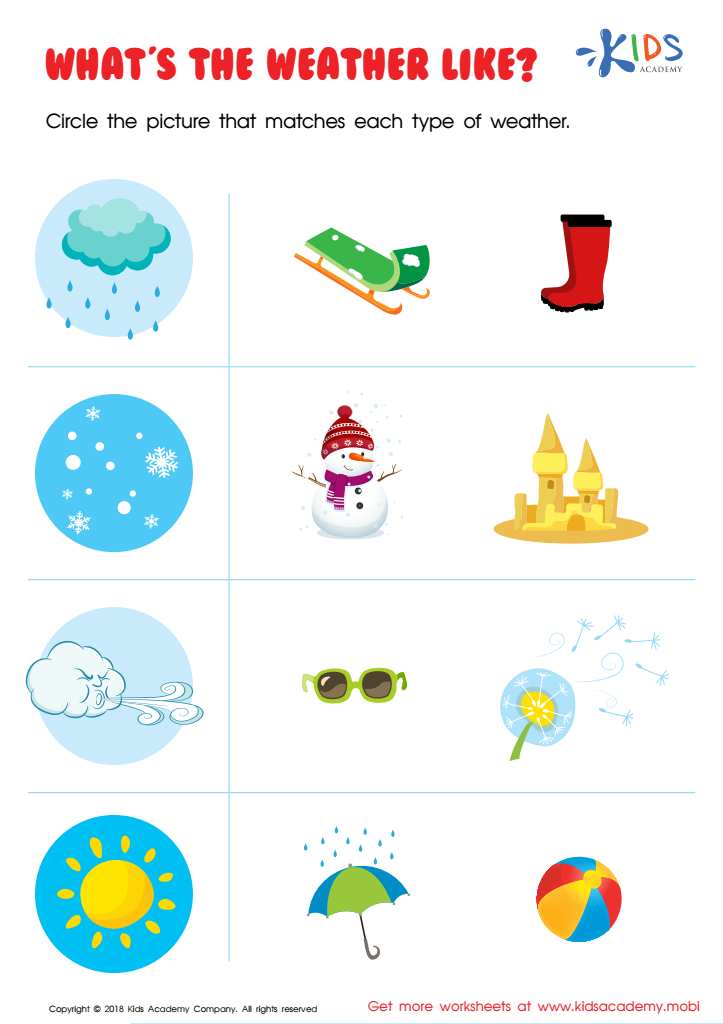
What's the Weather Like? Worksheet
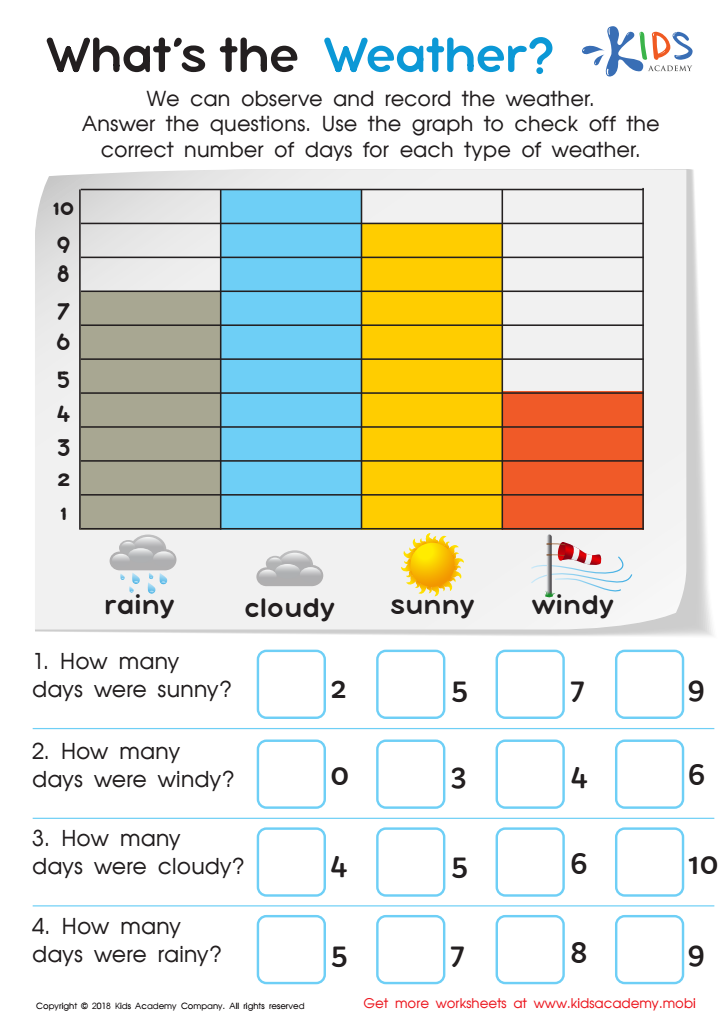
What's the Weather? Worksheet








Understanding weather identification is vital for young children aged 3-7, as it lays the groundwork for their awareness of the environment. Parents and teachers should care about this topic for several reasons.
First, it promotes curiosity and observation skills. When kids learn to identify different types of weather—sunny, rainy, snowy, etc.—they become more attuned to their surroundings and engage in adventurous learning through observation.
Second, weather understanding plays a crucial role in safety. By educating children on how different weather conditions can impact their daily activities—such as staying dry during rain or dressing warmly for snow—they learn to make informed decisions that keep them safe.
Additionally, discussing weather can provide opportunities for creative expression. Storytelling, drawing, and dramatizing weather scenarios can foster literacy and emotional expression, while also enhancing vocabulary.
Finally, teaching weather observation aligns with concepts in science and nature, nurturing a lifelong appreciation for the environment. It encourages a sense of responsibility for the world around them and sparks interest in future exploration, setting the stage for more advanced scientific learning in years to come. By investing in weather identification, parents and teachers promote essential life skills and awareness in young children.








