Handwriting practice Normal Community Worksheets for Ages 3-7
5 filtered results
Difficulty Level
Grade
Age
-
From - To
Subject
Activity
Standards
Enhance your child's handwriting skills with our Handwriting Practice Normal Community Worksheets designed for ages 3-7. Our engaging and educational worksheets are crafted to promote proper letter formation, fine motor skills, and overall writing fluency. Each worksheet is filled with fun, community-themed exercises to keep young learners motivated. Made to support early learning standards, these handy worksheets will have your child confidently writing letters, words, and sentences in no time. Ideal for both classroom use and homeschooling, these printables are a perfect tool to give your child a head start in handwriting mastery. Ready to nurture young, skilled writers!
Favorites
With answer key
Interactive
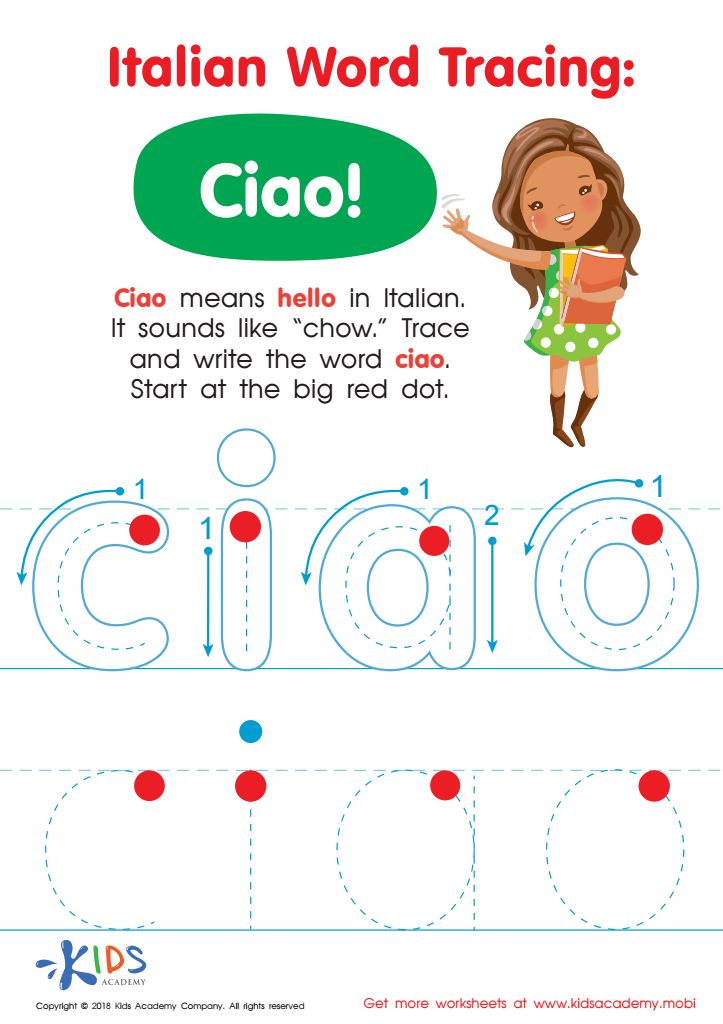
Italian Word Tracing: Ciao Worksheet
Help kids learn to greet people in different languages with this fun worksheet! Featuring the Italian word 'Ciao', it helps kids trace and learn the pronunciation. Plus, it teaches hand-eye coordination and fine-motor skills. Global connectivity can start with this activity!
 Assign to My Students
Italian Word Tracing: Ciao Worksheet
Worksheet
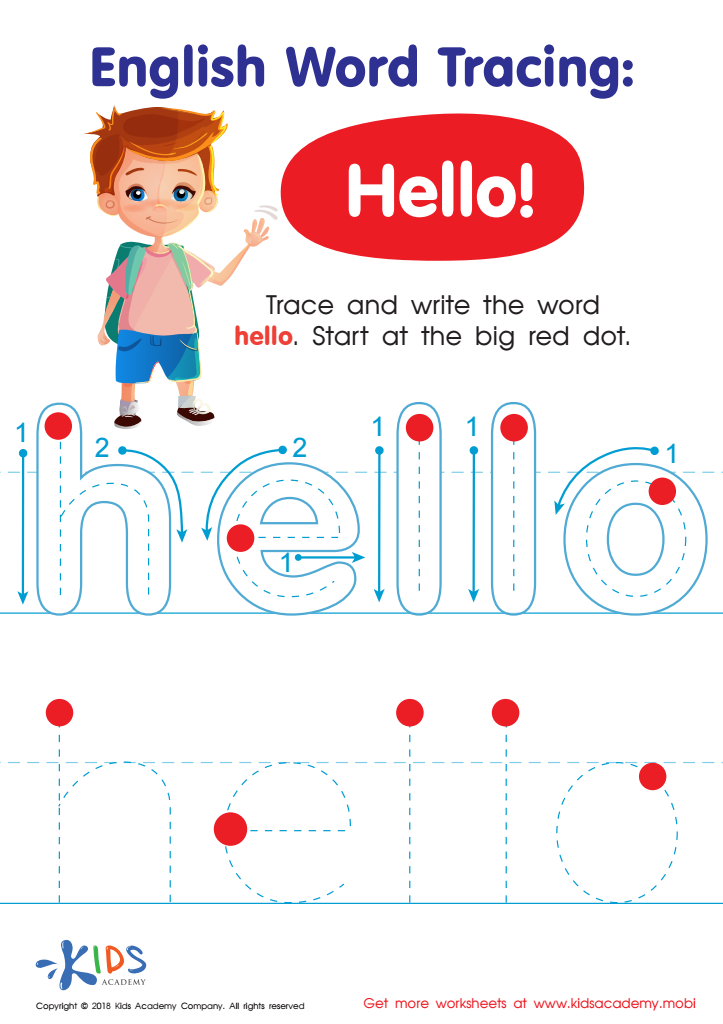
English Word Tracing: Hello Worksheet
Searching for free worksheets to help your kids refine their motor skills, handwriting and English word knowledge? Get this cheerful PDF! It offers your children the chance to practice tracing words like Hello, while following a top-to-bottom, left-to-right patterning.
English Word Tracing: Hello Worksheet
Worksheet
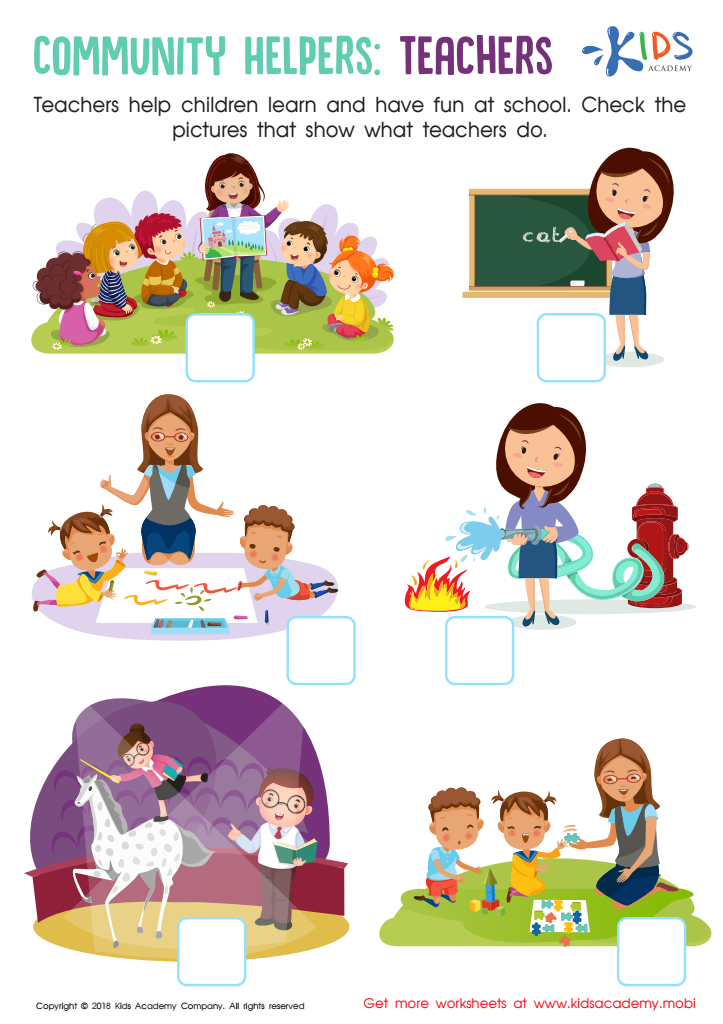
Teachers Community Helpers Worksheet
Ask your students to name some of the ways a teacher helps. Then, use this worksheet to show the right ways teachers can help. Have them check the boxes of the pictures that accurately depict what a teacher does. This is a great exercise to show your students how you help them learn and contribute to their community.
Teachers Community Helpers Worksheet
Worksheet
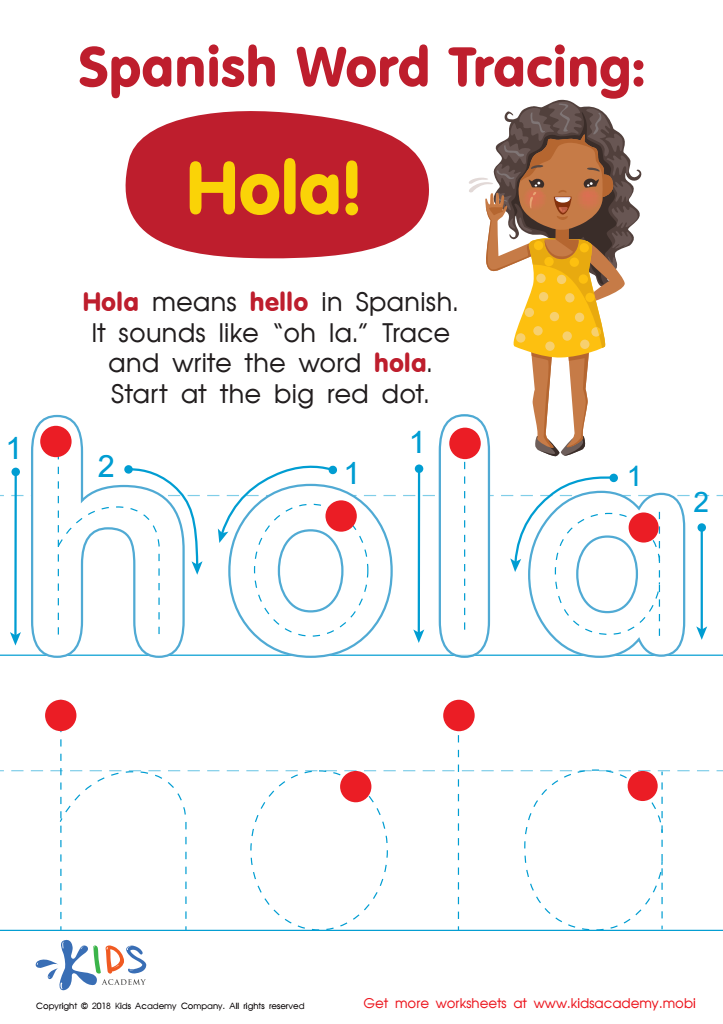
Spanish Word Tracing: Hola Worksheet
This PDF provides a fun way for students to learn "Hola" (Hello) in Spanish! Kids can practice fine motor and handwriting skills while they trace the letters. They'll get the hang of top-to-bottom, left-to-right patterning while they learn how to say and write in Spanish. With practice, they'll soon feel confident speaking and writing Spanish!
Spanish Word Tracing: Hola Worksheet
Worksheet
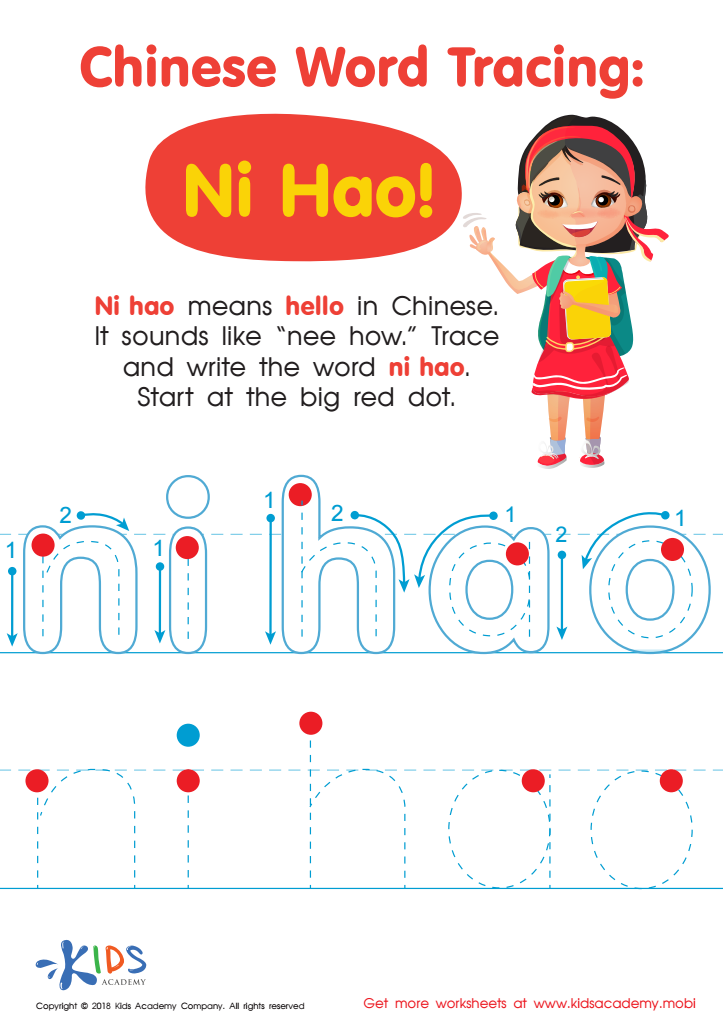
Chinese Word Tracing: Ni Hao Worksheet
Kids can learn to say "Ni hao" with this fun tracing worksheet. The free PDF helps kids write and say the Chinese greeting while also developing fine-motor, handwriting and reading skills. With red guide dots and traceable lines, kids will learn top-to-bottom and left-to-right patterning for fluent reading.
Chinese Word Tracing: Ni Hao Worksheet
Worksheet
Join Kids Academy for Free
Who is primarily going to use this learning content?








Handwriting practice is crucial for children aged 3-7 as it plays a fundamental role in their cognitive and motor skill development. At this formative stage, engaging in handwriting exercises helps improve fine motor skills, hand-eye coordination, and muscle memory, which are essential for everyday tasks. By prioritizing handwriting practice, parents and teachers contribute to children's physical development, enabling them to confidently perform activities like tying shoelaces or buttoning clothes.
Moreover, handwriting practice supports cognitive development. It reinforces memory and learning; when children form letters by hand, they activate the brain’s sensorimotor region, aiding in better information retention and comprehension. This skill is foundational for reading and spelling proficiency, forming a bridge between visual and auditory learning.
Additionally, handwriting fosters creativity and boosts self-expression. Young children can more fluidly translate their thoughts into words, aiding emotional expression and communication skills. Well-formed handwriting enhances legibility, which is important for both self-esteem and academic success, as children gain confidence from clearly presenting their thoughts.
In a community context, where handwriting practice is encouraged and supported, children benefit from a shared focus on essential skills. This collective effort builds a robust foundation for future academic and personal achievements. Supporting young learners in mastering handwriting is a step towards nurturing competent, creative, and confident individuals.