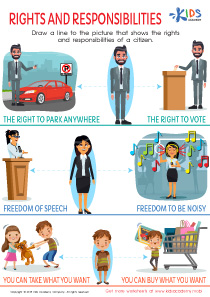
Normal Governance and Civics Worksheets for Ages 3-7 - Page 2
28 filtered results
-
From - To
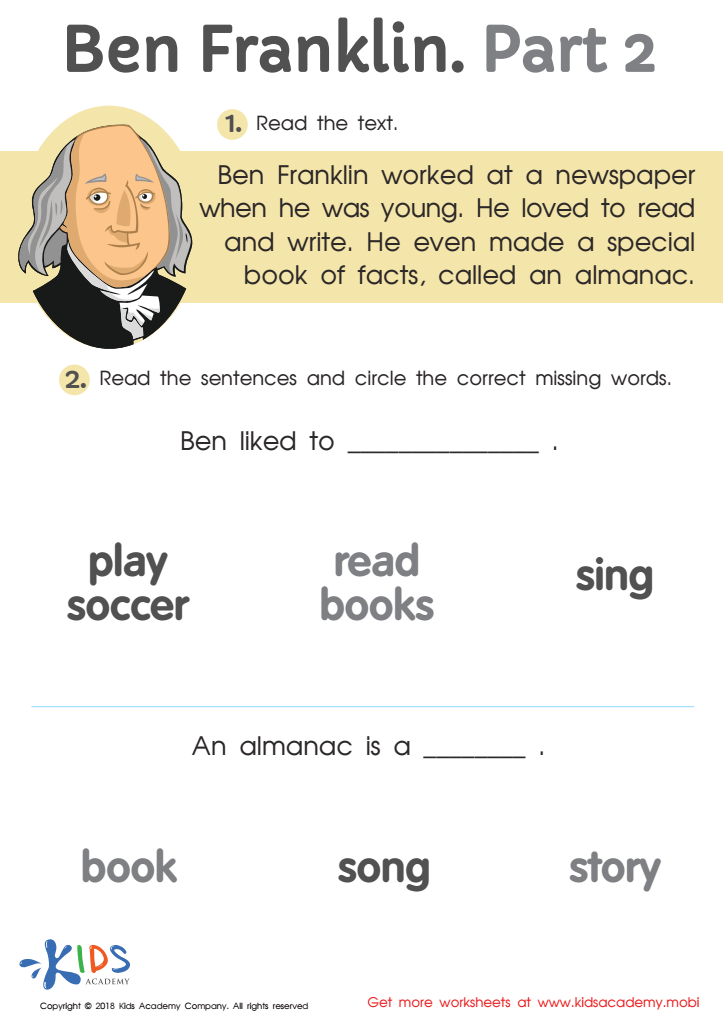
Ben Franklin Part 2 Worksheet
 Assign to My Students
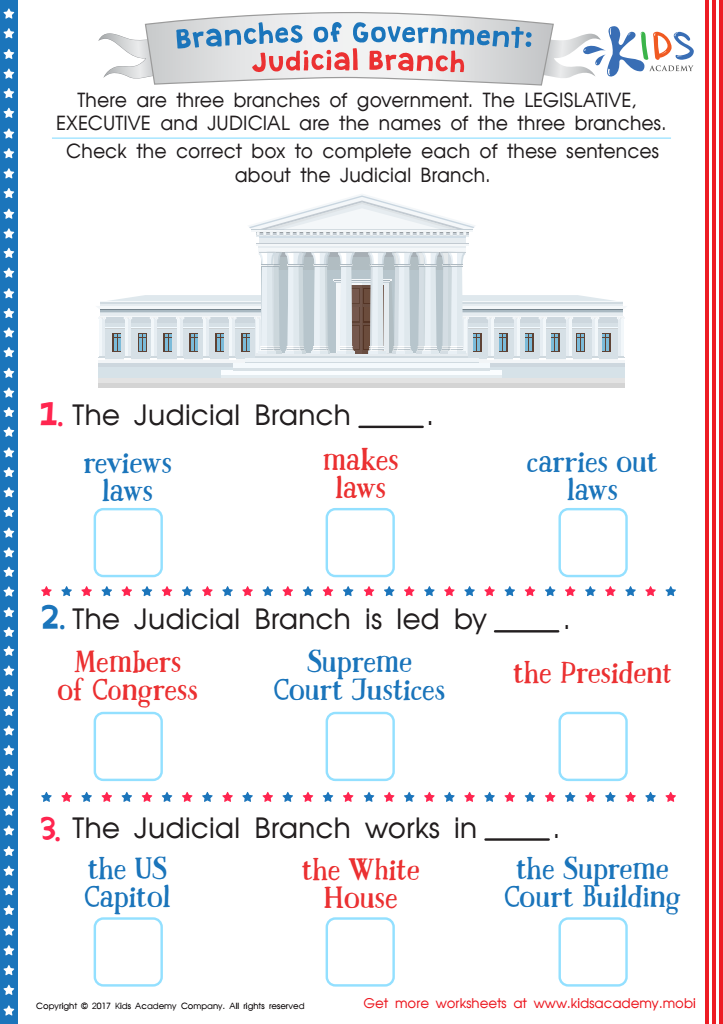
Braches of the Government: Judicial Branch Worksheet
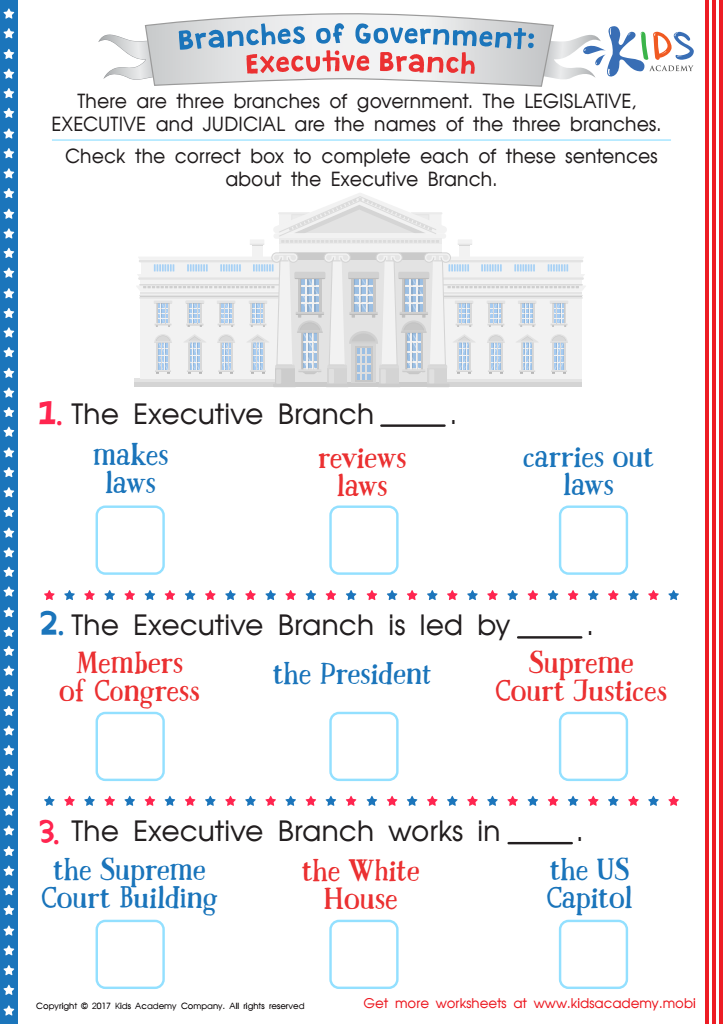
Branches of the Government: Executive Branch Printable
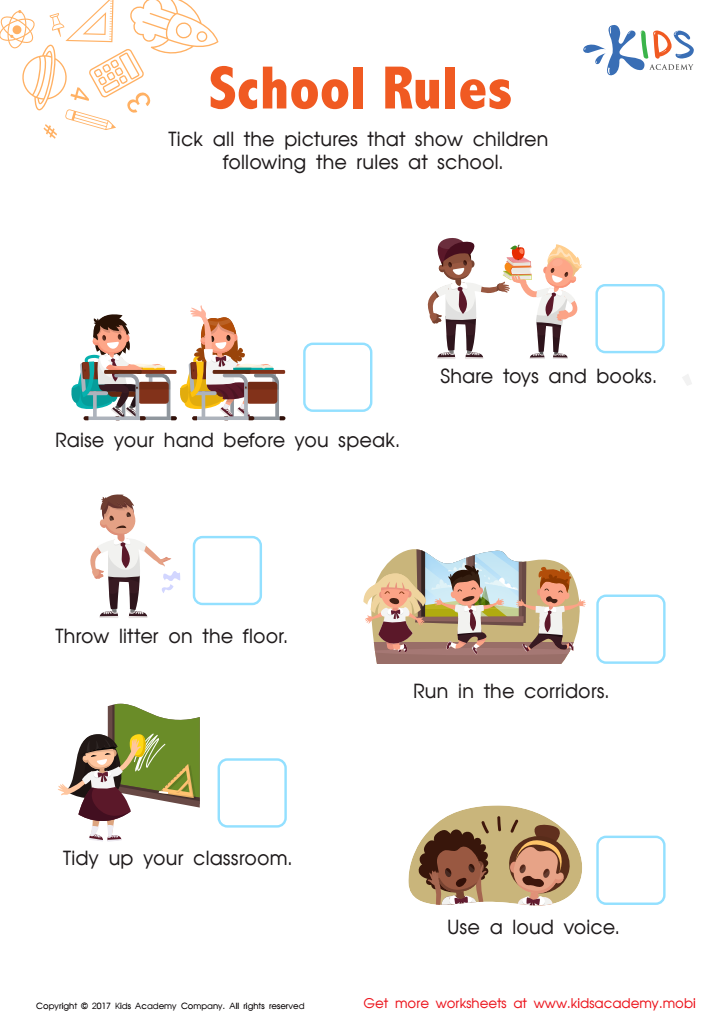
School Rules Worksheet


Teaching Normal Governance and Civics to children aged 3-7 is crucial for their development as responsible citizens. At this early age, children are like sponges, absorbing norms, behaviors, and values from their surroundings. Introducing them to concepts of governance—like fairness, community, and the importance of rules—helps lay a foundation for understanding how society functions.
Fostering civic awareness encourages children to recognize their roles within a community. It teaches them the significance of cooperation, sharing, and respecting others' rights, which are essential skills for social interaction and collaborative problem-solving. Engaging youngsters in discussions about rules can foster critical thinking and help them understand why guidelines exist, making them more willing to abide by them.
Moreover, early exposure to these themes can cultivate empathy and a sense of belonging, essential for emotional development. By instilling democratic principles such as participation, listening to diverse opinions, and valuing each voice, teachers and parents can guide children to become active, informed members of their communities. Ultimately, nurturing these values at a young age enhances children's social skills, prepares them for future challenges, and contributes to building a more responsible, engaged society.