Color Identification Normal Social Studies Worksheets for Ages 3-7
3 filtered results
-
From - To
Enhance your child’s learning with our “Color Identification Normal Social Studies Worksheets,” designed specifically for ages 3-7. These engaging worksheets introduce young learners to colors while connecting them to social studies concepts. Through fun activities and colorful illustrations, children will not only identify and recognize colors but also learn about their significance in the world around them. Perfect for home or classroom use, these worksheets encourage creative expression and critical thinking, fostering a love for learning. Explore the vibrant world of colors and enrich your child’s educational experience today with exciting, skill-building activities that make learning enjoyable!

Fireman Worksheet
 Assign to My Students
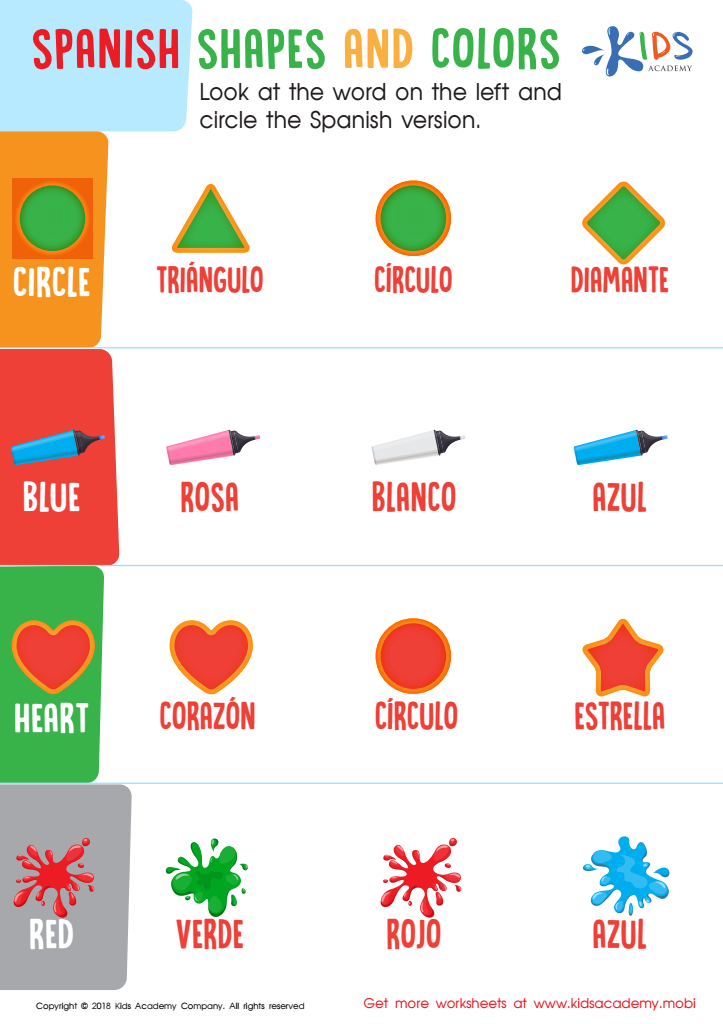
Spanish Shapes and Colors Worksheet
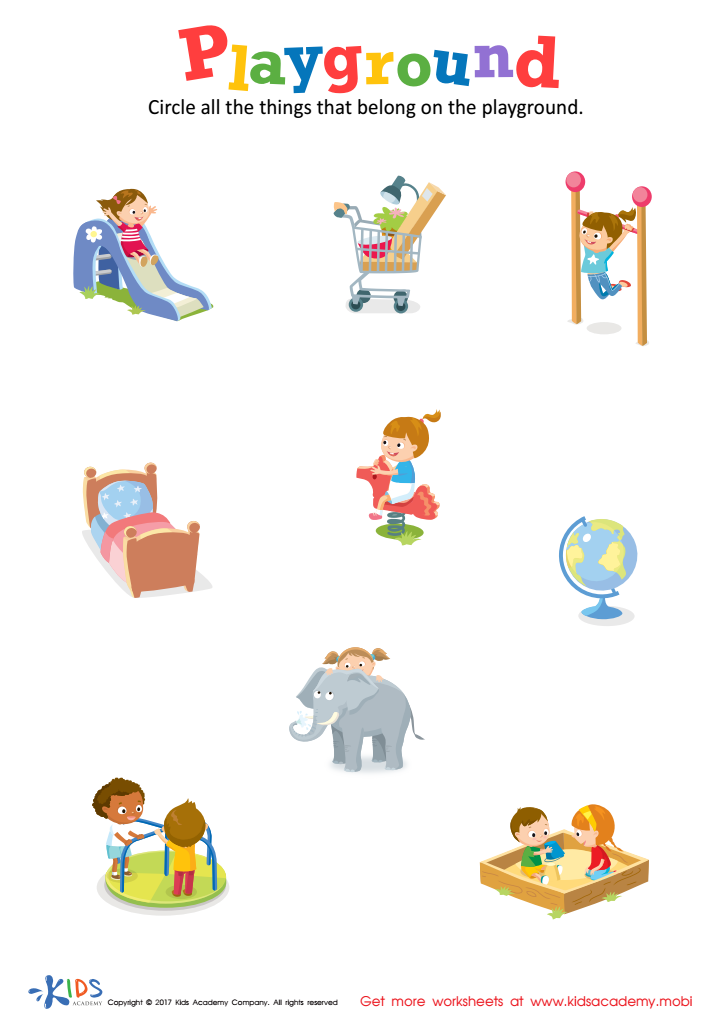
Playground Worksheet







.jpg)
Color identification plays a crucial role in the development of young children, making it essential for parents and teachers to prioritize this skill in social studies for ages 3-7. Understanding colors is foundational not only for language acquisition but also for enhancing cognitive skills. Children frequently encounter colors in their daily environment; recognizing and naming these colors helps them describe their surroundings and express thoughts more clearly.
Additionally, color identification aids in building critical thinking and categorization skills. As children learn to classify objects by colors, they also practice problem-solving, which can translate to more complex learning tasks later on. Social studies, in particular, involves an understanding of diversity and individuality; recognizing different skin tones and cultural colors fosters inclusivity and empathy among young learners.
Engaging in enthusiastic color identification activities also has fun and creative benefits, enriching children's emotional development. Experiments with colors in art and play stimulate imagination and boost confidence. Therefore, instilling a strong grasp of color identification not only contributes to academic readiness but also nurtures socially aware and emotionally intelligent individuals ready to engage with the world around them. Ultimately, caring about this aspect of learning means investing in well-rounded, capable future citizens.