Visual recognition Normal Social Studies Worksheets for Ages 3-7
6 filtered results
-
From - To
Welcome to our Visual Recognition Normal Social Studies Worksheets designed specifically for children ages 3-7! These engaging worksheets promote essential visual recognition skills while introducing young learners to important social concepts. Each activity is crafted to enhance children's observational abilities and critical thinking as they explore community, diversity, and culture. Our colorful illustrations and age-appropriate content not only make learning fun but also encourage discussions about the world around them. Perfect for home or classroom use, these worksheets aim to foster curiosity and understanding in early learners. Start your child's educational journey with exciting social studies explorations today!
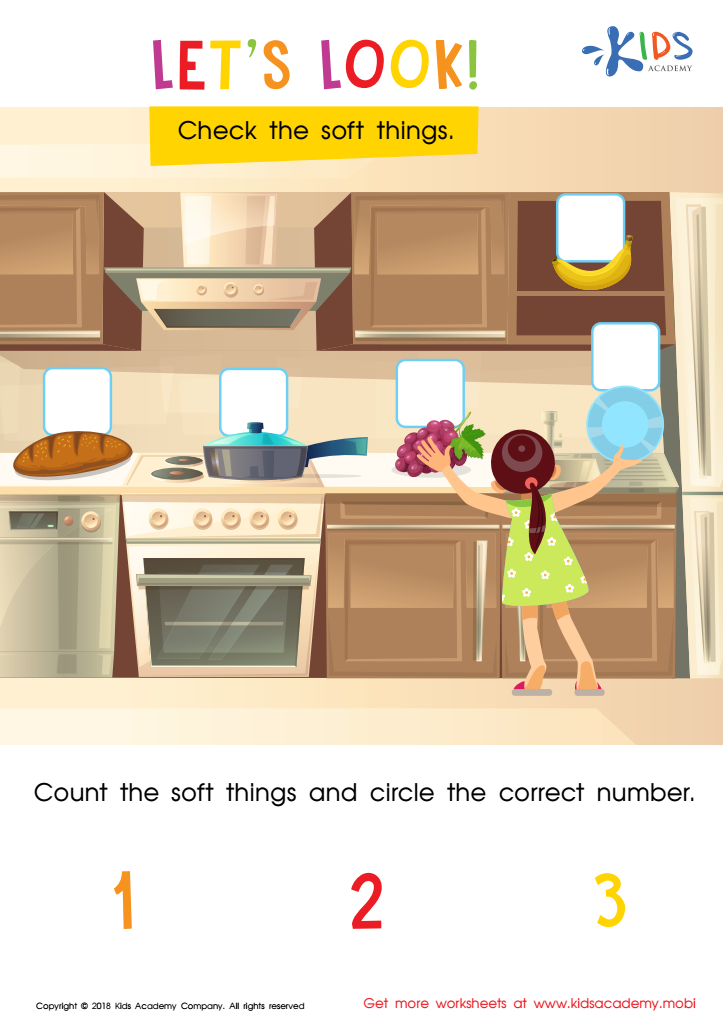
Let's Look! Assessment Worksheet
 Assign to My Students
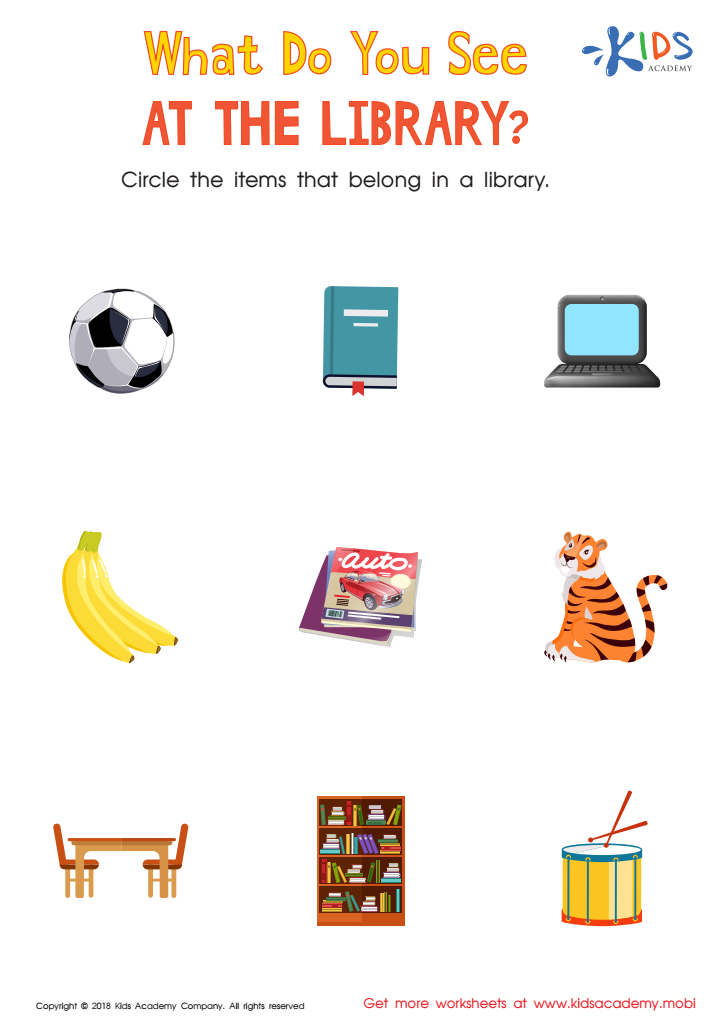
What Do you See at the Library? Worksheet
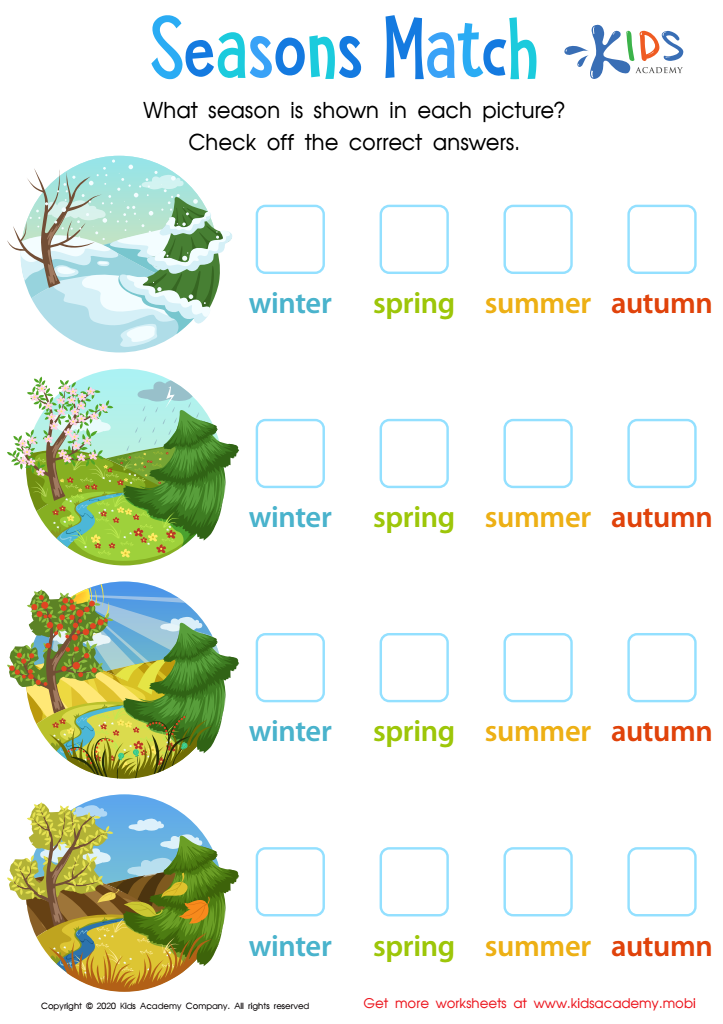
Seasons Match Worksheet
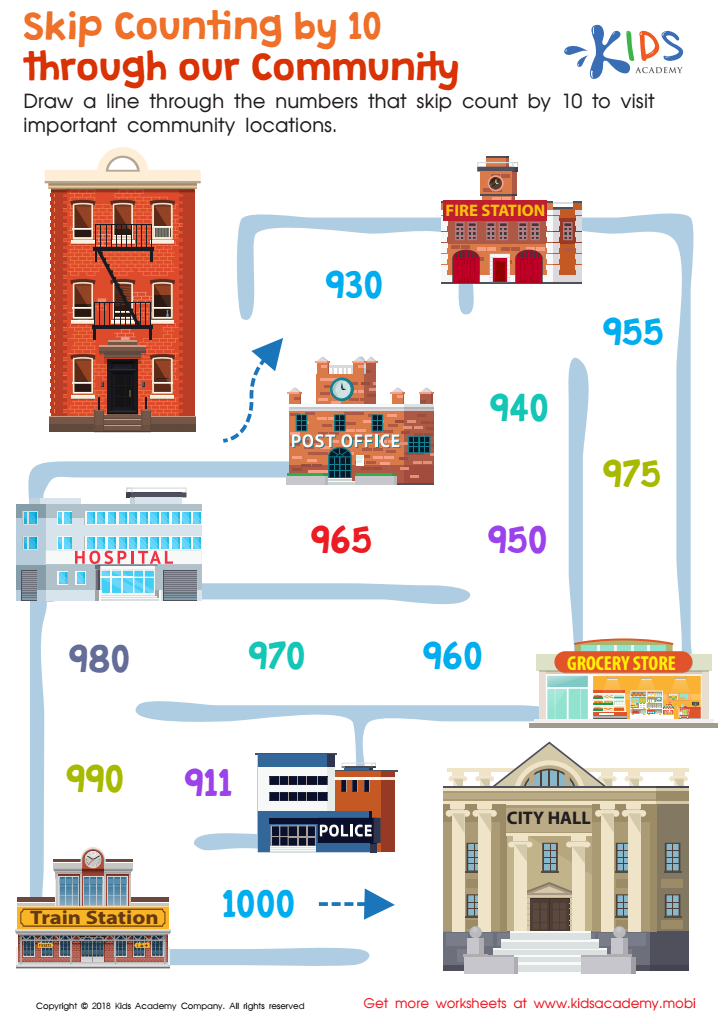
Skip Counting by 10 Through Our Community Worksheet
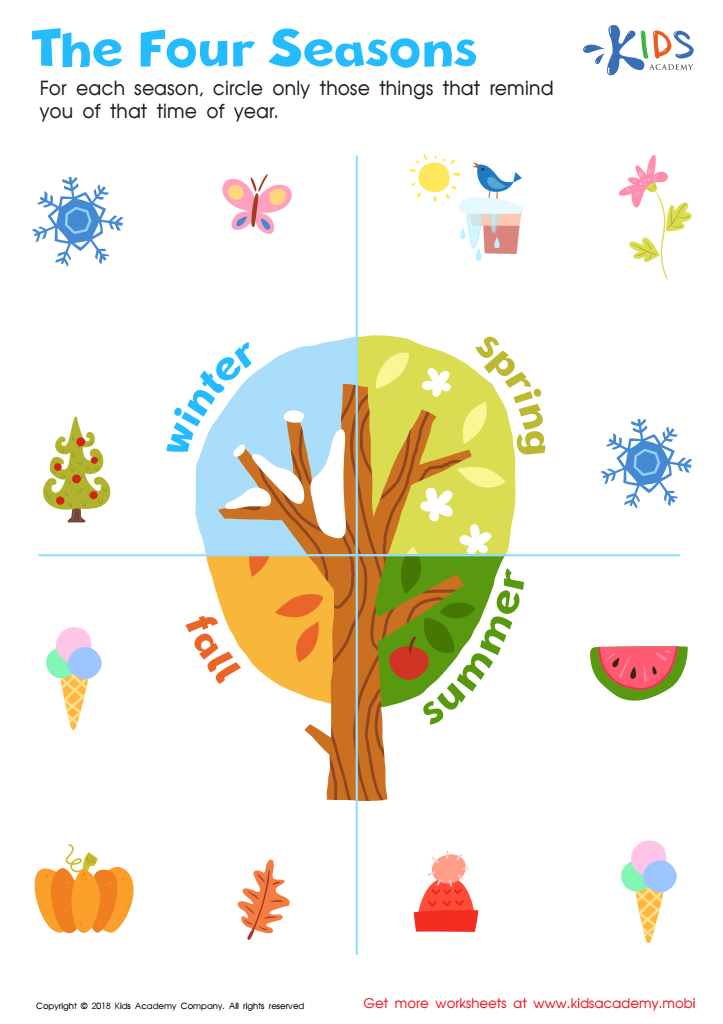
The Four Seasons Worksheet
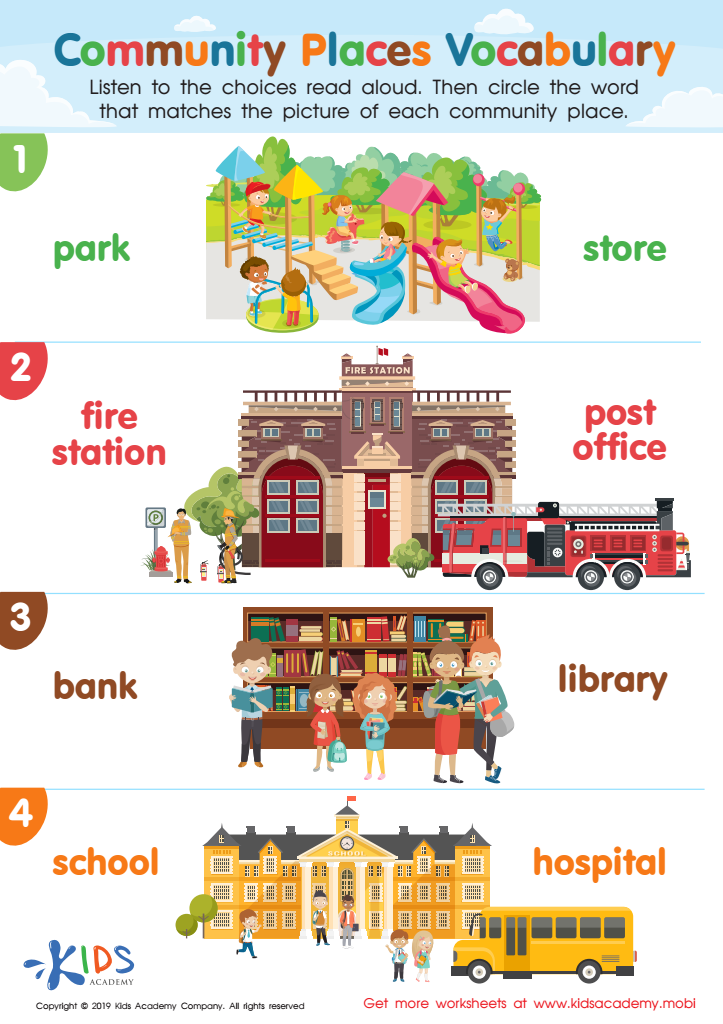
Community Places Vocabulary Worksheet







Visual recognition is a crucial skill for young learners, particularly in the context of Normal Social Studies for children ages 3-7. This developmental stage is pivotal for understanding their environment, cultivating social awareness, and learning about diverse cultures.
First, children's ability to recognize visual stimuli—like images of people, places, and events—enhances their comprehension of social concepts. Activities involving pictures and symbols help them connect ideas to real-world contexts, fostering critical thinking and helping them make sense of complex information.
Moreover, visual recognition aids in the development of empathy and social skills. By seeing and recognizing different individuals, situations, and cultural elements, children learn to appreciate diversity and understand social cues. This understanding is fundamental for effective communication and building relationships with peers.
Furthermore, as parents and teachers, fostering visual recognition can create engaging, interactive learning experiences. Incorporating visuals in lessons makes learning relatable and enjoyable, enhancing children's enthusiasm and retention.
Ultimately, caring about visual recognition in social studies not only supports cognitive and social development but also prepares children to navigate and thrive in an increasingly interconnected world. Investing in these skills ensures they grow into empathetic, informed individuals capable of contributing positively to society.