Vocabulary expansion Normal Grammar Worksheets for Ages 3-7 - Page 2
26 filtered results
-
From - To
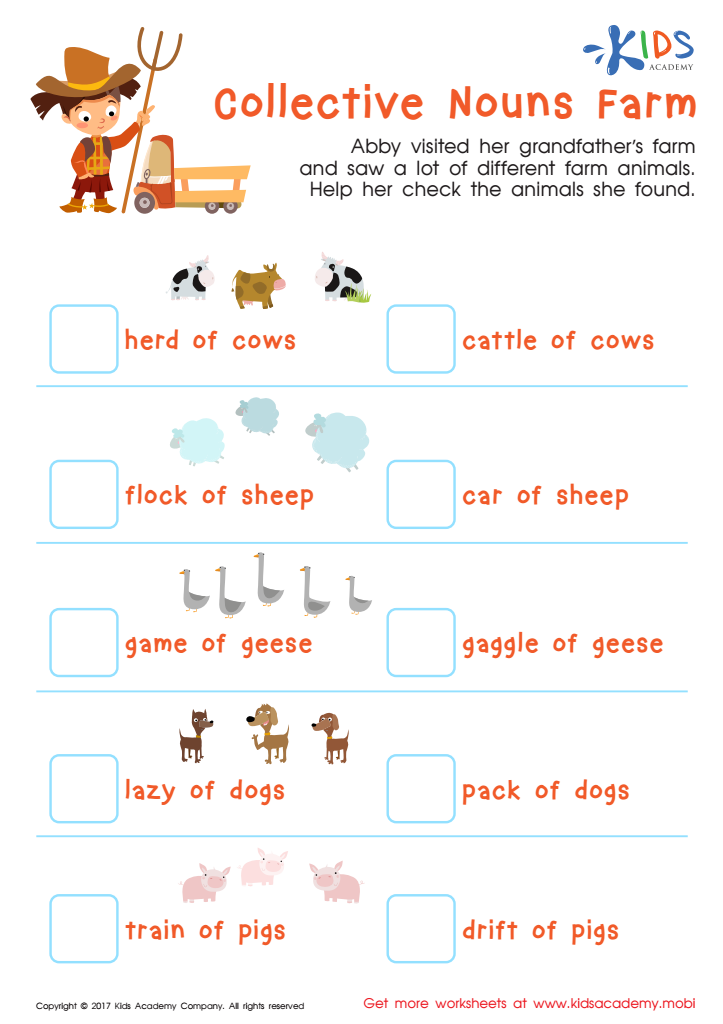
Collective Nouns Worksheet
 Assign to My Students
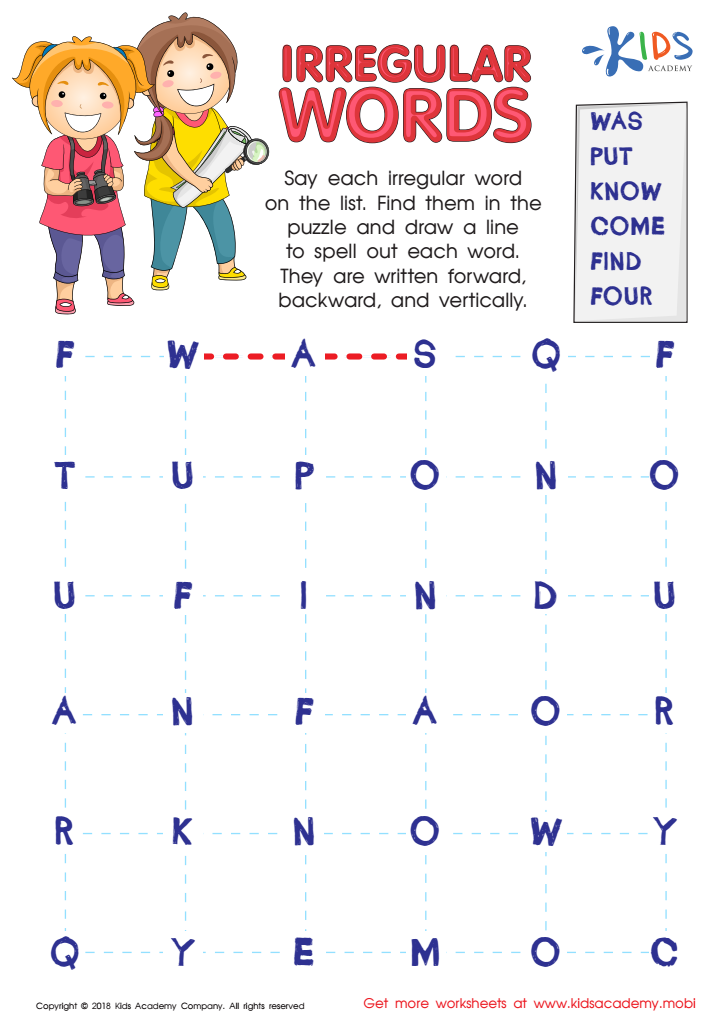
Irregular Words Worksheet






Vocabulary expansion and mastery of normal grammar are crucial for children aged 3-7, as they serve as the foundation for effective communication and literacy skills. During these formative years, children are particularly receptive to language acquisition, making it an optimal time for parents and teachers to prioritize vocabulary development.
A rich vocabulary enhances a child’s ability to express their thoughts, emotions, and ideas, fostering self-confidence in communication. Moreover, comprehension of grammar leads to clearer speech and writing, helping children convey their messages accurately. This is particularly important as they begin to engage in more complex conversations and academic tasks in later grades.
Additionally, a well-developed vocabulary enhances cognitive abilities and critical thinking skills. Children learn to categorize, reason, and articulate concepts, which aids their overall intellectual growth. Furthermore, children with strong language skills tend to perform better in reading and writing, which can set the stage for academic success in future grades.
By promoting vocabulary and grammatical proficiency in early childhood, parents and teachers can play a vital role in laying the groundwork for lifelong communication skills, emotional expression, and academic achievement—essential tools for navigating the world around them. Ultimately, investing in these skills early can have profound impacts on a child's future learning journey.