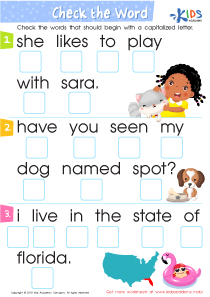
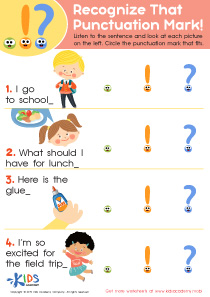
Reading proficiency Normal Writing Worksheets for Ages 3-7
3 filtered results
-
From - To
Unlock your child's reading potential with our engaging Reading Proficiency Normal Writing Worksheets designed specifically for ages 3-7. These carefully crafted worksheets help young learners develop essential reading skills through interactive and enjoyable writing exercises. Children will explore letter recognition, sound associations, and vocabulary building, all while having fun! Ideal for home or classroom use, our resources cater to diverse learning styles, promoting confidence and a love for reading from an early age. With vibrant illustrations and age-appropriate content, your child will stay motivated to learn and evolve their literacy skills. Start their reading journey today with our dynamic writing worksheets!
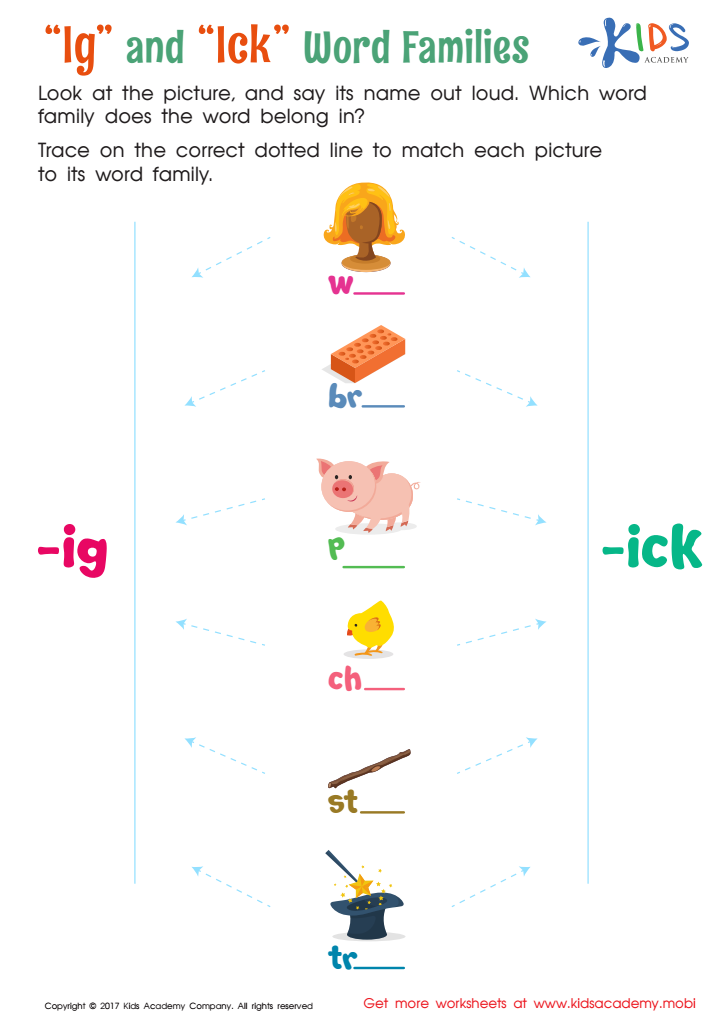
Words Families "ig" and "ick" Spelling Worksheet
 Assign to My Students
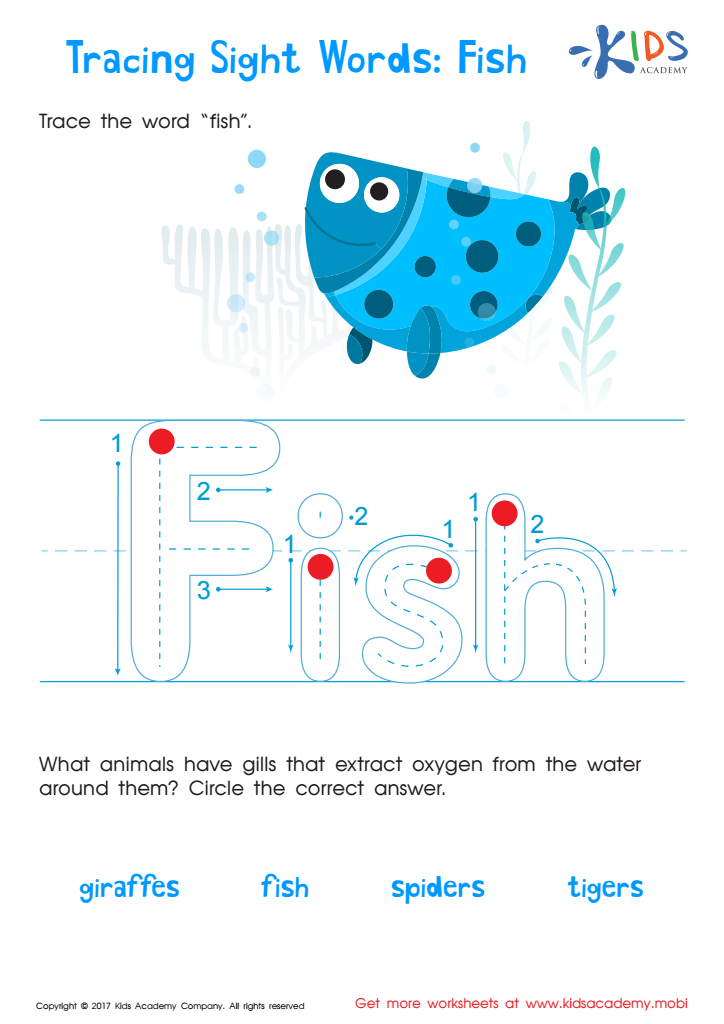
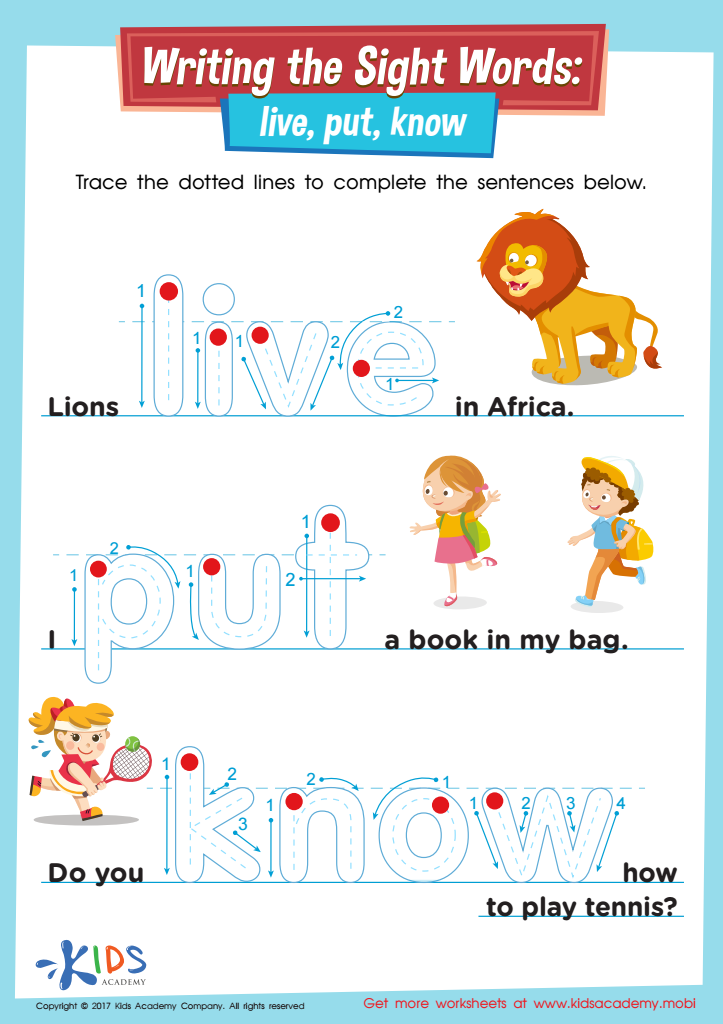
Live, Put, Know Printable Sight Words Worksheet






Reading proficiency in children aged 3-7 is crucial for their overall development and future academic success. During these formative years, children are like sponges, absorbing language and concepts that will shape their understanding of the world. Not only does early reading facilitate language acquisition and comprehension skills, but it also significantly enhances cognitive development and critical thinking.
When parents and teachers prioritize reading proficiency, they lay the groundwork for lifelong learning habits. Children who engage with books learn to express themselves better, both verbally and in writing. This proficiency fosters confidence, encouraging children to participate in discussions and share their ideas openly.
Moreover, strong reading skills correlate with better performance in other subjects, as literacy is foundational in learning math, science, and social studies. It also helps in developing social-emotional skills through storytelling, allowing children to navigate their feelings and build empathy.
Additionally, promoting reading at a young age sets a positive tone for the child’s educational journey, helping to prevent future learning challenges. By fostering a love for reading, parents and teachers can create supportive environments that inspire curiosity and a passion for knowledge, shaping confident, capable learners.