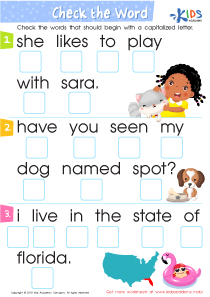
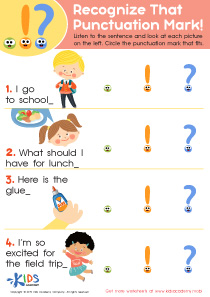
Verb identification Normal Writing Worksheets for Ages 3-7
5 filtered results
-
From - To
Unlock the power of language with our Verb Identification Normal Writing Worksheets, specially designed for children aged 3-7. These interactive and engaging worksheets help young learners effortlessly recognize and understand verbs in sentences. Each activity promotes language development, enhances writing skills, and encourages creativity through fun exercises and vibrant illustrations. Perfect for parents and educators, our resources make teaching verbs enjoyable and effective, ensuring a solid foundation in grammar. Whether in the classroom or at home, inspire your child's love for learning with these captivating worksheets that transform verb identification into a delightful journey of discovery!
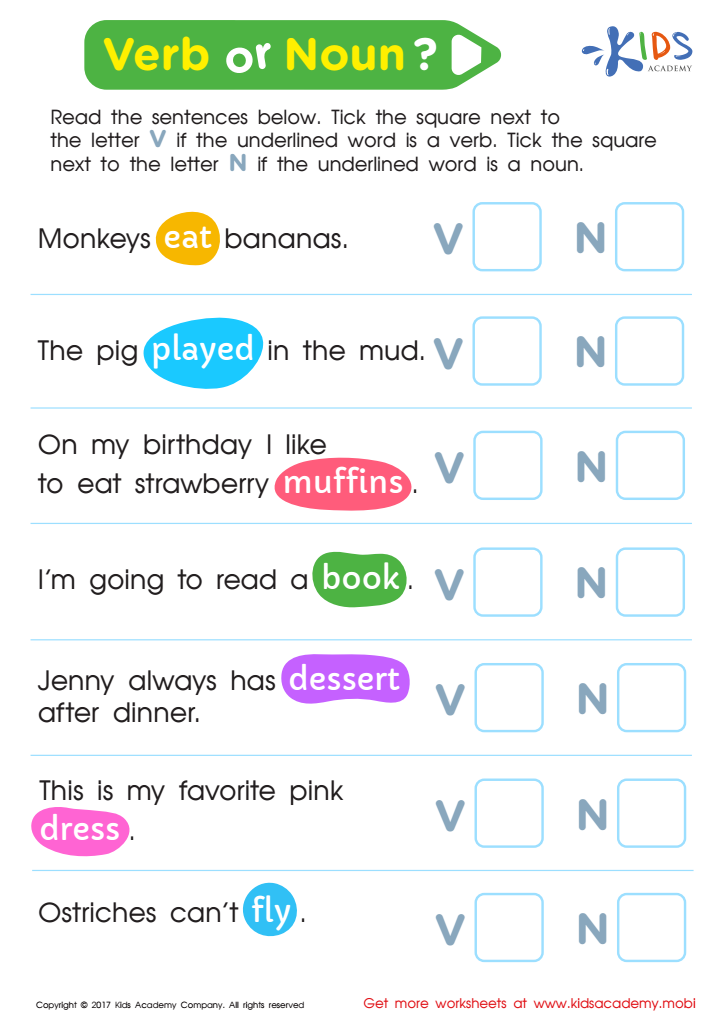
Verb or Noun Worksheet
 Assign to My Students
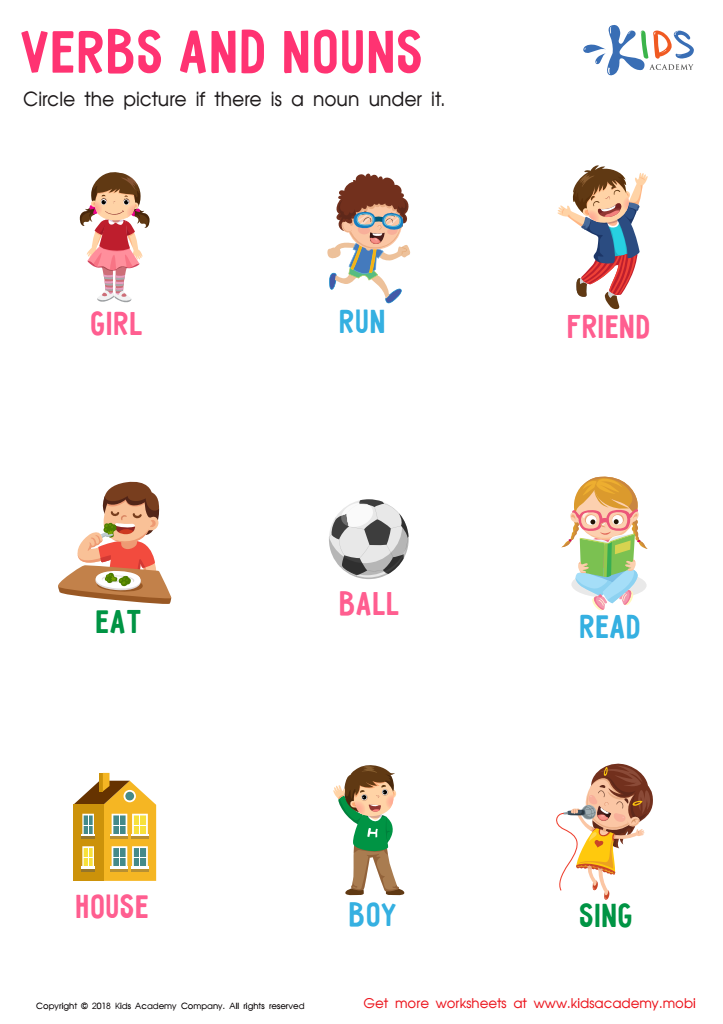
Verbs and Nouns Worksheet
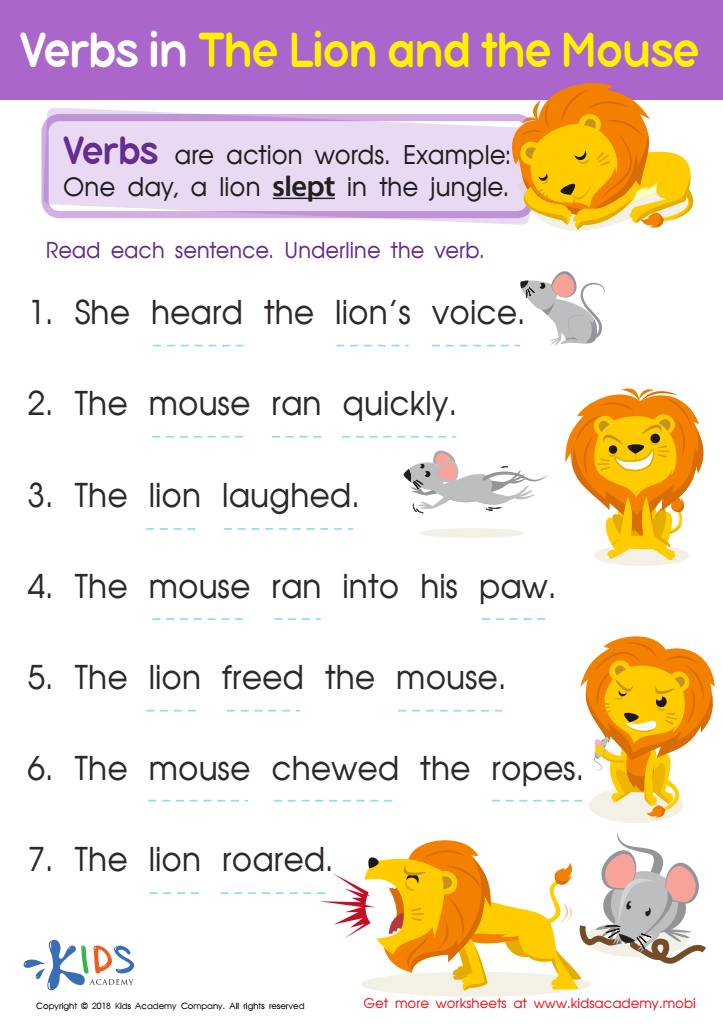
Verbs in The Lion and the Mouse Worksheet
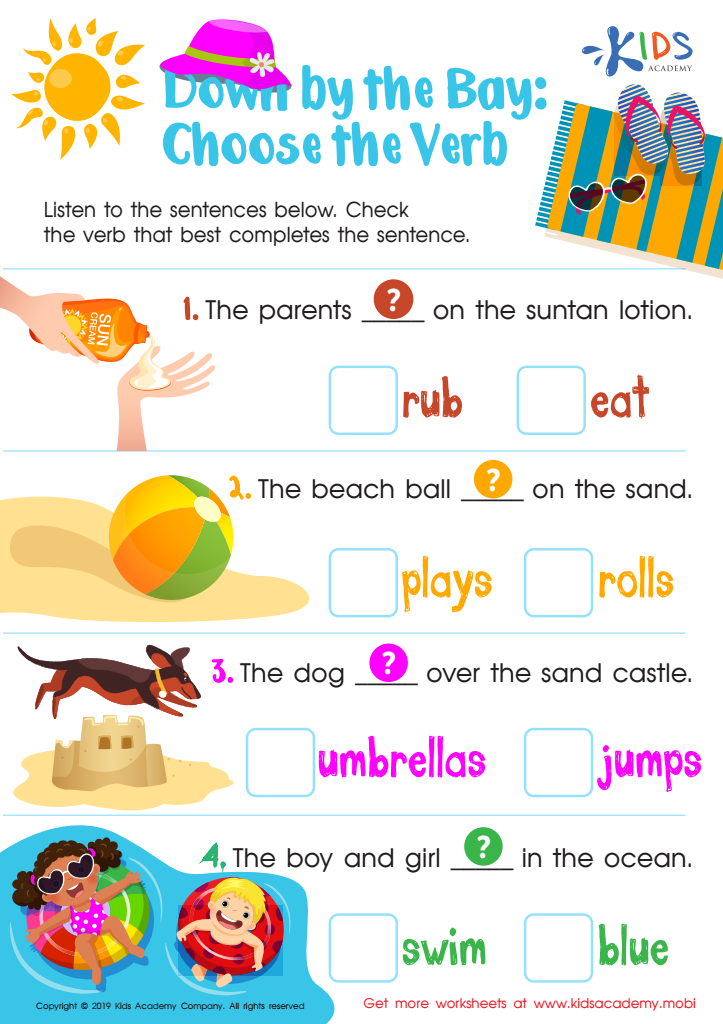
Down by the Bay: Choose the Verb Worksheet
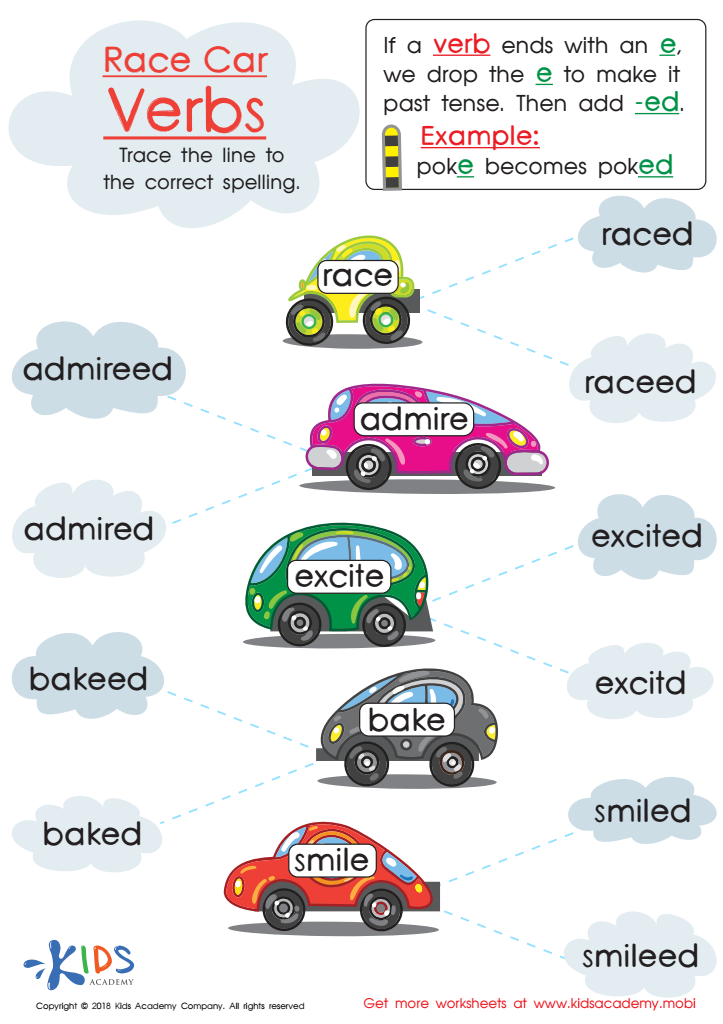
Race Car Verbs Worksheet







Verb identification is a crucial skill for young children, especially in the age range of 3 to 7 years, as it lays the foundation for effective communication and literacy development. Understanding verbs helps children express actions, feelings, and ideas clearly, enhancing their speaking and writing abilities. When parents and teachers prioritize verb identification, they support children's ability to form sentences, ask questions, and convey information meaningfully.
At this developmental stage, children are naturally curious and engage more deeply with language through play and storytelling. Identifying verbs enriches their vocabulary by connecting words to actions, making learning more relatable. It also fosters critical thinking skills as children begin to categorize language and understand how verbs impact sentence structure.
Moreover, teaching verb identification aligns with early literacy benchmarks, preparing children for more complex language tasks in the future. When children grasp the role of verbs, they become better equipped for reading comprehension, allowing them to enjoy books more fully and engage with narratives.
Incorporating fun activities like games, songs, and stories centered around verbs can make learning enjoyable. By supporting verb identification, parents and teachers empower children to communicate effectively, boosting their confidence in both social and academic settings.