Reading Skills Normal Tracing Words Worksheets for Ages 3-7
3 filtered results
Difficulty Level
Grade
Age
-
From - To
Subject
Activity
Standards
Welcome to our "Reading Skills Normal Tracing Words Worksheets" designed for children ages 3-7! These engaging worksheets help young learners develop essential reading and writing skills through fun tracing activities. Each worksheet features easily recognizable words, enhancing vocabulary and cognitive skills while promoting fine motor development. Kids will love practicing their handwriting as they trace over letters and words, fostering confidence in their reading abilities. Perfect for homeschooling or classroom settings, our worksheets provide an enjoyable way to lay the foundation for literacy. Encourage your child’s journey to become a confident reader with our interactive and educational tracing resources today!
Favorites
With answer key
Interactive
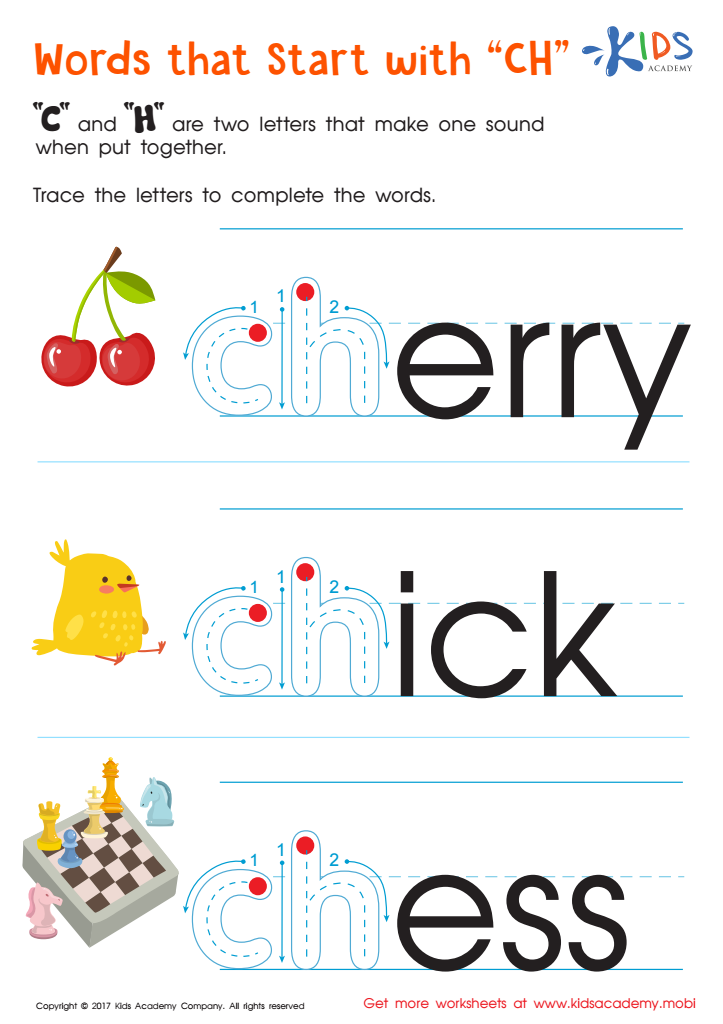
Words That Start with "ch" Spelling Worksheet
With Kids Academy, learning phonics and spelling has never been easier.
Kids Academy's "ch" tracing worksheet makes it easy for your little one to learn phonics and spelling. It features cute, brightly colored images to help them trace familiar words, making learning fun and enjoyable.
 Assign to My Students
Words That Start with "ch" Spelling Worksheet
Worksheet
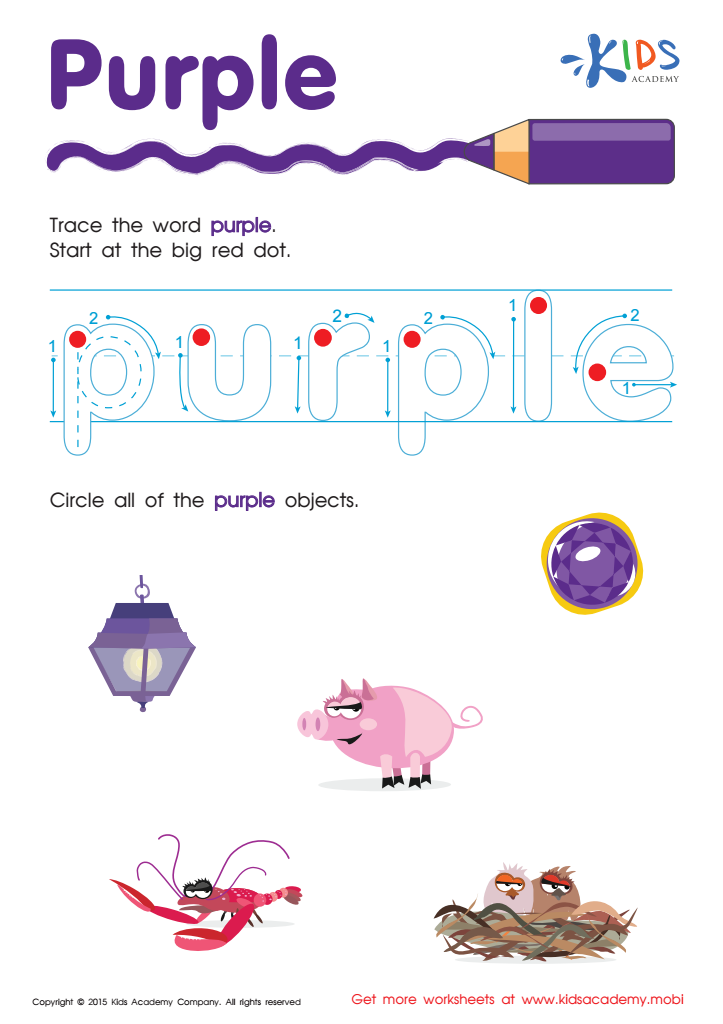
Purple Tracing Color Words Worksheet
Help your kindergartener practice their handwriting with this fun, free printable. They'll trace and color the word “purple”, starting at the big red dots, and pick out and circle all the purple objects they see. They'll get to train their fine motor muscles while having fun! Check out here for more handwriting practice.
Purple Tracing Color Words Worksheet
Worksheet
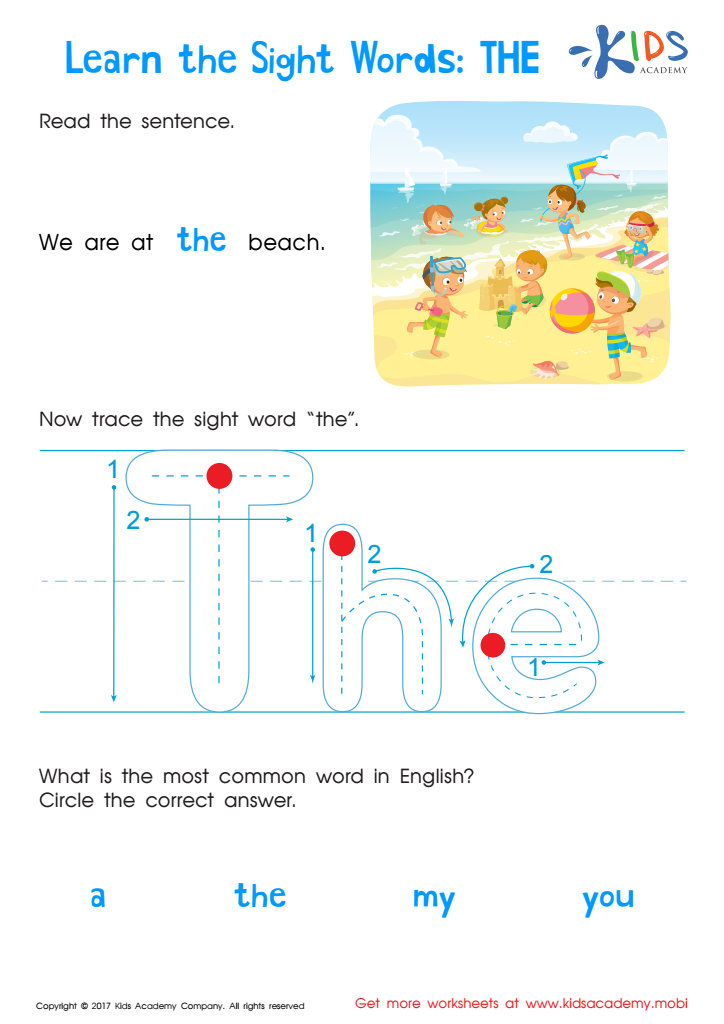
Sight Words: The Worksheet
Get the worksheet and start now.
The word "the" is an essential part of English. Teaching your child to read and write it is easy with this sight words worksheet. They'll practice reading the word, tracing it, and using it in sentences. It's the perfect way to take your child's language skills to the next level! Get the worksheet today.
Sight Words: The Worksheet
Worksheet
Join Kids Academy for Free
Who is primarily going to use this learning content?







Reading skills, particularly Normal Tracing Words, play a crucial role in the early developmental stages of children aged 3-7. During this formative period, children are rapidly acquiring language and literacy skills that lay the foundation for future academic success. Tracing words enhances their fine motor skills, hand-eye coordination, and cognitive development, making it an engaging way to integrate writing practice into reading activities.
Parents and teachers should prioritize these skills because they are essential in fostering a love for reading and learning intuitively. As children trace letters and words, they learn letter formation, sound recognition, and word association simultaneously, catering to various learning styles. This multi-sensory approach fuels their confidence and encourages them to explore reading further.
Moreover, strong reading skills at a young age predict better literacy outcomes in later years. By supporting the development of Normal Tracing Words, parents and teachers can help children build resilience, self-esteem, and critical thinking skills essential for lifelong learning. Engaging children in this way also allows for a deeper connection between adults and children, making learning a shared and joyous experience. Thus, caring for and supporting these skills is a vital investment in their future success and overall development.